
Nicholas Wolterstorff
Author of Lament For a Son
About the Author
Nicholas Wolterstorff is Noah Porter Professor Emeritus of Philosophical Theology at Yale University, and Senior Research Fellow at the Institute for Advanced Studies in Culture at the University of Virginia.
Image credit: Photo courtesy of Yale Divinity School
Works by Nicholas Wolterstorff
Until Justice and Peace Embrace: The Kuyper Lectures for 1981 Delivered at the Free University of Amsterdam (1983) 162 copies
The God We Worship: An Exploration of Liturgical Theology (Kantzer Lectures in Revealed Theology (KLRT)) (2015) 73 copies
Religion in the Public Square: The Place of Religious Convictions in Political Debate (1996) 65 copies
Journey toward Justice: Personal Encounters in the Global South (Turning South: Christian Scholars in an Age of World Christianity) (2013) 53 copies
Keeping faith: Talks for new faculty at Calvin College (Occasional papers from Calvin College) (1989) 4 copies
Beyond Imagining: Remembering the Beginnings and Early Years of Church of the Servant (2022) 2 copies
Reading Joshua 2 copies
Tradition, Insight and Constraint 2 copies
The God Who Loves Justice 1 copy
藝術與宗教 1 copy
School and Curriculum 1 copy
Associated Works
Philosophers Who Believe: The Spiritual Journeys of 11 Leading Thinkers (1993) — Contributor — 277 copies, 1 review
Rationality, Religious Belief, and Moral Commitment: New Essays in the Philosophy of Religion (1986) — Contributor — 31 copies
Dare We Speak of Hope?: Searching for a Language of Life in Faith and Politics (2014) — Foreword — 31 copies
Philosophy and the Christian Faith (University of Notre Dame Studies in the Philosophy of Religion, No. 5) (1988) — Contributor — 27 copies
Making Higher Education Christian: The History and Mission of Evangelical Colleges in America (1987) — Contributor — 26 copies
On Moral Medicine: Theological Perspectives in Medical Ethics (2012) — Contributor, some editions — 23 copies, 1 review
Oxford Readings in Philosophical Theology: Volume 2: Providence, Scripture, and Resurrection (2009) — Contributor — 20 copies
Christian Scholarship in the Twenty-First Century: Prospects and Perils (2014) — Contributor — 16 copies
Crumbling Walls of Certainty: Towards a Christian Critique of Postmodernity and Education (1998) — Introduction — 5 copies
Tagged
Common Knowledge
- Birthdate
- 1932-01-21
- Gender
- male
- Education
- Calvin College
Harvard University - Occupations
- philosopher
- Organizations
- Yale University
Society of Christian Philosophers
Calvin College
American Philosophical Association - Awards and honors
- Woodrow Wilson Fellowship (1953)
Harvard Foundation Fellowship (1954)
Josiah Royce Memorial Fellowship (1954)
Fulbright Scholarship (1957) - Relationships
- Plantinga, Alvin (friend)
- Nationality
- USA
- Birthplace
- Bigelow, Minnesota, USA
- Places of residence
- Bigelow, Minnesota, USA (birth)
- Associated Place (for map)
- Bigelow, Minnesota, USA
Members
Reviews
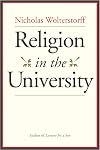
Religion in the University by Nicholas Wolterstorff is an engaging and thoughtful argument for the (continued) inclusion of religion in the university. Contrary to some propaganda, religion never left the university, but it has been shoved aside at the same time that open debate and nuanced thought was shoved aside for profit and political gain. I read this book in tandem with Standing for Reason by John Sexton and taken together they make a strong and positive case for not just our show more universities but our currently polarized society.
Wolterstorff presents a fair assessment of Weber's views and using that as a starting point to argue against he makes his case. I have seen a couple of people who read this as "religion should have a say in the university" but that isn't quite what I took from it. I understood something closer to religious people, faculty and students alike, should have their religious ideas included in the university. I think the difference is that, for instance, Physics does not so much have a say in the university as it is an integral part of it. Same should be true of religion.
The argument is largely directed at secular universities since faith-based universities, especially cult-based "universities" such as Liberty, have religion (or cult dogma) at their core. If universities return to being fertile ground for open and honest debate and argument (in the best sense of the word) then religion must be included since the vast majority of people have part of their identity informed by religion, whether by following one or by rejecting them. Either way, the topic and ideas are part of society and open for discussion and debate.
Two of my favorite professors at a state university where I got a couple of my BAs were not just religious people but clergy. One was an ordained Lutheran minister and the other a Jewish rabbi. Their beliefs were not hidden but at the same time they were concerned with teaching us how to think, not what to think. That distinction is the one that most worries those who question religion in education, especially at pseudo-religious schools like Liberty.
I would recommend this to anyone interested in the role, or potential role, of religion and religious people in higher education.
Reviewed from a copy made available by the publisher via NetGalley. show less
Wolterstorff presents a fair assessment of Weber's views and using that as a starting point to argue against he makes his case. I have seen a couple of people who read this as "religion should have a say in the university" but that isn't quite what I took from it. I understood something closer to religious people, faculty and students alike, should have their religious ideas included in the university. I think the difference is that, for instance, Physics does not so much have a say in the university as it is an integral part of it. Same should be true of religion.
The argument is largely directed at secular universities since faith-based universities, especially cult-based "universities" such as Liberty, have religion (or cult dogma) at their core. If universities return to being fertile ground for open and honest debate and argument (in the best sense of the word) then religion must be included since the vast majority of people have part of their identity informed by religion, whether by following one or by rejecting them. Either way, the topic and ideas are part of society and open for discussion and debate.
Two of my favorite professors at a state university where I got a couple of my BAs were not just religious people but clergy. One was an ordained Lutheran minister and the other a Jewish rabbi. Their beliefs were not hidden but at the same time they were concerned with teaching us how to think, not what to think. That distinction is the one that most worries those who question religion in education, especially at pseudo-religious schools like Liberty.
I would recommend this to anyone interested in the role, or potential role, of religion and religious people in higher education.
Reviewed from a copy made available by the publisher via NetGalley. show less
Summary: Defends the idea of the place of religious ideas in scholarly discussion.
In many quarters of the world of higher education, religious ideas or religiously informed perspectives are deemed inappropriate for the classroom, and for scholarly research and discourse, confining these discussions to the co-curricular part of the university. Emeritus Yale philosopher Nicholas Wolterstorff lays out in compact but carefully reasoned format, an argument for the proper place of religious ideas show more in academic discourse.
He begins with a classic work by Max Weber, "Science as Vocation," that argued that religious ideas, not being immediately accessible facts, should not be part of academic discourse but be relegated to the private and personal sphere of life. Wolterstorff would contend that this reigning assumption still holds, although developments over the last fifty years significantly undermine this argument.
First of all, in science, the work of Thomas Kuhn demonstrated that evidence often under-determines theory, and thus other factors influence choices of theory. Likewise, Hans Georg Gadamer demonstrated in textual interpretation that questions of significance shape the conclusions made about texts and reflect the situation of the interpreter: gender, ethnicity, social class, underlying philosophical commitments. Hence, in the humanities, there arose a number of critical schools: Marxist, feminist, queer, African, and so forth. All scholars bring judgments of significance, theoretical preferences, and prejudgments to their work.
So, why then are religious commitments ruled out? One of the reasons is a criterion of rationality, and the notion that religious beliefs are non-rational. Some of this comes from the work of Locke, that proposed that a warranted belief should be based on an argument. Yet this dismisses the reality that human beings believe many things on the basis of testimony and experience without resort to argument. Many accept findings on scientific matters on testimony and come to other beliefs on the basis of immediate experience. Wolterstorff proposes that, while we should be open to the possibility of our or others' beliefs being mistaken, "beliefs, in general, are innocent until proven guilty, not guilty until proven innocent" (p. 102). He allows that while there are specific cases of deficient religious beliefs, this does not warrant relegating all religious beliefs to the category of non-rational and thus excluded from academic discourse.
In his concluding chapter, he argues that the reality of universities is that they are pluralist institutions and that religious as well as other perspectives ought to be welcome to contribute their distinctive voices to academic discussions. He believes that to exclude these contributions is to impoverish the university.
I do not feel qualified to evaluate Wolterstorff's discussion of different philosophers and so find myself trusting his testimony(!). I would propose that in American universities, Wolterstorff offers a special challenge to Christians, who for a period enjoyed a kind of hegemony, and then experience a displacement amounting to being exiled from academic discourse. It entails laying aside past memories either of privilege or persecution and learning the practice of participation as Christians in contributing their insights into academic discourse, along with others. In place of a posture of either entitlement or embattlement, this calls for a posture of engagement. It means the careful, respectful hearing of others, weighing the merit of ideas, and forthrightly contributing one's own for rigorous analysis, for critique, and refinement. That is how universities work at their best. That is the opportunity for religion in the university in the early twenty-first century.
________________________________
Disclosure of Material Connection: I received this book free from the publisher. I was not required to write a positive review. The opinions I have expressed are my own. show less
In many quarters of the world of higher education, religious ideas or religiously informed perspectives are deemed inappropriate for the classroom, and for scholarly research and discourse, confining these discussions to the co-curricular part of the university. Emeritus Yale philosopher Nicholas Wolterstorff lays out in compact but carefully reasoned format, an argument for the proper place of religious ideas show more in academic discourse.
He begins with a classic work by Max Weber, "Science as Vocation," that argued that religious ideas, not being immediately accessible facts, should not be part of academic discourse but be relegated to the private and personal sphere of life. Wolterstorff would contend that this reigning assumption still holds, although developments over the last fifty years significantly undermine this argument.
First of all, in science, the work of Thomas Kuhn demonstrated that evidence often under-determines theory, and thus other factors influence choices of theory. Likewise, Hans Georg Gadamer demonstrated in textual interpretation that questions of significance shape the conclusions made about texts and reflect the situation of the interpreter: gender, ethnicity, social class, underlying philosophical commitments. Hence, in the humanities, there arose a number of critical schools: Marxist, feminist, queer, African, and so forth. All scholars bring judgments of significance, theoretical preferences, and prejudgments to their work.
So, why then are religious commitments ruled out? One of the reasons is a criterion of rationality, and the notion that religious beliefs are non-rational. Some of this comes from the work of Locke, that proposed that a warranted belief should be based on an argument. Yet this dismisses the reality that human beings believe many things on the basis of testimony and experience without resort to argument. Many accept findings on scientific matters on testimony and come to other beliefs on the basis of immediate experience. Wolterstorff proposes that, while we should be open to the possibility of our or others' beliefs being mistaken, "beliefs, in general, are innocent until proven guilty, not guilty until proven innocent" (p. 102). He allows that while there are specific cases of deficient religious beliefs, this does not warrant relegating all religious beliefs to the category of non-rational and thus excluded from academic discourse.
In his concluding chapter, he argues that the reality of universities is that they are pluralist institutions and that religious as well as other perspectives ought to be welcome to contribute their distinctive voices to academic discussions. He believes that to exclude these contributions is to impoverish the university.
I do not feel qualified to evaluate Wolterstorff's discussion of different philosophers and so find myself trusting his testimony(!). I would propose that in American universities, Wolterstorff offers a special challenge to Christians, who for a period enjoyed a kind of hegemony, and then experience a displacement amounting to being exiled from academic discourse. It entails laying aside past memories either of privilege or persecution and learning the practice of participation as Christians in contributing their insights into academic discourse, along with others. In place of a posture of either entitlement or embattlement, this calls for a posture of engagement. It means the careful, respectful hearing of others, weighing the merit of ideas, and forthrightly contributing one's own for rigorous analysis, for critique, and refinement. That is how universities work at their best. That is the opportunity for religion in the university in the early twenty-first century.
________________________________
Disclosure of Material Connection: I received this book free from the publisher. I was not required to write a positive review. The opinions I have expressed are my own. show less
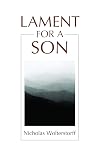
Wolterstorff has written a brief, yet poingnantly reflective book on his journey through the valley of grief. He lost his 25 year-old son to a tragic mountain climbing accident, and wrote this book as he writes in the preface "to give voice to [his] grief." He continues "Though it is intensely personal, I have decided now to publish it, in the hope that it will be of help to some of those who find themselves with us in the company of mourners."
This book is powerfully moving and brought tears show more to my eyes when I first read it. Wolterstorff voices many of the often unspoken feelings that mourners go through- from intense sadness to anger, to questioning, to longing for the loved one whom has died.
His reflections are powerful yet concise, and he has written the book in the style of a journal- documenting his struggle to grieve and cope with the intense anger and sadness of losing his son. Ultimately he finds his faith to be his greatest source of comfort and strength, but not before a long journey through the dark wilderness of grief.
I have also found this book to be extremely comforting and helpful- both in coping with my personal losses, as well as for bereaved family members in the grief support group that I facilitate. This book should be required reading for ANYONE who has lost a loved one, or works with the bereaved or is close to someone who has lost a loved one. I highly recommend it. show less
This book is powerfully moving and brought tears show more to my eyes when I first read it. Wolterstorff voices many of the often unspoken feelings that mourners go through- from intense sadness to anger, to questioning, to longing for the loved one whom has died.
His reflections are powerful yet concise, and he has written the book in the style of a journal- documenting his struggle to grieve and cope with the intense anger and sadness of losing his son. Ultimately he finds his faith to be his greatest source of comfort and strength, but not before a long journey through the dark wilderness of grief.
I have also found this book to be extremely comforting and helpful- both in coping with my personal losses, as well as for bereaved family members in the grief support group that I facilitate. This book should be required reading for ANYONE who has lost a loved one, or works with the bereaved or is close to someone who has lost a loved one. I highly recommend it. show less
Philosophical theologian, Nicholas Wolterstorff penned these reflections in the wake of their 25 year old son's death. It is a beautiful book, full of honest grappling with grief, God and faith. He offers no easy answers but opens up about his pain he carried.
You May Also Like


Associated Authors
Statistics
- Works
- 48
- Also by
- 25
- Members
- 2,988
- Popularity
- #8,543
- Rating
- 4.1
- Reviews
- 17
- ISBNs
- 103
- Languages
- 6
- Favorited
- 3