
Daniel Walker Howe (1937–2025)
Author of What Hath God Wrought: The Transformation of America, 1815-1848
About the Author
Image credit: Daniel Walker Howe, on right. Columbia University. pulitzer.org
Works by Daniel Walker Howe
Associated Works
A Stream of Light: A Short History of American Unitarianism (1975) — Contributor — 192 copies, 3 reviews
Tagged
Common Knowledge
- Birthdate
- 1937-01-10
- Date of death
- 2025-12-25
- Gender
- male
- Education
- Harvard University (AB|1959)
University of Oxford (MA|1962)
University of California, Berkeley (PhD|1966) - Occupations
- history professor
- Organizations
- University of California, Los Angeles
Oxford University
United States Army (1959-1960)
American Historical Association
American Studies Association
Society for Religion in Higher Education (show all 7)
Phi Beta Kappa - Nationality
- USA
- Birthplace
- Ogden, Utah, USA
- Places of residence
- Ogden, Utah, USA
Sherman Oaks, California, USA - Associated Place (for map)
- USA
Members
Reviews
What Hath God Wrought: The Transformation of America, 1815-1848 (Oxford History of the United States) by Daniel Walker Howe

The real drawback for me of Daniel Walker Howe's early 19th century American history was not the writing, but the narrator. There were times that I wondered if the reader was a computer or a human. So monotone at different points it was almost enough to get me to turn it off. But Howe's writing was good and the topics/tales/history that were told were very interesting. Mix that with the turbulent times and exciting and unbelievable characters Walker Howe had a great canvas with which to show more work. So good as a book, didn't quite reach that level as a audiobook. Still, I would recommended it, well worth the time. show less
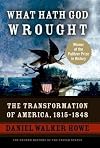
In WHAT HATH GOD WROUGHT, Daniel Howe has managed to create an animated verbal film depicting a still-new nation writhing in the throes of its growing pains, still undecided as to its political structure, the extent of its religious toleration, its attitude toward currency and banking, or even its desire for a standing army.
As immature boys reacting to growing testosterone levels, various national leaders, supported by a goodly (though never unanimous) part of the country, charged blindly show more ahead toward their various egocentric goals of driving earlier inhabitants from their lands to make way for the "superior" white, male-dominated culture and to take what lands they wished from inhabitants who could not defend them from avaricious greed. Similarly, as with youth who have not yet lived long enough to have learned from life's lessons the meanings of "equality," "freedom," and "humanity," the young nation felt few pangs of guilt over human slavery or the belittling subjugation of women.
Perhaps the most beneficial result of reading about the country as it was only about 180 years ago (not long at all in terms of human civilization) is the realization that the nation that most of us readers were born in was not as we see it today and that our public school history books may not have been adequate to teach us all that we should know about our collective younger self. Howe is very adept at showing us truths about our historical selves, and he is equally adept at using the English language effectively and, at times, entertainingly, to do so. With this book, the author has created a motion picture in words--shall we call it a documentary film in print?--to explain a three-decade period in the "growth spurt" of the United States (which, as one comes to realize, were not all that much united at the time).
Some reviewers criticize Howe's work as drawing unflattering parallels between old presidents such as Andrew Jackson and James Polk and modern heads of state such as George W. Bush. First, let's dispense with this specious criticism by noting that Howe draws no parallels. Nowhere in the entire book is there any comparison with contemporary figures. On the other hand, if unilateral, ill-defined, and inadequately-justified acts characterize presidential administrations that are 180 years apart, the reader is perfectly free to infer whatever comparisons may come to mind. And this does bring up another thought: whether to be reassured that the nation has endured despite the selfish and bullying acts of former presidents and weak congresses, or whether to be dismayed that more than a century-and-a-half of progress has not freed the country from self-serving leaders. Howe's historical recitation may well leave the reader very conscious of this ambiguity as well as with a better understanding of the rocky roads traversed (jerkily and painfully at times) by the nation in the decades preceding the Civil War.
Another thought that Howe has left with me is the high irony of having Andrew Jackson pictured on the $20 bill. Sandwiched in with his racist imperialism is the fact that Jackson steadfastly opposed "soft" money or allowing the Federal government to issue currency of any sort! This militarist, who needlessly picked a battle with British forces near New Orleans in 1815 after peace had been declared (okay, admittedly he wasn't aware that the U.S. and Britain were no longer at war), would find today's system of currency and of national banks and of the FDIC itself abhorrent and would most likely disavow any connection with them. I shall probably never look again at a $20 bill without thinking of Howe's book.
WHAT HATH GOD WROUGHT is a heavy tome of 855 pages not counting the bibliographical essay and index, at least in terms of physical weight. However, it is far from heavy in terms of readability. The little irony of Andrew Jackson and the $20 bill is but a small sample of the fascinating "factoids" that the reader gleans from this book. Is it a totally objective picture of the nation during the first half of the 19th century? No indeed. How utterly boring that would be! Besides, what artist even pretends at total objectivity? I believe that most artists will tell us that the true artistry of their creations lies in their interpretation of the subject matter. In this instance, Howe applies the artistry of his expertise as a professional writer and historian to bring what, in other hands, might have been dreary facts to vibrant life and to help the 21st century reader see, understand and appreciate the 19th century picture he is viewing. When I was a student, I generally found history a boring subject. Not so now with books such as this one, and I heartily recommend WHAT HATH GOD WROUGHT as a fascinating and instructive read for anyone who cares at all about how this nation came to be as it is today and who just might care to help it avoid some of the pitfalls that befell it in its youth. show less
As immature boys reacting to growing testosterone levels, various national leaders, supported by a goodly (though never unanimous) part of the country, charged blindly show more ahead toward their various egocentric goals of driving earlier inhabitants from their lands to make way for the "superior" white, male-dominated culture and to take what lands they wished from inhabitants who could not defend them from avaricious greed. Similarly, as with youth who have not yet lived long enough to have learned from life's lessons the meanings of "equality," "freedom," and "humanity," the young nation felt few pangs of guilt over human slavery or the belittling subjugation of women.
Perhaps the most beneficial result of reading about the country as it was only about 180 years ago (not long at all in terms of human civilization) is the realization that the nation that most of us readers were born in was not as we see it today and that our public school history books may not have been adequate to teach us all that we should know about our collective younger self. Howe is very adept at showing us truths about our historical selves, and he is equally adept at using the English language effectively and, at times, entertainingly, to do so. With this book, the author has created a motion picture in words--shall we call it a documentary film in print?--to explain a three-decade period in the "growth spurt" of the United States (which, as one comes to realize, were not all that much united at the time).
Some reviewers criticize Howe's work as drawing unflattering parallels between old presidents such as Andrew Jackson and James Polk and modern heads of state such as George W. Bush. First, let's dispense with this specious criticism by noting that Howe draws no parallels. Nowhere in the entire book is there any comparison with contemporary figures. On the other hand, if unilateral, ill-defined, and inadequately-justified acts characterize presidential administrations that are 180 years apart, the reader is perfectly free to infer whatever comparisons may come to mind. And this does bring up another thought: whether to be reassured that the nation has endured despite the selfish and bullying acts of former presidents and weak congresses, or whether to be dismayed that more than a century-and-a-half of progress has not freed the country from self-serving leaders. Howe's historical recitation may well leave the reader very conscious of this ambiguity as well as with a better understanding of the rocky roads traversed (jerkily and painfully at times) by the nation in the decades preceding the Civil War.
Another thought that Howe has left with me is the high irony of having Andrew Jackson pictured on the $20 bill. Sandwiched in with his racist imperialism is the fact that Jackson steadfastly opposed "soft" money or allowing the Federal government to issue currency of any sort! This militarist, who needlessly picked a battle with British forces near New Orleans in 1815 after peace had been declared (okay, admittedly he wasn't aware that the U.S. and Britain were no longer at war), would find today's system of currency and of national banks and of the FDIC itself abhorrent and would most likely disavow any connection with them. I shall probably never look again at a $20 bill without thinking of Howe's book.
WHAT HATH GOD WROUGHT is a heavy tome of 855 pages not counting the bibliographical essay and index, at least in terms of physical weight. However, it is far from heavy in terms of readability. The little irony of Andrew Jackson and the $20 bill is but a small sample of the fascinating "factoids" that the reader gleans from this book. Is it a totally objective picture of the nation during the first half of the 19th century? No indeed. How utterly boring that would be! Besides, what artist even pretends at total objectivity? I believe that most artists will tell us that the true artistry of their creations lies in their interpretation of the subject matter. In this instance, Howe applies the artistry of his expertise as a professional writer and historian to bring what, in other hands, might have been dreary facts to vibrant life and to help the 21st century reader see, understand and appreciate the 19th century picture he is viewing. When I was a student, I generally found history a boring subject. Not so now with books such as this one, and I heartily recommend WHAT HATH GOD WROUGHT as a fascinating and instructive read for anyone who cares at all about how this nation came to be as it is today and who just might care to help it avoid some of the pitfalls that befell it in its youth. show less
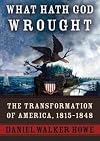
I would probably rate three stars the print edition. Narrator John Lescault is so monotone and rushed (I actually checked my app to make sure it wasn't sped up) that the textbook-like material lost any liveliness it had. Still, the subject matter is intensely interesting in appreciation the evolution of the United States. Historian Daniel Walker Howe illuminates the period from the battle of New Orleans to the end of the Mexican-American War, the transition out of the age of the Founding show more Fathers covering these presidencies:
James Madison (1809-1817)
James Monroe (1817-1825)
John Quincy Adams (1825-1829)
Andrew Jackson (1829-1837)
Martin Van Buren (1837-1841)
William Henry Harrison (1841)
John Tyler (1841-1845)
James K. Polk (1845-1849)
Zachary Taylor (1849-1850)
This was an era of revolutionary improvements in transportation (Jackson rode a horse into his populist and militarist reign of Indian Removal and left on a train) and communications (telegraph and daily newspapers) that accelerated the extension of the American empire. That acceleration is largely detailed in the merciless militarist imperialism of expansionist Polk who did more than Jefferson to extend the States. He examines the era's politics in an era when party politics evolved from reactionary organizations such as anti-Freemasons founding the Anti-Masonic Party in thw wake of assassinations and supposed conspiracies and the violent, nativist Know-Nothings and the factional Whig promoters of the American System. During this time there was a power of religion to shape many aspects of American life during this period, including slavery and antislavery, women's rights, and other reform movements. This is the era that led to -- relentlessly -- the Civil War and was thus the defined antebellum era between its idealistic founding and berfore its bloody maturity. show less
James Madison (1809-1817)
James Monroe (1817-1825)
John Quincy Adams (1825-1829)
Andrew Jackson (1829-1837)
Martin Van Buren (1837-1841)
William Henry Harrison (1841)
John Tyler (1841-1845)
James K. Polk (1845-1849)
Zachary Taylor (1849-1850)
This was an era of revolutionary improvements in transportation (Jackson rode a horse into his populist and militarist reign of Indian Removal and left on a train) and communications (telegraph and daily newspapers) that accelerated the extension of the American empire. That acceleration is largely detailed in the merciless militarist imperialism of expansionist Polk who did more than Jefferson to extend the States. He examines the era's politics in an era when party politics evolved from reactionary organizations such as anti-Freemasons founding the Anti-Masonic Party in thw wake of assassinations and supposed conspiracies and the violent, nativist Know-Nothings and the factional Whig promoters of the American System. During this time there was a power of religion to shape many aspects of American life during this period, including slavery and antislavery, women's rights, and other reform movements. This is the era that led to -- relentlessly -- the Civil War and was thus the defined antebellum era between its idealistic founding and berfore its bloody maturity. show less
What Hath God Wrought: The Transformation of America, 1815-1848 (The Oxford History of the United States, Vol. 5) by Daniel Walker Howe
A well written, comprehensive history of America between the War of 1812 and just before the Civil War. The book maintains a general chronological narrative, but chapters are organized thematically, alternating between politics, religion, and education/culture/technology. The chapter on literature was quite interesting; apparently, the United States only recognized U.S. copyright laws, so literature from Britain was printed en masse royalty free and almost pushed American authors out of the show more business entirely. This was cited as one of the reasons so many authors who are famous today (Poe, Melville, etc) died dirt-poor.
What I learned: everything old is new again. All of the outrages committed today, especially under the Bush administration, were perfected during this period of American history. If you think the Iraq War is a sham, just read the excuses James K. Polk used to declare war against Mexico and grab two-thirds of its territory. Then, as now, politicians and citizens were alarmed at these excesses in the use of executive power, but just as in today, these concerns didn't prevent anything.
I would have given this book a 4.5 if it was possible. It is definitely deserving of winning the 2008 Pulitzer Prize for history. show less
What I learned: everything old is new again. All of the outrages committed today, especially under the Bush administration, were perfected during this period of American history. If you think the Iraq War is a sham, just read the excuses James K. Polk used to declare war against Mexico and grab two-thirds of its territory. Then, as now, politicians and citizens were alarmed at these excesses in the use of executive power, but just as in today, these concerns didn't prevent anything.
I would have given this book a 4.5 if it was possible. It is definitely deserving of winning the 2008 Pulitzer Prize for history. show less
Lists
Awards


You May Also Like


Associated Authors
Statistics
- Works
- 13
- Also by
- 6
- Members
- 2,194
- Popularity
- #11,693
- Rating
- 4.0
- Reviews
- 32
- ISBNs
- 28
- Favorited
- 1