
Niviaq Korneliussen
Author of Last Night in Nuuk
About the Author
Works by Niviaq Korneliussen
Associated Works
Queer: A Collection of LGBTQ Writing from Ancient Times to Yesterday (2021) — Contributor, some editions — 64 copies
Tagged
Common Knowledge
- Birthdate
- 1990-01-27
- Gender
- female
- Nationality
- Denmark
Greenland - Birthplace
- Nanortalik, Greenland
- Map Location
- Greenland
Denmark
Members
Reviews
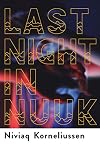
Last Night in Nuuk has been on my want-to-read list for YEARS, and I finally got a copy thanks to a friend on bookstagram.
Originally this was on my radar as a part of #WomenInTranslation. The author, Niviaq Korneliussen, is indigenous to Greenland, a country I have never read a book from previously.
Despite the many ways this book is literally foreign to me, it felt startlingly familiar in a lot of ways. Nuuk may be the capital of Greenland, but it is also a city with a population of only show more 17,000. Having gone to college in a town just a bit smaller than that, the lives of these five young adults, going from bar to house party, to another house party, running into the same people, everyone a friend of a friend of a friend, hooking up with someone who used to sleep with your roommate, well, let's just say I felt a certain kinship.
Each of the five characters has a chapter to tell their story, and each of those stories has partial overlap with the others. You get a brother and a sister. A woman who is the best friend of the brother and briefly a roommate of the sister. A woman the sister falls for, who turns out to be dating someone her roommate has the hots for. Each of them have a distinct voice with which they tell their story, one that could be diary entries, one told in a collection of letters, one that sounds more like the stream of consciousness of internal narration. The writing is a bit unconventional and it felt a bit jarring at first, but I soon fell under its spell.
And yes, this book is hella queer. All five of the characters are at least a little queer, though not all of them realize it at the beginning of their stories.
It felt very relatable. Very reminiscent of that time in your early twenties when you feel like you can redefine your entire life three times over in the course of a single afternoon.
Despite all the familiarity I still felt like I was learning about Greenland at the same time. A country I hate to admit I knew nearly nothing about before reading this, including that it is still somehow a territory of Denmark?
A fast read, I read this in pretty much a single sitting, and an absorbing one. show less
Originally this was on my radar as a part of #WomenInTranslation. The author, Niviaq Korneliussen, is indigenous to Greenland, a country I have never read a book from previously.
Despite the many ways this book is literally foreign to me, it felt startlingly familiar in a lot of ways. Nuuk may be the capital of Greenland, but it is also a city with a population of only show more 17,000. Having gone to college in a town just a bit smaller than that, the lives of these five young adults, going from bar to house party, to another house party, running into the same people, everyone a friend of a friend of a friend, hooking up with someone who used to sleep with your roommate, well, let's just say I felt a certain kinship.
Each of the five characters has a chapter to tell their story, and each of those stories has partial overlap with the others. You get a brother and a sister. A woman who is the best friend of the brother and briefly a roommate of the sister. A woman the sister falls for, who turns out to be dating someone her roommate has the hots for. Each of them have a distinct voice with which they tell their story, one that could be diary entries, one told in a collection of letters, one that sounds more like the stream of consciousness of internal narration. The writing is a bit unconventional and it felt a bit jarring at first, but I soon fell under its spell.
And yes, this book is hella queer. All five of the characters are at least a little queer, though not all of them realize it at the beginning of their stories.
It felt very relatable. Very reminiscent of that time in your early twenties when you feel like you can redefine your entire life three times over in the course of a single afternoon.
Despite all the familiarity I still felt like I was learning about Greenland at the same time. A country I hate to admit I knew nearly nothing about before reading this, including that it is still somehow a territory of Denmark?
A fast read, I read this in pretty much a single sitting, and an absorbing one. show less
Rating: 4* of five
The Publisher Says: A witty and fearless debut from a stunning new voice, Last Night in Nuuk is a work of daring invention about young life in Greenland. Through monologues, emails, and text exchanges, she brilliantly weaves together the coming of age of five distinct characters: a woman who’s “gone off sausage” (men); her brother, in a secret affair with a powerful married man; a lesbian couple confronting an important transition; and the troubled young woman who show more forces them all to face their fears. With vibrant imagery and daring prose, Korneliussen writes honestly about finding yourself and growing into the person you were meant to be. Praised for creating “its own genre” (Politiken, Denmark), Last Night in Nuuk is a brave entrance onto the literary scene and establishes her as a voice that cannot be ignored.
I RECEIVED A COPY AS A GIFT. THANK YOU.
My Review: I got one of these eight years ago from a friend now vanished into the internet's anonymity. I'd heard of it on Lambda Literary's reviews site.
There's always a novelty factor when someone from a place less frequented (to self-centered monoglot Anglophone readers) writes about their home place. It's new, it's fresh, it isn't a place you went on holiday in your teens. Extra exciting when the author's somewhere on the QUILTBAG spectrum and sets a queer story of five people in different gradations of outness in a place where that is not the first thing that comes to mind as a probability.
I had never once in my life considered the presence of QUILTBAG culture existing at all in Greenland.
A book of stories about different members of that community, deeply enmeshed in each others' lives, felt irresistible, and I was eager to dive in...then Life got in the way, my treebooks got relocated for me (much against my will), and it never happened until now. This is my last read of 2024. It's not a fat book so I thought it might be okay for me to hold.
Not a good choice. Much pain, three days to read under two hundred pages, an actual new gouty tophus formed from the exercise.
Yet I heartily enjoyed the novelty factor, I was on board with the use of this generation's epistolary style of texts and emails and social-media posts, since the characters are all young adults and this is their cultural landscape. Their landscape overlapped with mine of the same era in my life with its deeply predictable drunken sex and bewildering rage coming at them from unexpected places, aka bullying.
I don't think I'd've loved it more if I'd read it in '18. I didn't adore it now. I fell under its spell of novelty, enjoyed the reminder of how very powerful a force lust was in my past and how much fun it all was, and in the end was mildly glad I'd read it.
Won't pick it up again, will put it in the Little Free Library come spring, and might read the author's next book.
Equally might not.
Either outcome is fine. show less
The Publisher Says: A witty and fearless debut from a stunning new voice, Last Night in Nuuk is a work of daring invention about young life in Greenland. Through monologues, emails, and text exchanges, she brilliantly weaves together the coming of age of five distinct characters: a woman who’s “gone off sausage” (men); her brother, in a secret affair with a powerful married man; a lesbian couple confronting an important transition; and the troubled young woman who show more forces them all to face their fears. With vibrant imagery and daring prose, Korneliussen writes honestly about finding yourself and growing into the person you were meant to be. Praised for creating “its own genre” (Politiken, Denmark), Last Night in Nuuk is a brave entrance onto the literary scene and establishes her as a voice that cannot be ignored.
I RECEIVED A COPY AS A GIFT. THANK YOU.
My Review: I got one of these eight years ago from a friend now vanished into the internet's anonymity. I'd heard of it on Lambda Literary's reviews site.
There's always a novelty factor when someone from a place less frequented (to self-centered monoglot Anglophone readers) writes about their home place. It's new, it's fresh, it isn't a place you went on holiday in your teens. Extra exciting when the author's somewhere on the QUILTBAG spectrum and sets a queer story of five people in different gradations of outness in a place where that is not the first thing that comes to mind as a probability.
I had never once in my life considered the presence of QUILTBAG culture existing at all in Greenland.
A book of stories about different members of that community, deeply enmeshed in each others' lives, felt irresistible, and I was eager to dive in...then Life got in the way, my treebooks got relocated for me (much against my will), and it never happened until now. This is my last read of 2024. It's not a fat book so I thought it might be okay for me to hold.
Not a good choice. Much pain, three days to read under two hundred pages, an actual new gouty tophus formed from the exercise.
Yet I heartily enjoyed the novelty factor, I was on board with the use of this generation's epistolary style of texts and emails and social-media posts, since the characters are all young adults and this is their cultural landscape. Their landscape overlapped with mine of the same era in my life with its deeply predictable drunken sex and bewildering rage coming at them from unexpected places, aka bullying.
I don't think I'd've loved it more if I'd read it in '18. I didn't adore it now. I fell under its spell of novelty, enjoyed the reminder of how very powerful a force lust was in my past and how much fun it all was, and in the end was mildly glad I'd read it.
Won't pick it up again, will put it in the Little Free Library come spring, and might read the author's next book.
Equally might not.
Either outcome is fine. show less

Summary: Five young Greenlandic adults’ lives interweave as they discover their identities, fall in love, and betray each other.
Fia goes through the motions of a relationship with a long-term boyfriend she’s fallen out of love with. An encounter with Sara, a beautiful girl at a party ignites a new passion muddled with confusion.
Her brother Inuk’s life spirals after his friend Arnaq spills a secret that embroils him in public controversy and leaves him ostracized. He questions what it show more is to be a Greenlander, to be queer, and to forgive.
Arnaq lives to party, to drink, to fuck, and numb out her trauma. She’s falling in love with Sara’s partner, Ivik, and struggling to find happiness as her past clings to her.
Ivik wants to please Sara, he wants to make her feel loved, but he can’t stand to let her touch him. The divide between them grows wider as he struggles for an excuse to hide that he does not understand his own actions either.
Sara feels polluted. She feels abandoned. But slowly she realizes a truth that might destroy her relationship, but will let both her and Ivik find happiness and forgiveness.
Reflections: The writing style or the translation style was unique, a messy, poetic stream of consciousness. I came to enjoy it though it could be disorienting. Inuk’s chapter, which leaned more towards an abstract exploration of identity than the other characters’, worked the best with this style, in my opinion.
I was left with the weird sense of feeling my connection to the characters was both shallow and deep. The views of their lives were fairly narrow, limited primarily to the five main characters’ interactions with each other and to the parts of their lives concerned with relationships, sexuality, and partying. The narrative zoomed in on singular issues in each character’s life and got very personal, digging into their insecurities and darker thoughts, but the rest of who they were and what sort of lives they lived were neglected to the point the characters didn’t seem like full people.
Ivik’s acceptance of his trans identity was written oddly in that he does not realize or state that he is trans. But Sara gets this epiphany moment where she figures it out without him in the picture, decides with 100% certainty he is a man, completely flips how she thinks about him and their relationship based on this, and then brings it up with him for the first time (by straight up telling him what she’s decided he is). It’s not necessarily offensive – it can even be a nice thought that people sense that you are your true gender no matter what – just presented in a way that seems too simple and unquestioned. It’s treated like there’s some definitive marker of trans manhood and once you see it there’s no question (and no need for tact) when really a person could have had Ivik's experience and have been a woman or nonbinary or not ready for a label. The way Sara’s written then becomes uncomfortable as does the fact that Ivik never gets to give his own account of understanding/accepting his gender. show less
Fia goes through the motions of a relationship with a long-term boyfriend she’s fallen out of love with. An encounter with Sara, a beautiful girl at a party ignites a new passion muddled with confusion.
Her brother Inuk’s life spirals after his friend Arnaq spills a secret that embroils him in public controversy and leaves him ostracized. He questions what it show more is to be a Greenlander, to be queer, and to forgive.
Arnaq lives to party, to drink, to fuck, and numb out her trauma. She’s falling in love with Sara’s partner, Ivik, and struggling to find happiness as her past clings to her.
Ivik wants to please Sara, he wants to make her feel loved, but he can’t stand to let her touch him. The divide between them grows wider as he struggles for an excuse to hide that he does not understand his own actions either.
Sara feels polluted. She feels abandoned. But slowly she realizes a truth that might destroy her relationship, but will let both her and Ivik find happiness and forgiveness.
Reflections: The writing style or the translation style was unique, a messy, poetic stream of consciousness. I came to enjoy it though it could be disorienting. Inuk’s chapter, which leaned more towards an abstract exploration of identity than the other characters’, worked the best with this style, in my opinion.
I was left with the weird sense of feeling my connection to the characters was both shallow and deep. The views of their lives were fairly narrow, limited primarily to the five main characters’ interactions with each other and to the parts of their lives concerned with relationships, sexuality, and partying. The narrative zoomed in on singular issues in each character’s life and got very personal, digging into their insecurities and darker thoughts, but the rest of who they were and what sort of lives they lived were neglected to the point the characters didn’t seem like full people.
Ivik’s acceptance of his trans identity was written oddly in that he does not realize or state that he is trans. But Sara gets this epiphany moment where she figures it out without him in the picture, decides with 100% certainty he is a man, completely flips how she thinks about him and their relationship based on this, and then brings it up with him for the first time (by straight up telling him what she’s decided he is). It’s not necessarily offensive – it can even be a nice thought that people sense that you are your true gender no matter what – just presented in a way that seems too simple and unquestioned. It’s treated like there’s some definitive marker of trans manhood and once you see it there’s no question (and no need for tact) when really a person could have had Ivik's experience and have been a woman or nonbinary or not ready for a label. The way Sara’s written then becomes uncomfortable as does the fact that Ivik never gets to give his own account of understanding/accepting his gender. show less
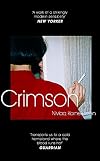
Crimson by Niviaq Korneliussen is an intense, somewhat experimental read that pays dividends. It’s a slim book that punches above its weight when it comes to the complexity of emotion. Told from the point of view of five Greenlanders, it deals with topics such as family, alcoholism and drinking, relationships and sexuality. The book uses various formats, such as text messages and letters to tell the story from different viewpoints.
I can’t say I know much about Greenland other than where show more it is on the map and Crimson offers some insight. It’s a small place where you will eventually run into people you know whether you like it or not. There doesn’t appear a lot for these young adults to do at night except drink and party at various houses and clubs. They talk about leaving but only one of them does, finding life in other countries to be foreign and alienating. These themes are universal no matter where you live. Relationships and sexuality are another closely explored theme in the story. Fia is with a man, but is not enjoying the relationship. When she sees Sara, it’s love at first sight. But Sara’s in a relationship with another woman, Ivik. Ivik is struggling with identity – is she a woman? Why does Ivik not want to be touched? Sara too is struggling in the relationship, with effects on her mood. Meanwhile, Fia’s brother has left Greenland after a scandal involving a politician on social media. Denmark is not Greenland, which is great – but it’s not home either. Yet with distance between him and his country, he can see both the problems with Greenland and the secret he’s been hiding from himself. Arnaq is the one who brought about his exile, but she’s hiding her guilt and feelings through excessive drinking, which worries her that she will be like her parents.
Crimson is a powerful, concentrated read that communicates these themes in less than 200 pages. The writing style changes with each chapter/story, told from the point of view of another character. Sometimes it’s more difficult to understand than others. For me, Inuk’s story was difficult at first as I didn’t know who he was and why he was leaving the country. His communication was frenzied, throwing big ideas into every sentence. But as he calmed down, his prose became slower and more logical (plus he remembered to name his sister in his letters). Sometimes the prose seemed reflective of what the character was doing. During her story, Arnaq has the kind of weekend not many people can manage – repeated parties, drinking and staying up for prolonged periods. Her story becomes disjointed and disoriented as she plows through drunkenness, sleepiness, the hangover from hell and then up to do it all over again.
It’s a great talent to be able to communicate this through prose alone. I’ll be hoping that Niviaq Korneliussen’s next work is translated into English.
Thank you to Hachette for the copy of this book. My review is honest.
http://samstillreading.wordpress.com show less
I can’t say I know much about Greenland other than where show more it is on the map and Crimson offers some insight. It’s a small place where you will eventually run into people you know whether you like it or not. There doesn’t appear a lot for these young adults to do at night except drink and party at various houses and clubs. They talk about leaving but only one of them does, finding life in other countries to be foreign and alienating. These themes are universal no matter where you live. Relationships and sexuality are another closely explored theme in the story. Fia is with a man, but is not enjoying the relationship. When she sees Sara, it’s love at first sight. But Sara’s in a relationship with another woman, Ivik. Ivik is struggling with identity – is she a woman? Why does Ivik not want to be touched? Sara too is struggling in the relationship, with effects on her mood. Meanwhile, Fia’s brother has left Greenland after a scandal involving a politician on social media. Denmark is not Greenland, which is great – but it’s not home either. Yet with distance between him and his country, he can see both the problems with Greenland and the secret he’s been hiding from himself. Arnaq is the one who brought about his exile, but she’s hiding her guilt and feelings through excessive drinking, which worries her that she will be like her parents.
Crimson is a powerful, concentrated read that communicates these themes in less than 200 pages. The writing style changes with each chapter/story, told from the point of view of another character. Sometimes it’s more difficult to understand than others. For me, Inuk’s story was difficult at first as I didn’t know who he was and why he was leaving the country. His communication was frenzied, throwing big ideas into every sentence. But as he calmed down, his prose became slower and more logical (plus he remembered to name his sister in his letters). Sometimes the prose seemed reflective of what the character was doing. During her story, Arnaq has the kind of weekend not many people can manage – repeated parties, drinking and staying up for prolonged periods. Her story becomes disjointed and disoriented as she plows through drunkenness, sleepiness, the hangover from hell and then up to do it all over again.
It’s a great talent to be able to communicate this through prose alone. I’ll be hoping that Niviaq Korneliussen’s next work is translated into English.
Thank you to Hachette for the copy of this book. My review is honest.
http://samstillreading.wordpress.com show less
Lists
Awards


You May Also Like


Associated Authors
Statistics
- Works
- 2
- Also by
- 2
- Members
- 299
- Popularity
- #78,482
- Rating
- 3.5
- Reviews
- 24
- ISBNs
- 33
- Languages
- 10