
Namwali Serpell
Author of The Old Drift
About the Author
Namwali Serpell has won the 2015 Caine Prize for African Writing for her short story 'The Sack'. Published in the collection Africa39: New Writing from Africa South of the Sahara. (Bowker Author Biography)
Works by Namwali Serpell
Muzungu : short story 1 copy
Associated Works
New Daughters of Africa: An International Anthology of Writing by Women of African Descent (2019) — Contributor — 116 copies, 1 review
Lusaka Punk and Other Stories: The Caine Prize for African Writing 2015 (2015) — Contributor — 17 copies, 1 review
The Daily Assortment of Astonishing Things and Other Stories: The Caine Prize for African Writing 2016 (2016) — Contributor — 15 copies
Tagged
Common Knowledge
- Legal name
- Serpell, Carla Namwali
- Birthdate
- 1980
- Gender
- female
- Education
- Yale University
Harvard University - Awards and honors
- Rona Jaffe Foundation Writers’ Award (2011)
- Nationality
- Zambia (birth)
USA (naturalized) - Birthplace
- Lusaka, Zambia
- Places of residence
- Baltimore, Maryland, USA
- Map Location
- Zambia
Members
Reviews

https://fromtheheartofeurope.eu/the-old-drift-by-namwali-serpell/
I thought The Old Drift was tremendous. It’s mostly about the interlinking lives of three families in Zambia, mostly in Lusaka but starting at the Victoria Falls, over the decades from the early twentieth century to the very near future, in a timeline that diverges slight from ours in terms of technology. I don’t think I’d ever read anything much about Zambia before, and this really conveyed the spirit of a young and also show more old country, with European and Asian inputs to an African culture. It’s quite a tech-oriented story as well, but the core is the vividly imagined relationships and environment of the characters, with different points of view sympathetically given. It stretched my mind in an unexpected way. Recommended. show less
I thought The Old Drift was tremendous. It’s mostly about the interlinking lives of three families in Zambia, mostly in Lusaka but starting at the Victoria Falls, over the decades from the early twentieth century to the very near future, in a timeline that diverges slight from ours in terms of technology. I don’t think I’d ever read anything much about Zambia before, and this really conveyed the spirit of a young and also show more old country, with European and Asian inputs to an African culture. It’s quite a tech-oriented story as well, but the core is the vividly imagined relationships and environment of the characters, with different points of view sympathetically given. It stretched my mind in an unexpected way. Recommended. show less
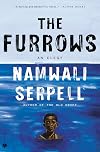
"...people do not die for us immediately, but remain bathed in a sort of aura of life which bears no relation to true immortality but through which they continue to occupy our thoughts in the same way as when they were alive."
This quote from Proust opens this elegiac book, titled as an elegy on the cover too, and as if to reiterate, the story begins: I don't want to tell you what happened. I want to tell you how it felt.
Cassandra is twelve when her eight year old brother, Wayne, dies. What show more follows is a lifetime of mourning; what remains of life in the aftermath of tragedy and the enshrouding grief.
The first half of this book is narrated by Cassandra recounting the tragic death, the uncertainty and hopefulness that follows when the body is missing, and the ways a family reels and breaks. Cassandra sees her brother in others as she grows into an adult and in ways that's startling to the reader.
The second half is mostly narrated by a man that Cassandra meets also named Wayne. His connection to Cassandra's deceased brother, even when he explains it, is never certain and parts of the story read like Dostoevsky's The Double, when it seems like one of the Waynes is a shadow of the other. Also, parts of the book are reminiscent of Morrison's Belovedwhere Sethe believes the young woman named Beloved is her daughter returned to her . It's almost as though the writer is leaving the door slightly ajar for the reader to explore possibility.
This is a dizzying tale and the book clearly frustrated some readers, for a reason, and has been harshly reviewed, in my opinion, and misunderstood. Reality is bent and the reader, using myself here, doesn't completely understand what is happening most times. Prose is expected to elucidate. Where poetry rises heavenward, prose is supposedly grounded. Which I think explains some of the frustration with the other reviews of the book I've seen.
But this book already described itself as an elegy, and not a novel. The lines: "I don't want to tell you what happened. I want to tell you how it felt." recur like a refrain, perhaps to remind the reader and even assure them that the feeling of grief and loss is more important than plot. Undoubtedly, I've not understood what happens in this book, not completely anyway, which can be very annoying for the reader as we don't like to feel inadequate, but I've understood how it felt. The beautiful prose and clear and brilliantly written voices carried me while everything else jostled and tumbled (this is truly well organised chaos in the form of a book), and this is a confounding read filled with uncertainties. But what's certain is that it's a smart book, Serpell is clearly an intelligent person and writer, and that it is a challenging but good book. show less
This quote from Proust opens this elegiac book, titled as an elegy on the cover too, and as if to reiterate, the story begins: I don't want to tell you what happened. I want to tell you how it felt.
Cassandra is twelve when her eight year old brother, Wayne, dies. What show more follows is a lifetime of mourning; what remains of life in the aftermath of tragedy and the enshrouding grief.
The first half of this book is narrated by Cassandra recounting the tragic death, the uncertainty and hopefulness that follows when the body is missing, and the ways a family reels and breaks. Cassandra sees her brother in others as she grows into an adult and in ways that's startling to the reader.
The second half is mostly narrated by a man that Cassandra meets also named Wayne. His connection to Cassandra's deceased brother, even when he explains it, is never certain and parts of the story read like Dostoevsky's The Double, when it seems like one of the Waynes is a shadow of the other. Also, parts of the book are reminiscent of Morrison's Beloved
This is a dizzying tale and the book clearly frustrated some readers, for a reason, and has been harshly reviewed, in my opinion, and misunderstood. Reality is bent and the reader, using myself here, doesn't completely understand what is happening most times. Prose is expected to elucidate. Where poetry rises heavenward, prose is supposedly grounded. Which I think explains some of the frustration with the other reviews of the book I've seen.
But this book already described itself as an elegy, and not a novel. The lines: "I don't want to tell you what happened. I want to tell you how it felt." recur like a refrain, perhaps to remind the reader and even assure them that the feeling of grief and loss is more important than plot. Undoubtedly, I've not understood what happens in this book, not completely anyway, which can be very annoying for the reader as we don't like to feel inadequate, but I've understood how it felt. The beautiful prose and clear and brilliantly written voices carried me while everything else jostled and tumbled (this is truly well organised chaos in the form of a book), and this is a confounding read filled with uncertainties. But what's certain is that it's a smart book, Serpell is clearly an intelligent person and writer, and that it is a challenging but good book. show less
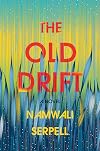
I had no idea at all what to expect when I received an advance copy of The Old Drift, but I am beyond happy; I am thrilled to have read it. This is a story that just pulls you in until you are completely immersed. To call it amazing and breathtaking doesn’t do it justice, and to say it is just the story of three multicultural families and the history of a country in Africa is an understatement. It's a sprawling saga, like a mystery you can’t wait to solve, a ball of string that keeps show more unwinding or an onion with many, many layers. It’s six degrees of separation at its best – the story goes from person to person to person and location to location, but all are cleverly linked. You suddenly look up and go “Oh!” because it’s that person or that place or that event again.
The writing is magnificent. The Old Drift is a tale of a changing world, a changing nation, a changing people, with all the love, longing, desire, and loss that go with it. The cruelties and the exploitation, not just by the colonials, but by each other, are shocking. You get so involved with the characters that you want to step in and stop the bad times, let their hopes and dreams come true.
This history was at once so foreign to me yet at the same time so familiar, so compellingly filled with the music and scents and sensations of Zambia brought to life by author Namwali Serpell. A cloud of sadness and futility hang over everything, yet hope, determination and courage push through. It’s sometimes magical, sometimes horrifying. It’s history, fairytale, romance and science fiction all rolled into one satisfying story. This is not a book you read lightly, not one you read to escape, but a book you won’t soon forget. show less
The writing is magnificent. The Old Drift is a tale of a changing world, a changing nation, a changing people, with all the love, longing, desire, and loss that go with it. The cruelties and the exploitation, not just by the colonials, but by each other, are shocking. You get so involved with the characters that you want to step in and stop the bad times, let their hopes and dreams come true.
This history was at once so foreign to me yet at the same time so familiar, so compellingly filled with the music and scents and sensations of Zambia brought to life by author Namwali Serpell. A cloud of sadness and futility hang over everything, yet hope, determination and courage push through. It’s sometimes magical, sometimes horrifying. It’s history, fairytale, romance and science fiction all rolled into one satisfying story. This is not a book you read lightly, not one you read to escape, but a book you won’t soon forget. show less
This novel is long and complex. At first, it feels like a collection of short stories, loosely connected by location - the Old Drift, a section of the Zambezi river - but over the generations all of the characters' lives become intertwined. In some ways, the book starts about 3 generations before the story actually begins, but that's because it's really a story about Zambia and colonialism more than a story about any individuals.
It reminds me a lot of Overstory: in both books, we are show more introduced to a bunch of characters who don't seem to have anything to do with each other, but whose stories eventually become tightly connected, and in both books, we realize in the very last pages that humans weren't really the main characters at all.
Serpell's writing is beautiful and engaging: with a less-skilled author, I would have wanted this book to be half as long, but her writing is so gorgeous, her characters so real, that I could have kept reading for another 600 pages.
Speaking of characters..... there are a lot of them. Enough that it can be hard to keep them all straight. Naturally some of them are better-developed than others, but Serpell is one of those writers who can evoke an entire person with a few sentences. Ultimately, though, the humans that are the focus of the events of the story aren't really the main characters. The story is really about Zambia and colonialism, from the racism of the first white explorers to the racism of the Chinese scientists who use Zambians as human guinea pigs for AIDS medications, to the vague outside political and technological forces who give Zambians technology just so they can control them.
The end of the book is at once exhilarating, ambitious, and a bit unsatisfying. There's a lot to chew on here, and ultimately it's hard to be sure what the reader's big takeaway should be. Then again, this book defies all genres and expectations, so that shouldn't be a surprise.
I'm going to be thinking about this book for weeks, and I can't wait for Serpell to write another novel. show less
It reminds me a lot of Overstory: in both books, we are show more introduced to a bunch of characters who don't seem to have anything to do with each other, but whose stories eventually become tightly connected, and in both books, we realize in the very last pages that humans weren't really the main characters at all.
Serpell's writing is beautiful and engaging: with a less-skilled author, I would have wanted this book to be half as long, but her writing is so gorgeous, her characters so real, that I could have kept reading for another 600 pages.
Speaking of characters..... there are a lot of them. Enough that it can be hard to keep them all straight. Naturally some of them are better-developed than others, but Serpell is one of those writers who can evoke an entire person with a few sentences. Ultimately, though, the humans that are the focus of the events of the story aren't really the main characters. The story is really about Zambia and colonialism, from the racism of the first white explorers to the racism of the Chinese scientists who use Zambians as human guinea pigs for AIDS medications, to the vague outside political and technological forces who give Zambians technology just so they can control them.
The end of the book is at once exhilarating, ambitious, and a bit unsatisfying. There's a lot to chew on here, and ultimately it's hard to be sure what the reader's big takeaway should be. Then again, this book defies all genres and expectations, so that shouldn't be a surprise.
I'm going to be thinking about this book for weeks, and I can't wait for Serpell to write another novel. show less
Lists
Awards


You May Also Like


Associated Authors
Statistics
- Works
- 8
- Also by
- 12
- Members
- 1,287
- Popularity
- #19,915
- Rating
- 3.5
- Reviews
- 35
- ISBNs
- 35
- Languages
- 4