
Takashi Hiraide
Author of The Guest Cat
About the Author
Takashi Hiraide was born in Moji, Japan in 1950. He has published several volumes of poetry. His first novel, The Guest Cat, won Japan's Kiyama Shohei Literary Award. (Bowker Author Biography)
Works by Takashi Hiraide
Associated Works
Family Resemblance: An Anthology and Exploration of 8 Hybrid Literary Genres (2015) — Contributor — 25 copies
現代詩手帖 1989年 09月号 特集=現代詩の冒険――詩的実験の40年 — Contributor — 1 copy
るしおる (41) — Contributor — 1 copy
るしおる (44) — Contributor — 1 copy
るしおる (46) — Contributor — 1 copy
るしおる (47) — Contributor — 1 copy
るしおる (50) — Contributor — 1 copy
るしおる (51) — Contributor — 1 copy
るしおる (52) — Contributor — 1 copy
るしおる (54) — Contributor — 1 copy
るしおる (40) — Contributor — 1 copy
るしおる (39) — Contributor — 1 copy
るしおる (38) — Contributor — 1 copy
るしおる (36) — Contributor — 1 copy
るしおる (35) — Contributor — 1 copy
るしおる (34) — Contributor — 1 copy
るしおる (33) — Contributor — 1 copy
るしおる (32) — Contributor — 1 copy
日本の詩101年 1890-1990 新潮 1990年11月号臨時増刊 — Contributor — 1 copy
Tagged
Common Knowledge
- Canonical name
- Hiraide, Takashi
- Legal name
- 隆, 平出
- Other names
- Hiraide, Takashi
- Birthdate
- 1950-11-21
- Gender
- male
- Education
- Hitotsubashi University
- Relationships
- 道代, 河野 (wife)
- Nationality
- Japan
- Birthplace
- Moji, Fukuoka, Japan
- Associated Place (for map)
- Fukuoka, Japan
Members
Reviews
“Observation is at its core an expression of love which doesn’t get caught up in sentiment.”
From first page’s delicate description of an optical illusion seen on a frosted window pane, this novella painstakingly documents minute and admiring observations, one object at a time. Nature features strongly: the cat, trees, butterflies, insects, but also windows and boundaries. The focus is on poetic beauty in the moment (like haiku), without shadow of sentiment, even when there is good show more cause for strong emotion.
I’m not a fan of sentimentality, but the narrator’s precise and clinical prose gave the impression of detachment, even when the words themselves suggested otherwise. I think that is why I was not as emotionally engaged as I wanted to be: I was looking at the patterns of his story as shadows through a knothole onto a frosted window pane, “like a dim movie screen”.
Loving the Unattainable
Cats tend to own people, rather than the other way round.
The main love object is Chibi: un- or not-quite-attainable because she’s a cat, exacerbated by her living with neighbours the other side of the alley. The narrator and his wife are her secondary humans.
All the other attachments (apart from the narrator to his wife) have a degree of unattainability as well. There is a hole at the heart, in the heart, of this little book, and maybe in me as well.
“By moving away, we also would be joining sides with those who forget.”
But maybe that’s for the best - especially if your love is without sentiment, or is unattainable.
Why Not More Stars?
There is beautiful imagery, and there are recurring themes (the guest cat, and the narrator living in the guesthouse of a larger estate; boundaries; windows; a zelkova tree; insects, and lightning), and Chibi is virtually mute.
I felt there was significance over the horizon, just beyond my awareness and understanding, grasp though I did for it.
The final chapter was unexpected and a little odd:disregard or reconsider the timeline and circumstances of Chibi’s death, half a book ago . Huh?
It’s also worth mentioning that there is not as much about Chibi as hardcore felinophiles might want. And for some strange reason, we’re told that the narrator’s wife “felt very close to animals” - except that she “viscerally disliked”... ducks!
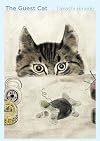
On the other hand, I love the picture on the cover, and the small format and thick paper of my copy felt delightfully suitable.
Quotes
• “Its branches... spread unhindered [and] extended their luxuriant fingers… providing all with the blessing of its leafy protection.”
• “The cat’s manner of rejection was like cold, white light.”
• Chibi sleeping “like a talisman curled gently in the shape of a comma and dug up from a prehistoric archaeological site - a deep sense of happiness arrived, as if the house itself had dreamed this scene.”
• Chibi entered their lives “as if a silken opening in a fabric had been continuously moistened and stretched… But at the same time… something else was closing in and pressing itself against that tendency.” Fate.
• “Everything timed to the rhythm of illumination and concealment” - in a chapter almost entirely devoted to windows.
• “The full moon shone through the glass eaves above us with their slits like a bamboo screen, so that the image was drawn out, flowing there like a milky white river.”
• A dragonfly “took flight then and approached the stream of [hose] water in midair, kissing it like a precision machine.”
• “It seemed as if the boundary between the two households had itself come into question.”
• “How much we see through colored glasses” - but we only realise when it’s too late. (This is about everything looking “dreary and drab” after loss.)
• “The word ‘to grieve’ or ‘lament’ in Japanese is actually made up of two different kanji characters - ‘sadness’ and ‘resentment’. show less
From first page’s delicate description of an optical illusion seen on a frosted window pane, this novella painstakingly documents minute and admiring observations, one object at a time. Nature features strongly: the cat, trees, butterflies, insects, but also windows and boundaries. The focus is on poetic beauty in the moment (like haiku), without shadow of sentiment, even when there is good show more cause for strong emotion.
I’m not a fan of sentimentality, but the narrator’s precise and clinical prose gave the impression of detachment, even when the words themselves suggested otherwise. I think that is why I was not as emotionally engaged as I wanted to be: I was looking at the patterns of his story as shadows through a knothole onto a frosted window pane, “like a dim movie screen”.
Loving the Unattainable
Cats tend to own people, rather than the other way round.
The main love object is Chibi: un- or not-quite-attainable because she’s a cat, exacerbated by her living with neighbours the other side of the alley. The narrator and his wife are her secondary humans.
All the other attachments (apart from the narrator to his wife) have a degree of unattainability as well. There is a hole at the heart, in the heart, of this little book, and maybe in me as well.
“By moving away, we also would be joining sides with those who forget.”
But maybe that’s for the best - especially if your love is without sentiment, or is unattainable.
Why Not More Stars?
There is beautiful imagery, and there are recurring themes (the guest cat, and the narrator living in the guesthouse of a larger estate; boundaries; windows; a zelkova tree; insects, and lightning), and Chibi is virtually mute.
I felt there was significance over the horizon, just beyond my awareness and understanding, grasp though I did for it.
The final chapter was unexpected and a little odd:
It’s also worth mentioning that there is not as much about Chibi as hardcore felinophiles might want. And for some strange reason, we’re told that the narrator’s wife “felt very close to animals” - except that she “viscerally disliked”... ducks!
On the other hand, I love the picture on the cover, and the small format and thick paper of my copy felt delightfully suitable.
Quotes
• “Its branches... spread unhindered [and] extended their luxuriant fingers… providing all with the blessing of its leafy protection.”
• “The cat’s manner of rejection was like cold, white light.”
• Chibi sleeping “like a talisman curled gently in the shape of a comma and dug up from a prehistoric archaeological site - a deep sense of happiness arrived, as if the house itself had dreamed this scene.”
• Chibi entered their lives “as if a silken opening in a fabric had been continuously moistened and stretched… But at the same time… something else was closing in and pressing itself against that tendency.” Fate.
• “Everything timed to the rhythm of illumination and concealment” - in a chapter almost entirely devoted to windows.
• “The full moon shone through the glass eaves above us with their slits like a bamboo screen, so that the image was drawn out, flowing there like a milky white river.”
• A dragonfly “took flight then and approached the stream of [hose] water in midair, kissing it like a precision machine.”
• “It seemed as if the boundary between the two households had itself come into question.”
• “How much we see through colored glasses” - but we only realise when it’s too late. (This is about everything looking “dreary and drab” after loss.)
• “The word ‘to grieve’ or ‘lament’ in Japanese is actually made up of two different kanji characters - ‘sadness’ and ‘resentment’. show less
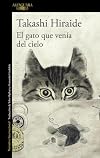
Definitivamente, la literatura japonesa sobre gatos NO es sobre gatos. Los felinos no son más que una excusa, como mucho un disparador para algo más. «Vine por las mascotas, me quedé por los temas subyacentes»: una trampa perfecta.
En este caso, el gato representa un cambio, pero también una nostalgia infinita. «[b:El gato que venía del cielo|22702917|El gato que venía del cielo|Takashi show more Hiraide|https://i.gr-assets.com/images/S/compressed.photo.goodreads.com/books/1404998088l/22702917._SY75_.jpg|24515019]» trata en realidad sobre la vida cotidiana de una pareja, con sus pequeños tedios y alegrías, en el Japón de los '80s.
La prosa del autor es exquisita. Es una novela tremendamente costumbrista, en la que a cada paso que dan los protagonistas se va pintando un cuadro. Esa es la sensación que me genera cada descripción, cada suceso. A veces, incluso, se le va un poco la mano a Hiraide con el nivel de detalle; llegando a ser apabullante cuando habla sobre la disposición de las casas en la vecindad donde ocurre el encuentro con el animalito que da título al libro.
Y como dije, la nostalgia. Es vivir en un mundo perfecto, pero a sabiendas de que ya empieza a desmoronarse, a caer; como una espiral creciente que todo lo envuelve, y que tarde o temprano termina con todo lo que es bello en nuestro mundo. Pero en una forma muy sutil, lo que tal vez sea aún más cruel. show less
Szemlélődős könyv. És mivel jobbára egy macskát szemlélnek benne, macskarajongóknak különösen ajánlott. Én macskarajongónak nem mondanám magam – egy kölcsönmacskánk van, bizonyos Bence, aki időnként bejön a lakásba kunyerálni, meg pompázatos biodíszletként szunyálni szunyálásra amúgy tökéletesen alkalmatlan helyeken –, de még engem is lenyűgözött az a háztáji Attenborough-ra hajazó higgadt aprólékosság, amivel a szerző figyeli ezt a Csibi show more nevezetű jószágot. Meg úgy nagyjából mindent: európai szemmel – mert nekem igenis európai szemem van, vállalom! – teljesen szokatlan az a már-már vallásos áhítat, ahogy a létezés legapróbb momentumai is (egy szitakötő, vagy akár egy fadarab) mintegy valós méretük többszörösére nőnek ebben a szövegben… Az embernek az a benyomása, hogy mintha valami fontosabb dolog helyett beszélnének macskákról meg szitakötőkről… holott erről szó sincs. Mert nincs olyan, hogy csak macska, vagy csak szitakötő. Macska van, meg szitakötő, és bennük tükröződik a szemlélő a maga teljességében, a maga egész világával. Ő maga a szöveg, bármiről is szóljon. Kellemesen meditatív olvasmány – de jó pillanatban kell elkapni. show less
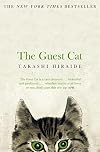
This is a thoughtful, philosophical tale about the impact an animal can have on people, even when they don't own the animal. It captures the aloof exploitative nature of a cat who charms a couple with its independence and seeming unavailability. When the cat disappears from their lives, it leaves them bereft and causes friction between them and their neighbour, the cat's true owner. Set on the cusp of change, from Shōwa to Heisei, from economic bubble to slump, it inhabits a calm space show more bound by feline comings and goings. show less
Lists
Awards

You May Also Like


Associated Authors
Statistics
- Works
- 10
- Also by
- 29
- Members
- 1,522
- Popularity
- #16,892
- Rating
- 3.5
- Reviews
- 73
- ISBNs
- 56
- Languages
- 14
- Favorited
- 1