
Noël Riley Fitch
Author of Appetite for Life: The Biography of Julia Child
About the Author
Image credit: Noël Riley Fitch
Works by Noël Riley Fitch
Sylvia Beach and the Lost Generation: A History of Literary Paris in the Twenties and Thirties (1983) 588 copies, 6 reviews
Faith and imagination: Essays on evangelicals and literature honoring Marian B. Washburn (1985) 2 copies
The 1959 Oasis 1 copy
Associated Works
Tagged
Common Knowledge
- Canonical name
- Fitch, Noël Riley
- Birthdate
- 1937-12-24
- Gender
- female
- Education
- Washington State University (Ph.D.)
- Nationality
- USA
- Birthplace
- New Haven, Connecticut, USA
- Places of residence
- New Haven, Connecticut, USA (birth)
Boise, Idaho, USA
Quincy, Massachusetts, USA
Pasadena, California, USA
La Jolla, California, USA
Los Angeles, California, USA (show all 9)
Paris, France
New York, New York, USA
Los Angeles, California, USA - Map Location
- USA
Members
Reviews

A delightful look at the life of one of America's greatest cooks, Julia Child. The title of the book is an apt one, as Julia lived a rich, full life, just like her cooking. After attending Smith College, she began working for the OSS, and was privy to many top secret US intelligence documents. After her marriage to Paul Child, she took up an interest in cooking, which spawned a career.
The book is well-written. For me, the most interesting parts where Julia's time in France, the writing of show more her first cookbook, and the filming of her first TV series, The French Chef. Anyone with an interest in this larger than life lady will enjoy this book. show less
The book is well-written. For me, the most interesting parts where Julia's time in France, the writing of show more her first cookbook, and the filming of her first TV series, The French Chef. Anyone with an interest in this larger than life lady will enjoy this book. show less
Sylvia Beach and the Lost Generation: A History of Literary Paris in the Twenties and Thirties by Noël Riley Fitch
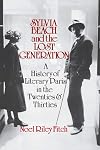
Just before reading this book I read a history of New York in the 1920's, roughly the same period as this book. That book suggested the changes that took place in the New York of the Roaring Twenties essentially defined modern America. Before me sits a book which in its own way refutes that hypothesis. Literary Paris of the 1920's encompassed characters as diverse as James Joyce, Andre Gide, Ernest Hemingway, composers like Igor Stravinsky (whose biggest works debuted in the decade before show more actually), and the Surrealists. Modernism graduated in the 1920's in Paris, not New York. The heroine of this book, Syvia Beach, bend over backward to bring Joyce's epic Ulysses, into the world. And being James Joyce's publisher was no picnic, either. Thank goodness for Beach's tireless efforts to promote her literary friends, and lend some of them a helping hand fleeing the Nazi's after the armistice France signed with Germany. Some owed her their lives. I've walked by the book store in Paris that bears the name of her original shop, Shakespeare & Company. I'm glad I know so much more about the amazing woman who created the original store. show less
Sylvia Beach and the Lost Generation: A History of Literary Paris in the Twenties and Thirties by Noël Riley Fitch

Exhaustive almost to the point of tedium, Fitch’s work covers much of the same ground as Shari Benstock’s Women of the Left Bank and the documentary “Paris was a Woman.” Fitch’s approach, however, is the more banal one. Of course Sylvia Beach was dedicated to literature, etc., etc., blah, blah, blah. That should go without saying (rather than saying it over 400 pages). What explains Beach’s work at that particular time and place is better covered by Benstock—women of the Left show more Bank were drawn to Paris by a freedom that allowed them to take the other women in their lives as their muse. In this case Beach’s muse, Adrienne Monnier, goes a long way toward explaining Shakespeare and Company. This is an aspect that is hastily glossed over by Fitch, who sums this up in one line by saying “Eros channeled into sorority yielded both personal and literary fruits.” “Fruits”…ha! Said with humor, that would be a pun almost worthy of Beach herself; unfortunately, Fitch uses it as a whitewash to cover the likes of Beach and Monnier, Stein and Toklas, Flanner and Solano, Barney and every woman on the face of the earth…take your pick.
If you’re interested in who borrowed what book from Shakespeare and Company on which particular day, and if you delight in hearing just how big of an ass James Joyce was, take a gander at this book. It is thoroughly researched on the day in and day out history of Shakespeare and Company. Direct all other inquiries to Benstock’s Women of the Left Bank and “Paris was a Woman.” (There is also Andrea Weiss’ Paris was a Woman: Portraits form the Left Bank, which I’m guessing, sight unseen, is probably dynamite.) show less
If you’re interested in who borrowed what book from Shakespeare and Company on which particular day, and if you delight in hearing just how big of an ass James Joyce was, take a gander at this book. It is thoroughly researched on the day in and day out history of Shakespeare and Company. Direct all other inquiries to Benstock’s Women of the Left Bank and “Paris was a Woman.” (There is also Andrea Weiss’ Paris was a Woman: Portraits form the Left Bank, which I’m guessing, sight unseen, is probably dynamite.) show less
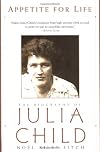
500 pages of Julia Child is a lot. Ms Child is worth 500 pages, though, and she offered up plenty of written material to base the book on, so it's an interesting read.
I'd say that unless you're really, really into Julia, reading "My Life if France" is enough. In fact, if you haven't read that one, you should.
Even though I'd already read about that portion of her life, I found the bits about her learning to cook and researching the recipes for Mastering the Art of French Cooking to be the show more most interesting part of the book. show less
I'd say that unless you're really, really into Julia, reading "My Life if France" is enough. In fact, if you haven't read that one, you should.
Even though I'd already read about that portion of her life, I found the bits about her learning to cook and researching the recipes for Mastering the Art of French Cooking to be the show more most interesting part of the book. show less
Lists
Modernism (1)
You May Also Like


Associated Authors
Statistics
- Works
- 11
- Also by
- 2
- Members
- 1,743
- Popularity
- #14,755
- Rating
- 3.7
- Reviews
- 23
- ISBNs
- 40
- Languages
- 4
- Favorited
- 1