

William Melvin Kelley (1937–2017)
Author of A Different Drummer
About the Author
William Melvin Kelley Jr. was born in Staten Island, New York on November 1, 1937. He studied English at Harvard University. During his senior year, his short story The Poker Game was published in The Harvard Advocate and won the Dana Reed Prize, awarded for the best work of fiction in an show more undergraduate publication. He left school before graduating to concentrate on writing. His first novel, A Different Drummer, was published in 1962. His other books included Dancers on the Shore, A Drop of Patience, Dem, and Dunfords Travels Everywheres. He wrote, produced, and starred in Excavating Harlem in 2290, an experimental film made with the video artist Steve Bull and released in 1988. His video diaries of Harlem were edited by Benjamin Oren Abrams into a short film, The Beauty That I Saw, which was shown at the Harlem International Film Festival in 2015. He died from complications of kidney failure on February 1, 2017 at the age of 79. (Bowker Author Biography) show less
Image credit: Carl Van Vechten (Library of Congress Collection)
Works by William Melvin Kelley
Associated Works
Breaking Ice: An Anthology of Contemporary African-American Fiction (1990) — Contributor — 304 copies, 1 review
The Best Short Stories by Black Writers, 1899-1967: The Classic Anthology (1967) — Contributor — 200 copies, 1 review
Calling the Wind: Twentieth Century African-American Short Stories (1992) — Contributor — 116 copies
Tagged
Common Knowledge
- Birthdate
- 1937-11-01
- Date of death
- 2017-02-01
- Gender
- male
- Education
- Harvard University
- Occupations
- novelist
professor - Organizations
- Saturday Evening Post
State University of New York at Geneseo
New School for Social Research
Sarah Lawrence College - Awards and honors
- Anisfield-Wolf Book Award (Lifetime Achievement, 2008)
- Nationality
- USA
- Birthplace
- Staten Island, New York, USA
- Places of residence
- New York, New York, USA
Paris, France
Jamaica - Place of death
- New York, New York, USA
- Associated Place (for map)
- New York, USA
Members
Reviews

An inscrutable act of defiance and the subsequent out-migration of blacks confounds then panics the local white population. The only people who seem to understand what's going on are the people who have persevered through the greatest adversity. Kelly’s choice to render the narrative primarily through the response of white characters seems odd at first, but it reminds us that not everyone gets to speak their piece. Put this one on the shelf with George Schuyler’s Black No More and show more Percival Everett’s The Trees. A worthwhile read. show less
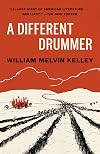
This 1962 novel, largely forgotten along with its author, is an astounding tale that is ripe for a series or a movie. In it, all the Black residents of an imaginary deep South state leave to head somewhere northward. Their claim that even Mississippi would be a better home is telling. The narrative begins when a rebellious enslaved man, described as a giant in the manner of the Incredible Hulk, escapes from the ship upon docking, but he eventually surrenders and it is one of his descendants show more who leads the future exodus. There's a valuable foreword explaining that some critics objected when the novel was published, because the point of view was primarily from a sympathetic young white man and not from Tucker Caliban, who purchases land from David Willson, a community leader, and destroys his own property to set the plan in motion. There's also a plot about Willson attending Harvard, meeting Bennett Bradshaw, a Black student, and realizing that he had never before taken a seat beside a Black man. Years later, David's abandoned alignment with communists and his reluctant return to his father's farm collides with Caliban's determination to force change. The stunningly unique Black escape and the vengeance wreaked on Bradshaw, now a preacher threatened by the independence movement and by the crackers left behind, leaves the reader moved and mystified, with no sequel nor clue to the brave new world found or created by the departed. show less
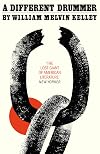
‘Thus begins a legend, Mister Willson.’
A re-publication of what is being hailed as a ‘lost classic’ of American literature, William Melvin Kelley’s 1962 novel centres on a fictional event in a fictional Southern state in 1957 when, following the lead of Tucker Caliban, the entire black population of the state ups and leaves to head north and more freedom. With shades of James Baldwin, and with the nuanced vision of the great American voices of Faulkner, Steinbeck and Lee, this is a show more visceral examination of Southern attitudes and a nation tearing itself apart. Seen through the shifting perspectives of a variety of white characters the story moves back and forward as we learn more about the Willsons, a typical Southern family dynasty, and the Calibans, especially Tucker, one of a line of slaves in the Willson property.
I did wonder at the outset why Kelley chose to write in this particular way: surely we want to hear the voices of the black population directly, not second- or third-hand and through the prism of the white ‘elite’? But as you read there is a generosity of spirit and a life-force that comes though the pages, and the more sympathetic white characters do indeed become rounded, meaningful characters. This is a book written in a different time, and the language and attitudes reflect that. Nor is it a perfect novel. But it is a telling indictment not only of our current times but every generation in between that the prejudices and issues remain, sometimes not always below the surface. The final scenes are a shocking and violent reminder of the very worst of humankind. No, this is not an easy or comfortable read, but I can totally understand why this is being pushed by the publisher as an important and timely rediscovery. Try to make time to read it, for it is indeed an important work.
(With thanks to the publisher and NetGalley for an ARC in return for an honest and unbiased review.) show less
A re-publication of what is being hailed as a ‘lost classic’ of American literature, William Melvin Kelley’s 1962 novel centres on a fictional event in a fictional Southern state in 1957 when, following the lead of Tucker Caliban, the entire black population of the state ups and leaves to head north and more freedom. With shades of James Baldwin, and with the nuanced vision of the great American voices of Faulkner, Steinbeck and Lee, this is a show more visceral examination of Southern attitudes and a nation tearing itself apart. Seen through the shifting perspectives of a variety of white characters the story moves back and forward as we learn more about the Willsons, a typical Southern family dynasty, and the Calibans, especially Tucker, one of a line of slaves in the Willson property.
I did wonder at the outset why Kelley chose to write in this particular way: surely we want to hear the voices of the black population directly, not second- or third-hand and through the prism of the white ‘elite’? But as you read there is a generosity of spirit and a life-force that comes though the pages, and the more sympathetic white characters do indeed become rounded, meaningful characters. This is a book written in a different time, and the language and attitudes reflect that. Nor is it a perfect novel. But it is a telling indictment not only of our current times but every generation in between that the prejudices and issues remain, sometimes not always below the surface. The final scenes are a shocking and violent reminder of the very worst of humankind. No, this is not an easy or comfortable read, but I can totally understand why this is being pushed by the publisher as an important and timely rediscovery. Try to make time to read it, for it is indeed an important work.
(With thanks to the publisher and NetGalley for an ARC in return for an honest and unbiased review.) show less
An African of almost-mythical proportions & strength is brought to America on a slave ship. He fights, runs away & is murdered, but his baby starts life as a slave. Many generations later, our protagonist Tucker Caliban (a descendant) leads a mass exodus of all black people from the fictitious state (presumed to be Louisiana) in the late 1950s -- a complete exodus of every single black person in the state. The story is told from multiple viewpoints, all white, as the folkloric slave history show more is re-told while the narrators muse & wonder over the current events of the exodus. Some is revealed later as a few of the final voices are from the white family that first enslaved, later employed, the Caliban family through generations.
I think this book is especially hard-hitting & thought-provoking in light of our current issues with race in this country. It raises some intriguing & hard questions (some unanswerable) & raises many avenues for conversation & action. I might even call this a "lost classic"; hopefully it is one that will find its way into the spotlight. Worth your time to read. show less
I think this book is especially hard-hitting & thought-provoking in light of our current issues with race in this country. It raises some intriguing & hard questions (some unanswerable) & raises many avenues for conversation & action. I might even call this a "lost classic"; hopefully it is one that will find its way into the spotlight. Worth your time to read. show less
Lists
Schwob Nederland (1)
Awards


You May Also Like


Associated Authors
Statistics
- Works
- 15
- Also by
- 18
- Members
- 591
- Popularity
- #42,465
- Rating
- 4.1
- Reviews
- 13
- ISBNs
- 48
- Languages
- 6