

Walter Tevis (1928–1984)
Author of The Queen's Gambit
About the Author
Walter Tevis was an English literature professor at the University of Ohio.
Series
Works by Walter Tevis
Walter Tevis Sci-Fi Novels: The Man Who Fell to Earth, Mockingbird, The Steps of the Sun (2020) 13 copies, 2 reviews
The Man Who Fell to Earth (DVD & novel) — Author — 5 copies
Far from Home [short story] 2 copies
The Hustler [short fiction] 1 copy
Rent Control 1 copy
I fuorilegge della natura 1 copy
Tevis Walter 1 copy
Associated Works
The Workshop: Seven Decades of the Iowa Writers Workshop - 43 Stories, Recollections, & Essays on Iowa's Place in Twentieth-Century American Literature (1999) — Contributor — 197 copies, 1 review
The Best Fantasy Stories from the Magazine of Fantasy & Science Fiction (1985) — Contributor — 77 copies, 2 reviews
Stella a cinque mondi — Contributor — 4 copies
Tagged
Common Knowledge
- Legal name
- Tevis, Walter Stone
- Birthdate
- 1928-02-28
- Date of death
- 1984-08-08
- Gender
- male
- Education
- University of Iowa Writers' Workshop (MFA|1960)
University of Kentucky (BA|1949| MA|1954 ∙ English)
Model Laboratory School - Occupations
- novelist
short story writer
screenwriter
professor - Organizations
- Ohio University
Authors Guild
United States Navy (WWII) - Awards and honors
- Billiard Congress of America's Hall of Fame (1991)
- Agent
- Susan Schulman Literary Agency
- Cause of death
- lung cancer
- Nationality
- USA
- Birthplace
- San Francisco, California, USA
- Places of residence
- San Francisco, California, USA
Kentucky, USA
New York, New York, USA - Place of death
- New York, New York, USA
- Burial location
- Richmond Cemetery, Richmond, Kentucky, USA
- Associated Place (for map)
- USA
Members
Reviews
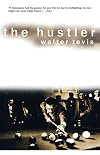
Fuuuuuck. This book is soooo good.
In 'The Hustler', Walter Tevis introduces you to Fast Eddie Felson, a small time pool shark (though Eddie himself dislikes the term) and gifted pool player. And he really thinks he's all that and a bag of chips, and probably a couple other bags of chips.
But I'll be damned if you don't learn to love him, even though he's kind of an asshole. But you know, he's an honest asshole that never pretends to be anything else. And there's some glory and redemption in show more him as well. He's a complex machine of flaws and foibles and strengths and blessings, and there's some glory in him. Tevis can really get into a character's head, so much so that you're drawn into their world and, for those brief magical moments, believe they're real.
The emotional moments towards the end of the book are like running the table in billiards, just one fantastic shot after another.
For a slender volume, this novel punches way above its weight. show less
In 'The Hustler', Walter Tevis introduces you to Fast Eddie Felson, a small time pool shark (though Eddie himself dislikes the term) and gifted pool player. And he really thinks he's all that and a bag of chips, and probably a couple other bags of chips.
But I'll be damned if you don't learn to love him, even though he's kind of an asshole. But you know, he's an honest asshole that never pretends to be anything else. And there's some glory and redemption in show more him as well. He's a complex machine of flaws and foibles and strengths and blessings, and there's some glory in him. Tevis can really get into a character's head, so much so that you're drawn into their world and, for those brief magical moments, believe they're real.
The emotional moments towards the end of the book are like running the table in billiards, just one fantastic shot after another.
For a slender volume, this novel punches way above its weight. show less

Brilliant. This a deceptively simple story, told in simple, uncomplicated prose, but with unexpected depth and relevance. It might come off as slightly trite now, as with most mid-20th century fiction set in "the near future" (the late 1980s, of all things!), but I'm sure in 1963 it was truly a sign of the times. What I'm sure hasn't lost its charge over the years is the tint of sadness, of individualized despair, that permeates the book and ultimately embitters the characters. No one show more escapes their self-destructive fears - not the American government, not the curious scientist, and most especially not the titular visitor who comes to save his world but can't even save himself. The film version, starring David Bowie, is far more surreal and symbolically charged (and, as with any Nicholas Roeg film, obsessed with sexuality), but the plot is almost completely the same, and anyone who enjoys one version of the tale should enjoy the other. Definitely worth seeking out. show less
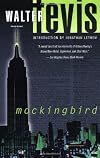
Perhaps I'm losing my taste for dystopias, at least the futuristic kind. Reading the gushing reviews all over the internet makes me feel almost as isolated from society as the inhabitants of Tevis's moribund 25th century USA.
The big idea is that after the standard technological misadventures - WWIII, fallout, mass-death, global government - humankind has come to eschew all interaction and individual expression, with people retreating into their inner worlds while being fed, clothed and show more stupefied with fertility-inhibiting drugs by a decrepit robotocracy prone to malfunction and scarcely able to perpetuate itself. The chief symptom of this great turning-inward is that no-one can read anymore (nor does anyone want to), and so enter our hero, a middle-aged everyman Adam who manages to rediscover this long-suppressed art by viewing an old educational film hidden in a stash of pornos. This, and his happening upon a latter-day Eve who is the only undrugged, fertile woman left in the world, sparks a competently-plotted journey of discovery with a conclusion highly satisfying to all involved.
A couple of bits I liked: the background phenomenon of people publicly immolating themselves in threes as the ennui gets too much for them. And the best thing in the book, an uplifting conversation with a bus which seems to have driven right out of a Douglas Adams story.
So I suppose I'd have to recommend this strongly to anyone who likes this kind of thing. It's not a bad book. But there are three reasons I didn't enjoy it, and at least two of them must warrant depriving it of a star:
Firstly and perhaps most unfairly, I found it a chore to read, because most of the book is written from the perspective of people with only a basic level of (emotional and actual) literacy. So the more successful Tevis is in demonstrating the constraints of his characters, the less room there is for any dynamism in the prose. I appreciate that most people prefer a plain style, but this isn't Hemingway... it's an immersion in the painful struggle of the characters to express things that we take for granted. I got the point fairly early on and by the end felt as weary as you'd expect after several hours in the company of people with very little emotional experience and limited capacity to express it.
Second, I was pretty unconvinced by Tevis's choice of dystopia. Sure, we can always point at our modern connected media-infused over-medicated existences and say this book is prophetic, but you can find something prophetic about any SF novel. That's kind of the point, isn't it? I think where Tevis lost me was with his universal child brainwashing complexes and non-existent economy (free basics for all and no work). In general I find more plausible those scenarios born of entropy than those born of some sinister over-arching system.
Finally I suspect part of the reason I'm not so moved as Everyone Else on the Internet is because this is very much a "triumph of the human spirit" novel. I can't stand triumphs of the human spirit. I also dislike the fetishisation of reading, and though I don't think "Mockingbird" goes that far, many of its cheerleaders do. show less
The big idea is that after the standard technological misadventures - WWIII, fallout, mass-death, global government - humankind has come to eschew all interaction and individual expression, with people retreating into their inner worlds while being fed, clothed and show more stupefied with fertility-inhibiting drugs by a decrepit robotocracy prone to malfunction and scarcely able to perpetuate itself. The chief symptom of this great turning-inward is that no-one can read anymore (nor does anyone want to), and so enter our hero, a middle-aged everyman Adam who manages to rediscover this long-suppressed art by viewing an old educational film hidden in a stash of pornos. This, and his happening upon a latter-day Eve who is the only undrugged, fertile woman left in the world, sparks a competently-plotted journey of discovery with a conclusion highly satisfying to all involved.
A couple of bits I liked: the background phenomenon of people publicly immolating themselves in threes as the ennui gets too much for them. And the best thing in the book, an uplifting conversation with a bus which seems to have driven right out of a Douglas Adams story.
So I suppose I'd have to recommend this strongly to anyone who likes this kind of thing. It's not a bad book. But there are three reasons I didn't enjoy it, and at least two of them must warrant depriving it of a star:
Firstly and perhaps most unfairly, I found it a chore to read, because most of the book is written from the perspective of people with only a basic level of (emotional and actual) literacy. So the more successful Tevis is in demonstrating the constraints of his characters, the less room there is for any dynamism in the prose. I appreciate that most people prefer a plain style, but this isn't Hemingway... it's an immersion in the painful struggle of the characters to express things that we take for granted. I got the point fairly early on and by the end felt as weary as you'd expect after several hours in the company of people with very little emotional experience and limited capacity to express it.
Second, I was pretty unconvinced by Tevis's choice of dystopia. Sure, we can always point at our modern connected media-infused over-medicated existences and say this book is prophetic, but you can find something prophetic about any SF novel. That's kind of the point, isn't it? I think where Tevis lost me was with his universal child brainwashing complexes and non-existent economy (free basics for all and no work). In general I find more plausible those scenarios born of entropy than those born of some sinister over-arching system.
Finally I suspect part of the reason I'm not so moved as Everyone Else on the Internet is because this is very much a "triumph of the human spirit" novel. I can't stand triumphs of the human spirit. I also dislike the fetishisation of reading, and though I don't think "Mockingbird" goes that far, many of its cheerleaders do. show less
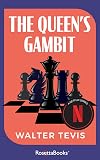
Sex, drugs, and…rooks? In this rollicking thriller we follow Elizabeth Harmon, orphaned at 8, from her first taste of chess and tranquilizers at the orphanage, to youthful chess acclaim and astonishing success. With frequent bouts of self-doubt and equally frequent bouts of intense chess study, Beth traverses the dangerous chasms of adolescence, sexism, sexual awakening, addiction (to tranquilizers and later alcohol), and acclaim, to eventually take on the Soviet giants of the chess world. show more You’ll practically have to hold on to your hat given the pace of Beth’s rise but you’ll also be gripped with tension as she plays out her most significant games. You might even momentarily believe that you understand the import and impact of key moves. Don’t worry. Once you close the cover, you will quickly revert to being an absolute chess novice.
A fun read and easy to recommend to those up for a bit of castling. show less
A fun read and easy to recommend to those up for a bit of castling. show less
Lists
Books for Birute (1)
science fiction (1)
1980 great books (1)
Read These Too (3)
The "A" List (1)
SF Masterworks (2)
Read Next (1)
Awards


You May Also Like


Associated Authors
Statistics
- Works
- 23
- Also by
- 16
- Members
- 7,144
- Popularity
- #3,434
- Rating
- 4.0
- Reviews
- 251
- ISBNs
- 251
- Languages
- 20
- Favorited
- 7