

Delos W. Lovelace (1894–1967)
Author of King Kong [Novelization]
About the Author
Works by Delos W. Lovelace
Associated Works
Tagged
Common Knowledge
- Canonical name
- Lovelace, Delos W.
- Legal name
- Lovelace, Delos Wheeler
- Birthdate
- 1894-12-02
- Date of death
- 1967-01-17
- Gender
- male
- Occupations
- reporter (for the New York Daily News and New York Sun)
- Relationships
- Lovelace, Maud Hart (wife)
- Nationality
- USA
- Birthplace
- Brainerd, Minnesota, USA
- Associated Place (for map)
- Minnesota, USA
Members
Discussions
KING KONG DLE — Signed by the Illustrator in Easton Press Collectors (November 2023)
Reviews
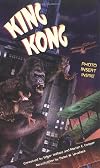
In King Kong, Delos W. Lovelace adapts Edgar Wallace and Merian C. Cooper’s screenplay for the original 1933 film to the novel format, released in the same year as the film. Lovelace’s writing evokes the best of the classic adventure novel story and doesn’t waste words. He quickly sends the characters off on adventure, allows the suspense to build when necessary, and focuses on the action to great effect. The only point on which Lovelace grows repetitive is his portrayal of Denham show more constantly reiterating that this is a tale of Beauty and the Beast. In many respects, he’s right. King Kong serves as a modern retelling of Gabrielle-Suzanne Barbot de Villeneuve’s classic French fairytale. Unfortunately, the “modern” setting is the 1930s and there are plenty of scenes that suggest severe racial undertones.
The basic story of King Kong, well-known as it is, serves as an American retelling of Sir Arthur Conan Doyle’s The Lost World. In this manner, Kong carries with it not only the baggage of a colonial mindset from the romanticized Age of Exploration and Discovery, but also the racial attitudes prevalent in the United States in the 1930s. As the crew of the Wanderer approaches Skull Island, Denham declares, “I tell you there’s something on that island…Something no white man has ever seen” (p. 46). Later, following Kong’s capture of Ann, Lovelace evokes the myth of the black male rapist when he writes,
“In the faint light Ann was now no more than a shadow except where her dress was torn. There, however, her shoulder was white and softly gleaming. Kong squatted down…Ann screamed again. Kong snatched at her. His hand caught in her dress and the dress tore in his huge fingers. More whiteness was revealed. Kong touched the smooth revelation” (p. 164).
Finally, Denham’s proclamation to his Broadway audience calls to mind the image of a slave on the auction block:
“I am going to show you the greatest sight your eyes ever beheld. One who was king and the god of the world he knew, but who now comes to civilization as a captive, as an exhibit to gratify mankind’s insatiable curiosity” (p. 202).
This subtext, while rarely overt, lurks throughout Lovelace’s writing.
Following the passage of eighty-three years, most modern readers will not grasp the racially-charged nature of King Kong without a background in history or literary analysis. For most modern readers, the various remakes and spinoffs of King Kong (including the Toho films) have buried most of the subtext, turning the character into a typical giant monster, or kaijū. With that in mind, Lovelace’s novel and its use of language may seem dated to a modern reader, but not overtly offensive. show less
The basic story of King Kong, well-known as it is, serves as an American retelling of Sir Arthur Conan Doyle’s The Lost World. In this manner, Kong carries with it not only the baggage of a colonial mindset from the romanticized Age of Exploration and Discovery, but also the racial attitudes prevalent in the United States in the 1930s. As the crew of the Wanderer approaches Skull Island, Denham declares, “I tell you there’s something on that island…Something no white man has ever seen” (p. 46). Later, following Kong’s capture of Ann, Lovelace evokes the myth of the black male rapist when he writes,
“In the faint light Ann was now no more than a shadow except where her dress was torn. There, however, her shoulder was white and softly gleaming. Kong squatted down…Ann screamed again. Kong snatched at her. His hand caught in her dress and the dress tore in his huge fingers. More whiteness was revealed. Kong touched the smooth revelation” (p. 164).
Finally, Denham’s proclamation to his Broadway audience calls to mind the image of a slave on the auction block:
“I am going to show you the greatest sight your eyes ever beheld. One who was king and the god of the world he knew, but who now comes to civilization as a captive, as an exhibit to gratify mankind’s insatiable curiosity” (p. 202).
This subtext, while rarely overt, lurks throughout Lovelace’s writing.
Following the passage of eighty-three years, most modern readers will not grasp the racially-charged nature of King Kong without a background in history or literary analysis. For most modern readers, the various remakes and spinoffs of King Kong (including the Toho films) have buried most of the subtext, turning the character into a typical giant monster, or kaijū. With that in mind, Lovelace’s novel and its use of language may seem dated to a modern reader, but not overtly offensive. show less

''King Kong'' was initially concieved as a screenplay by Wallace and Cooper. Lovelace novelized the screenplay and released it before the movie came out. It's a fast read non-stop action (like a movie). There is nothing particularly deep about the writing since it's just a written version of the movie. The language is 1930s wise guy with lines like "look here" and "tough egg" and "shove off" peppered throughout (and not in a nostalgic way, the "genuine article"). ''King Kong'' is of course show more part of the "Lost World" genre started by ''King Solomons Mines'', but is most influened by Edgar Burroughs ''The Land that Time Forgot'' and Arthur Conan Doyle's ''The Lost World''. show less

Short and to the point, Lovelace's novelization (one of the premier movie novelizations to exist) does not add much to the story in the original film, but is still a swift, solid read with some literary quality.
This was a shortish freebie on Audible which I listened to when getting to sleep. It was very much of its time but actually a lot of fun as an adventure book.
You May Also Like


Associated Authors
Statistics
- Works
- 8
- Also by
- 1
- Members
- 508
- Popularity
- #48,805
- Rating
- 3.5
- Reviews
- 11
- ISBNs
- 60
- Languages
- 9