
Janet McNeill (1907–1994)
Author of Tea at Four O'Clock
About the Author
Works by Janet McNeill
The giant's birthday 2 copies
Eine Fee namens Andi 1 copy
Associated Works
The Glass Shore: Short Stories by Women Writers from the North of Ireland (2016) 24 copies, 1 review
Tagged
Common Knowledge
- Birthdate
- 1907-09-14
- Date of death
- 1994-10
- Gender
- female
- Education
- University of St Andrews
Birkenhead High School - Occupations
- novelist
radio playwright
justice of the peace
children's book author - Nationality
- Ireland
- Birthplace
- Dublin, Ireland
- Places of residence
- Lisburn, Northern Ireland, UK
Bristol, Gloucestershire, England, UK
Birkenhead, Cheshire, England, UK
Belfast, Northern Ireland, UK - Place of death
- Bristol, Gloucestershire, England, UK
- Associated Place (for map)
- UK
Members
Reviews
Amended Review:
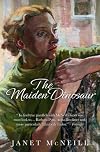
This is a short but rich and nuanced novel about a middle-aged Belfast spinster. Respected school teacher and locally known poet, fiftyish Sarah Vincent grew up in a well-to-do Presbyterian family. The family’s stately home (on the shores of Belfast Lough, not far from the Zoological Gardens) was divided into apartments after the death of Sarah’s father. Sarah now lives in one flat, and her girlhood friends, Helen and Addie, live in the others. For years, Sarah has show more regularly attended “tea parties” with her former school chums—among them: Mary, now a grandmother; the well-to-do Florence; and 40-year-old Joyce, the younger sister of Rose, who was the first of Sarah’s cohort to die (tragically, in her 20s, during childbirth). Rose’s is not the only sad story. Kitty, another unfortunate, is mentally ill and keeps to her bed. Kindhearted and used to obliging others, Sarah, the only unmarried woman in the bunch, makes regular visits to an unstable and aggressive woman whom everyone else seeks to avoid. Sarah is believed to have a special calming influence on Kitty. It’s convenient for the others to think so anyway.
Sarah has a lot of of things weighing on her. She is not nearly as free of responsibilities as the others think. First, there is the matter of the unfortunate, Helen, who has lived a very different life from Sarah. Once a wife and mother, Helen is professionally successful—she runs a thriving flower shop—but privately she is a mess. Mired in memories of personal tragedies, Helen is histrionic and seeks solace in the arms of a series of gentleman callers—one of them, Kitty’s husband. Helen’s beauty is fading fast, and it is the job of plain and steady Sarah to prop her up. On the one hand, Helen is scornful of her friend’s lack of sexual knowledge (Sarah’s senior girls seem better informed than their teacher); on the other hand, Helen depends on Sarah’s unique combination of unconditional positive regard and school-teacher bossiness. It’s a game of sorts, Sarah realizes, and she follows the unspoken rules . . . until one day she doesn’t.
None of Sarah’s friends is aware of the ways in which she is haunted. Chided constantly in childhood about her homely, large, and graceless body, she attempted early on to dissociate herself from her physical being, paying as little mind to her appearance as possible and focussing instead on developing her intellect. As a young person, Sarah also happened upon two distressing scenes of a sexual nature (one of them involving a family member). No one ever bothered to discuss either of these experiences with her. The events were subsequently buried until Sarah had a breakdown in adolescence. Her mother, an invalid for many years, died soon after. Sarah may now be middle aged, but part of her remains a child imprisoned in the past. At times, she still hears, sees, and addresses her dead parents. (Freud would have had a heyday with this woman.)
MacNeill’s novel offers a glimpse into a certain middle-class segment of mid-twentieth-century Belfast society, when women’s roles and sexual mores were beginning to change. The book is also a sensitive and restrained psychological study of sexual repression. The novel was originally published in 1964 and appears to be set in the early 1960s. There are a few references to the new freedoms for women— specifically, the birth control pill, which was first introduced as a contraceptive in 1960. I found McNeill’s mention of “The Troubles” in the text to be quite confusing—as I’ve always understood the term to apply to the Northern Ireland of the late 1960s and early 1970s . I didn’t know (until I did some online research) that the Belfast Riots of 1920-1922 are called “The First Troubles”. In the novel, to avoid being shot at, McNeill’s characters had, when young, been forced to lie down in the trams that took them to and from school during this period.
The Maiden Dinosaur is a brisk and compelling character-driven novel, which manages to accomplish a lot in relatively few pages. There’s much to ponder here (including the ways in which literature can hoodwink young, impressionable girls into dangerous romanticization of sexuality and relations between the sexes.)This is a book that begs to be read, re-read, and discussed with friends. show less
This is a short but rich and nuanced novel about a middle-aged Belfast spinster. Respected school teacher and locally known poet, fiftyish Sarah Vincent grew up in a well-to-do Presbyterian family. The family’s stately home (on the shores of Belfast Lough, not far from the Zoological Gardens) was divided into apartments after the death of Sarah’s father. Sarah now lives in one flat, and her girlhood friends, Helen and Addie, live in the others. For years, Sarah has show more regularly attended “tea parties” with her former school chums—among them: Mary, now a grandmother; the well-to-do Florence; and 40-year-old Joyce, the younger sister of Rose, who was the first of Sarah’s cohort to die (tragically, in her 20s, during childbirth). Rose’s is not the only sad story. Kitty, another unfortunate, is mentally ill and keeps to her bed. Kindhearted and used to obliging others, Sarah, the only unmarried woman in the bunch, makes regular visits to an unstable and aggressive woman whom everyone else seeks to avoid. Sarah is believed to have a special calming influence on Kitty. It’s convenient for the others to think so anyway.
Sarah has a lot of of things weighing on her. She is not nearly as free of responsibilities as the others think. First, there is the matter of the unfortunate, Helen, who has lived a very different life from Sarah. Once a wife and mother, Helen is professionally successful—she runs a thriving flower shop—but privately she is a mess. Mired in memories of personal tragedies, Helen is histrionic and seeks solace in the arms of a series of gentleman callers—one of them, Kitty’s husband. Helen’s beauty is fading fast, and it is the job of plain and steady Sarah to prop her up. On the one hand, Helen is scornful of her friend’s lack of sexual knowledge (Sarah’s senior girls seem better informed than their teacher); on the other hand, Helen depends on Sarah’s unique combination of unconditional positive regard and school-teacher bossiness. It’s a game of sorts, Sarah realizes, and she follows the unspoken rules . . . until one day she doesn’t.
None of Sarah’s friends is aware of the ways in which she is haunted. Chided constantly in childhood about her homely, large, and graceless body, she attempted early on to dissociate herself from her physical being, paying as little mind to her appearance as possible and focussing instead on developing her intellect. As a young person, Sarah also happened upon two distressing scenes of a sexual nature (one of them involving a family member). No one ever bothered to discuss either of these experiences with her. The events were subsequently buried until Sarah had a breakdown in adolescence. Her mother, an invalid for many years, died soon after. Sarah may now be middle aged, but part of her remains a child imprisoned in the past. At times, she still hears, sees, and addresses her dead parents. (Freud would have had a heyday with this woman.)
MacNeill’s novel offers a glimpse into a certain middle-class segment of mid-twentieth-century Belfast society, when women’s roles and sexual mores were beginning to change. The book is also a sensitive and restrained psychological study of sexual repression. The novel was originally published in 1964 and appears to be set in the early 1960s. There are a few references to the new freedoms for women— specifically, the birth control pill, which was first introduced as a contraceptive in 1960. I found McNeill’s mention of “The Troubles” in the text to be quite confusing—as I’ve always understood the term to apply to the Northern Ireland of the late 1960s and early 1970s . I didn’t know (until I did some online research) that the Belfast Riots of 1920-1922 are called “The First Troubles”. In the novel, to avoid being shot at, McNeill’s characters had, when young, been forced to lie down in the trams that took them to and from school during this period.
The Maiden Dinosaur is a brisk and compelling character-driven novel, which manages to accomplish a lot in relatively few pages. There’s much to ponder here (including the ways in which literature can hoodwink young, impressionable girls into dangerous romanticization of sexuality and relations between the sexes.)This is a book that begs to be read, re-read, and discussed with friends. show less
Janet McNeill lived most of her adult life in Northern Ireland and was a prolific writer of plays and children's books as well as 10 adult novels and a number of volumes of short stories. She wasn't on my radar until I came across an article called ' Ten great Northern Irish novels you may have missed.
Compared on the jacket to Barbara Pym, Anita Brookner and Elizabeth Taylor, the writing in this novel certainly reminded me of Barbara Pym's writing, particularly in terms of characterisation. show more I've not got to Taylor yet, but McNeill's writing quality is absolutely on a level with Pym's and Brookner's, and it's a shame that she's never received the same level of recognition (Virago, Persephone - sort it out).
The Maiden Dinosaur centres around the main character Sarah, a fifty-something year old spinster teacher and minor poet who shares her former family home (now divided into 4 apartments) with two of her childhood friends and the daughter and son-in-law of another friend. The plain, sensible, clever one, with no family of her own Sarah is the no-nonsense linchpin both they and their wider friendship group turn to as conveniences them, whilst Sarah has quietly devoted herself for over 40 years to Helen within the group, whose personal tragedies and vanities demand much of Sarah's willing attention.
As the shifting sands of life bring inevitable significant events within the lives of the group of friends, the novel explores themes of loss and new beginnings in a middle-age context over one summer in Belfast.
McNeill's writing in this novel doesn't evoke a sense of place in terms of Northern Ireland itself, but in a way I quite liked that and enjoyed the absence of the usual local colloquialisms. Belfast Zoo (or Bellevue Zoo as it used to be known) is mentioned quite often, as the novel is set in North Belfast where the zoo still to this day sits looking down over the city just below Cave Hill. There was a charming children's film called Zoo made in 2017 which is filmed at Belfast Zoo. It's based on the true story of a woman in a terraced back-street in Belfast who hid an elephant from the zoo in her tiny back yard to stop it being euthanised when the Belfast Blitz began (somehow that story could only be true from Northern Ireland).
I thoroughly enjoyed this book, and will definitely be looking out for other titles by McNeill which are still in print.
This type of novel won't appeal to everyone, but if you're a lover of Pym or Brookner I would recommend it (I believe it's titled The Belfast Friends in the US).
4.5 stars - A wonderful depiction of the claustrophobia that life as a middle-aged woman can become. show less
Compared on the jacket to Barbara Pym, Anita Brookner and Elizabeth Taylor, the writing in this novel certainly reminded me of Barbara Pym's writing, particularly in terms of characterisation. show more I've not got to Taylor yet, but McNeill's writing quality is absolutely on a level with Pym's and Brookner's, and it's a shame that she's never received the same level of recognition (Virago, Persephone - sort it out).
The Maiden Dinosaur centres around the main character Sarah, a fifty-something year old spinster teacher and minor poet who shares her former family home (now divided into 4 apartments) with two of her childhood friends and the daughter and son-in-law of another friend. The plain, sensible, clever one, with no family of her own Sarah is the no-nonsense linchpin both they and their wider friendship group turn to as conveniences them, whilst Sarah has quietly devoted herself for over 40 years to Helen within the group, whose personal tragedies and vanities demand much of Sarah's willing attention.
As the shifting sands of life bring inevitable significant events within the lives of the group of friends, the novel explores themes of loss and new beginnings in a middle-age context over one summer in Belfast.
McNeill's writing in this novel doesn't evoke a sense of place in terms of Northern Ireland itself, but in a way I quite liked that and enjoyed the absence of the usual local colloquialisms. Belfast Zoo (or Bellevue Zoo as it used to be known) is mentioned quite often, as the novel is set in North Belfast where the zoo still to this day sits looking down over the city just below Cave Hill. There was a charming children's film called Zoo made in 2017 which is filmed at Belfast Zoo. It's based on the true story of a woman in a terraced back-street in Belfast who hid an elephant from the zoo in her tiny back yard to stop it being euthanised when the Belfast Blitz began (somehow that story could only be true from Northern Ireland).
I thoroughly enjoyed this book, and will definitely be looking out for other titles by McNeill which are still in print.
This type of novel won't appeal to everyone, but if you're a lover of Pym or Brookner I would recommend it (I believe it's titled The Belfast Friends in the US).
4.5 stars - A wonderful depiction of the claustrophobia that life as a middle-aged woman can become. show less
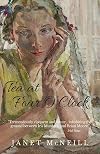
I loved this quiet novel about a middle-aged woman who finds her life suddenly changed when her invalid sister dies. Laura has been caring for Mildred for 6 years and has led a completely sheltered and isolated existence, completely controlled by the domineering Mildred. When Mildred dies, Laura inherits their large home and estate and her life begins to have motion. A long lost brother returns, bringing up memories of a friend of his who she loved in her youth and bringing to light a family show more secret that could change how Laura has viewed her whole adult life. Laura will have to decide for herself how she wants her life to look from here on out.
This is a simple novel with a simple plot that gives plenty of room for a deeply drawn character and situation. It's one of my favorite kinds of novel and reminded me of Barbara Pym, Anita Brookner, and Penelope Fitzgerald. I'll be on the lookout for more books by [[Janet McNeill]] who doesn't seem to have much currently in print in the U.S. show less
This is a simple novel with a simple plot that gives plenty of room for a deeply drawn character and situation. It's one of my favorite kinds of novel and reminded me of Barbara Pym, Anita Brookner, and Penelope Fitzgerald. I'll be on the lookout for more books by [[Janet McNeill]] who doesn't seem to have much currently in print in the U.S. show less

“‘I don’t feel anything,’ she said, ‘not anything at all. It isn’t that I’m trying not to. I want to feel something, even though Harold mightn’t have wished me to. But I just go on in an empty muddled kind of way, getting impatient because I’m always waiting for some piercing grief that doesn’t come.’”
Harold, Julia Stevens’s husband of 33 years, dies suddenly at the age of 60. An academic, a veteran of World War II, and a POW, he was due to be honoured, along with show more his cousin, Madge, at the Royal Albert Hall, but he collapsed—perhaps from a heart attack—at some point early in the ceremony. Julia was supposed to be watching the televised event; so were her four children and Madge’s brother, but all were too busy, each in his or her own way, to tune in. There is a certain mystery around Harold’s death, and Julia will later try to get Madge (a witness) to tell her about it.
I don’t want to give the wrong impression here: This book is NOT a mystery, though secrets do surface by the end. I do want to say that the book is a study of “bereavement”, but I’m afraid that, too, gives the wrong impression: that this is a story about intense mourning. Julia does not feel loss so much as lost or unmoored. Her husband’s death provokes not grief (which everyone seems to expect) so much as a dramatic role change. No longer is Julia the little woman to Harold’s big man. Her relationships with her four adult children will undergo adjustments.
Initially, Julia is prescribed tranquillizers to help her sleep. She also contracts influenza from a couple of door-to-door Jehovah Witness types. The flu will lay her up over Christmas—“good tidings of great joy” to family members, who all actually prefer to make their own Christmas anyway. When Julia is finally up and about, she goes on a mad shopping spree, her mood becoming almost manic as the purchases add up. At the last minute, however, she collapses in a flood of tears. A taxi is engaged to send her home. Apparently because she lost control of herself, “the small widow” is required to spend time at the homes of her two eldest children and their families. (Her younger son and daughter have flats in the family home.) Harold’s cousins, Lionel and Madge, also have important parts to play in the story. Unkempt Madge, always an odd duck, runs her own gardening business and seems to be closer to her dogs than to humans. She will become increasingly drunk and disorderly as the novel unfolds, appearing at Julia’s home at all hours. There is something very important she needs to communicate . . .
The first two-thirds of The Small Widow is brilliantly written and often very funny. It is full of sharp, unvarnished observations about marriage, motherhood, ageing, the sublimation of one person—a wife— into the world of a larger-than-life husband. Julia’s unsettled state after Harold’s death is, for the most part, compellingly and convincingly portrayed. However, the final third of the novel feels rushed and rather weak. Coming too hard and too fast, the denouement feels unnecessarily melodramatic. Nevertheless, I still found this a stimulating, insightful, and enjoyable novel.
Rating: 3.5 show less
Harold, Julia Stevens’s husband of 33 years, dies suddenly at the age of 60. An academic, a veteran of World War II, and a POW, he was due to be honoured, along with show more his cousin, Madge, at the Royal Albert Hall, but he collapsed—perhaps from a heart attack—at some point early in the ceremony. Julia was supposed to be watching the televised event; so were her four children and Madge’s brother, but all were too busy, each in his or her own way, to tune in. There is a certain mystery around Harold’s death, and Julia will later try to get Madge (a witness) to tell her about it.
I don’t want to give the wrong impression here: This book is NOT a mystery, though secrets do surface by the end. I do want to say that the book is a study of “bereavement”, but I’m afraid that, too, gives the wrong impression: that this is a story about intense mourning. Julia does not feel loss so much as lost or unmoored. Her husband’s death provokes not grief (which everyone seems to expect) so much as a dramatic role change. No longer is Julia the little woman to Harold’s big man. Her relationships with her four adult children will undergo adjustments.
Initially, Julia is prescribed tranquillizers to help her sleep. She also contracts influenza from a couple of door-to-door Jehovah Witness types. The flu will lay her up over Christmas—“good tidings of great joy” to family members, who all actually prefer to make their own Christmas anyway. When Julia is finally up and about, she goes on a mad shopping spree, her mood becoming almost manic as the purchases add up. At the last minute, however, she collapses in a flood of tears. A taxi is engaged to send her home. Apparently because she lost control of herself, “the small widow” is required to spend time at the homes of her two eldest children and their families. (Her younger son and daughter have flats in the family home.) Harold’s cousins, Lionel and Madge, also have important parts to play in the story. Unkempt Madge, always an odd duck, runs her own gardening business and seems to be closer to her dogs than to humans. She will become increasingly drunk and disorderly as the novel unfolds, appearing at Julia’s home at all hours. There is something very important she needs to communicate . . .
The first two-thirds of The Small Widow is brilliantly written and often very funny. It is full of sharp, unvarnished observations about marriage, motherhood, ageing, the sublimation of one person—a wife— into the world of a larger-than-life husband. Julia’s unsettled state after Harold’s death is, for the most part, compellingly and convincingly portrayed. However, the final third of the novel feels rushed and rather weak. Coming too hard and too fast, the denouement feels unnecessarily melodramatic. Nevertheless, I still found this a stimulating, insightful, and enjoyable novel.
Rating: 3.5 show less
Lists
Awards


You May Also Like


Associated Authors
Statistics
- Works
- 31
- Also by
- 5
- Members
- 234
- Popularity
- #96,590
- Rating
- 3.8
- Reviews
- 12
- ISBNs
- 49
- Languages
- 2