
Andrew Nahum
Author of Flying Machine (Eyewitness Books)
About the Author
Andrew Nahum is Senior Curator of Aeronautics at the Science Museum in London and a Visiting Research Tutor in Vehicle Design at the Royal College of Art.
Works by Andrew Nahum
Associated Works
Tagged
Common Knowledge
Members
Reviews
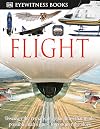
This is what you’d expect from an Eyewitness Book: lots of big pictures and explanations of details. The history of flight is very male-centric, though; Amelia Earhart doesn’t get a look-in until the very end of the book, and the subtitle on the front cover talks about “man’s” conquest of the skies, which is eyeroll-inducing for a book published in 2011. More amusing is the inclusion of a CD full of clip art. Not sure how many computers these days have a CD drive…

As the English say, this is an excellent "soup to nuts" biography of an engine that was both a technical dead-end and potentially an engineering pinnacle.
The authors pay homage to the roots of the Crecy with the story of Harry Ricardo and acknowledge the desire for, and the promise airborne diesel engines. After the chapters on the design/development there are chapters covering contemporary reports including a report by Sir Hooker complete with margin notes written by another unknown RR show more employee. Visual aspects of the engine are also well covered with plenty of charts, illustrations and photographs, and the engine photographs themselves being of pretty decent quality. The authors point out the Crecy suffered from the exigencies of war only to be overcome by the turbine engine. As a reader, I have to wonder what would have happened if RR had not acquired Power Jets along with the ascent of the turbine? Is it reasonable to assume the Crecy would have been more successful than the Napier Nomad? Highly recommended for anyone with an interest in aircraft engines or Rolls Royce. show less
The authors pay homage to the roots of the Crecy with the story of Harry Ricardo and acknowledge the desire for, and the promise airborne diesel engines. After the chapters on the design/development there are chapters covering contemporary reports including a report by Sir Hooker complete with margin notes written by another unknown RR show more employee. Visual aspects of the engine are also well covered with plenty of charts, illustrations and photographs, and the engine photographs themselves being of pretty decent quality. The authors point out the Crecy suffered from the exigencies of war only to be overcome by the turbine engine. As a reader, I have to wonder what would have happened if RR had not acquired Power Jets along with the ascent of the turbine? Is it reasonable to assume the Crecy would have been more successful than the Napier Nomad? Highly recommended for anyone with an interest in aircraft engines or Rolls Royce. show less
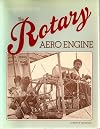
The rotary aero engine has always fascinated aviation historians and enthusiasts. When the 50hp Gnome appeared in 1908, it was the most powerful engine for its weight available and was used by almost all the notable pioneers to set records for height, speed and endurance. Rotaries also played a key role in the First World War, powering many of the famous 'fighting scouts' such as the Sopwith Camel and Fokker Monoplane. In this book, Andrew Nahum gives an original and well-argued explanation, show more showing that rotary development was limited by a 'power ceiling' which was a basic consequence of design. show less
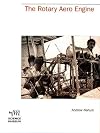
Interesting little book on rotary engines, written for a general evolution overview and to support the author thesis on the dismissal of such engines. I found it lacking (or better, was expecting it to have but wasn't requiring it to justify the expense) more details on the operation and maintenance of such engines. In balance, a good and informative reading.
You May Also Like


Associated Authors
Statistics
- Works
- 25
- Also by
- 1
- Members
- 862
- Popularity
- #29,693
- Rating
- 3.9
- Reviews
- 8
- ISBNs
- 67
- Languages
- 14