
Gigi Amateau
Author of Chancey of the Maury River
About the Author
Image credit: family photo
Series
Works by Gigi Amateau
Come August, Come Freedom: The Bellows, The Gallows, and The Black General Gabriel (2012) 106 copies, 8 reviews
Associated Works
Tagged
Common Knowledge
- Birthdate
- 1964-10-20
- Gender
- female
- Agent
- Leigh Feldman
- Places of residence
- Richmond, Virginia, USA
- Associated Place (for map)
- Virginia, USA
Members
Reviews

When Jenna's great-great-aunt Tannie breaks her ankle her mother becomes worried about her. Tannie lives on a large farm and has chickens. She has traveled all over the world and is a very active person. Jenna's mom is a nurse and knows how fragile her great-aunt's bones have become since she has gotten older. She and Jenna decided to have Tannie come and live with them. They prepare the house and try to convince Tannie she needs to move in with them. They go to bring her back over Spring show more Break and are able to convince her to move. She sells everything and moves in with them. But, it isn't as easy as just having someone move in with them.
I was able to relate to this simple book on such a large level. My mother lives with us. At first it wasn't so bad. She was very mobile and did a lot around the house so it felt like we all just lived together and shared the responsibilites. Then one day while we were gone she slipped and fell and broke both feet and her ankle. She is very resistant to some of our suggestions when we know it is for her best. In a lot of ways she has given up doing things we know she can do. As Tannie and her mom found out, there is a very delicate balance that has to be struck for everyone to live harmonioulsy. This is a great book to read any time, but especially if you have an older loved one who must come and live with you. show less
I was able to relate to this simple book on such a large level. My mother lives with us. At first it wasn't so bad. She was very mobile and did a lot around the house so it felt like we all just lived together and shared the responsibilites. Then one day while we were gone she slipped and fell and broke both feet and her ankle. She is very resistant to some of our suggestions when we know it is for her best. In a lot of ways she has given up doing things we know she can do. As Tannie and her mom found out, there is a very delicate balance that has to be struck for everyone to live harmonioulsy. This is a great book to read any time, but especially if you have an older loved one who must come and live with you. show less
 This review was written for LibraryThing Early Reviewers.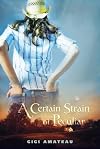
For Mary Harold, life in Virginia has gotten all but unbearable. Pegged "the grossest girl" and forced into exile by her former best friend, the 13-year-old pleads with her mother to return them to Wren, Alabama to be with Mary Harold's beloved grandmother, Ayma. When Bye refuses to let her go, she takes matters into her own hands.
Life is definitely different in Wren. Mary Harold sets about helping Ayma's farm manager Bud with chores around the homestead, wrestling cattle and mending fences show more long broken. In building up her own strength physically, Mary Harold builds herself up emotionally -- and all of the fear and anxiety she experienced in Virginia begin to ebb away.
In the process, Mary Harold meets Bud's children Dixie and Delta, both "special" in their own way. Since their own mama left them for a shot at stardom, Dixie has "become" a horse full-time, and Delta acts out in often reprehensible ways. Mary Harold befriends Dixie and occasionally clobbers Delta, and the lessons she learns from both are significant -- namely, the nature of true friendship.
I enjoyed A Certain Strain of Peculiar -- it was a quick read full of wonderful imagery. Told from Mary Harold's point of view, it's a very "internal" book -- full of descriptions and her inner monologues, and not a lot of dialogue. That didn't really bother me so much, but sometimes it felt a little slow.
I really liked watching Mary Harold morph from an insecure girl to a brave, strong and tanned young woman, someone secure in her own skin and confident enough to take on anything or anyone -- from facing her own crippling panic attacks to standing up for weaker students bullied around by the unsavory Gil.
Mary Harold's relationship with her mother was very strong and inspiring, and I loved that about it, too. I wish I'd gotten a little more back story on Bye, her mom -- we know she was a hellraiser who got pregnant young and left town for good. But she doesn't seem that way at all now. She's deeply connected to nature, a theme that really is the cornerstone of the novel -- the connection to the living things around us, animate and inanimate. Local rivers are a lifeblood for Ayma, Mary Harold and Bye, and the descriptions of nature were great.
There were some moments in the novel that really made my skin crawl -- a few disturbing scenes involving Delta's behavior. If I were young, they might have given me nightmares . . . the build-up to them was a little sudden and intense. They were important to the story, no doubt, but I felt a little uneasy reading after that. When something scary takes me by surprise, it's hard for me to relax again.
Regardless, Amateau has a very clear and wonderful voice -- and I recommend her coming-of-age novel. Teen readers might enjoy it even more than I did, but I liked getting to know the residents of Wren and wish Mary Harold well! show less
Life is definitely different in Wren. Mary Harold sets about helping Ayma's farm manager Bud with chores around the homestead, wrestling cattle and mending fences show more long broken. In building up her own strength physically, Mary Harold builds herself up emotionally -- and all of the fear and anxiety she experienced in Virginia begin to ebb away.
In the process, Mary Harold meets Bud's children Dixie and Delta, both "special" in their own way. Since their own mama left them for a shot at stardom, Dixie has "become" a horse full-time, and Delta acts out in often reprehensible ways. Mary Harold befriends Dixie and occasionally clobbers Delta, and the lessons she learns from both are significant -- namely, the nature of true friendship.
I enjoyed A Certain Strain of Peculiar -- it was a quick read full of wonderful imagery. Told from Mary Harold's point of view, it's a very "internal" book -- full of descriptions and her inner monologues, and not a lot of dialogue. That didn't really bother me so much, but sometimes it felt a little slow.
I really liked watching Mary Harold morph from an insecure girl to a brave, strong and tanned young woman, someone secure in her own skin and confident enough to take on anything or anyone -- from facing her own crippling panic attacks to standing up for weaker students bullied around by the unsavory Gil.
Mary Harold's relationship with her mother was very strong and inspiring, and I loved that about it, too. I wish I'd gotten a little more back story on Bye, her mom -- we know she was a hellraiser who got pregnant young and left town for good. But she doesn't seem that way at all now. She's deeply connected to nature, a theme that really is the cornerstone of the novel -- the connection to the living things around us, animate and inanimate. Local rivers are a lifeblood for Ayma, Mary Harold and Bye, and the descriptions of nature were great.
There were some moments in the novel that really made my skin crawl -- a few disturbing scenes involving Delta's behavior. If I were young, they might have given me nightmares . . . the build-up to them was a little sudden and intense. They were important to the story, no doubt, but I felt a little uneasy reading after that. When something scary takes me by surprise, it's hard for me to relax again.
Regardless, Amateau has a very clear and wonderful voice -- and I recommend her coming-of-age novel. Teen readers might enjoy it even more than I did, but I liked getting to know the residents of Wren and wish Mary Harold well! show less
This review was written for LibraryThing Early Reviewers.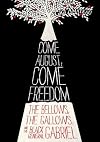
This beautiful but tragic story is based on actual events relating to the slave Gabriel, who had the temerity, in 18th Century Virginia, to dream of freedom.
The author imagines Gabriel’s interior life, based on what is known about his actual circumstances. Born into slavery on a tobacco plantation in 1776, Gabriel was taught to read and write. As he grew up and acquired the skills of a blacksmith, he was also hired out to Richmond to bring in more money for his master. There he interacted show more with free blacks and white laborers and heard not only the ideas of freedom and equality touted by the American Revolution, but of the successful uprising in Saint Domingue led by black slaves that culminated in the end of slavery there. Why, he asked, couldn’t that happen in America?
He recruited others, and worked on obtaining weapons. Their rebellion was scheduled to start August 30, 1800. Not only did a torrential rain intervene, but two slaves confessed the plan to their masters. Many of the conspirators were caught, some were executed, and some were exiled to other states. A rare few were pardoned. Gabriel of course was not among them, and was hanged on October 10.
Ms. Amateau tries to recreate not only Gabriel’s thoughts during his life, but the reactions of his mother and later his wife, Nanny, to the exceptional man that Gabriel grew up to be. Nanny, as courageous as her husband, also participated in the planning for the rebellion. The author includes reproductions, interspersed throughout the text, of documents from the time relating to Gabriel’s rebellion, capture, sentencing, and execution.
Evaluation: The plotline of this book and of Gabriel’s true story were only bearable for me because, unlike a movie or television production, there are no visuals of violence, and no actual faces I could attach to those who would perpetuate slavery (with the notable exception of James Monroe, then Governor of Virginia). It is meant to be a book you can bear, and yet – it is hard. The prose is lovely, and explicit evils of slavery are kept to a minimum, but the pain and awfulness of slavery cannot be hidden. Nor should it be! It is a real enough story, and should be told; should be borne. Research notes are appended to the text.
While this book is being marketed as Middle Grade, I didn’t see any reason why it could not also or alternatively be labeled Young Adult or Adult.
Highly recommended!
Note: On August 30, 2007 Governor Tim Kane informally pardoned Gabriel, saying that his motivation had been "his devotion to the ideals of the American revolution — it was worth risking death to secure liberty." show less
The author imagines Gabriel’s interior life, based on what is known about his actual circumstances. Born into slavery on a tobacco plantation in 1776, Gabriel was taught to read and write. As he grew up and acquired the skills of a blacksmith, he was also hired out to Richmond to bring in more money for his master. There he interacted show more with free blacks and white laborers and heard not only the ideas of freedom and equality touted by the American Revolution, but of the successful uprising in Saint Domingue led by black slaves that culminated in the end of slavery there. Why, he asked, couldn’t that happen in America?
He recruited others, and worked on obtaining weapons. Their rebellion was scheduled to start August 30, 1800. Not only did a torrential rain intervene, but two slaves confessed the plan to their masters. Many of the conspirators were caught, some were executed, and some were exiled to other states. A rare few were pardoned. Gabriel of course was not among them, and was hanged on October 10.
Ms. Amateau tries to recreate not only Gabriel’s thoughts during his life, but the reactions of his mother and later his wife, Nanny, to the exceptional man that Gabriel grew up to be. Nanny, as courageous as her husband, also participated in the planning for the rebellion. The author includes reproductions, interspersed throughout the text, of documents from the time relating to Gabriel’s rebellion, capture, sentencing, and execution.
Evaluation: The plotline of this book and of Gabriel’s true story were only bearable for me because, unlike a movie or television production, there are no visuals of violence, and no actual faces I could attach to those who would perpetuate slavery (with the notable exception of James Monroe, then Governor of Virginia). It is meant to be a book you can bear, and yet – it is hard. The prose is lovely, and explicit evils of slavery are kept to a minimum, but the pain and awfulness of slavery cannot be hidden. Nor should it be! It is a real enough story, and should be told; should be borne. Research notes are appended to the text.
While this book is being marketed as Middle Grade, I didn’t see any reason why it could not also or alternatively be labeled Young Adult or Adult.
Highly recommended!
Note: On August 30, 2007 Governor Tim Kane informally pardoned Gabriel, saying that his motivation had been "his devotion to the ideals of the American revolution — it was worth risking death to secure liberty." show less

Lovely modern day version of the archetypal Black Beauty story: horse narrates his life as he is sold to a series of owners and makes friends along the way, learns lessons. In this case, Macadoo is a Belgian draft horse, which is a different and interesting choice for a horse story. His mother imparts lessons to him about his breed, that they were important for humans, used in clearing land and doing all sorts of work; and that his job will always be to be strong and to heal people. Yes, the show more story is a little heartstring-pulling and dare I say schmaltzy, but really nice. Macadoo suffers the heartbreaking first separation from his mother, and then another separation years later from the boy he has grown to love; but he also learns to stay true to his calling and love every new child who comes to care for him or to ride him. And there's a lovely happy ending. I enjoyed learning a little more about vaulting (the sport of doing gymnastics tricks while on the back of a horse running around in a circle!) and therapeutic riding stables. I liked the mules he befriends, Job and Molly, too. My only quibble, and what kept me from giving it five stars, was that the horses were pretty much all-knowing; they all understood their humans perfectly, so they were always aware of what was going to happen to them. Mac's mom knew what an auction was and knew of the historic importance of Belgians; Mac learns to recognize the constellations in the night sky! As in, their real names, not some horse-idea of the constellations. But maybe I am being too cynical. I know as a 13-year old I would have eaten this book up, and I enjoyed being able to hand it to one of my library teens as her summer reading prize recently. I would read the other book in the series, Chancey of Maury River, too. I received an Early Reviewer advance reading copy of this book from LibraryThing in exchange for my (belated) review. show less
This review was written for LibraryThing Early Reviewers.Lists
Awards


You May Also Like


Associated Authors
Statistics
- Works
- 7
- Also by
- 1
- Members
- 496
- Popularity
- #49,830
- Rating
- 3.8
- Reviews
- 63
- ISBNs
- 40
- Favorited
- 1

