
Euell Gibbons (1911–1975)
Author of Stalking The Wild Asparagus
About the Author
Works by Euell Gibbons
Stalking Wild Foods on a Desert Isle 2 copies
Associated Works
Tagged
Common Knowledge
- Legal name
- Gibbons, Euell Theophilus
- Birthdate
- 1911-09-08
- Date of death
- 1975-12-29
- Gender
- male
- Nationality
- USA
- Birthplace
- Clarksville, Texas, USA
- Place of death
- Sunbury, Pennsylvania, USA
- Associated Place (for map)
- USA
Members
Reviews

Ever eat a pine tree? Many parts are edible.
--Euell Gibbons, 1970s TV commercial for Grape Nuts cereal
Back when I was a teen, we went through a spell of making jokes using "Ever eat a ___? Many parts are edible" as a template. A meme, if you will.
In Stalking the Wild Asparagus I discovered I really like Gibbons, the man. The jokes we made might have been funny but now I realize he was a national treasure, an inspiration. He was wonderfully entertaining and generous. He possessed a true show more wealth of information and was a nature-lover of the first order. In his book, even his friends teased him about the effort and economics of foraging. But he always responded good naturedly about it, secretly knowing that his Saturday's bounty was all free and healthful, while his friends gardened or golfed that day--neither of those activities with low economies per take home output. Gibbons knew that he, instead, had the memory of a beautiful day spent in the sun or in a cooling rain among critters and plants with complete relaxation and peace of mind. And arms full of good food.
Sadly, I couldn't help but wonder about how different the American landscape might seem to him now, 50 years later. Would four adults--he, his wife, a friend and his wife--still be able to forage all their meals on a Pennsylvania man's 20 acres? For a week? He did back then. Maybe he could now too, but much of where he might have foraged once is buried under cement or barred by No Trespassing signs, I'm sure.
Still, it did make my heart sing to attentively imagine all that he gathered and vicariously enjoy the many ways he prepared his wild foods. I admired that he carried within him eons of human knowledge.
I felt a twinge of the wannabe prepper in me, wondering how much I could gather right here that was edible. I see thousands of gold bean pods hanging from maligned mesquite trees every late summer and autumn and know the Native Americans made a flour from them. I wonder how that might taste. On leisurely winter walks I've gathered several pounds of pecans from neighbors' trees that fall on the public side. Late this summer, my eldest granddaughter, 20, made prickly pear tuna jelly from cacti growing not more than 10 feet from our homes. The jelly was delicious and sparkled a jewel-like magenta. This summer I taught my littlest granddaughters, 6 and 8, that the weeds growing in their lawn--clover--were edible and tasted lemony. They tried them and were amazed, couldn't wait to share with their parents when they got home.
As I read Gibbons, I realized how all around me, even in a desert, grow edibles. Wild amaranth, dandelions, oaks with acorns, mustard weed, purslane, mushrooms, wild garlic, horehound, milkweed, sage, common sunflowers -all perfectly edible--and more I'm certain if only I too would partake of eons of human knowledge.
I loved this book. No joke. show less
--Euell Gibbons, 1970s TV commercial for Grape Nuts cereal
Back when I was a teen, we went through a spell of making jokes using "Ever eat a ___? Many parts are edible" as a template. A meme, if you will.
In Stalking the Wild Asparagus I discovered I really like Gibbons, the man. The jokes we made might have been funny but now I realize he was a national treasure, an inspiration. He was wonderfully entertaining and generous. He possessed a true show more wealth of information and was a nature-lover of the first order. In his book, even his friends teased him about the effort and economics of foraging. But he always responded good naturedly about it, secretly knowing that his Saturday's bounty was all free and healthful, while his friends gardened or golfed that day--neither of those activities with low economies per take home output. Gibbons knew that he, instead, had the memory of a beautiful day spent in the sun or in a cooling rain among critters and plants with complete relaxation and peace of mind. And arms full of good food.
Sadly, I couldn't help but wonder about how different the American landscape might seem to him now, 50 years later. Would four adults--he, his wife, a friend and his wife--still be able to forage all their meals on a Pennsylvania man's 20 acres? For a week? He did back then. Maybe he could now too, but much of where he might have foraged once is buried under cement or barred by No Trespassing signs, I'm sure.
Still, it did make my heart sing to attentively imagine all that he gathered and vicariously enjoy the many ways he prepared his wild foods. I admired that he carried within him eons of human knowledge.
I felt a twinge of the wannabe prepper in me, wondering how much I could gather right here that was edible. I see thousands of gold bean pods hanging from maligned mesquite trees every late summer and autumn and know the Native Americans made a flour from them. I wonder how that might taste. On leisurely winter walks I've gathered several pounds of pecans from neighbors' trees that fall on the public side. Late this summer, my eldest granddaughter, 20, made prickly pear tuna jelly from cacti growing not more than 10 feet from our homes. The jelly was delicious and sparkled a jewel-like magenta. This summer I taught my littlest granddaughters, 6 and 8, that the weeds growing in their lawn--clover--were edible and tasted lemony. They tried them and were amazed, couldn't wait to share with their parents when they got home.
As I read Gibbons, I realized how all around me, even in a desert, grow edibles. Wild amaranth, dandelions, oaks with acorns, mustard weed, purslane, mushrooms, wild garlic, horehound, milkweed, sage, common sunflowers -all perfectly edible--and more I'm certain if only I too would partake of eons of human knowledge.
I loved this book. No joke. show less
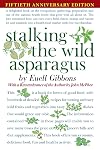
Imagine, if you will, sitting with your grandfather on his screened-in front porch or around a picnic table listening to your great-uncle spin his tales of years past. That might be the sensation you experience reading Gibbons' iconic 1962 text on wild foods.
Filled with personal vignettes, interesting recipes (some even with MSG!), and thoughtful commentary and insightful views, Gibbons came before the 1960's and 70's "back-to-nature" movement and the Foxfire books... perhaps his writings show more helped inspire those endeavors? As portrayed in his text he promotes natural foods, but not as a "natural-only" push... he distinctly states that medical science should be used when necessary, and waxes that his desire that his natural, foraged food diet limits that need. show less
Filled with personal vignettes, interesting recipes (some even with MSG!), and thoughtful commentary and insightful views, Gibbons came before the 1960's and 70's "back-to-nature" movement and the Foxfire books... perhaps his writings show more helped inspire those endeavors? As portrayed in his text he promotes natural foods, but not as a "natural-only" push... he distinctly states that medical science should be used when necessary, and waxes that his desire that his natural, foraged food diet limits that need. show less

This book is really hard to classify. It's not really travel - he does travel through the Hawaiian islands, but that's far from his focus. Cooking is closer - a _lot_ of the book is his recipes for (yummy-sounding) food that can be made from things gathered from the wild. Coconuts, fish, wild goats and pigs, guava, various nuts... It's the story of how he lived in a small house and basically fed himself by scrounging - fed himself (and his friends) scrumptiously, not on scraps. Some of his show more stuff is got by hunting or fishing, some from roadside plants (or plants much further from civilization), some need ingredients bought or scrounged from civilization. He informs us, for instance, that the brewery near his house scraped the ice from its freezer pipes once a week, and if he showed up then with a bucket they were happy to give it to him. He made ice-cream with that ice and various jellys and custards that he'd made from wild guava or coconut. He talks a little about working wood (into bowls and the like) to sell for money for the few things it's necessary to buy. And so on. I don't know whether it would still be possible to live his beachcomber's life - I get the feeling that property is more strongly held these days, but that may be less true in Hawaii than in California or Virginia. And it might well be possible to sustain yourself by offering to empty trees for people so the fruits won't fall and squash and make a mess. The recipes are interesting, the gathering instructions are comprehensive (though it sounds like a lot of work), the lifestyle would shortly drive me mad I think. But a very interesting book to read. show less

Ever since the first time I used the detailed instructions to make many pints of utterly wonderful maple syrup... mostly Manitoba maple (box elder) because Euell Gibbons accurately assured us that it was quite as good as sugar maple... and learned to identify hedgerow asparagus, I've had a soft spot for this book. That was 50 years ago -- I was 12. Stalking the Wild Asparagus really is a classic that every forager needs to read, and it richly rewards the reading.
You May Also Like


Associated Authors
Statistics
- Works
- 15
- Also by
- 2
- Members
- 1,621
- Popularity
- #15,881
- Rating
- 4.0
- Reviews
- 14
- ISBNs
- 28
- Favorited
- 1