
H. Rider Haggard (1856–1925)
Author of King Solomon's Mines
About the Author
Sir Henry Rider Haggard (1856-1925) is best remembered for his 34 adventure fantasy novels set in exotic locations. As a child, Haggard, whose father was an English barrister, was considered dim-witted and was inclined to daydreaming. His parents ended his formal education when he was seventeen, show more and he was sent to work in South Africa, where his imagination was inspired by the people, animals, and jungle. He became close friends with authors Rudyard Kipling and Andrew Lang. Haggard's most popular books are King Solomon's Mines (1886) and She (1887). He also wrote short stories, as well as nonfiction on topics such as gardening, English farming, and rural life, interests which led to duties on government commissions concerned with land maintenance. For his literary contributions and his government service, Haggard was knighted in 1912. Several of Haggard's novels have been filmed. She was filmed in 1965, starring Ursula Andress. King Solomon's Mines was filmed with Stewart Granger and Deborah Kerr in 1950, and again with Richard Chamberlain and Sharon Stone in 1985. Also, the novel Allan Quatermain was filmed as Allan Quatermain and the Lost City of Gold with Richard Chamberlain and Sharon Stone in 1986. (Bowker Author Biography) show less
Image credit: Henry Rider Haggard, circa 1905. Photographer unknown. Bains News Service / Wikimedia.
Series
Works by H. Rider Haggard
Hunter Quatermain's Story: The Uncollected Adventures of Allan Quartermain (1885) 74 copies, 1 review
Regeneration, Being an Account of the Social Work of the Salvation Army in Great Britain (1910) 23 copies
Kuningas Saalomoni kaevandused ; Seeba kuninganna sõrmus : [romaanid] (2007) — Author — 20 copies, 1 review
Cetywayo and his White Neighbours Remarks on Recent Events in Zululand, Natal, and the Transvaal (1882) 16 copies
The Annotated She: A Critical Edition of H. Rider Haggard's Victorian Romance (Visions (Bloomington, Ind.)) (1991) 15 copies, 1 review
King Solomon's Mines and Other Adventures Vol. 1 (The Allan Quatermain Tales--Four Exciting Adventure Novels in One Volume) (2008) 11 copies
The Allan Quatermain Series: 15 Books and Stories in One Volume (Unexpurgated Edition) (Halcyon Classics) (2009) 9 copies, 1 review
The Favorite Novels of H Rider Haggard One Volume Edition (Cleopatra / She / King Solomon's Mines / Allan Quatermain / M (1928) 8 copies
SHE: The four novels.: (She, Ayesha: The Return of She, She and Allan, Wisdom?s Daughter) (Timeless Wisdom Collection) (2016) — Author — 8 copies
Quatermain: the Complete Adventures: 3-Child of Storm & Allan and the Holy Flower (Quartermain) (2008) 6 copies
Quatermain: the Complete Adventures: 6-Heu-Heu or, the Monster & The Treasure of the Lake (2009) 6 copies
African Adventures: 2-The People of the Mist, Black Heart and White Heart & The Wizard (2009) 4 copies
Der Geist der Freude Studien zu den Vorlagen, zur Textgestaltung und zu den Konzeptionen der Jugendwerke des "anderen" Goethe (2012) 4 copies
Quatermain: the Complete Adventures: 7-Allan and the Ice Gods, Four Short Adventures & Nada the Lily (2009) 4 copies
Rural England; being an account of agricultural and social researches carried out in the years 1901 & 1902 (2011) 4 copies
King Solomon's Mines — The Original 1885 Classic and the First Adventure Novel of Allan Quatermain (Reader's Library Classics) (2023) 3 copies
New Oxford Progressive English Readers: Grade 4: 3700 Headwords: King Solomon's Mines (2008) 3 copies
King Solomon's Mines: Allan Quatermain and Montezuma's Daughter (Illustrated British Classics) (2016) 2 copies
Allan Quatermain Stories 2 copies
Magepa the Buck and Other Allan Quatermain Stories by H. Rider Haggard (Unexpurgated Edition) (Halcyon Classics) (2009) 2 copies
The Collected Works of Henry Rider Haggard: The Complete Works PergamonMedia (Highlights of World Literature) (2015) 2 copies
African Stories 2 copies
She [Motion picture] 2 copies
King Solomons Mines 2 copies
ඈ හෙවත් අයේෂා : 2 වන වෙළුම 2 copies
The Spring of the Lion 2 copies
The Lady of the Heavens 1 copy
[*] ΚΛΑΣΣΙΚΑ Εικονογραφημένα, Νο. 1068 (3η σειρά): Κλεοπάτρα [Classics Illustrated, No. 1068 (Greek - 3rd series): Cleopatra] (1889) 1 copy
Margaret 1 copy
Classics Illustrated JES, No. 38: The Golden Empire of Zu-Vendi (from "Allan Quatermain") (1887) 1 copy
She [Short Story] 1 copy
(all) 1 copy
Les mines du roi salomon 1 copy
Aztekernas sista hövding 1 copy
Pollyanna 1 copy
Colonel Quaritch, V.C. 1 copy
Rozamunda 1 copy
Haggard Anthology 1 copy
Smith und die Pharaonen / Das Hochzeitsgeschenk (Dornbrunnen Taschenschmöker) (2017) — Author — 1 copy
Allan Quatermain Annotated 1 copy
Zij en Ayesha 1 copy
The Blue Curtains 1 copy
Jitřenka (1920) 1 copy
As Minas de Salomão Livro 1 1 copy
About Fiction 1 copy
Den sorte lilie 1 copy
Allan Quatermain (abridged) 1 copy
The Days of My Life - Vol 2 1 copy
The Zayat Kiss 1 copy
foreign teachers graded reading the Oxford English society (Level 4) (Oxford progressive English readers) (1998) 1 copy
Et eventyrland 1 copy
Beatrice. A Novel. Vol. I 1 copy
MY FELLOW LABORER. 1 copy
LEGENDS OF AN EXTRAORDINARY GENTLEMAN #3 - AN ALLAN QUATERMAIN OMNIBUS: SHE & ALLAN; THE TREASURE OF THE LAKE; THE IVORY CHILD (2009) 1 copy
Barbara Who Came Back 1 copy
Mr. Meeson's Will 1 copy
Allan Quartermain Stories 1 copy
LEGENDS OF AN EXTRAORDINARY GENTLEMAN #1 - AN ALLAN QUATERMAIN OMNIBUS: ALLAN'S WIFE; MARIE; CHILD OF THE STORM (2009) 1 copy
LEGENDS OF AN EXTRAORDINARY GENTLEMAN #4 - AN ALLAN QUATERMAIN OMNIBUS: FINISHED; MAGEPA THE BUCK; KING SOLOMON'S MINES (2009) 1 copy
Beatrice. A Novel. Vol. II 1 copy
Smith y los faraones 1 copy
La principessa splendente 1 copy
Associated Works
Isaac Asimov's Magical Worlds of Fantasy, Volume 2: Witches (1984) — Contributor — 156 copies, 1 review
Mammoth Book of Short Fantasy Novels (Mammoth) (1986) — Contributor, some editions — 80 copies, 1 review
Into Unknown England, 1866-1913: Selections from the Social Explorers (1976) — Contributor — 24 copies
Adventure Novels: King Solomon's Mines, Prisoner of Zenda, Under the Red Robe, The Lost World, Beau Geste (Collins Classics) (1995) — Contributor — 7 copies
Out of the Sand: Mummies, Pyramids, and Egyptology in Classic Science Fiction and Fantasy (2008) — Contributor — 5 copies
Marvel Classics Comics No. 24 — Story — 2 copies
Het Beste Boek 124: Luchtkasteel / Liesbeth / Gekidnapt / Vondeling van de storm (1986) — Author — 2 copies, 1 review
Tagged
Common Knowledge
- Canonical name
- Haggard, H. Rider
- Legal name
- Haggard, Henry Rider
- Birthdate
- 1856-06-22
- Date of death
- 1925-05-14
- Gender
- male
- Education
- Ipswich Grammar School
- Occupations
- novelist
barrister
civil servant - Awards and honors
- Knight Commander, Order of the British Empire (1919)
Knight Bachelor (1912) - Relationships
- Haggard, Lilias Rider (daughter)
- Nationality
- UK
- Birthplace
- Bradenham, Norfolk, England, UK
- Places of residence
- South Africa
UK - Place of death
- London, Middlesex, England, UK
- Burial location
- St Mary Churchyard, Ditchingham, Norfolk, England, UK
- Map Location
- England, UK
Members
Reviews

Darwinian thought influences Allan's Wife and the other tales contained herein more forthrightly than anything else by Haggard I have so far read. In fact, in the story, "Long Odds," he directly employs the term, "survival of the fittest." This is as close to literary naturalism as you will find in any of his works. The hunting short stories, in particular, focus on a perceived realism, although the descriptions of animal behavior are exaggerated and, indeed, often incorrect, and they show more combine this realism with an emphasis on the rawness of nature and the combat necessary simply to get from one day to the next. It is harrowing stuff.
But it is in the title story/novel/novella, or however it may best be termed, that Haggard really gets around to dealing with notions of naturalism in literature. Taking up a trope common to European mythology, the feral White child, which can be seen even in the foundation stories applied to the creation of Rome, Haggard transplants the idea to Africa. Here, a White feral girl is raised by a troop of baboons, until she is rescued by a young woman who will become Allan Quatermain's wife.
Named Hendrika, the feral girl can not only communicate in "baboon talk" but also trains herself up in ways that manifest the strength, agility, and balance of those apes. Brought into the home of Stella Carson and her father, Hendrika is civilized and made a part of the family. All works well until Allan's arrival unleashes a streak of jealousy and hatred in Hendrika that leads to yet more adventure and tragedy.
Clearly, Haggard anticipates Edgar Rice Burroughs' Tarzan by almost a quarter of a century. (Burroughs, by the way, along with Zane Grey, would bring literary naturalism to the forefront of the American bestseller in the years right before World War I.) But Haggard does so in his own unique way. And this is what makes his protagonist, Allan, so interesting. Far from the indomitable, perfect White hero, ruling over the plains and jungles of Africa, Quatermain is a flawed man, stubborn, easily put into moods, doubting, and, worst of all, someone who frequently makes the wrong decision, even as his instincts try to warn him off taking errant paths. In Allan's Wife, these flaws multiply, especially when the skeptical Allan refuses to listen to the warnings his African friend, a seer, constantly supplies. This thematic tension, between rational skepticism and mysticism runs throughout the Quatermain series of books. And, in this particular tale, Allan's refusal to listen to advice has consequences that forever sadden his life. show less
But it is in the title story/novel/novella, or however it may best be termed, that Haggard really gets around to dealing with notions of naturalism in literature. Taking up a trope common to European mythology, the feral White child, which can be seen even in the foundation stories applied to the creation of Rome, Haggard transplants the idea to Africa. Here, a White feral girl is raised by a troop of baboons, until she is rescued by a young woman who will become Allan Quatermain's wife.
Named Hendrika, the feral girl can not only communicate in "baboon talk" but also trains herself up in ways that manifest the strength, agility, and balance of those apes. Brought into the home of Stella Carson and her father, Hendrika is civilized and made a part of the family. All works well until Allan's arrival unleashes a streak of jealousy and hatred in Hendrika that leads to yet more adventure and tragedy.
Clearly, Haggard anticipates Edgar Rice Burroughs' Tarzan by almost a quarter of a century. (Burroughs, by the way, along with Zane Grey, would bring literary naturalism to the forefront of the American bestseller in the years right before World War I.) But Haggard does so in his own unique way. And this is what makes his protagonist, Allan, so interesting. Far from the indomitable, perfect White hero, ruling over the plains and jungles of Africa, Quatermain is a flawed man, stubborn, easily put into moods, doubting, and, worst of all, someone who frequently makes the wrong decision, even as his instincts try to warn him off taking errant paths. In Allan's Wife, these flaws multiply, especially when the skeptical Allan refuses to listen to the warnings his African friend, a seer, constantly supplies. This thematic tension, between rational skepticism and mysticism runs throughout the Quatermain series of books. And, in this particular tale, Allan's refusal to listen to advice has consequences that forever sadden his life. show less

This is a rip-roaring slice of Haggard action and drama set in the 16th century at the time of Cortes's conquest of the Aztecs. Thomas Wingfield is an Englishman with a Spanish mother. She is killed by a Spaniard, De Garcia, and Thomas spends twenty years avenging her death, which brings him to Mexico where he joins the Aztecs against their common Spanish enemy, despite his revulsion at their practices of human sacrifice. He marries the eponymous Princess, betraying his vows to his show more sweetheart Lily back in England. He witnesses and fights against the Spanish Conquista, finally kills De Garcia, suffers the death of his wife and children, and returns to England and marries Lily who has waited for him. Full of cliches by modern standards of course, but a gripping read with many dramatic and even horrific scenes. Splendid stuff. 5/5 show less
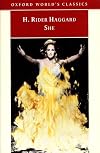
"Time Hath No Power Against Identity"
Such a rare and joyful pleasure when a 'classic' proves equal to its reputation. At once a rollicking adventure tale and a rumination on the folly of vanity (both personal and cultural), She was an engaging read throughout. Haggard's prose remain effective 140 years later and the narrative brings the same thrills (and chills, make no mistake) that it must have done a century and a half ago.
The effect of this work on the burgeoning field of show more imaginative/speculative fiction was profound and numerous strains of its influence can be seen today in stories of fantasy, horror, and imagination. show less
Such a rare and joyful pleasure when a 'classic' proves equal to its reputation. At once a rollicking adventure tale and a rumination on the folly of vanity (both personal and cultural), She was an engaging read throughout. Haggard's prose remain effective 140 years later and the narrative brings the same thrills (and chills, make no mistake) that it must have done a century and a half ago.
The effect of this work on the burgeoning field of show more imaginative/speculative fiction was profound and numerous strains of its influence can be seen today in stories of fantasy, horror, and imagination. show less

She by H. Rider Haggard is an adventure novel that was originally published in 1887 after being previously serialized in a magazine. This fantasy adventure is the story of Cambridge professor Horace Holly and his ward Leo Vincey and their journey to a lost kingdom in the African interior. While the story is very unbelievable, I enjoyed being reminded of how I felt as a child when I would watch old Tarzan movies on “Jungle Theatre”.
This story about a two thousand year old sorceress, show more “She-Who-Must-Be-Obeyed” and her tribe of cannibals is sheer balderdash but there were touches of misogynistic attitudes, a great deal of racism, and definite colonial attitudes that gives the reader a good look at the mindset of imperialist Victorians in the 1880s. Although the story is dated, it is a fact that this book was a trailblazer of original adventure stories, and is well remembered and at times copied even today. show less
This story about a two thousand year old sorceress, show more “She-Who-Must-Be-Obeyed” and her tribe of cannibals is sheer balderdash but there were touches of misogynistic attitudes, a great deal of racism, and definite colonial attitudes that gives the reader a good look at the mindset of imperialist Victorians in the 1880s. Although the story is dated, it is a fact that this book was a trailblazer of original adventure stories, and is well remembered and at times copied even today. show less
Lists
Awards


You May Also Like


Associated Authors
Statistics
- Works
- 284
- Also by
- 49
- Members
- 18,905
- Popularity
- #1,155
- Rating
- 3.6
- Reviews
- 394
- ISBNs
- 3,525
- Languages
- 26
- Favorited
- 46


