
Gary Phillips (1) (1955–)
Author of DC Comics novels - Batman: The Killing Joke
For other authors named Gary Phillips, see the disambiguation page.
About the Author
Image credit: Photo by flickr user Mark Coggins
Series
Works by Gary Phillips
The Darker Mask : Heroes from the Shadows [Anthology] (2008) — Editor, Contributor — 58 copies, 3 reviews
The Obama Inheritance: Fifteen Stories of Conspiracy Noir (2017) — Editor; Contributor — 41 copies, 4 reviews
Send My Love and a Molotov Cocktail! Stories of Crime, Love, and Rebellion (2011) — Editor — 37 copies
Politics Noir: Dark Tales from the Corridors of Power (2008) — Editor; Contributor — 19 copies, 1 review
The Socratic Method 2 copies
The Sleeping Detective 1 copy
Angeltown # 4 1 copy
Angeltown # 1 1 copy
South Central Rhapsody 1 copy
Angeltown # 2 1 copy
Angeltown # 3 1 copy
Angeltown # 5 1 copy
The Kim Novak Effect 1 copy
Associated Works
In Pursuit of Spenser: Mystery Writers on Robert B. Parker and the Creation of an American Hero (2012) — Contributor — 81 copies, 6 reviews
The World's Finest Mystery and Crime Stories: First Annual Collection (2000) — Contributor — 68 copies, 1 review
Black Noir: Mystery, Crime, and Suspense Fiction by African-American Writers (2009) — Contributor — 61 copies, 1 review
Anatomy of Innocence: Testimonies of the Wrongfully Convicted (2017) — Contributor — 59 copies, 1 review
The Highway Kind: Tales of Fast Cars, Desperate Drivers, and Dark Roads (2016) — Contributor — 58 copies, 3 reviews
The World's Finest Mystery and Crime Stories: Second Annual Collection (2001) — Contributor — 56 copies, 1 review
Jewish Noir: Contemporary Tales of Crime and Other Dark Deeds (2015) — Contributor — 50 copies, 1 review
Shades of Black: Crime and Mystery Stories by African-American Authors (2004) — Contributor — 47 copies
Between the Dark and the Daylight and 27 More of the Best Crime and Mystery Stories of the Year (2009) — Contributor — 43 copies, 1 review
Sticking It to the Man: Revolution and Counterculture in Pulp and Popular Fiction, 1950 to 1980 (2019) — Contributor — 36 copies
From Sea to Stormy Sea: 17 Stories Inspired by Great American Paintings (2019) — Contributor — 31 copies, 3 reviews
The Faking of the President: Nineteen Stories of White House Noir (2000) — Contributor — 30 copies, 8 reviews
A Sampling of Sleuths: Short Stories from Bingeworthy Mystery Authors (2023) — Contributor — 16 copies, 3 reviews
Pop the Clutch: Thrilling Tales of Rockabilly, Monsters, and Hot Rod Horror (2019) — Contributor — 8 copies
Dead of Winter: Chilling New Tales of Crime — Contributor — 4 copies
Crawl Out Your Window #8 — Contributor — 1 copy
Crawl Out Your Window #7 — Contributor — 1 copy
Crawl Out Your Window #9 & 10 — Contributor — 1 copy
Tagged
Common Knowledge
- Birthdate
- 1955
- Gender
- male
- Nationality
- USA
- Birthplace
- Los Angeles, California, USA
- Associated Place (for map)
- California, USA
Members
Reviews
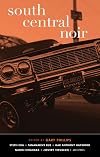
This collection of noir centers on a 33-mile patch of LA made famous by the 1992 riots and gangsta rap. South Central has a reputation of being cold and hard, and these stories certainly reflect this aspect of reality. What I especially enjoyed about this collection is that 1/3 of the stories are historically set (before the riots), as well as the exploration of the melting pot of cultures that swirls around Central Avenue.
The stories are divided into three categories: Always and Forever, show more Cold Sweat, and The World is a Ghetto. My favorite story (by a long margin) was "The Golden Coffin" by Emory Holmes II, set in the 1930s around the classic Dunbar Hotel, an oasis for upper-class Blacks during the Depression. The story's main strength is the strong sense of community. We have our narrator and all of the people around him, who serve as a reflection of the illusion of safety that is the Dunbar, nestled in the heart of a heady, racist LA. The eponymous golden coffin speaks to the nature of the Dunbar and all the people who both work there and stay there. It's a wonderful story, a blend of history, murder, and noir, and also the longest of the bunch.
There is a lot of grim, miserable reality in these pages: the opening story is about a Korean store owner who burns down his place during the riots in a gamble for insurance money. The second story is about two teen girls who hustle for their lives (quite literally) as well as the precious life of an innocent baby. The first story in the second section is a slice of life vignette following a kneebreaker for a loan shark in the post-war period. "Mae's Family Dining" is another excellent story spanning decades, telling how Mae opened her restaurant and how she can (and can't) outrun her luck as an outspoken Black woman in the 1960s. There's a thread of corruption (especially police corruption) through the entire collection, one that reality has proven is even worse than we think. All of the stories in Part 3 are misery personified, with only the last one offering a glimpse of hope. It's a lot to read all at once.
There is some sweetness to balance the dark - "All that Glitters" by Gar Anthony Haywood was another personal favorite, a bittersweet story about a mentally challenged man who hides his family treasure among the structures of Watts Towers before he dies - and all of the people who are trying to find it. I called it a "sideways fairy tale" in my notes. "I Am Yojimbo" by Naomi Hirahara is an interesting intersection of cultures: a young Black boy idolizes the samurais in the movies shown at the local Japanese theatre, but life gets a little too real when he has a run-in with a real-life yakuza.
In the end, there was just a touch too much darkness for me to rate the entire collection higher than 3, but it is a solid collection and worth reading. I'd definitely like to read the other LA-centered collections, especially the "classics" given California noir was practically its own subgenre during the postwar heyday. show less
The stories are divided into three categories: Always and Forever, show more Cold Sweat, and The World is a Ghetto. My favorite story (by a long margin) was "The Golden Coffin" by Emory Holmes II, set in the 1930s around the classic Dunbar Hotel, an oasis for upper-class Blacks during the Depression. The story's main strength is the strong sense of community. We have our narrator and all of the people around him, who serve as a reflection of the illusion of safety that is the Dunbar, nestled in the heart of a heady, racist LA. The eponymous golden coffin speaks to the nature of the Dunbar and all the people who both work there and stay there. It's a wonderful story, a blend of history, murder, and noir, and also the longest of the bunch.
There is a lot of grim, miserable reality in these pages: the opening story is about a Korean store owner who burns down his place during the riots in a gamble for insurance money. The second story is about two teen girls who hustle for their lives (quite literally) as well as the precious life of an innocent baby. The first story in the second section is a slice of life vignette following a kneebreaker for a loan shark in the post-war period. "Mae's Family Dining" is another excellent story spanning decades, telling how Mae opened her restaurant and how she can (and can't) outrun her luck as an outspoken Black woman in the 1960s. There's a thread of corruption (especially police corruption) through the entire collection, one that reality has proven is even worse than we think. All of the stories in Part 3 are misery personified, with only the last one offering a glimpse of hope. It's a lot to read all at once.
There is some sweetness to balance the dark - "All that Glitters" by Gar Anthony Haywood was another personal favorite, a bittersweet story about a mentally challenged man who hides his family treasure among the structures of Watts Towers before he dies - and all of the people who are trying to find it. I called it a "sideways fairy tale" in my notes. "I Am Yojimbo" by Naomi Hirahara is an interesting intersection of cultures: a young Black boy idolizes the samurais in the movies shown at the local Japanese theatre, but life gets a little too real when he has a run-in with a real-life yakuza.
In the end, there was just a touch too much darkness for me to rate the entire collection higher than 3, but it is a solid collection and worth reading. I'd definitely like to read the other LA-centered collections, especially the "classics" given California noir was practically its own subgenre during the postwar heyday. show less
 This review was written for LibraryThing Early Reviewers.
South Central Noir is a spectacular addition to the Akashic Noir Series. Here’s the thing. I always know each volume in the Noir Series will be interesting and enjoyable, but some locations simply are more noir than others. In some places, noir is not even a genre and must be explained by the editor, and the stories, while still interesting, miss the mark a bit. But what can be more noir than South Central?
I also want to thank editor Gary Phillips for writing the most noir introduction of show more the series. Noir does not explain. Noir has the confidence to just put it out there with a nice, short introduction without any justification for his choices other than he made them.
He knew what he was doing. Not one of the fourteen stories bored or disappointed me. Some were truly superb. Haint in the Window by Tananarive Due was particularly inventive. Besides, I always love stories in bookstores. I also loved Mae’s Family Dining by Penny Mickelbury about a woman, a restaurant, and some very bad cops. How Hope Found Chauncey by Jervey Tervalon was heartbreaking but still so rich in the love of friendship.
I can just about guarantee that I will love an Akashic Noir book. They are a completely different kind of armchair traveling, giving us a gritty, and probably more realistic view of a place we’ve never been. South Central Noir succeeds on all fronts, as good stories and as a unique insight to a place I have never been.
I received an ARC of South Central Noir from the publisher through LibraryThing.
South Central Noir at Akashic Books
Akashic Noir Series
Gary Phillips author site
https://tonstantweaderreviews.wordpress.com/2022/09/14/south-central-noir-ed-by-... show less
I also want to thank editor Gary Phillips for writing the most noir introduction of show more the series. Noir does not explain. Noir has the confidence to just put it out there with a nice, short introduction without any justification for his choices other than he made them.
He knew what he was doing. Not one of the fourteen stories bored or disappointed me. Some were truly superb. Haint in the Window by Tananarive Due was particularly inventive. Besides, I always love stories in bookstores. I also loved Mae’s Family Dining by Penny Mickelbury about a woman, a restaurant, and some very bad cops. How Hope Found Chauncey by Jervey Tervalon was heartbreaking but still so rich in the love of friendship.
I can just about guarantee that I will love an Akashic Noir book. They are a completely different kind of armchair traveling, giving us a gritty, and probably more realistic view of a place we’ve never been. South Central Noir succeeds on all fronts, as good stories and as a unique insight to a place I have never been.
I received an ARC of South Central Noir from the publisher through LibraryThing.
South Central Noir at Akashic Books
Akashic Noir Series
Gary Phillips author site
https://tonstantweaderreviews.wordpress.com/2022/09/14/south-central-noir-ed-by-... show less
This review was written for LibraryThing Early Reviewers.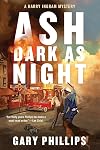
Ash Dark as Night is the second volume in Gary Phillips' series featuring Black freelance photographer Harry Ingram. The series is set in the first half of the 1960s. Ingram, a veteran of the Korean War, is doing the best he can to make his living as a news photographer, taking on side jobs as a process server when necessary in order to make ends meet. Given the times, police-press relationships are hostile, particularly when the police are white and the photographer Black.
Ash Dark as Night show more opens in the midst of the Watts riots. Ingram is on the ground, looking for shots he might be able to sell to local newspapers. One photo, of the death of a rising activist at police hands, has Ingram in all kinds of trouble; he's badly beaten and his camera is seized. Matters are further complicated when Ingram begins searching for a man who disappeared during the riots. Was he also a victim of the police?
I find this series compelling because of its setting during a time of violent transition in the U.S. and the Black Angelino community it represents. This new installment is more ambitious and less tidy than the first volume, One-Shot Harry. Plot lines mesh, then unravel, and there's no neat resolution at the book's end—just more questions. The good news is that those unanswered questions promise more volumes to come.
If you appreciate historical mysteries that explore the contradictions of the times in which they're set and that are firmly based in the perspective of often-marginalized communities, you'll want to keep an eye out for this series.
I received a free electronic review copy of this title from the publisher via Edelweiss; the opinions are my own. show less
Ash Dark as Night show more opens in the midst of the Watts riots. Ingram is on the ground, looking for shots he might be able to sell to local newspapers. One photo, of the death of a rising activist at police hands, has Ingram in all kinds of trouble; he's badly beaten and his camera is seized. Matters are further complicated when Ingram begins searching for a man who disappeared during the riots. Was he also a victim of the police?
I find this series compelling because of its setting during a time of violent transition in the U.S. and the Black Angelino community it represents. This new installment is more ambitious and less tidy than the first volume, One-Shot Harry. Plot lines mesh, then unravel, and there's no neat resolution at the book's end—just more questions. The good news is that those unanswered questions promise more volumes to come.
If you appreciate historical mysteries that explore the contradictions of the times in which they're set and that are firmly based in the perspective of often-marginalized communities, you'll want to keep an eye out for this series.
I received a free electronic review copy of this title from the publisher via Edelweiss; the opinions are my own. show less
Absolutely amazing. This is one of the best Akashic Noir collections I have ever read. The style and setting of each story is unique - some more current and others nearly 100 years in the past. Watching this section of Los Angeles change over time in just 280 pages is an experience no fan of noir should miss. While South Central is almost a character in its own right, these stories all bring the people to the forefront, and they are first and foremost people. They aren't mere vehicles to show more further an author's message about gentrification, over-policing (especially in the wake of the 1992 brutal beating of Rodney King), gang violence, drugs, or even the pandemic. Those messages are all there, but they transcend their circumstances and demand to be seen.
There is not a single story in this collection that I did not enjoy. The scope of this collection is breathtaking. The writing quality on all of them is high. I cannot recommend this one enough. "The Golden Coffin" by Emory Holmes II was probably my favorite. Set in 1935, this one had an absolutely perfect ending. Jeri Westerson's "The Last Time I Died" was sad and haunting. "All That Glitters" by Gar Anthony Haywood was delightful and I loved the narrator of Eric Stone's "Collections". Mae, the central character in Penny Mickelbury's "Mae's Family Dining" is probably my favorite character in the collection, though. I loved her. show less
This review was written for LibraryThing Early Reviewers.Lists
PM Press (2)
Awards


You May Also Like


Associated Authors
Statistics
- Works
- 70
- Also by
- 45
- Members
- 1,130
- Popularity
- #22,721
- Rating
- 3.5
- Reviews
- 58
- ISBNs
- 179
- Languages
- 2
