
Roger E. Olson
Author of The Story of Christian Theology: Twenty Centuries of Tradition & Reform
About the Author
Roger E. Olson (PhD, Rice University) is emeritus professor of Christian theology at Baylor University's Truett Theological Seminary. He is the author of many books, including Questions to All Your Answers; Reformed and Always Reforming; How to Be Evanqelical without Being Conservative; and Aqainst show more Calvinism. show less
Works by Roger E. Olson
The Story of Christian Theology: Twenty Centuries of Tradition & Reform (1999) 853 copies, 6 reviews
Finding God in the Shack: Seeking Truth in a Story of Evil and Redemption (2009) 155 copies, 1 review
Reformed and Always Reforming: The Postconservative Approach to Evangelical Theology (Acadia Studies in Bible and Theology) (2007) 126 copies, 3 reviews
Questions to All Your Answers: The Journey from Folk Religion to Examined Faith (2007) 81 copies, 1 review
The Essentials of Christian Thought: Seeing Reality through the Biblical Story (2017) 58 copies, 1 review
The Westminster Handbook to Evangelical Theology (Westminster Handbooks to Christian Theology) (2004) 45 copies
基督教三一論淺析 1 copy
統一與多元的基督教信仰 1 copy
Family in America, CT Review (Jesus in Beijing); Roger Olson article from Waco Trib file folder 2004 1 copy
Calvinism/Arminianism Which? 1 copy
Associated Works
The Pietist Impulse in Christianity (Princeton Theological Monograph) (2011) — Contributor — 12 copies, 1 review
Revisioning, Renewing, Rediscovering the Triune Center: Essays in Honor of Stanley J. Grenz (2014) — Foreword — 9 copies
By What Authority?: The Vital Questions of Religious Authority in Christianity (2010) — Contributor — 5 copies
Tagged
Common Knowledge
- Other names
- 奧爾森
- Birthdate
- 1952 -02-02
- Gender
- male
- Education
- Open Bible College (BA| Biblical and Theological Studies|1974)
North American Baptist Seminary (MA|Religious Studies|1978)
Rice University (MA|Religious Studies|1982)
Rice University (PhD|Religious Studies1984) - Occupations
- cleric
professor - Organizations
- American Academy of Religion
National Association of Baptist Professors of Religion
American Theological Society - Relationships
- Sandahl, Becky Jeanne (spouse)
Olson, Sonja Kristen (daughter)
Olson, Amanda Joy (daughter) - Nationality
- USA
- Associated Place (for map)
- USA
Members
Reviews
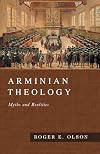
This is an excellent book for anyone seeking to understand Arminian theology properly, that is, as taught by James Arminius. Many Calvinists have a grave misunderstanding of classical Arminianism basically, I think, because they may not have not read Arminius' "Works" (I wonder if apologists like James White or theologians like MacArthur read it). In any case, Olson gives a very readable - not at all technical - understanding of Arminianism comparing the erroneous assertions made as to what show more it teaches with what Arminius himself and those who followed him taught . He admits that some who call themselves Arminians have strayed away from Arminius' teachings, however, it cannot be denied that even Calvinist have done the same with John Calvin. The value in "Arminian Theology" is the clarity he gives to Arminius' teachings and points exactly where others have gotten it all wrong; and, I must admit, in my experience discussing Arminianism as compared to Calvinism, the Calvinist brings up these exact misrepresentations of Arminianism as Olson points out in the book. It also helped me tremendously by pointing out areas where I have misunderstood Arminianism. For the Calvinist and the Arminian this a must read; and for the novice in theology who has an interest in reading Arminius' "Work", I suggest you read Olson's book first. show less
While eating in the college cafeteria as a young student, I spoke favorably of John Calvin. Years passed before a friend confessed how much I had shocked him. His pastor taught that Calvin was a heretic burning in Hell to this day, so my friend concluded I must be headed in the same direction.
While I’ve never considered debates between Calvinists and Arminians as anything but intramural friendlies, not everyone agrees. For every Arminian who thinks Calvinism a damnable heresy, there’s a show more Calvinist who thinks Arminians are humanists who reverse the power dynamic between God and man.
Theologian and professor Roger E. Olson of Baylor University is anxious to disperse this mutual animosity. As an Arminian, he doesn’t believe there exists a middle ground on the issues that divide. I agree and appreciate that he doesn’t fuzz away the differences. Rather, he defines and defends what he considers true Arminianism so Calvinists can grapple with the real thing rather than strawmen.
To this end, Olson structures each chapter around busting a myth; for instance, the first chapter meets the Calvinist challenge that Arminianism is not really a Reformed theology. Olson supports each of his chapters with original quotations, starting from Jacobus Arminius himself, then from his Remonstrant heirs, John Wesley, and both 19th- and 20th-century Arminian theologians.
Olson’s account is clarifying. He contends that both Arminians and Calvinists understand God’s glory in salvation as the main thing. But where Calvinists contend that God’s glory (not to mention sovereignty) is jeopardized if even the smallest atom is subject to free human decision, Arminians contend that God has already revealed in Jesus that his highest glory is that of love both genuine and universal.
Love limited and coerced is no love at all. From this, not to mention from Scriptures that seem to teach a universal atonement, flows the foundational doctrine of prevenient grace: that although all are dead in trespass and sin, and thus incapable in themselves of exercising a good will toward God, the death of Jesus imparts enough grace to everyone that anyone can stop resisting the call to salvation.
Olson distinguishes between this “Arminianism of the heart” and the “Arminianism of the head” represented by Philip Limborch, Charles Finney, and America’s liberal denominations. These fall into semi- or straight-up Pelagianism, recognizing man as either neutral or positive toward God, unfettered by a sin nature, and lacking nothing more serious than knowledge to make the right decision.
True Arminians cling to their Reformation roots, giving glory to God alone for the grace which renews dead sinners to eternal life, and diverging from their Calvinist brethren only to the extent of holding that God opts to display his glory through a genuine offer of salvation to anyone and everyone, thus limiting his own coercive power in deference to his revealed character of love.
I found Olson’s approach clear, balanced, irenic, and satisfying. He aims at a popular audience, so the text is neither drowning in footnotes nor drowsing in jargon. Whether you agree with him or not is less important than recognizing that neither John Calvin nor Jacobus Arminius are likely burning in Hell. Perhaps, then, their modern-day disciples can ratchet down the rhetoric that does such damage to the one and undivided Body of Christ. show less
While I’ve never considered debates between Calvinists and Arminians as anything but intramural friendlies, not everyone agrees. For every Arminian who thinks Calvinism a damnable heresy, there’s a show more Calvinist who thinks Arminians are humanists who reverse the power dynamic between God and man.
Theologian and professor Roger E. Olson of Baylor University is anxious to disperse this mutual animosity. As an Arminian, he doesn’t believe there exists a middle ground on the issues that divide. I agree and appreciate that he doesn’t fuzz away the differences. Rather, he defines and defends what he considers true Arminianism so Calvinists can grapple with the real thing rather than strawmen.
To this end, Olson structures each chapter around busting a myth; for instance, the first chapter meets the Calvinist challenge that Arminianism is not really a Reformed theology. Olson supports each of his chapters with original quotations, starting from Jacobus Arminius himself, then from his Remonstrant heirs, John Wesley, and both 19th- and 20th-century Arminian theologians.
Olson’s account is clarifying. He contends that both Arminians and Calvinists understand God’s glory in salvation as the main thing. But where Calvinists contend that God’s glory (not to mention sovereignty) is jeopardized if even the smallest atom is subject to free human decision, Arminians contend that God has already revealed in Jesus that his highest glory is that of love both genuine and universal.
Love limited and coerced is no love at all. From this, not to mention from Scriptures that seem to teach a universal atonement, flows the foundational doctrine of prevenient grace: that although all are dead in trespass and sin, and thus incapable in themselves of exercising a good will toward God, the death of Jesus imparts enough grace to everyone that anyone can stop resisting the call to salvation.
Olson distinguishes between this “Arminianism of the heart” and the “Arminianism of the head” represented by Philip Limborch, Charles Finney, and America’s liberal denominations. These fall into semi- or straight-up Pelagianism, recognizing man as either neutral or positive toward God, unfettered by a sin nature, and lacking nothing more serious than knowledge to make the right decision.
True Arminians cling to their Reformation roots, giving glory to God alone for the grace which renews dead sinners to eternal life, and diverging from their Calvinist brethren only to the extent of holding that God opts to display his glory through a genuine offer of salvation to anyone and everyone, thus limiting his own coercive power in deference to his revealed character of love.
I found Olson’s approach clear, balanced, irenic, and satisfying. He aims at a popular audience, so the text is neither drowning in footnotes nor drowsing in jargon. Whether you agree with him or not is less important than recognizing that neither John Calvin nor Jacobus Arminius are likely burning in Hell. Perhaps, then, their modern-day disciples can ratchet down the rhetoric that does such damage to the one and undivided Body of Christ. show less

Olson provides, again, an excellent read on the history of Christian faith and theology in relation to philosophy. Here he shows that Christians adhere to a fundamental tenets which originate from a revelatory philosophical world view inherent in the Bible. He says, "The biblical Christian vision of reality is a 'view from somewhere'... a revealed-to-faith perspective that, in the writer's perspective, cannot be proved true but nevertheless is no private worldview based solely on a show more subjective leap of faith. It is rooted in the narrative of the Bible..." (p.39).
It seems to me that Olson contends we do not need to go to philosophical views of being or metaphysics to understand or explain the Christian faith as, perhaps, the Church Fathers have done, because the Bible has its own metaphysical view of reality. He further argues that "throughout the centuries and yet today Christian thinkers have succumbed to the temptation to replace the thinking of the Bible with alien philosophies under the wrong assumption that the Bible is a bunch of stories which no reasonable, workable metaphysical vision (or ethic) can be drawn for later cultures and their Christians" (p.69).
Olson suggests that what we need to know of ultimate reality, the Bible provides adequate answers; that we need not look outside the Bible to philosophy, while it does have some benefits, to explain the Bible, but that the Bible "contains its own metaphysical vision of reality" (p.77).
Olson says that while Christians have varying beliefs on certain issues, nevertheless, they are united in the essential tenets that are absolutely necessary to thought identified as Christian or Biblical.
An excellent read for those interested in the relationship between philosophy and the Bible and the negative impact the former has upon the latter with correctives of ultimate reality from a Christian philosophical perspective. show less
It seems to me that Olson contends we do not need to go to philosophical views of being or metaphysics to understand or explain the Christian faith as, perhaps, the Church Fathers have done, because the Bible has its own metaphysical view of reality. He further argues that "throughout the centuries and yet today Christian thinkers have succumbed to the temptation to replace the thinking of the Bible with alien philosophies under the wrong assumption that the Bible is a bunch of stories which no reasonable, workable metaphysical vision (or ethic) can be drawn for later cultures and their Christians" (p.69).
Olson suggests that what we need to know of ultimate reality, the Bible provides adequate answers; that we need not look outside the Bible to philosophy, while it does have some benefits, to explain the Bible, but that the Bible "contains its own metaphysical vision of reality" (p.77).
Olson says that while Christians have varying beliefs on certain issues, nevertheless, they are united in the essential tenets that are absolutely necessary to thought identified as Christian or Biblical.
An excellent read for those interested in the relationship between philosophy and the Bible and the negative impact the former has upon the latter with correctives of ultimate reality from a Christian philosophical perspective. show less
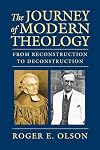
This is a great read, a "almost entirely" revised edition (2013) of "20th Century Theology" (1992) by Grenz and Olson, on the history of Christian modern theological and philosophical thought from Descartes to John Caputo. Olson seems to thoroughly handle each theologian or philosophers ideas on a level easily understandable to the lay reader (like me) and in a manner that really engaging. While all the persons, subjects, and issues are very interesting, the last person, Caputo the show more deconstructionist, is to me the most intriguing; and Olson's manner of writing about Caputo shows how much he enjoyed critiquing him (while, nevertheless, not agreeing at all with him).
This is a good introduction to Christian thought in modern times. show less
This is a good introduction to Christian thought in modern times. show less
Awards


You May Also Like


Associated Authors
Statistics
- Works
- 48
- Also by
- 9
- Members
- 3,972
- Popularity
- #6,355
- Rating
- 3.9
- Reviews
- 42
- ISBNs
- 88
- Languages
- 7
- Favorited
- 4
