
Barry Turner (2) (1937–)
Author of Suez 1956: The Inside Story of the First Oil War
For other authors named Barry Turner, see the disambiguation page.
About the Author
Barry Turner was educated at the London School of Economics and London Institute of Education. He has been a full-time writer for twenty years, and has been a regular guest on television and radio programs in the UK, mainly for commentary on the arts and education
Image credit: Wikipedia
Series
Works by Barry Turner
Outpost of Occupation: The Nazi Occupation of the Channel Islands 1940-45 (2010) 30 copies, 2 reviews
The Writer's Handbook Guide to Writing for Stage and Screen (Writer's Handbook Guides) (2003) 13 copies
The Screenwriter's Handbook: The Essential Companion for all Screenwriters (Screenwriter's Handbook: The Essential Companion for Screenwriters) (2007) 10 copies
Latin America profiled : essential facts on society, business, and politics in Latin America (2000) 5 copies
France Profiled: Essential Facts on Society, Business, and Politics in France (Statesman's Yearbook Factbooks) (2000) 4 copies
Germany Profiled: Essential Facts on Society, Business, and Politics in Germany (Statesman's Yearbook Factbooks) (2000) 4 copies
Scandinavia Profiled: Essential Facts on Society, Business, and Politics in Scandinavia (Syb Factbook) (2000) 4 copies
China Profiled: Essential Facts on Society, Business, and Politics in China (Syb Factbook) (2000) 3 copies
Central Europe Profiled: Essential Facts on Society, Business, and Politics in Central Europe (Statesman's Yearbook Factbooks) (2000) 3 copies
The Statesman's Yearbook; the essential political and economic guide to all the countries of the world; 1998-1999 (1998) 3 copies
The writer's handbook 1 copy
The Long Horizon 1 copy
Tagged
Common Knowledge
- Birthdate
- 1937-10-04
- Gender
- male
- Occupations
- journalist
broadcaster
writer - Organizations
- The Times of London
- Nationality
- UK
- Associated Place (for map)
- UK
Members
Reviews
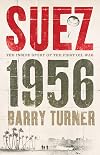
While there are no shortage of candidates for the moment when the Western empires came to an end, one of the most popular is that of the failed attempt by Britain and France to reclaim the Suez Canal in the autumn of 1956. For all of the military gains made by their forces and their Israeli allies, Operation Musketeer (as the plan was called) ended with the humiliating withdrawal of European forces and a political triumph for the ruler of Egypt, Gamal Nasser. Though subsequently regarded as show more a military success but a political failure, Barry Turner is having none of it. As he argues in his flawed but informative book, the effort was "a military failure and a political disaster," one the effects of which were felt for decades to come.
Turner traces its origins to the early investigations by the French at the start of the 19th century to explore the possibility of building a canal connecting the Mediterranean and Red Seas. His narrative loses its focus early here, as he offers a much broader of the West's involvement with the entire Middle East during the 19th and 20th centuries than is really necessary. Once he gets into the details of the immediate events leading up to the decision to invade, however, his narrative improves, as he details the chain of decisions in Britain, Egypt, France, Israel, and elsewhere that led the British prime minister, Anthony Eden, to seek a military response to Nasser's decision to nationalize the Suez Canal in 1956. The preparation for the invasion is portrayed as a comedy of errors, as National Servicemen found themselves suddenly thrust into an operation for which they were completely unprepared, with outdated and poorly-maintained Second World War-era equipment that was often inferior to the Soviet-supplied weapons of their Egyptian foes. The invasion itself was conducted with what proved in retrospect an overabundance of caution, as the Egyptians found themselves unprepared for the conflict and facing a war on two fronts. Yet it was the Egyptians who emerged as the victors, as international pressure brought an end to the last hurrah of an old style of Western imperialism.
All of this is described in an accessible and informative manner, one that strives, usually with success, to convey the major personalities behind the conflict. Turner's use of quotes is a great strength in this respect, as he deploys the memoirs and interviews of the major participants to give color to his narrative, Yet Turner's book suffers from a some flaws of construction. Foremost is in the subtitle, as his claims of Suez as the "first oil war" are strained and backed by little evidence, imbalancing some of his other assessments in the process. His narrative is also heavily Anglo-centric in its focus, which further distorts his analysis of the roles played by various participants and decisions. As a result, while an enjoyable introduction of the Suez crisis, Turner's book falls short of being the dramatic and insightful study that this account deserves. show less
Turner traces its origins to the early investigations by the French at the start of the 19th century to explore the possibility of building a canal connecting the Mediterranean and Red Seas. His narrative loses its focus early here, as he offers a much broader of the West's involvement with the entire Middle East during the 19th and 20th centuries than is really necessary. Once he gets into the details of the immediate events leading up to the decision to invade, however, his narrative improves, as he details the chain of decisions in Britain, Egypt, France, Israel, and elsewhere that led the British prime minister, Anthony Eden, to seek a military response to Nasser's decision to nationalize the Suez Canal in 1956. The preparation for the invasion is portrayed as a comedy of errors, as National Servicemen found themselves suddenly thrust into an operation for which they were completely unprepared, with outdated and poorly-maintained Second World War-era equipment that was often inferior to the Soviet-supplied weapons of their Egyptian foes. The invasion itself was conducted with what proved in retrospect an overabundance of caution, as the Egyptians found themselves unprepared for the conflict and facing a war on two fronts. Yet it was the Egyptians who emerged as the victors, as international pressure brought an end to the last hurrah of an old style of Western imperialism.
All of this is described in an accessible and informative manner, one that strives, usually with success, to convey the major personalities behind the conflict. Turner's use of quotes is a great strength in this respect, as he deploys the memoirs and interviews of the major participants to give color to his narrative, Yet Turner's book suffers from a some flaws of construction. Foremost is in the subtitle, as his claims of Suez as the "first oil war" are strained and backed by little evidence, imbalancing some of his other assessments in the process. His narrative is also heavily Anglo-centric in its focus, which further distorts his analysis of the roles played by various participants and decisions. As a result, while an enjoyable introduction of the Suez crisis, Turner's book falls short of being the dramatic and insightful study that this account deserves. show less
I sought out this book after reading the fictional book The Guernsey Literary and Potato Peel Society. Up to that point I'd been ignorant about the Channel Islands occupation by Germany during WWII, and was interested in learning more.
This was an interesting and detailed account of the 5 year occupation, although I felt it could have been much shorter. Of particular interest was learning how Churchill blamed the islanders for not trying harder to fight back against the Nazis, even though show more Britain had demilitarised the islands and left them unable to defend themselves. show less
This was an interesting and detailed account of the 5 year occupation, although I felt it could have been much shorter. Of particular interest was learning how Churchill blamed the islanders for not trying harder to fight back against the Nazis, even though show more Britain had demilitarised the islands and left them unable to defend themselves. show less
Last night I finished
[IMG]
Outpost of Occupation, How the Channel Islands Survived Nazi Rule 1940-1945, Barry Turner, 2010, Aurum Press Ltd, 312pp, photos, endnotes, index
I finished this last night, after starting it before Christmas. I had put the book down because of a lack of time during the holiday season and picked it back up this weekend past.
Overall, I learned a great deal about the islands, specifically how they are governed and the association then and now with the United Kingdom. show more As a US citizen, I did not realize that the islands are a Crown possession and not necessarily subject to the same laws and other governances as British subjects in Old Blighty.
The manuscript seems to have been well sourced utilizing a broad list of records and the author used direct quotes as often as he could. The writing style was engaging and held my interest well, in spite of me having to put it down for a few weeks because of time constraints.
I did feel at times, though, the author went a bit beyond necessity as an apologist where collaboration was concerned, but this was not a constant, over-riding theme.
The author noted the lack of significant resistance to the German occupation and I felt his reasoning held merit, which was the small size of the island and 3:1 to 1:1 ratio of occupiers to residents. The inhabitants had nowhere really to hide.
This was a good read and I recommend it.
9/10 show less
[IMG]
Outpost of Occupation, How the Channel Islands Survived Nazi Rule 1940-1945, Barry Turner, 2010, Aurum Press Ltd, 312pp, photos, endnotes, index
I finished this last night, after starting it before Christmas. I had put the book down because of a lack of time during the holiday season and picked it back up this weekend past.
Overall, I learned a great deal about the islands, specifically how they are governed and the association then and now with the United Kingdom. show more As a US citizen, I did not realize that the islands are a Crown possession and not necessarily subject to the same laws and other governances as British subjects in Old Blighty.
The manuscript seems to have been well sourced utilizing a broad list of records and the author used direct quotes as often as he could. The writing style was engaging and held my interest well, in spite of me having to put it down for a few weeks because of time constraints.
I did feel at times, though, the author went a bit beyond necessity as an apologist where collaboration was concerned, but this was not a constant, over-riding theme.
The author noted the lack of significant resistance to the German occupation and I felt his reasoning held merit, which was the small size of the island and 3:1 to 1:1 ratio of occupiers to residents. The inhabitants had nowhere really to hide.
This was a good read and I recommend it.
9/10 show less
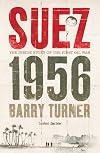
Quite readable. A mixture of political and military history. The emphasis is on the former, but it includes eye witness accounts by some of the soldiers. It is very critical of Eden, and indeed of the British political and military establishment in general.
Lists
Awards

You May Also Like


Associated Authors
Statistics
- Works
- 74
- Members
- 990
- Popularity
- #26,013
- Rating
- 3.5
- Reviews
- 9
- ISBNs
- 161
- Languages
- 4