
Hélène Gestern
Author of The People in the Photo
About the Author
Works by Hélène Gestern
Tagged
Common Knowledge
- Canonical name
- Gestern, Hélène
- Birthdate
- 1971
- Gender
- female
- Places of residence
- Nancy, Meurthe-et-Moselle, Grand-Est, France
- Associated Place (for map)
- Grand-Est, France
Members
Reviews
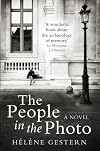
Have you ever gone through piles of old photographs and wondered who the people in them are or why the person who kept them did so? When we take a photograph, it tells a story, but that story is lost if no one continues to tell it or to know it. Just as the images themselves fade, so too do the histories behind the photos, if their stories aren't passed along. In Helene Gestern's lovely epistolary novel, The People in the Photo, the important story of a woman's mother is in danger of being show more lost to time and memory until she finds a photograph and embarks on a quest to uncover her mother's history and that of her own.
Helene was raised by her father and stepmother, who never spoke at all about the mother who died when she was just four years old. When she, as an adult, finds a photograph of her mother and two unknown men in an old newspaper clipping, she advertises to see if she can find out any information about the woman who has long been nothing more than a cypher in her life. Helene's father is dead and her stepmother no longer has memories to share so Helene, an archivist by trade, is determined to find out what information she can. A man named Stephane writes back to her identifying not only his father but his godfather as the other two people in the photo. Between Helene and Stephane then, they start to construct a tale that stretches far beyond the photo. As their letters and emails show, they have a flourishing correspondence and a matching keenness to uncover personal history.
Their letters show a remarkable gradual opening up and sharing of their current lives as well as their speculations, sometimes confirmed and sometimes refuted, about the past. They start off carefully and guardedly but eventually feel free to divulge the hurts of their pasts, perhaps because of the initial facelessness of their correspondence. The letters also show a growing affinity for each other even as they grapple with apprehensiveness about what they might uncover. In their explorations they flesh out Natasha, called Nathalie, and Peter beyond the flat confines of the original photo and all those photos that follow. The story, written as it is, is a slow unveiling of the truth, beautifully paced, even incorporating realistic gaps of time due to either Helene and Stephane's discomfort with the findings.
Uniquely and wonderfully effective in terms of the presentation of the story, each set of letters and emails is interleaved with descriptions of photographs that both illuminate and present more secrets for Helene and Stephane to tease out. Gestern has written an elegant and considered novel, a melancholy and aching tale of one love that cannot be and one that can. In the end, the connection between Helene and Stephane is not surprising although the details are simple and affecting. The novel is moody and atmospheric as they search for their parents' truths and bravely dig past the long silence. This is an incredibly quick read, a fascinating look at love and memory, and the part the past, even the unknown past, plays in our present and our very identity. show less
Helene was raised by her father and stepmother, who never spoke at all about the mother who died when she was just four years old. When she, as an adult, finds a photograph of her mother and two unknown men in an old newspaper clipping, she advertises to see if she can find out any information about the woman who has long been nothing more than a cypher in her life. Helene's father is dead and her stepmother no longer has memories to share so Helene, an archivist by trade, is determined to find out what information she can. A man named Stephane writes back to her identifying not only his father but his godfather as the other two people in the photo. Between Helene and Stephane then, they start to construct a tale that stretches far beyond the photo. As their letters and emails show, they have a flourishing correspondence and a matching keenness to uncover personal history.
Their letters show a remarkable gradual opening up and sharing of their current lives as well as their speculations, sometimes confirmed and sometimes refuted, about the past. They start off carefully and guardedly but eventually feel free to divulge the hurts of their pasts, perhaps because of the initial facelessness of their correspondence. The letters also show a growing affinity for each other even as they grapple with apprehensiveness about what they might uncover. In their explorations they flesh out Natasha, called Nathalie, and Peter beyond the flat confines of the original photo and all those photos that follow. The story, written as it is, is a slow unveiling of the truth, beautifully paced, even incorporating realistic gaps of time due to either Helene and Stephane's discomfort with the findings.
Uniquely and wonderfully effective in terms of the presentation of the story, each set of letters and emails is interleaved with descriptions of photographs that both illuminate and present more secrets for Helene and Stephane to tease out. Gestern has written an elegant and considered novel, a melancholy and aching tale of one love that cannot be and one that can. In the end, the connection between Helene and Stephane is not surprising although the details are simple and affecting. The novel is moody and atmospheric as they search for their parents' truths and bravely dig past the long silence. This is an incredibly quick read, a fascinating look at love and memory, and the part the past, even the unknown past, plays in our present and our very identity. show less
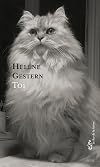
Si ce livre m’avait été résumé, j’aurais peut-être souri, condescendant, en imaginant une « mèmère à chat-chat ». Mais il faut le lire et comprendre combien un tel jugement peut-être facile et… totalement hors propos. Et quand bien même ?
Un livre qui m’a un peu rappelé Assise, debout, couchée ! d’Ovidie et de cette relation particulière qui peut se tisser avec un animal.
Et c’est touchant, tendre et beau. C’est plein d’amour
Un livre qui m’a un peu rappelé Assise, debout, couchée ! d’Ovidie et de cette relation particulière qui peut se tisser avec un animal.
Et c’est touchant, tendre et beau. C’est plein d’amour
"Our families' silence is a poison that infects everything it touches: our dreams, our fears, our entire adult lives. And it leaves us with nothing but questions to fall back on, thirty or forty years down the line."
From the blurb, because it's very accurate: Parisian archivist Hélène takes out a newspaper advert seeking information about her mother, who died when she was three, and the two men pictured with her in a photograph taken at a tennis tournament at Interlaken in 1971. Stéphane, show more a Swiss biologist living in Kent, responds: his father is one of the people in the photo. More letters and more photos pass between them as they embark on a journey to uncover the truth their parents kept from them. But will the images and documents from the past fill the silences left by the players?
The author has given the protagonist her own first name - when that happens, I do have to wonder if it is partly autobiographical (although Hélène is a very pretty name!). Hélène is well captured - gentle, curious, reflective, desperate to unearth her truth but loath to upset others. Obviously a sad childhood. I struggled a little more with Stéphane and actually preferred him when he cracked a bit every now and again. The epistolary style, in a sense, permits very limited development of any other characters, but then the whole book is about piecing together people from several decades ago and Nataliya is revealed little by little. Jean Pamiat, the side-lined friend, is actually my favourite character in the whole book, I think. He's deliciously omnipresent, and thankfully still alive in the modern time for our detectives to at least visit.
I've said it before - I love the epistolary novel. It permits gentle development of the story (and the sub-story - just the right way to deliver that) without being slow. Had it been told another way I might well have thrown the book aside in frustration with the romance and the clunky delivery of the decades-old mystery - but this method was natural and elegant.
For me, the aspect I walk away with is the incredible sadness of the ending. The climax is correctly paced and the puzzle is appropriately concluded, including various characters' odd behaviour, but this tale of love lost, found and lost again is really very sad in the end. Our characters put a brave face on it but... I would not be so sanguine.
It made me want to learn Russian! And mourn the lost art of the letter. I greatly enjoyed the adventures of Bourbaki the cat as told by Hélène - and the sub-story, which I cannot reveal for spoiler-avoidance reasons, is sweetly developed in the letters. show less
From the blurb, because it's very accurate: Parisian archivist Hélène takes out a newspaper advert seeking information about her mother, who died when she was three, and the two men pictured with her in a photograph taken at a tennis tournament at Interlaken in 1971. Stéphane, show more a Swiss biologist living in Kent, responds: his father is one of the people in the photo. More letters and more photos pass between them as they embark on a journey to uncover the truth their parents kept from them. But will the images and documents from the past fill the silences left by the players?
The author has given the protagonist her own first name - when that happens, I do have to wonder if it is partly autobiographical (although Hélène is a very pretty name!). Hélène is well captured - gentle, curious, reflective, desperate to unearth her truth but loath to upset others. Obviously a sad childhood. I struggled a little more with Stéphane and actually preferred him when he cracked a bit every now and again. The epistolary style, in a sense, permits very limited development of any other characters, but then the whole book is about piecing together people from several decades ago and Nataliya is revealed little by little. Jean Pamiat, the side-lined friend, is actually my favourite character in the whole book, I think. He's deliciously omnipresent, and thankfully still alive in the modern time for our detectives to at least visit.
I've said it before - I love the epistolary novel. It permits gentle development of the story (and the sub-story - just the right way to deliver that) without being slow. Had it been told another way I might well have thrown the book aside in frustration with the romance and the clunky delivery of the decades-old mystery - but this method was natural and elegant.
For me, the aspect I walk away with is the incredible sadness of the ending. The climax is correctly paced and the puzzle is appropriately concluded, including various characters' odd behaviour, but this tale of love lost, found and lost again is really very sad in the end. Our characters put a brave face on it but... I would not be so sanguine.
It made me want to learn Russian! And mourn the lost art of the letter. I greatly enjoyed the adventures of Bourbaki the cat as told by Hélène - and the sub-story, which I cannot reveal for spoiler-avoidance reasons, is sweetly developed in the letters. show less
This was a random pick from the library shelves, and I guess it was OK. It's a slowly unraveling mystery and to my mind the slowness of the unraveling felt a bit annoying. Highly unlikely plot devices were used to signal that something interesting was coming up but we weren't allowed to know. The main female character kept really important documents unread for unbelievable amounts of time. We were finding lots of mysterious aspects of the story and then a conveniently long lost letter or show more diary entry was found to fill in lots of gaps all at once and yet usually - and predictably - leave an important element unresolved. Further, the two main characters seemed to fall in love without any good reason - we didn't see enough of their relationship to understand why they fell for each other, and yet that seemed inevitable from page 1. show less
Awards


You May Also Like


Associated Authors
Statistics
- Works
- 12
- Members
- 240
- Popularity
- #94,568
- Rating
- 3.7
- Reviews
- 17
- ISBNs
- 28
- Languages
- 4