

David Epstein (1) (1980–)
Author of Range: Why Generalists Triumph in a Specialized World
For other authors named David Epstein, see the disambiguation page.
About the Author
David Epstein is the author of the New York Times bestseller The Sports Gene. He has master's degrees in environmental science and journalism and has worked as an investigative reporter for ProPublica and a senior writer for Sports Illustrated. He lives in Washington, DC.
Image credit: By Slowking4 - https://www.flickr.com/photos/73455099@N07/48656141628/, CC BY-SA 2.0, https://commons.wikimedia.org/w/index.php?curid=83848284
Works by David Epstein
The Sports Gene: Inside the Science of Extraordinary Athletic Performance (2013) 651 copies, 18 reviews
Associated Works
Tagged
Common Knowledge
- Birthdate
- 1980
- Gender
- male
- Occupations
- journalist
- Organizations
- Sports Illustrated
ProPublica - Agent
- Parris-Lamb, Chris
- Relationships
- Gladwell, Malcolm (inspiration)
- Nationality
- USA
- Associated Place (for map)
- USA
Members
Reviews
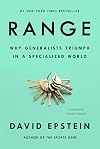
The argument in this book is that instead of specializing in a field or a hobby early in life, you should keep your options open, try a variety of things and see what sticks. It’s a thought that runs counter to modern society, where early specialization is the rule and people who jump from one career to another are seen as flaky or indecisive. And yet there is something to be said for having a variety of experiences: in our increasingly automated world, the advantage for humans is our show more ability to synthesize and conceptualize information in new ways to solve increasingly complex problems. I found this a compelling argument indeed, being someone who specialized in her career fairly early on and is having something of a midlife crisis about it: feeling pigeonholed and wanting to do more and different things. I’d recommend this book if you’re feeling stuck and looking for a change; it will encourage you to do something about it. show less

For the first few chapters, it seemed like this book was shaping up to be one of those "everybody does X, but Y is better" non-fiction narratives. Don't get me wrong, I love this type of hook. It's anti-conventional wisdom and occasionally the counter-proponents are right. But then David Epstein's Range did a deep dive and convincingly made the case for a broad spectrum of education and experience.
It's almost like specialization was a self-reinforcing problem we should have all seen coming. show more At the outset it makes sense. Be an expert at something. But then it became extraordinarily difficult to remain an education generalist and still expect a well-paying career. The specialists then naturally and inadvertently siloed themselves and the potential for the problem grew from there. It's difficult to say what will happen long term, but if the expertise of the specialists grows less reliable than the generalists (or possibly even AI), then we could see another cultural work shift.
Time will tell but I believe Range offers a fair warning of what's to come. show less
It's almost like specialization was a self-reinforcing problem we should have all seen coming. show more At the outset it makes sense. Be an expert at something. But then it became extraordinarily difficult to remain an education generalist and still expect a well-paying career. The specialists then naturally and inadvertently siloed themselves and the potential for the problem grew from there. It's difficult to say what will happen long term, but if the expertise of the specialists grows less reliable than the generalists (or possibly even AI), then we could see another cultural work shift.
Time will tell but I believe Range offers a fair warning of what's to come. show less
The core premise here is that innovation often comes from applying old ideas in new ways. Whether tools are physical or mental, having a variety of tools in your toolkit allows you to approach problems more different ways. Epstein uses historical examples of groundbreaking ideas born from familiar concepts in one field being transferred to another to solve a big problem, examples where hyper-focused ideologies led to disaster, and various pieces of scientific evidence to support the premise show more that, while we need subject matter experts, we also need well rounded thinkers who can think abstractly about problems and apply old ideas in new ways.
While he critiques the 10,000 hour rule popularized by Malcolm Gladwell, I feel the presentation of the research behind it is caught in the crossfire. Gladwell’s presentation is a problem, but at times the way he presents critiques of that presentation are overly critical of the research. He could have acknowledged that in Peak, Ericsson isn’t advocating putting your kid in a room with a violin 20 hours a day. He addresses that highly specialized skills don’t transfer unless they can be integrated into your existing mental models. He emphasizes that a core element of deliberate practice is being able to maintain a high level of focus throughout, and that repetition without the focus isn’t going to be that helpful. He doesn’t advocate anything like just abandoning everything else to train one skill.
Ultimately I don’t think they’re that far apart. They’re both selling the message that you can improve at things you want to improve at, and that it’s never too late to start learning. It did sour me a little to see how he presented Anders work, but I think both works can be used to inform your efforts at self improvement. I highly encourage both. show less
I worry about how much Epstein's writing appeals to me since it often feels like confirming biases and suspicions I already harbour. But if you've ever spent any time invested deeply in long-term development (sports, kids, yourself), so many of the topics covered in Range are likely real issues you've encountered. Do I specialize early, am I missing out by not committing down one path, should I even bother with some interest that isn't directly applicable to my work or field of study? show more There's a lot of pop psych about head-start approaches to development but not much which validates what you come to realize with age is still a valid and useful path to success: breadth and experimentation.
The next time some coach or trainer tells you how imperative early specialization is, this is the book that will help you feel more comfortable at dealing with a culture hellbent on being first rather than growing into skill and talent. show less
The next time some coach or trainer tells you how imperative early specialization is, this is the book that will help you feel more comfortable at dealing with a culture hellbent on being first rather than growing into skill and talent. show less
Lists
Awards


You May Also Like


Associated Authors
Statistics
- Works
- 2
- Also by
- 1
- Members
- 2,986
- Popularity
- #8,547
- Rating
- 4.1
- Reviews
- 77
- ISBNs
- 104
- Languages
- 9