
Alex Hutchinson (1)
Author of Endure: Mind, Body, and the Curiously Elastic Limits of Human Performance
For other authors named Alex Hutchinson, see the disambiguation page.
About the Author
Alex Hutchinson is a contributing editor at Popular Mechanics magazine, senior editor at Canadian Running magazine, and columnist for the Toronto Globe and Mail. He holds a master's in journalism from Columbia and a Ph.D. in physics from Cambridge, and he did his postdoctoral research with the U.S. show more National Security Agency. show less
Image credit: via Penguin Random House
Works by Alex Hutchinson
Endure: Mind, Body, and the Curiously Elastic Limits of Human Performance (2018) 465 copies, 9 reviews
Which Comes First, Cardio or Weights?: Fitness Myths, Training Truths, and Other Surprising Discoveries from the Science of Exercise (2011) 147 copies, 4 reviews
The Explorer's Gene: Why We Seek Big Challenges, New Flavors, and the Blank Spots on the Map (2025) 26 copies
Big Ideas: 100 Modern Inventions That Have Transformed Our World (Popular Mechanics) (2009) 21 copies, 1 review
Tagged
Common Knowledge
- Gender
- male
- Education
- University of Cambridge (PhD|Physics)
Columbia University (MS|Journalism)
McGill University (BSc|Physics) - Awards and honors
- National Newspaper Award, Canada
National Magazine Award, Silver, Canada
National Magazine Award, United States
Lowell Thomas Award for Travel Writing - Nationality
- Canada
- Places of residence
- Toronto, Ontario, Canada
- Associated Place (for map)
- Ontario, Canada
Members
Reviews
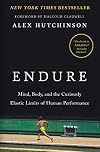
“Over the past decade, I’ve traveled to labs in Europe, South Africa, Australia, and across North America, and spoken to hundreds of scientists, coaches, and athletes who share my obsession with decoding the mysteries of endurance. I started out with the hunch that the brain would play a bigger role than generally acknowledged. That turned out to be true, but not in the simple it’s-all-in-your head manner of self-help books. Instead, brain and body are fundamentally intertwined, and to show more understand what defines your limits under any particular set of circumstances, you have to consider them both together. That’s what the scientists described in the following pages have been doing, and the surprising results of their research suggest to me that, when it comes to pushing our limits, we’re just getting started.”
Journalist, physicist, and runner (as a member of the Canadian national team) Alex Hutchinson relates the history and latest scientific research regarding the limits of human performance. He is particularly interested in whether our limits are imposed by mental or physical factors. Woven in between the sports physiology is a narrative set around Eliud Kipchoge’s attempt to run a marathon in under two hours. He likens this milestone to Roger Bannister breaking the four-minute mile.
This is a book for people who are avidly interested in endurance sports physiology and psychology. It contains fascinating anecdotes related to other sports such as cycling, mountain climbing, arctic exploration, basketball, breath-holding diving, triathlons, and ultramarathoning. The author creatively blends together these engrossing true stories with scientific data on world-class athletes. It seems the majority of people can improve through training the body, but once a person reaches world-class levels, the mind becomes an even bigger part of the performance.
The information is imparted in an easily accessible fashion, though it will appeal most to those specifically interested in sports performance. There is no simple answer to the question of what limits us – body or brain – but Hutchinson thoroughly explores the subject in a way that kept my interest from beginning to end. show less
Journalist, physicist, and runner (as a member of the Canadian national team) Alex Hutchinson relates the history and latest scientific research regarding the limits of human performance. He is particularly interested in whether our limits are imposed by mental or physical factors. Woven in between the sports physiology is a narrative set around Eliud Kipchoge’s attempt to run a marathon in under two hours. He likens this milestone to Roger Bannister breaking the four-minute mile.
This is a book for people who are avidly interested in endurance sports physiology and psychology. It contains fascinating anecdotes related to other sports such as cycling, mountain climbing, arctic exploration, basketball, breath-holding diving, triathlons, and ultramarathoning. The author creatively blends together these engrossing true stories with scientific data on world-class athletes. It seems the majority of people can improve through training the body, but once a person reaches world-class levels, the mind becomes an even bigger part of the performance.
The information is imparted in an easily accessible fashion, though it will appeal most to those specifically interested in sports performance. There is no simple answer to the question of what limits us – body or brain – but Hutchinson thoroughly explores the subject in a way that kept my interest from beginning to end. show less

“Over the past decade, I’ve traveled to labs in Europe, South Africa, Australia, and across North America, and spoken to hundreds of scientists, coaches, and athletes who share my obsession with decoding the mysteries of endurance. I started out with the hunch that the brain would play a bigger role than generally acknowledged. That turned out to be true, but not in the simple it’s-all-in-your head manner of self-help books. Instead, brain and body are fundamentally intertwined, and to show more understand what defines your limits under any particular set of circumstances, you have to consider them both together. That’s what the scientists described in the following pages have been doing, and the surprising results of their research suggest to me that, when it comes to pushing our limits, we’re just getting started.”
Journalist, physicist, and runner (as a member of the Canadian national team) Alex Hutchinson relates the history and latest scientific research regarding the limits of human performance. He is particularly interested in whether our limits are imposed by mental or physical factors. Woven in between the sports physiology is a narrative set around Eliud Kipchoge’s attempt to run a marathon in under two hours. He likens this milestone to Roger Bannister breaking the four-minute mile.
This is a book for people who are avidly interested in endurance sports physiology and psychology. It contains fascinating anecdotes related to other sports such as cycling, mountain climbing, arctic exploration, basketball, breath-holding diving, triathlons, and ultramarathoning. The author creatively blends together these engrossing true stories with scientific data on world-class athletes. It seems the majority of people can improve through training the body, but once a person reaches world-class levels, the mind becomes an even bigger part of the performance.
The information is imparted in an easily accessible fashion, though it will appeal most to those specifically interested in sports performance. There is no simple answer to the question of what limits us – body or brain – but Hutchinson thoroughly explores the subject in a way that kept my interest from beginning to end. show less
Journalist, physicist, and runner (as a member of the Canadian national team) Alex Hutchinson relates the history and latest scientific research regarding the limits of human performance. He is particularly interested in whether our limits are imposed by mental or physical factors. Woven in between the sports physiology is a narrative set around Eliud Kipchoge’s attempt to run a marathon in under two hours. He likens this milestone to Roger Bannister breaking the four-minute mile.
This is a book for people who are avidly interested in endurance sports physiology and psychology. It contains fascinating anecdotes related to other sports such as cycling, mountain climbing, arctic exploration, basketball, breath-holding diving, triathlons, and ultramarathoning. The author creatively blends together these engrossing true stories with scientific data on world-class athletes. It seems the majority of people can improve through training the body, but once a person reaches world-class levels, the mind becomes an even bigger part of the performance.
The information is imparted in an easily accessible fashion, though it will appeal most to those specifically interested in sports performance. There is no simple answer to the question of what limits us – body or brain – but Hutchinson thoroughly explores the subject in a way that kept my interest from beginning to end. show less
Which Comes First, Cardio or Weights?: Fitness Myths, Training Truths, and Other Surprising Discoveries from the Science of Exercise by Alex Hutchinson
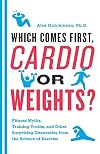
This is not likely to become a book for the ages. Hutchinson reviews many recent results in sports science. The basic problem is that recent results in science are always ephemeral. There is a great nutrition book, Eat Drink and Be Healthy, by Walter Willett. Willett points out this problem. He advises his readers to ignore recent scientific results. The science to live by are the old results that have stood the test of time, that stopped being newsworthy decades ago. Science is a slow show more winnowing process. The latest reports published in journals and conference proceedings have only passed the very preliminary filters. Other researchers will come at those topics from different directions and get somewhat different results. After five or ten years some sort of rough consensus will form and appear in a review paper. Another five or ten years go by with some more sorting out and deeper understanding, and clear picture is presented in a monograph. Finally the subject becomes boring and appears in undergraduate textbooks. The boring textbook science is what you want to live by. If you are in desperate straights then maybe you could gamble with notions out of review papers. But if you are not so unlucky, it is smarter to play safer.
Another problem with the book is that it focuses on competitive sports. It is not at all clear that competitive sports are a smart way to stay healthy. Rather the contrary, sorry to say. Yeah, somehow one needs to push oneself out of the comfort zone... some stress and risk is necessary for healthy living. Competition is one way to generate that kind of push. But competition can be playful. One can keep the goal of winning in perspective, as just a tactic in the larger game of staying healthy.
It's a nice puzzle, actually. What is it go be healthy, or fit? Fit for what? The practical tasks of living involve both routine and extraordinary challenges. And then these change decade by decade, as we age, as our circumstances change, and as our world evolves. In some times and places the only practical way to get around is by automobile. Other times and places allow for pedestrian locomotion alongside automobiles. In yet others automobiles are difficult and the easiest way to get around is on foot. Daily life can demand certain types of fitness and also promote it. A fourth floor walk-up apartment could even change a person's diet, just to reduce the weight of groceries to be carried up!
I will say, this book inspired me to go out for a run. I hope I manage to keep running regularly as part of my regular rotation! So it's definitely a book one can learn from and be inspired by. But I don't plan ever to enter into any sort of athletic competition. Maybe I will do some interval training even though I am not interested in competition. But how do I adapt training program to optimize by fitness for the routine and extraordinary physical challenges of my coming decades? This book doesn't help me much.
For example, its discussion of stretching is a bit odd. Hutchinson looks at whether static or dynamic stretching before an athletic competition will improve my results. But if I don't care about winning races, what difference to my overall practical fitness does it make, whether my muscles are tight or loose? If my muscles are so tight that my posture is pulled out of alignment? A dedicated competitive athlete might even ruin their own health to win. Look at the use of performance enhancing drugs! Somehow the emphasis of this book on winning... while it surely will increase the book's appeal in a sizable audience... doesn't increase its appeal for me! show less
Another problem with the book is that it focuses on competitive sports. It is not at all clear that competitive sports are a smart way to stay healthy. Rather the contrary, sorry to say. Yeah, somehow one needs to push oneself out of the comfort zone... some stress and risk is necessary for healthy living. Competition is one way to generate that kind of push. But competition can be playful. One can keep the goal of winning in perspective, as just a tactic in the larger game of staying healthy.
It's a nice puzzle, actually. What is it go be healthy, or fit? Fit for what? The practical tasks of living involve both routine and extraordinary challenges. And then these change decade by decade, as we age, as our circumstances change, and as our world evolves. In some times and places the only practical way to get around is by automobile. Other times and places allow for pedestrian locomotion alongside automobiles. In yet others automobiles are difficult and the easiest way to get around is on foot. Daily life can demand certain types of fitness and also promote it. A fourth floor walk-up apartment could even change a person's diet, just to reduce the weight of groceries to be carried up!
I will say, this book inspired me to go out for a run. I hope I manage to keep running regularly as part of my regular rotation! So it's definitely a book one can learn from and be inspired by. But I don't plan ever to enter into any sort of athletic competition. Maybe I will do some interval training even though I am not interested in competition. But how do I adapt training program to optimize by fitness for the routine and extraordinary physical challenges of my coming decades? This book doesn't help me much.
For example, its discussion of stretching is a bit odd. Hutchinson looks at whether static or dynamic stretching before an athletic competition will improve my results. But if I don't care about winning races, what difference to my overall practical fitness does it make, whether my muscles are tight or loose? If my muscles are so tight that my posture is pulled out of alignment? A dedicated competitive athlete might even ruin their own health to win. Look at the use of performance enhancing drugs! Somehow the emphasis of this book on winning... while it surely will increase the book's appeal in a sizable audience... doesn't increase its appeal for me! show less
Well-researched book about physical and psychological limits of human performance, that has all the ingredients I like but I didn't enjoy this meal as much as I had expected. Mostly, because there is no specific conclusion that would challenge or enrich my understanding of the subject.
This book seems to be 3 different books mixed in a blender. One presens stories of extraordinary people pushed to their limits or even beyond them (to the fatal end), the second chronicles progress of medicine show more and experiments that helped us understand how our bodies work, and the last one about running - combining personal experiences of the author with a sub-2-hours marathon attempt. The shifts between these 3 modes always threw me off balance. There is no strong narrative that connects different parts - one could read chapters in random order without missing a lot - and the whole seems to be underwhelming. Oftentimes there is an intriguing premise, then a build up with a lot of meandering and skipping between anecdotes, facts, and personal stories, leading to a very inconclusive resolution that doesn't really pay off.
The writing is clear and has a distinctive style of curiosity and skepticism. The author presents research results without cherry-picking, often showing conflicting conclusions, and trying to make some sense "with the reader". The number of details provided is as admirable as excruciating. Surely the author did his homework but I think more effort could go into the editing, cutting all the facts that do not support his message. Numerous digressions and shifts between threads require the reader to keep multiple pieces of information in mind to follow the author connecting the dots, but in the end a lot of dots remain disconnected and seem to be added just to show off.
If you are an avid sports fan, especially running or cycling (extra points for the appreciation of the history of record breaking), you might enjoy this book more than I did and add one star to my rating. Otherwise, it is a fascinating but not really ground-breaking read. show less
This book seems to be 3 different books mixed in a blender. One presens stories of extraordinary people pushed to their limits or even beyond them (to the fatal end), the second chronicles progress of medicine show more and experiments that helped us understand how our bodies work, and the last one about running - combining personal experiences of the author with a sub-2-hours marathon attempt. The shifts between these 3 modes always threw me off balance. There is no strong narrative that connects different parts - one could read chapters in random order without missing a lot - and the whole seems to be underwhelming. Oftentimes there is an intriguing premise, then a build up with a lot of meandering and skipping between anecdotes, facts, and personal stories, leading to a very inconclusive resolution that doesn't really pay off.
The writing is clear and has a distinctive style of curiosity and skepticism. The author presents research results without cherry-picking, often showing conflicting conclusions, and trying to make some sense "with the reader". The number of details provided is as admirable as excruciating. Surely the author did his homework but I think more effort could go into the editing, cutting all the facts that do not support his message. Numerous digressions and shifts between threads require the reader to keep multiple pieces of information in mind to follow the author connecting the dots, but in the end a lot of dots remain disconnected and seem to be added just to show off.
If you are an avid sports fan, especially running or cycling (extra points for the appreciation of the history of record breaking), you might enjoy this book more than I did and add one star to my rating. Otherwise, it is a fascinating but not really ground-breaking read. show less
Lists
Awards


You May Also Like


Associated Authors
Statistics
- Works
- 6
- Members
- 664
- Popularity
- #37,984
- Rating
- 4.0
- Reviews
- 14
- ISBNs
- 38
- Languages
- 3