
Barbara Hamby
Author of Seriously Funny: Poems about Love, Death, Religion, Art, Politics, Sex, and Everything Else
About the Author
Barbara Hamby has published seven books of poetry, most recently Bird Odyssey and On the Street of Divine Love: New and Selected Poems. She was a 2010 Guggenheim fellow, and her book of linked stories, Lester Higata's 20th Century, won the 2010 University of Iowa John Simmons Award and was show more published by the University of Iowa Press. She and her husband David Kirby edited the poetry anthology Seriously Funny. She teaches at Florida State University where she is distinguished university scholar. show less
Works by Barbara Hamby
Seriously Funny: Poems about Love, Death, Religion, Art, Politics, Sex, and Everything Else (2010) — Editor — 51 copies
Associated Works
The Poets' Grimm: 20th Century Poems from Grimm Fairy Tales (2003) — Contributor — 70 copies, 1 review
When She Named Fire: An Anthology of Contemporary Poetry by American Women (2008) — Contributor — 15 copies
Tagged
Common Knowledge
- Legal name
- Hamby, Barbara
- Birthdate
- 1952
- Gender
- female
- Occupations
- poet
editor
lecturer - Organizations
- Florida State University
- Awards and honors
- Guggenheim Fellow
- Relationships
- Kirby, David K. (husband)
- Short biography
- [from author's website]
Barbara Hamby was born in New Orleans and raised in Honolulu. Her poems have appeared in The New Yorker, Poetry, American Poetry Review, Ploughshares, Yale Review, and The New York Times. She is the author of seven poetry collections including Holoholo (2021), Bird Odyssey (2018), On the Street of Divine Love: New and Selected Poems (2014), All-Night Lingo Tango (2009), and Babel (2004). Her second book, The Alphabet of Desire (1999) won the New York University Press Prize for Poetry. Her first book, Delirium (1995), won the Vassar Miller Prize, The Kate Tufts Award, and the Poetry Society of America's Norma Farber First Book Award.
The John Simon Guggenheim Memorial Foundation honored Barbara as a 2010 Guggenheim Fellow in Poetry. Her short story collection Lester Higata's 20th Century won the 2010 Iowa Short Fiction Award.
Barbara edited an anthology of poems, Seriously Funny (Georgia, 2009), with her husband David Kirby. She teaches at Florida State University where she is a Distinguished University Scholar. - Nationality
- USA
- Birthplace
- New Orleans, Louisiana, USA
- Places of residence
- Tallahassee, Florida, USA
Honolulu, Hawaii, USA - Associated Place (for map)
- USA
Members
Reviews

Not every author has the fortitude to start a collection of stories with a story about the death of the title character. Hamby is to be applauded for this, it's gutsy! It isn't extremely successful, though, beacuse the unspooling of Lester Higata's life from 1946 to 1999 is unevenly presented and unevenly edited, as quite some several of these stories appeared in other venues before being collected here.
The very best story, the chef d'ouevre, is the delightful, fresh, energetic story of show more Lester's last day: "Lester Higata's String Theory Paradise." Waking up to a conversation with your dead father, one in which he bashes your equally dead Gorgon of a mother, is a pretty good clue that the rest of the day isn't going to be normal. And it is, oddly, very normal in its events and yet Lester's certainty that this is his last day on Earth manages to make all its events sharp and clear and dear to him. It's an excellent story. It's no surprise to me that this story appeared in TriQuarterly and was edited by the superb, talented, and very accomplished Susan Hahn. She impressed me mightily in our one professional contact, when she bought a story from one of my then-clients in my former life as an agent.
Well, I said the collection was uneven...and the next story, "Iniki Chicken", is proof of this. In and of itself, it's not a bad little piece, but it needed a pruning before being put in the show. It appeared in Southwestern Review, which magazine has a decent reputation, but the piece has an overwordy quality that detracts from Hamby's clean and simple message: "Looking at all the people gathered around the table, I wondered how so many different faces could be made in the image of one God? Maybe the Hawaiians were right, and there were many gods: {there follows a list of four gods and their areas of expertise, taking up a long paragraph}...But if there was only one God what could he possibly be like?..." A taut meditation on the nature of spiritual belief and its relationship to human interaction becomes a comparative religion lecture, and loses force and clarity. SO frustrating!
The strong stories outnumber the weak ones, fortunately: "Mr. Manago's Mango Trees" is bleak, but wryly witty; "Lani Dances the Zombie Hula in LA" is a spare, cold-eyed flensing of the way promise gets transmogrified into failure and misery; "Sayonara, Mrs. Higata" pitilessly shows the too-late-ness of deathbed regrets, and the hollow-yet-shining face of Duty's Daughters; and "Lester Higata in Love" is heartbreakingly tender and beautifully rendered, its landscape of love's losses and joys as mountainous as O'ahu itself.
The University of Iowa press sent this ARC to me as part of the Early Reviewers program. It's a pleasure to be able to recommend the collection to any reader even slightly interested in the geography of love. show less
The very best story, the chef d'ouevre, is the delightful, fresh, energetic story of show more Lester's last day: "Lester Higata's String Theory Paradise." Waking up to a conversation with your dead father, one in which he bashes your equally dead Gorgon of a mother, is a pretty good clue that the rest of the day isn't going to be normal. And it is, oddly, very normal in its events and yet Lester's certainty that this is his last day on Earth manages to make all its events sharp and clear and dear to him. It's an excellent story. It's no surprise to me that this story appeared in TriQuarterly and was edited by the superb, talented, and very accomplished Susan Hahn. She impressed me mightily in our one professional contact, when she bought a story from one of my then-clients in my former life as an agent.
Well, I said the collection was uneven...and the next story, "Iniki Chicken", is proof of this. In and of itself, it's not a bad little piece, but it needed a pruning before being put in the show. It appeared in Southwestern Review, which magazine has a decent reputation, but the piece has an overwordy quality that detracts from Hamby's clean and simple message: "Looking at all the people gathered around the table, I wondered how so many different faces could be made in the image of one God? Maybe the Hawaiians were right, and there were many gods: {there follows a list of four gods and their areas of expertise, taking up a long paragraph}...But if there was only one God what could he possibly be like?..." A taut meditation on the nature of spiritual belief and its relationship to human interaction becomes a comparative religion lecture, and loses force and clarity. SO frustrating!
The strong stories outnumber the weak ones, fortunately: "Mr. Manago's Mango Trees" is bleak, but wryly witty; "Lani Dances the Zombie Hula in LA" is a spare, cold-eyed flensing of the way promise gets transmogrified into failure and misery; "Sayonara, Mrs. Higata" pitilessly shows the too-late-ness of deathbed regrets, and the hollow-yet-shining face of Duty's Daughters; and "Lester Higata in Love" is heartbreakingly tender and beautifully rendered, its landscape of love's losses and joys as mountainous as O'ahu itself.
The University of Iowa press sent this ARC to me as part of the Early Reviewers program. It's a pleasure to be able to recommend the collection to any reader even slightly interested in the geography of love. show less
 This review was written for LibraryThing Early Reviewers.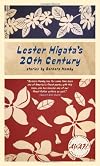
Short stories are one of my favorite genres and Barbara Hamby has written a superb collection. Set in Hawaii from World War II forward, she captures the cadence and ambiance of the setting perfectly. I lived in Hawaii for two years, back in the 1970's, and then moved to Japan. My exposure to the Japanese Hawaiians helped ease the culture shock of that move. As I was reading Hamby's eloquently written dialogue, I could hear my best Hawaiian friend "Auntie" in her lilting sing-song local show more dialect. I had no trouble with the vocabulary but the author provides a robust glossary of terminology for those unfamiliar with the language.
As I read, I found myself comparing this to another of my favorite short story collections: the Pulitzer Prize winner: Olive Kitteridge by Elizabeth Strout. Lester Higata and Olive Kitteridge have much in common. They are involved in many different aspects of their communities, they are aging, the stories in the collections give us a beautiful and fully developed character, and an insight into the life of those in the settings. Hamby's linked stories include a look back to Lester's wounding in the war and his marriage to a haole (white) woman of whom his mother dusapproved, and give us a sense of community among the other inhabitants of Lipona street. A truly rewarding reading experience. show less
As I read, I found myself comparing this to another of my favorite short story collections: the Pulitzer Prize winner: Olive Kitteridge by Elizabeth Strout. Lester Higata and Olive Kitteridge have much in common. They are involved in many different aspects of their communities, they are aging, the stories in the collections give us a beautiful and fully developed character, and an insight into the life of those in the settings. Hamby's linked stories include a look back to Lester's wounding in the war and his marriage to a haole (white) woman of whom his mother dusapproved, and give us a sense of community among the other inhabitants of Lipona street. A truly rewarding reading experience. show less

This jewel-like collection of stories is dense and sweet and much too short. As we move back through the second half of the 20th century – beginning with the death of the patriarch Lester Higata – his wife, children, parents and neighbors form bonds and weave a web that colors the events that enfold them. War, hurricane and the messy detritus of human life inform the drama of each self-contained tale. All the characters are fully formed, from Lester and his wife Katherine, to the mother show more and mother-in-law, both strong and stubborn women – the one to her Buddhist heritage; the other to the rural Christianity of her native Ohio – through his children and the community around them.
The stories are informed by a deep understanding of the Hawaiian psyche while presenting tales of universal relevance. This book, if I had any say, deserves the Pulitzer.
I hope Barbara Hamby has more to tell about the life of Lester Higata. show less
The stories are informed by a deep understanding of the Hawaiian psyche while presenting tales of universal relevance. This book, if I had any say, deserves the Pulitzer.
I hope Barbara Hamby has more to tell about the life of Lester Higata. show less
This review was written for LibraryThing Early Reviewers.
The fragrant Hawaiian breezes blow through Barbara Hamby’s elegiac “Lester Higata’s 20th Century” like a gentle tidal flow, and they belie the sometimes fierce emotional ebbs and rushes that bedevil its characters. This is sumptuous, a delicious repast, a deserving award winner from the University of Iowa Press.
We witness several of Lester Higata’s life’s salient events in reverse order: we begin with 1999, the time of his death, and end up in 1946, when he falls in love while show more recuperating from war wounds suffered in Italy. Ms. Hamby has stitched together a series of stand-alone short pieces, à la “Olive Kitteredge,” to illuminate Lester’s life and times. She features Lester’s wife Katherine prominently, of course, along with his mother and father, and a few memorable neighbors, too. Each piece has a nearly impossible clarity while illuminating its weighty issues, and they lend themselves to the whole quilt beautifully. Ms. Hamby knows her subject intimately, and the emotional feel here is completely unerring. We have racial prejudice, greed, generational conflict, traditional vs. modern practices, xenophobia, and abuse issues all on display. But the feeling I take away is a quiet longing, a yearning for the islands, felt by one who grew up there and has been exiled.
But this longing never gets in the way of the plot or the characters. Lester fights for his country, sustains severe wounds, falls in love and marries, puts himself in harm’s way to protect a neighbor boy being chased down the street by a belt-wielding father, and on the eve of his death, jokes with his long-dead father about his insufferable mother. Characters recur story to story, of course, and if they’re lucky, they get a close treatment at Ms. Hamby’s deft hand.
Sometimes I search for a word to do justice to the flavor of a work, and the one that works here is “beguiling.” We rush from each short piece to the next, knowing we’ll reap another reward for our effort – and the anticipation is a chief delight. I applaud whoever bestows the John Simmons Short Fiction Award at the University of Iowa. Well done!
http://bassoprofundo1.blogspot.com/2010/06/lester-higatas-20th-century-by-barbar... show less
We witness several of Lester Higata’s life’s salient events in reverse order: we begin with 1999, the time of his death, and end up in 1946, when he falls in love while show more recuperating from war wounds suffered in Italy. Ms. Hamby has stitched together a series of stand-alone short pieces, à la “Olive Kitteredge,” to illuminate Lester’s life and times. She features Lester’s wife Katherine prominently, of course, along with his mother and father, and a few memorable neighbors, too. Each piece has a nearly impossible clarity while illuminating its weighty issues, and they lend themselves to the whole quilt beautifully. Ms. Hamby knows her subject intimately, and the emotional feel here is completely unerring. We have racial prejudice, greed, generational conflict, traditional vs. modern practices, xenophobia, and abuse issues all on display. But the feeling I take away is a quiet longing, a yearning for the islands, felt by one who grew up there and has been exiled.
But this longing never gets in the way of the plot or the characters. Lester fights for his country, sustains severe wounds, falls in love and marries, puts himself in harm’s way to protect a neighbor boy being chased down the street by a belt-wielding father, and on the eve of his death, jokes with his long-dead father about his insufferable mother. Characters recur story to story, of course, and if they’re lucky, they get a close treatment at Ms. Hamby’s deft hand.
Sometimes I search for a word to do justice to the flavor of a work, and the one that works here is “beguiling.” We rush from each short piece to the next, knowing we’ll reap another reward for our effort – and the anticipation is a chief delight. I applaud whoever bestows the John Simmons Short Fiction Award at the University of Iowa. Well done!
http://bassoprofundo1.blogspot.com/2010/06/lester-higatas-20th-century-by-barbar... show less
This review was written for LibraryThing Early Reviewers.Awards


You May Also Like


Associated Authors
Statistics
- Works
- 9
- Also by
- 6
- Members
- 205
- Popularity
- #107,801
- Rating
- 3.7
- Reviews
- 15
- ISBNs
- 22

