
Steven Savile
Author of Elemental
About the Author
Image credit: Mari Adkins, June 26, 2006
Series
Works by Steven Savile
StoryBundle: The Crossing Worlds YA Bundle — Contributor — 7 copies
The Last Angel 3 copies
The Song Her Heart Sang 3 copies
Lies of the Flesh 2 copies
The Bear King 2 copies
Winter's Rage (Byron Tibor #3) 2 copies
The Ghosts of the Conquered 2 copies
Death's Cold Kiss 2 copies
Night Of Falling Stars 2 copies
Ghosts Of Love 2 copies
The Odalisque 2 copies
Dear Prudence 2 copies
Absence Of Divinity 2 copies
The God Of Forgotten Things 2 copies
Idiot Hearts 1 copy
Metamorphosis 1 copy
Death's Cold Kiss 1 copy
Blood Will Have Blood 1 copy
Last Angel 1 copy
Junkyard Dogs 1 copy
Angels In The Snow 1 copy
Integrity 1 copy
-30- (Viral #1) 1 copy
Ghostkiller 1 copy
Icarus Descending 1 copy
Winterlong 1 copy
Seed of Vanirs 1 copy
Byker Burning 1 copy
Blood and Money 1 copy
Jack Be Nimble 1 copy
Remember Me Yesterday 1 copy
The Restless Dead 1 copy
Painting Blue Murders 1 copy
The Last Picture Of Summer 1 copy
Monster Town 1 copy
Meek 1 copy
Send Me Dead Flowers 1 copy
Mens Rea: A Guilty Mind 1 copy
Mechanisms Of Grief 1 copy
Ashes {short story} 1 copy
All That Remains Is You 1 copy
The Angel With The Sad Eyes 1 copy
Each Ember's Ghost 1 copy
Associated Works
L. Ron Hubbard Presents Writers of the Future, Volume 19 (2003) — Contributor — 56 copies, 2 reviews
Tagged
Common Knowledge
- Legal name
- Savile, Steven
- Other names
- Savile, Steve
- Birthdate
- 1969-10-12
- Gender
- male
- Nationality
- UK
- Birthplace
- Newcastle, Northumberland, England, UK
- Places of residence
- Stockholm, Sweden
- Associated Place (for map)
- UK
Members
Reviews

Back in the LiveJournal days, I had a friend there who was invited to pitch for this book; he reached out to me and my friend Michael for Doctor Who advice because he hadn't really seen the show. (In retrospect, he was kind of obnoxious; he got in the book, and I saw him making comments in promotion of his story like, "I always liked x Doctor because of y," when I know for a fact he'd never seen a story featuring x Doctor until we recommended one to him!) Because of this, I seem to recall show more (it has been almost two decades, so I may be wrong) that editor Steven Savile wanted to do an anthology covering the history of a city, and was torn between doing London and Prague. Prague has a rich history, but it seems kind of random to be honest (I explained the premise of this book to my wife while reading it and she laughed), and how many Doctor Who authors know a lot about the history of Prague? London would be more familiar territory... but of course, probably too familiar. What's the USP of a book made up of Doctor Who stories set in London?
Obviously, Savile decided to go with Prague in the end. I thought the book opened a bit oddly, with a story about an inhabitant-less Prague being taken out of time, hardly the kind of thing that makes the reader experience Prague and thus see the upside to setting a bunch of stories there. The next story takes place in Prague's future, and so does the next, and so does the next. I found this a bit of an odd choice, too—I felt like if the selling point of this book was Prague's rich history, then maybe we ought to lead off with a story set in that rich history.
Halfway through, though, I realized we still hadn't had a historical, and so that must be intentional in the sense that I was wrong about the book's premise. It wasn't chronicling past and future history, but only future history. I feel like this is an okay idea, though in that case, I think it probably would make more sense to go with a city readers are more familiar with, like London. But I also think that if you are going to tell just future history, it would be better to do it in chronological order. If the book had a mix of historical and future-set stories, then jumping around would definitely be the right choice for the sake of variety. But if the decision is to only tell the future story of the city, then jumping around makes that future story hard to discern. It would be neat to get a series of snapshots of Prague's future, chronicling its various ascents and descents moving ever further into the future... but what we get instead is dispersed and fragmented and hard to glom onto.
On top of that, I think the choice of just telling future-Prague stories doesn't play to the authors' strengths. I suspect a bunch of authors largely unfamiliar with a city could do some research to find interesting historical incidents to build stories around, and I think a bunch of authors familiar with a city might have found something to say about its future. But telling stories about the future of a city you don't know much about is a tricky business, and mostly what we get are pretty generic sci-fi stories and/or repetitive transpositions of classic Prague things into the future, like (if I counted correctly) three different Golem stories and three different Kafka's "Metamorphosis" riffs.
Like the last Short Trips volume I read, The Quality of Leadership, this one has a second, implicit USP: the editor is not part of the usual cohort of mid-2000s Doctor Who tie-in writers, and thus they have a different Rolodex of authors to call on, most of whom had never written a Doctor Who story (or maybe just one) and many of whom never would again. Some of them are people who have had (or would go on to have) pretty decent writing careers outside of Doctor Who in fact: names I knew from other contexts included Mike W. Barr (a number of DC comics from the 1980s, including Batman: Year Two and Star Trek: The Mirror Universe Saga), Keith R.A. DeCandido (innumerable Star Trek stories, including editing the S.C.E. series), Kevin Killiany (S.C.E.: Orphans), Mary Robinette Kowal (the Lady Astronaut series), Paul Kupperberg (JSA: Ragnarok), Todd McCaffrey (Pern, though I've never actually read any of his contributions), and Sean Williams (The New Jedi Order: Force Heretic).
Bringing in outside writers to an existing tie-in franchise can be hit-or-miss in my experience. Sometimes those outsiders have an expanded way of seeing it, and they come at it from atypical, interesting angles. But conversely, sometimes they have a more limited understanding of it, because their understanding is mostly shaped by what's on screen; because they haven't been living and breathing tie-ins for a decade, they don't see the dynamism that the premise really allows for. Doctor Who can do really interesting stuff in the medium of prose short fiction... but I don't think you'd know it by reading this book, where it seemed to me that most writers were trying to tell fairly "typical" Doctor Who adventures with aliens invading or time-travel shenanigans or rogue Time Lords, stuff that might work very well on screen with a canvas of ninety minutes, but comes across as superficial on the printed page. In particular, the book suffers from the sheer quantity of stories; some Short Trips anthologies have as few as seven or eight, if I recall correctly, but this one crams in over twenty, meaning many of them are by necessity quite short. You just can't do the "typical" Doctor Who story in fifteen-ish pages in a satisfactory way.
Thus, I found this one a bit of a struggle. Indeed, I think it's indicative that of the three stories I did think were very good, two of them were by authors who have written multiple other Doctor Who stories. The first story that really clicked for me was Mary Robinette Kowal's "Suspension and Disbelief"; it's weird and short (the Doctor has to help a woman whose husband is going to be executed for chopping down a tree so she can make a puppet; the resolution involves a giant puppet) but inventive and well told.
The second was James Swallow's "Lady of the Snows," which was a beautiful story about an artist falling in love with an amnesiac Charley Pollard, using her as his muse, with some great imagery and interesting thematic resonance between what the artist is doing to Charley, and what has happened to Prague in the far future. (To be fair to Swallow, who has gone on to write a lot of Doctor Who stories, I think this was just his fourth one or so.)
The last one was also the very last in the book, Stel Pavlou's "Omegamorphosis." (And to be fair to Pavlou, though he has written other Doctor Who stories, it's literally just two of them. But all three are bangers!) This is the book's third and final Kafka riff... but it's the only one of them that actually feels Kafkaesque, surreal and disconcerting.
So, I think there are better Short Trips volumes out there, and I unfortunately suspect this one was fundamentally misconceived from the beginning. show less
Obviously, Savile decided to go with Prague in the end. I thought the book opened a bit oddly, with a story about an inhabitant-less Prague being taken out of time, hardly the kind of thing that makes the reader experience Prague and thus see the upside to setting a bunch of stories there. The next story takes place in Prague's future, and so does the next, and so does the next. I found this a bit of an odd choice, too—I felt like if the selling point of this book was Prague's rich history, then maybe we ought to lead off with a story set in that rich history.
Halfway through, though, I realized we still hadn't had a historical, and so that must be intentional in the sense that I was wrong about the book's premise. It wasn't chronicling past and future history, but only future history. I feel like this is an okay idea, though in that case, I think it probably would make more sense to go with a city readers are more familiar with, like London. But I also think that if you are going to tell just future history, it would be better to do it in chronological order. If the book had a mix of historical and future-set stories, then jumping around would definitely be the right choice for the sake of variety. But if the decision is to only tell the future story of the city, then jumping around makes that future story hard to discern. It would be neat to get a series of snapshots of Prague's future, chronicling its various ascents and descents moving ever further into the future... but what we get instead is dispersed and fragmented and hard to glom onto.
On top of that, I think the choice of just telling future-Prague stories doesn't play to the authors' strengths. I suspect a bunch of authors largely unfamiliar with a city could do some research to find interesting historical incidents to build stories around, and I think a bunch of authors familiar with a city might have found something to say about its future. But telling stories about the future of a city you don't know much about is a tricky business, and mostly what we get are pretty generic sci-fi stories and/or repetitive transpositions of classic Prague things into the future, like (if I counted correctly) three different Golem stories and three different Kafka's "Metamorphosis" riffs.
Like the last Short Trips volume I read, The Quality of Leadership, this one has a second, implicit USP: the editor is not part of the usual cohort of mid-2000s Doctor Who tie-in writers, and thus they have a different Rolodex of authors to call on, most of whom had never written a Doctor Who story (or maybe just one) and many of whom never would again. Some of them are people who have had (or would go on to have) pretty decent writing careers outside of Doctor Who in fact: names I knew from other contexts included Mike W. Barr (a number of DC comics from the 1980s, including Batman: Year Two and Star Trek: The Mirror Universe Saga), Keith R.A. DeCandido (innumerable Star Trek stories, including editing the S.C.E. series), Kevin Killiany (S.C.E.: Orphans), Mary Robinette Kowal (the Lady Astronaut series), Paul Kupperberg (JSA: Ragnarok), Todd McCaffrey (Pern, though I've never actually read any of his contributions), and Sean Williams (The New Jedi Order: Force Heretic).
Bringing in outside writers to an existing tie-in franchise can be hit-or-miss in my experience. Sometimes those outsiders have an expanded way of seeing it, and they come at it from atypical, interesting angles. But conversely, sometimes they have a more limited understanding of it, because their understanding is mostly shaped by what's on screen; because they haven't been living and breathing tie-ins for a decade, they don't see the dynamism that the premise really allows for. Doctor Who can do really interesting stuff in the medium of prose short fiction... but I don't think you'd know it by reading this book, where it seemed to me that most writers were trying to tell fairly "typical" Doctor Who adventures with aliens invading or time-travel shenanigans or rogue Time Lords, stuff that might work very well on screen with a canvas of ninety minutes, but comes across as superficial on the printed page. In particular, the book suffers from the sheer quantity of stories; some Short Trips anthologies have as few as seven or eight, if I recall correctly, but this one crams in over twenty, meaning many of them are by necessity quite short. You just can't do the "typical" Doctor Who story in fifteen-ish pages in a satisfactory way.
Thus, I found this one a bit of a struggle. Indeed, I think it's indicative that of the three stories I did think were very good, two of them were by authors who have written multiple other Doctor Who stories. The first story that really clicked for me was Mary Robinette Kowal's "Suspension and Disbelief"; it's weird and short (the Doctor has to help a woman whose husband is going to be executed for chopping down a tree so she can make a puppet; the resolution involves a giant puppet) but inventive and well told.
The second was James Swallow's "Lady of the Snows," which was a beautiful story about an artist falling in love with an amnesiac Charley Pollard, using her as his muse, with some great imagery and interesting thematic resonance between what the artist is doing to Charley, and what has happened to Prague in the far future. (To be fair to Swallow, who has gone on to write a lot of Doctor Who stories, I think this was just his fourth one or so.)
The last one was also the very last in the book, Stel Pavlou's "Omegamorphosis." (And to be fair to Pavlou, though he has written other Doctor Who stories, it's literally just two of them. But all three are bangers!) This is the book's third and final Kafka riff... but it's the only one of them that actually feels Kafkaesque, surreal and disconcerting.
So, I think there are better Short Trips volumes out there, and I unfortunately suspect this one was fundamentally misconceived from the beginning. show less
The Further Adventures of Sherlock Holmes - Murder at Sorrow's Crown (Further Adventures of Sherlock Holmes (Paperback)) by Steven Savile
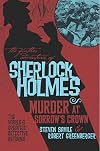
In London during the summer of 1881, and still early in their now legendary partnership, Doctor Watson schedules a number of appointments for bored, brilliant detective Sherlock Holmes, who has been unable as of late to find a case worthy of his considerable talents. After the string of potential clients are turned away one by one, an unscheduled caller arrives—bringing with her an intriguing case, naturally.
Hermione Frances Sara Wynter, an elderly widow, has been unable to obtain a show more satisfactory answer from the Admiralty as to the whereabouts of her son, Lieutenant Norbert Wynter. Norbert was due home one month previous aboard the HMS Dido after fighting in the war against the Boers in South Africa.
However, all of Mrs. Wynter's initial inquiries to the Admiralty went unanswered until finally, they revealed that Norbert had been classified as missing in action and a deserter. His mother, of course, refused to believe such an outlandish accusation.
Holmes accepts the case and, together with Watson, sets forth to interrogate, beleaguer, and otherwise annoy the Admiralty into providing information on Lieutenant Wynter. Soon, it becomes clear that something is amiss, especially since Wynter was listed as missing in action in February, yet continued to receive a paycheck until July.
When Holmes and Watson are attacked on the street by men sent by someone at the Admiralty, the detective is certain that a government cover-up is at play and, as Holmes is often quoted as saying, "The game is afoot!"
An investigation into the missing officer leads Holmes and Watson to a web of conspiracy that involves the death of former Prime Minister Benjamin Disraeli, the now defunct East India Company, and much more.
Savile and Greenberger deftly capture the characters and relationship of Holmes and Watson in a plot that was well-conceived and unfurled at a perfect pace. I was pleased to see the inclusion of Holmes's "street Arabs," aka The Baker Street Irregulars, as well as Scotland Yard Inspector Gregson over the more famous Lestrade, the latter making only a cameo appearance. I have absolutely nothing against Lestrade, of course, but I appreciate the nod being given to the more minor recurring Gregson. show less
Hermione Frances Sara Wynter, an elderly widow, has been unable to obtain a show more satisfactory answer from the Admiralty as to the whereabouts of her son, Lieutenant Norbert Wynter. Norbert was due home one month previous aboard the HMS Dido after fighting in the war against the Boers in South Africa.
However, all of Mrs. Wynter's initial inquiries to the Admiralty went unanswered until finally, they revealed that Norbert had been classified as missing in action and a deserter. His mother, of course, refused to believe such an outlandish accusation.
Holmes accepts the case and, together with Watson, sets forth to interrogate, beleaguer, and otherwise annoy the Admiralty into providing information on Lieutenant Wynter. Soon, it becomes clear that something is amiss, especially since Wynter was listed as missing in action in February, yet continued to receive a paycheck until July.
When Holmes and Watson are attacked on the street by men sent by someone at the Admiralty, the detective is certain that a government cover-up is at play and, as Holmes is often quoted as saying, "The game is afoot!"
An investigation into the missing officer leads Holmes and Watson to a web of conspiracy that involves the death of former Prime Minister Benjamin Disraeli, the now defunct East India Company, and much more.
Savile and Greenberger deftly capture the characters and relationship of Holmes and Watson in a plot that was well-conceived and unfurled at a perfect pace. I was pleased to see the inclusion of Holmes's "street Arabs," aka The Baker Street Irregulars, as well as Scotland Yard Inspector Gregson over the more famous Lestrade, the latter making only a cameo appearance. I have absolutely nothing against Lestrade, of course, but I appreciate the nod being given to the more minor recurring Gregson. show less
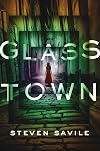
On the day of his grandfather Boone’s funeral, Josh Rainer finds a letter left to Boone by Josh’s great-grandfather. It talks of the obsession of two brothers for an actress in the 1920s and about her disappearance. It also explains that Rainer is not their real last name and that they are, in fact, part of one of London’s biggest criminal families. Josh is mildly intrigued but, when an elderly member of this family shows up at the funeral and gives what is clearly a veiled threat to show more leave the past alone and then he finds his house being ransacked by an impossibly beautiful woman but one who doesn’t seem quite human, Josh first tries to run but, as it becomes clear that he can’t escape whomever or whatever is after him, he develops his own obsession with solving the seventy-year-old mystery.
I will say right off the top that I found both reading and reviewing Glass Town by author Steven Savile somewhat challenging. Not to say it wasn’t an interesting read but it took me a while to get into it. And I finished it a couple of weeks ago but have been struggling with how I felt about it since. I found it at times a bit confusing and very hard to categorize. It’s listed as an urban fantasy but there’s also a kind of homage to 1920s silent films and the hidden dark side of London as well as perhaps a nod to noir movies – or maybe I’m looking deeper into it than need be. At any rate, it is, at the very least, a dark, gritty and atmospheric fantasy and one that certainly made me think. To be honest though, it seems that, for me, I will need to read it again to fully appreciate it. In the meantime, I give it 4 stars because it is very well-written and smart and 3 because it is at times confusing and a bit slow. So 3.5 stars it is.
3.5
Thanks to Netgalley and St Martin’s Press for the opportunity to read this book in exchange for an honest review show less
I will say right off the top that I found both reading and reviewing Glass Town by author Steven Savile somewhat challenging. Not to say it wasn’t an interesting read but it took me a while to get into it. And I finished it a couple of weeks ago but have been struggling with how I felt about it since. I found it at times a bit confusing and very hard to categorize. It’s listed as an urban fantasy but there’s also a kind of homage to 1920s silent films and the hidden dark side of London as well as perhaps a nod to noir movies – or maybe I’m looking deeper into it than need be. At any rate, it is, at the very least, a dark, gritty and atmospheric fantasy and one that certainly made me think. To be honest though, it seems that, for me, I will need to read it again to fully appreciate it. In the meantime, I give it 4 stars because it is very well-written and smart and 3 because it is at times confusing and a bit slow. So 3.5 stars it is.
3.5
Thanks to Netgalley and St Martin’s Press for the opportunity to read this book in exchange for an honest review show less
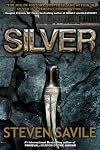
I was given this book to review.
Silver is a tome, one hell of a book, in scope, complexity and power. Twinning a secret religious cult made up of the descendants of the misunderstood Judas and a handful of highly organized acts of terrorism that begins with 13 people burning themselves alive at the same moment in time across the world, Silver pits a team of secretive investigators against a worldwide religious-political threat.
Move over Dan Brown, Saville threads in more flavor, texture show more and dimension into a story than most authors dream of. Moving from the U.S. to Israel, Rome and Germany and including a vast cast that will make other international thrillers appear pale in comparison, Silver is a hefty read.
The pace is even, but not always speedy and the layered details might not be intriguing to all readers. The emphasis here is strongly on large scope character and world building. Silver would appeal to readers who enjoy more of a mainstream slant to genre fiction, such as those who find Stephen King and Michael Crichton's detail and character-oriented styles to their taste. Even readers who might find this storytelling method slow will have to admit that Saville backs it up with a lot of plot interest and intrigue and a twist on the Christian theological mythos that's edgy and new. show less
Silver is a tome, one hell of a book, in scope, complexity and power. Twinning a secret religious cult made up of the descendants of the misunderstood Judas and a handful of highly organized acts of terrorism that begins with 13 people burning themselves alive at the same moment in time across the world, Silver pits a team of secretive investigators against a worldwide religious-political threat.
Move over Dan Brown, Saville threads in more flavor, texture show more and dimension into a story than most authors dream of. Moving from the U.S. to Israel, Rome and Germany and including a vast cast that will make other international thrillers appear pale in comparison, Silver is a hefty read.
The pace is even, but not always speedy and the layered details might not be intriguing to all readers. The emphasis here is strongly on large scope character and world building. Silver would appeal to readers who enjoy more of a mainstream slant to genre fiction, such as those who find Stephen King and Michael Crichton's detail and character-oriented styles to their taste. Even readers who might find this storytelling method slow will have to admit that Saville backs it up with a lot of plot interest and intrigue and a twist on the Christian theological mythos that's edgy and new. show less
Lists
Awards


You May Also Like


Associated Authors
Statistics
- Works
- 133
- Also by
- 33
- Members
- 1,540
- Popularity
- #16,721
- Rating
- 3.5
- Reviews
- 59
- ISBNs
- 138
- Languages
- 7
