
Charles Jennings (1) (1956–)
Author of Greenwich: The Place Where Days Begin and End
For other authors named Charles Jennings, see the disambiguation page.
Works by Charles Jennings
The Fast Set: Three Extraordinary Men and Their Race for the Land Speed Record (2004) 21 copies, 1 review
Associated Works
Smoke 4 — Contributor — 1 copy
Tagged
Common Knowledge
- Birthdate
- 1956
- Gender
- male
- Education
- University of Oxford
- Short biography
- Charles Jennings was born in London and was educated there and at Oxford University. He is married with two children, and lives in London. He writes for a range of newspapers including the Daily Telegraph, the Guardian and the Times
- Nationality
- UK
- Birthplace
- London, England, UK
- Associated Place (for map)
- England, UK
Members
Reviews
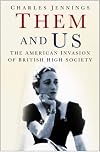
I have to wonder why the author wrote this book. It would make sense if he wanted to write an unbiased work based on the facts. However, what we have here is the author's contempt of both Americans and upper crust British society written across every page. I don't think I've ever read anything quite so negative in its appraisal of both "Them and Us".
Jennings' characterization of pre-Duchess of Marlborough Consuelo Vanderbilt is misguided. He basically goes to say that her life before show more marriage was just one bed of roses. I can assure you, it was not. Her mother locked her away until she decided she would marry the man chosen for her. Her letters were intercepted and she was never without someone reporting on her every move. None of that is even touched on in the book.
Also, he is scathing in his opinion of William Randolph Hearst, who bought a castle in Wales (hence his inclusion in the book). Jennings accuses Hearst of thieving the art collections of Europe to enhance his own homes. He doesn't mention that Hearst purchased these treasures from homes/estates that were already destroyed and saved quite a number of things worthy of any museum. He calls his American home at San Simeon a "grotesque micro-city". I wonder if the author even bothered to visit. Not one person I know who has been there has anything but wonderful things to say about it.
I came away from this book wondering why the author had such a beef with his subjects and why write a book about people you obviously hate. With the possible exception of May Goelet, Duchess of Roxburghe, not one person mentioned in the book comes off with any sort of good character. One wonders of which Jennings was more jealous: that he wasn't born a wealthy American or that he wasn't born a British aristocrat.
Not worth your time. Move on if you want an unbiased view of Americans among British society. show less
Jennings' characterization of pre-Duchess of Marlborough Consuelo Vanderbilt is misguided. He basically goes to say that her life before show more marriage was just one bed of roses. I can assure you, it was not. Her mother locked her away until she decided she would marry the man chosen for her. Her letters were intercepted and she was never without someone reporting on her every move. None of that is even touched on in the book.
Also, he is scathing in his opinion of William Randolph Hearst, who bought a castle in Wales (hence his inclusion in the book). Jennings accuses Hearst of thieving the art collections of Europe to enhance his own homes. He doesn't mention that Hearst purchased these treasures from homes/estates that were already destroyed and saved quite a number of things worthy of any museum. He calls his American home at San Simeon a "grotesque micro-city". I wonder if the author even bothered to visit. Not one person I know who has been there has anything but wonderful things to say about it.
I came away from this book wondering why the author had such a beef with his subjects and why write a book about people you obviously hate. With the possible exception of May Goelet, Duchess of Roxburghe, not one person mentioned in the book comes off with any sort of good character. One wonders of which Jennings was more jealous: that he wasn't born a wealthy American or that he wasn't born a British aristocrat.
Not worth your time. Move on if you want an unbiased view of Americans among British society. show less
Lots of fun stuff in that tongue in cheek way of the english Londoner... funny yes; pertinent no. whitty, gritty and fun - great vocabulary of Jennings to paint the images of these towns

Ah, our beloved Greenwich. A town full of history, naval connections and strong emotional links for my family, a town still punctually visited whenever any family member returns to England. Punctuality is also the mathematical definition of a point in space, and is most appropriately applied to Greenwich where the Meridian of world time and navigation was first fixed at the Royal Observatory in Greenwich Park. This small patch of greenness in among the rotting sprawl of docks, mud and show more gas-works of South East London has a genealogy encompassing Kings, Queens, sailors, Charles Dickens and Samuel Pepys.
From the large Blackheath above, still a vast open green, past the Meridian Observatory with its charming Wren octagonal rooms and down the ‘tumbling’ hill to the gorgeous Naval College, with the masts of the tea-clipper Cutty Sark soaring above the shores of the Thames each step we take with Jennings’ narrative is full of history. He visits the Trafalgar Tavern, the last survivor of the three famously competing Whitebait serving Inns where one can still sit at wooden benches and eat the famous dish while looking at the largely unchanged view that featured so often in the Pepys diaries. The science of Greenwich – the Observatory, the Longitude, the Harrison Chronometers and the technical schools of the Royal Naval College – is contrasted with the working heritage of ships and docks, and the stunning buildings and river tunnels and ferries.
Charles Jennings, a Londoner himself writes for the Daily Telegraph, the Guardian and the Times and this book explores Greenwich with an investigating, journalistic depth. He elects to structure the work with Chapter headings that nominate the subject of each piece; Maritime, Arty, Working and Scientific and then poses a hypothetical interlocution which he then answers. Other than these rather annoying stylistic questions.. it is like listening again to Donald Rumsfield .. the book is fascinating, and for those that know and love this town offers an affectionate guide and visit.
The author’s other books now tempt and some are already added to The Wish List! show less
From the large Blackheath above, still a vast open green, past the Meridian Observatory with its charming Wren octagonal rooms and down the ‘tumbling’ hill to the gorgeous Naval College, with the masts of the tea-clipper Cutty Sark soaring above the shores of the Thames each step we take with Jennings’ narrative is full of history. He visits the Trafalgar Tavern, the last survivor of the three famously competing Whitebait serving Inns where one can still sit at wooden benches and eat the famous dish while looking at the largely unchanged view that featured so often in the Pepys diaries. The science of Greenwich – the Observatory, the Longitude, the Harrison Chronometers and the technical schools of the Royal Naval College – is contrasted with the working heritage of ships and docks, and the stunning buildings and river tunnels and ferries.
Charles Jennings, a Londoner himself writes for the Daily Telegraph, the Guardian and the Times and this book explores Greenwich with an investigating, journalistic depth. He elects to structure the work with Chapter headings that nominate the subject of each piece; Maritime, Arty, Working and Scientific and then poses a hypothetical interlocution which he then answers. Other than these rather annoying stylistic questions.. it is like listening again to Donald Rumsfield .. the book is fascinating, and for those that know and love this town offers an affectionate guide and visit.
The author’s other books now tempt and some are already added to The Wish List! show less
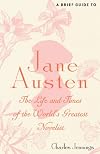
For an Austen newbie like me this Brief Guide – though at over two hundred and forty pages not that brief – is an excellent introduction and summary, told intelligently and sympathetically. Four succinct but readable chapters deal first with her life and novels, followed by an overview in ten sections of life in Regency England and a summary of Jane’s afterlife in criticism and the media. Added to this core are a short introduction, a select bibliography and, finally, an indispensable show more index. While the map of southern Britain helps chart Jane’s travels (despite the central area being obscured by the binding) what would have made this Guide complete would have been a family tree, however simplified, to elucidate sibling and other relationships.
Jennings, an Oxford English graduate and former journalist, certainly proves an able but unostentatious escort around the nuances of the Regency period and particularly Jane’s contribution and significance to the literature of the time. I’m never going to be enough of a Janeite to spot any flaws or inconsistencies in his account, though of necessity much discussion has to be left out, especially of juvenilia and works, both complete and incomplete, that only get passing mentions. Despite the limitations of space, Jennings manages to give a commentary on each of the six canonical novels which is, of course, what draws most readers in. He’s not afraid to be critical, but he also draws attention to their subtleties and strengths in ways that deepen my understanding of those I’ve already read and prepare me for the ones I haven’t.
For more detailed studies one has to go elsewhere (I’m very much looking forward to Irene Collins’ Jane Austen and the Clergy, for example, an area that Jennings devotes just one page to), but as a general introduction this is perfect. First of all, however, I must hobnob with those other titles beckoning to me from their shelves.
http://wp.me/s2oNj1-austen show less
Jennings, an Oxford English graduate and former journalist, certainly proves an able but unostentatious escort around the nuances of the Regency period and particularly Jane’s contribution and significance to the literature of the time. I’m never going to be enough of a Janeite to spot any flaws or inconsistencies in his account, though of necessity much discussion has to be left out, especially of juvenilia and works, both complete and incomplete, that only get passing mentions. Despite the limitations of space, Jennings manages to give a commentary on each of the six canonical novels which is, of course, what draws most readers in. He’s not afraid to be critical, but he also draws attention to their subtleties and strengths in ways that deepen my understanding of those I’ve already read and prepare me for the ones I haven’t.
For more detailed studies one has to go elsewhere (I’m very much looking forward to Irene Collins’ Jane Austen and the Clergy, for example, an area that Jennings devotes just one page to), but as a general introduction this is perfect. First of all, however, I must hobnob with those other titles beckoning to me from their shelves.
http://wp.me/s2oNj1-austen show less
Lists
Awards

You May Also Like


Associated Authors
Statistics
- Works
- 12
- Also by
- 1
- Members
- 332
- Popularity
- #71,552
- Rating
- 3.1
- Reviews
- 8
- ISBNs
- 34
- Languages
- 1