
Katharine E.K. Duckett
Author of Miranda in Milan
About the Author
Works by Katharine E.K. Duckett
Uncanny Magazine Issue 30: September/October 2019 (Disabled People Destroy Fantasy) (2019) — Editor — 22 copies, 4 reviews
Associated Works
Some of the Best from Tor.com: 2020 Edition: A Tor.com Original (2021) — Contributor — 101 copies, 3 reviews
Uncanny Magazine Issue 24: September/October 2018 (Disabled People Destroy Science Fiction) (2018) — Contributor — 52 copies
Tor.com Publishing 2019 Debut Sampler: Some of the Most Exciting New Voices in Science Fiction and Fantasy (2019) — Contributor — 28 copies
Tagged
Common Knowledge
- Gender
- female
- Education
- Hampshire College
- Nationality
- USA
- Places of residence
- Brooklyn, New York, USA
- Associated Place (for map)
- New York, USA
Members
Reviews
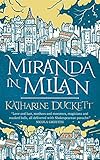
When Miranda came to Milan, she found she was a monster.
---
Either this is a bad book or I really do just have hate in my heart. Maybe it’s both?
I love The Tempest. I’m a massive Shakespeare nerd, and The Tempest is one of my all-time favorite Shakespeare plays. It’s a gorgeous masterpiece and a beautiful meditation on power, old age, and the art of stagecraft.
So when I heard about Miranda in Milan, which sets itself as an immediate sequel to The Tempest, I was intrigued. Miranda is show more a fairly flat character in the play, so a text expanding on her character and journey would be most welcome. And Prospero is an absolute dick for the entire play and gets away with it scot-free, so I was more than happy to let him finally get his due.
All of this is to say that I went into Miranda in Milan with an open mind and good expectations. But Miranda in Milan is just not a good book, and it’s a pale and weak successor to The Tempest.
The problem is, if you’re going to write an adaptation or sequel of a text like The Tempest, you need to take existing issues and themes in the text and expand on them. You can’t just start inventing things wholesale. And you absolutely can’t blatantly disregard critical truths in the original text because it doesn’t fit into the story you want to tell.
Miranda in Milan is not a sequel to The Tempest. It’s not even fanfiction. It takes the pieces that it likes and tosses the pieces that it doesn’t, and then mixes in a bunch of made-up hooey that has absolutely no place in the story Shakespeare set up.
As a result, we end up with a Miranda who immediately forgets and discards Ferdinand like he’s a dropped tissue in favor of a blandly benevolent manic pixie dream girl, who she tumbles into bed with by page 70 (this all happened so ridiculously fast that I laughed out loud). Which is nuts. I could totally, 100% get behind a story where Miranda realizes the dude she hung out with for four hours before marrying isn’t actually her type, and I could absolutely be a fan of a plot where Miranda subsequently realizes she prefers ladies. But to discard Ferdinand, who is a fairly important character in the play, so immediately and to send Miranda careening into someone else’s arms so quickly does not indicate an author adapting issues she gleaned from the original text. It speaks of an author who decided that something in the original play was inconvenient to her ideas and then getting rid of the inconvenience with a swipe of the pen.
Which is just NOT how you adapt a text. Seriously.
To add further insult to injury, the plot itself is not great. Miranda and Dorothea are confronted with a fairly obvious mystery and immediately leap to the stupidest and most illogical conclusions, simply because the plot isn’t ready for them to solve the mystery yet. Prospero is both all-powerful and pathetically weak at the same time, depending on the plot situation (his ability to make the people of Milan forget only things the plot needs them to forget, as opposed to the things Prospero needs them to forget, is particularly egregious).
In short, I did not enjoy Miranda in Milan. show less
---
Either this is a bad book or I really do just have hate in my heart. Maybe it’s both?
I love The Tempest. I’m a massive Shakespeare nerd, and The Tempest is one of my all-time favorite Shakespeare plays. It’s a gorgeous masterpiece and a beautiful meditation on power, old age, and the art of stagecraft.
So when I heard about Miranda in Milan, which sets itself as an immediate sequel to The Tempest, I was intrigued. Miranda is show more a fairly flat character in the play, so a text expanding on her character and journey would be most welcome. And Prospero is an absolute dick for the entire play and gets away with it scot-free, so I was more than happy to let him finally get his due.
All of this is to say that I went into Miranda in Milan with an open mind and good expectations. But Miranda in Milan is just not a good book, and it’s a pale and weak successor to The Tempest.
The problem is, if you’re going to write an adaptation or sequel of a text like The Tempest, you need to take existing issues and themes in the text and expand on them. You can’t just start inventing things wholesale. And you absolutely can’t blatantly disregard critical truths in the original text because it doesn’t fit into the story you want to tell.
Miranda in Milan is not a sequel to The Tempest. It’s not even fanfiction. It takes the pieces that it likes and tosses the pieces that it doesn’t, and then mixes in a bunch of made-up hooey that has absolutely no place in the story Shakespeare set up.
As a result, we end up with a Miranda who immediately forgets and discards Ferdinand like he’s a dropped tissue in favor of a blandly benevolent manic pixie dream girl, who she tumbles into bed with by page 70 (this all happened so ridiculously fast that I laughed out loud). Which is nuts. I could totally, 100% get behind a story where Miranda realizes the dude she hung out with for four hours before marrying isn’t actually her type, and I could absolutely be a fan of a plot where Miranda subsequently realizes she prefers ladies. But to discard Ferdinand, who is a fairly important character in the play, so immediately and to send Miranda careening into someone else’s arms so quickly does not indicate an author adapting issues she gleaned from the original text. It speaks of an author who decided that something in the original play was inconvenient to her ideas and then getting rid of the inconvenience with a swipe of the pen.
Which is just NOT how you adapt a text. Seriously.
To add further insult to injury, the plot itself is not great. Miranda and Dorothea are confronted with a fairly obvious mystery and immediately leap to the stupidest and most illogical conclusions, simply because the plot isn’t ready for them to solve the mystery yet. Prospero is both all-powerful and pathetically weak at the same time, depending on the plot situation (his ability to make the people of Milan forget only things the plot needs them to forget, as opposed to the things Prospero needs them to forget, is particularly egregious).
In short, I did not enjoy Miranda in Milan. show less

At the end of Shakespeare's Tempest, the previously stranded Prospero and Miranda were ready to go back to Milan, with Prospero having relinquished his magic. Katharine Duckett takes up the story at the moment when they enter Milan (although she does catch us up on what happened in between).
The original play had always contained a lot of conflicting information - we know that Prospero was the good guy because he told us (and Miranda) so but his actions during and before the play makes the show more reader wonder. In fact everything we know outside of what we see during the play is Prospero's version of events - either directly or by what he had told his daughter. The fact that they sent her away when they exiled him seems to be giving some credence to his story but the doubts always linger. Even Caliban's wrong doings are only presented by what Prospero says about them.
Duckett plays exactly on that ambiguity - what if Prospero was not the maligned innocent and actually was an awful man and Antonio was not the villain in the piece (Miranda being sent to an almost certain death as a toddler notwithstanding)? So here is part of the same story we thought we know - from Caliban's punishment for something he never did, through Miranda realizing what a monster her father is (and always had been) to her finally starting to think for herself - for the first time in her life.
I liked the idea of the story although I am not sure I liked the execution as much. Miranda is way too modern and knowledgeable in certain things (and way too naive in others) in seemingly random moments - not badly enough to grate but still noticeable in some parts. Using dream walking to get us to see the past seemed like a good idea but felt a lot like the author just had no idea how to get Miranda to see the truth so dreams it is (noone dreams all their life every night...). I did not even mind her getting in love - her love for Ferdinand was born on an enchanted island when she had known a total of 2 people in her life. But then Dorothea felt almost like a deus-ex-machina in some places.
I did not really dislike the story and I am happy I read it but at the end I was left wanting something more. Maybe a different structure would have helped. Maybe a bit more reality (despite it being a fantasy story) would have helped (in places it felt as one-toned as a fairy tale for very young children). And I am not entirely sure how much my impressions were colored by the fact that this is probably the Shakespearean play I like the least - both as a story and in the way it was told. show less
The original play had always contained a lot of conflicting information - we know that Prospero was the good guy because he told us (and Miranda) so but his actions during and before the play makes the show more reader wonder. In fact everything we know outside of what we see during the play is Prospero's version of events - either directly or by what he had told his daughter. The fact that they sent her away when they exiled him seems to be giving some credence to his story but the doubts always linger. Even Caliban's wrong doings are only presented by what Prospero says about them.
Duckett plays exactly on that ambiguity - what if Prospero was not the maligned innocent and actually was an awful man and Antonio was not the villain in the piece (Miranda being sent to an almost certain death as a toddler notwithstanding)? So here is part of the same story we thought we know - from Caliban's punishment for something he never did, through Miranda realizing what a monster her father is (and always had been) to her finally starting to think for herself - for the first time in her life.
I liked the idea of the story although I am not sure I liked the execution as much. Miranda is way too modern and knowledgeable in certain things (and way too naive in others) in seemingly random moments - not badly enough to grate but still noticeable in some parts. Using dream walking to get us to see the past seemed like a good idea but felt a lot like the author just had no idea how to get Miranda to see the truth so dreams it is (noone dreams all their life every night...). I did not even mind her getting in love - her love for Ferdinand was born on an enchanted island when she had known a total of 2 people in her life. But then Dorothea felt almost like a deus-ex-machina in some places.
I did not really dislike the story and I am happy I read it but at the end I was left wanting something more. Maybe a different structure would have helped. Maybe a bit more reality (despite it being a fantasy story) would have helped (in places it felt as one-toned as a fairy tale for very young children). And I am not entirely sure how much my impressions were colored by the fact that this is probably the Shakespearean play I like the least - both as a story and in the way it was told. show less
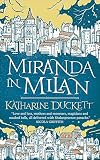
I had a lot of fun reading this novella that takes place just after The Tempest. I read the play ages ago but don't remember it very well. I didn't find that mattered to my reading of this title. My favorite part was discovering the backstory of Miranda and her family. I rarely say this but I wish this had been a bit longer as I think some of the relationships could have been more fleshed out. The romance in particular felt rushed, which was a shame as they had some seriously romantic lines show more with each other but it all felt instantaneous. The characters are a lot younger than me, though, so maybe it was more supposed to be that rush of first love that I don't relate to very well. Recommended. show less
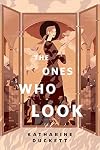
This short story is a bit odd: it deals with Heaven & Hell and judgment, but it also is 100% human. The sci-fi aspect of it (which I am not going into because of spoilers — you can read the story for yourself here and see for yourself: https://www.tor.com/2020/07/01/the-ones-who-look-katharine-duckett/) is something I could see humanity actually doing, right or wrong, once we have the capability for it.
I thought this was a well-crafted story, but too open-ended for my personal tastes. I show more didn't get any hint of what happened at the end of the story, and even when something is left open to personal interpretation, I like there to be a hint. Now, it's possible that there is a hint there for people who are either more religious than I am (maybe there are hints in the Heaven & Hell aspect that I missed) or people who know more about the actual mechanics of what the programmers did. But if there were hints about what the ending meant, I missed them completely. show less
I thought this was a well-crafted story, but too open-ended for my personal tastes. I show more didn't get any hint of what happened at the end of the story, and even when something is left open to personal interpretation, I like there to be a hint. Now, it's possible that there is a hint there for people who are either more religious than I am (maybe there are hints in the Heaven & Hell aspect that I missed) or people who know more about the actual mechanics of what the programmers did. But if there were hints about what the ending meant, I missed them completely. show less
Lists
SFFKit 2022 (1)
Awards

You May Also Like


Associated Authors
Statistics
- Works
- 4
- Also by
- 13
- Members
- 228
- Popularity
- #98,696
- Rating
- 3.8
- Reviews
- 17
- ISBNs
- 4
- Languages
- 1