
Eliza Granville
Author of Gretel and the Dark
Works by Eliza Granville
The Awakening 2 copies
Tagged
Common Knowledge
- Gender
- female
Members
Reviews
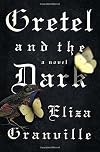
"Dark" is right there in the title, and this book is: half Holocaust story, half German fairy tale, layered and woven together.
Krysta is the stubborn daughter of a German doctor at Ravensbruck (though the camp isn't mentioned by name until near the end of the book); she found her mother's body after she committed suicide, and she discovers her father's dead body as well, after which she is thrown into the camp with the rest of the "animal-people." She escapes into the fairy tales her old show more housemaid/nanny, Greet, used to tell her, and spins stories for her friend Daniel as well.
Alternating with Krysta's story in Ravensbruck is the story of Josef Breuer in Vienna. His gardener and handyman Benjamin discovers a young woman - shorn, naked, beaten - and brings her to Josef, who struggles to find out where she comes from and misguidedly falls in love with her. But is Lilie - as he calls her - even real? Or is she an invention of his mind - or someone else's?
Quotes
But fear has become too familiar of a companion to act as a spur for long. (2)
"God is a human invention." (Lilie to Josef, 26)
It suddenly occurred to Josef that being left to their own devices might bot be considered a misfortune for women, but rather a period of great liberation if such a gift could be accepted. He considered what it must be like to be judged on physical appearance, to be desired on looks alone - and then, with the passing of time, to be not. (160)
"Life is hard, but knowing about other people, other civilizations, other ways of living, other places - that's your escape route, a magical journey. Once you know about these things, no matter what happens, your mind can create stories to take you anywhere you want to go....Anywhere and any-when." (Erika to Krysta, 170)
"You didn't come back."
"Sometimes people don't." He looks away. "That's what happens here." (Krysta and Daniel, 170)
"The rich get richer while the poor get poorer. Fairness never comes into it." (Greet to Krysta, 201)
"Stories are fast travelers, always moving on....Oh yes, stories change with the wind and the tide and the moon. Half the time they're only plaited mist anyway, so they disappear altogether when daylight shines on them." (Greet to Krysta, 202)
"Our lives are spent seeking the person who will make us whole. We know it as bashert - that coming together with the lost half. They say when it happens the pair is lost in an amazement of love and friendship and intimacy. Afterwards one will not be out of the other's sight even for a moment." (Hanna to Krysta, 277)
If it was possible to create objects to meet one's deepest longings, then nobody would need God. (Josef, 288)
I try to do what I've always done - escape into that secret part of me where by magic or heroism I make things turn out differently, leaving behind an automaton, a machine with no feelings whatsoever - but today I can't. A door has closed. The ideas have gone. The words aren't there. Perhaps this is what happens when you invent stories inside stories that are themselves inside a fairy tale: they become horribly real. (Krysta, 327)
....the results of the hardships we suffered did not lessen when the world grew weary of our pain, our grief and fears, our strangeness; and the worse the memory, the stronger its stranglehold on the present. We survived. We went on. It seemed enough. (337)
It's an additional torture that this generation, too, should suffer for our memories; almost impossible to find the point of balance between burdening them with the vile details and ensuring the truth is never forgotten. (339) show less
Krysta is the stubborn daughter of a German doctor at Ravensbruck (though the camp isn't mentioned by name until near the end of the book); she found her mother's body after she committed suicide, and she discovers her father's dead body as well, after which she is thrown into the camp with the rest of the "animal-people." She escapes into the fairy tales her old show more housemaid/nanny, Greet, used to tell her, and spins stories for her friend Daniel as well.
Alternating with Krysta's story in Ravensbruck is the story of Josef Breuer in Vienna. His gardener and handyman Benjamin discovers a young woman - shorn, naked, beaten - and brings her to Josef, who struggles to find out where she comes from and misguidedly falls in love with her. But is Lilie - as he calls her - even real? Or is she an invention of his mind - or someone else's?
Quotes
But fear has become too familiar of a companion to act as a spur for long. (2)
"God is a human invention." (Lilie to Josef, 26)
It suddenly occurred to Josef that being left to their own devices might bot be considered a misfortune for women, but rather a period of great liberation if such a gift could be accepted. He considered what it must be like to be judged on physical appearance, to be desired on looks alone - and then, with the passing of time, to be not. (160)
"Life is hard, but knowing about other people, other civilizations, other ways of living, other places - that's your escape route, a magical journey. Once you know about these things, no matter what happens, your mind can create stories to take you anywhere you want to go....Anywhere and any-when." (Erika to Krysta, 170)
"You didn't come back."
"Sometimes people don't." He looks away. "That's what happens here." (Krysta and Daniel, 170)
"The rich get richer while the poor get poorer. Fairness never comes into it." (Greet to Krysta, 201)
"Stories are fast travelers, always moving on....Oh yes, stories change with the wind and the tide and the moon. Half the time they're only plaited mist anyway, so they disappear altogether when daylight shines on them." (Greet to Krysta, 202)
"Our lives are spent seeking the person who will make us whole. We know it as bashert - that coming together with the lost half. They say when it happens the pair is lost in an amazement of love and friendship and intimacy. Afterwards one will not be out of the other's sight even for a moment." (Hanna to Krysta, 277)
If it was possible to create objects to meet one's deepest longings, then nobody would need God. (Josef, 288)
I try to do what I've always done - escape into that secret part of me where by magic or heroism I make things turn out differently, leaving behind an automaton, a machine with no feelings whatsoever - but today I can't. A door has closed. The ideas have gone. The words aren't there. Perhaps this is what happens when you invent stories inside stories that are themselves inside a fairy tale: they become horribly real. (Krysta, 327)
....the results of the hardships we suffered did not lessen when the world grew weary of our pain, our grief and fears, our strangeness; and the worse the memory, the stronger its stranglehold on the present. We survived. We went on. It seemed enough. (337)
It's an additional torture that this generation, too, should suffer for our memories; almost impossible to find the point of balance between burdening them with the vile details and ensuring the truth is never forgotten. (339) show less
Perhaps this is what happens when you invent stories that are themselves inside a fairy tale: they become horribly real. Page 327
Joseph Breuer is a well known doctor in Vienna who comes across a patient like none other he's ever encountered. Found naked and injured, the girl claims that she is a machine and feels nothing. She has a dire warning for Joseph, a warning that concerns his family in the generations to come. Kill the monster before he destroys them all. Fast forward time and we show more meet yet another girl in Germany. This one is young, ignorant, and caught up in a world of stories and fairytales. Her father is also a doctor who works at a secret infirmary. Ignorant and unaware, her world becomes a nightmare when her father passes away and the stories are no longer a safe enough haven for her to retreat in. Two girls, separate by time and space, but connected in a horrifying and unimaginable way.
I've read a number of books about war and what war does to people. Gretel and the Dark is in part a war story but told in a way that I've never read before. The first couple of chapters took a bit of adjustment as the stories alternated between two different narrators and I had a hard time anchoring myself to the environment. Slowly, like Hansel and Gretel who are lead into the forest by a trail of crumbs, we as the readers are lead deeper and deeper into a story that is rife with darkness and the inhumanity of war and its repercussions. The human mind can be a fragile thing, but also capable of incomprehensible strength and perseverance. Through the stories of Lilie and Krysta, we also come to understand that life is not always a happily ever after. Sometimes to get to a happily ever after, if such a thing exists, evil, pain, cruelty and the lowest depths of human despair must come first. Highly recommend because it's one of those books that stay with you long after you've finished the last page. show less
Joseph Breuer is a well known doctor in Vienna who comes across a patient like none other he's ever encountered. Found naked and injured, the girl claims that she is a machine and feels nothing. She has a dire warning for Joseph, a warning that concerns his family in the generations to come. Kill the monster before he destroys them all. Fast forward time and we show more meet yet another girl in Germany. This one is young, ignorant, and caught up in a world of stories and fairytales. Her father is also a doctor who works at a secret infirmary. Ignorant and unaware, her world becomes a nightmare when her father passes away and the stories are no longer a safe enough haven for her to retreat in. Two girls, separate by time and space, but connected in a horrifying and unimaginable way.
I've read a number of books about war and what war does to people. Gretel and the Dark is in part a war story but told in a way that I've never read before. The first couple of chapters took a bit of adjustment as the stories alternated between two different narrators and I had a hard time anchoring myself to the environment. Slowly, like Hansel and Gretel who are lead into the forest by a trail of crumbs, we as the readers are lead deeper and deeper into a story that is rife with darkness and the inhumanity of war and its repercussions. The human mind can be a fragile thing, but also capable of incomprehensible strength and perseverance. Through the stories of Lilie and Krysta, we also come to understand that life is not always a happily ever after. Sometimes to get to a happily ever after, if such a thing exists, evil, pain, cruelty and the lowest depths of human despair must come first. Highly recommend because it's one of those books that stay with you long after you've finished the last page. show less
Had I read Eliza Granville’s Gretel and the Dark in 2014 when it was released, it most definitely would have been on my “best of” list. As it is, I think I will probably have to include it on the 2015 list, even though it was released earlier.
Initially, one feels a bit nonplussed by this novel and all it contains. It opens with a retelling of the Pied Piper of Hamlin. The novel then moves on to 1899 Vienna, where a naked, shorn-headed, badly beaten woman with a numerical tattoo on one show more wrist has been taken in by a psychotherapist who both wants to help her, but also wants to claim the glory he feels he’s deserved, but has never been given. Lilie (the name he gives his new patient) insists that she is a machine, without name or family, who has been sent to turn-of-the century Vienna to kill the monster “Adi” before he becomes too powerful. She warns the psychotherapist that the fate of his own descendants rests upon the success of her mission. After that, the novel takes us to Ravensbrück concentration camp, where we meet young Krysta whose mother has recently committed suicide and whose father works in the facility’s “infirmary.” From that point on, readers move back and forth between the stories of Lilie and Krista.
The mix of fable, what appears to be science fiction, and Holocaust literature is demanding, draining, and seemingly disconnected, but the writing is so compelling that it pulls the reader along, even through this difficult beginning. And as one keeps reading the parallels among the three stories gradually become clearer. Not until then end of the book, though, does the reader fully understand the connections among these these narratives.
Gretel and the Dark contains a great deal of unhappiness and unkindness, but it is not without hope. Hope burns within it like a single, small candle in the middle of the darkness that is the bulk of the novel.
Eliza Granville’s ability to imagine and depict the seemingly unimaginable continually floored me. As I read, I turned the novel’s events over and over in my mind—but I also found myself wondering about the magic of fiction and the power of a truly great writer, who can create an entire world, worlds actually, and make them vivid enough for readers to temporarily live within them.
This is one of those books I know I’ll be returning to every few years both for the merits of the writing and the structure, as well as for the complex reflection it inspires. Buy it in hardback, so it will allow you multiple readings. show less
Initially, one feels a bit nonplussed by this novel and all it contains. It opens with a retelling of the Pied Piper of Hamlin. The novel then moves on to 1899 Vienna, where a naked, shorn-headed, badly beaten woman with a numerical tattoo on one show more wrist has been taken in by a psychotherapist who both wants to help her, but also wants to claim the glory he feels he’s deserved, but has never been given. Lilie (the name he gives his new patient) insists that she is a machine, without name or family, who has been sent to turn-of-the century Vienna to kill the monster “Adi” before he becomes too powerful. She warns the psychotherapist that the fate of his own descendants rests upon the success of her mission. After that, the novel takes us to Ravensbrück concentration camp, where we meet young Krysta whose mother has recently committed suicide and whose father works in the facility’s “infirmary.” From that point on, readers move back and forth between the stories of Lilie and Krista.
The mix of fable, what appears to be science fiction, and Holocaust literature is demanding, draining, and seemingly disconnected, but the writing is so compelling that it pulls the reader along, even through this difficult beginning. And as one keeps reading the parallels among the three stories gradually become clearer. Not until then end of the book, though, does the reader fully understand the connections among these these narratives.
Gretel and the Dark contains a great deal of unhappiness and unkindness, but it is not without hope. Hope burns within it like a single, small candle in the middle of the darkness that is the bulk of the novel.
Eliza Granville’s ability to imagine and depict the seemingly unimaginable continually floored me. As I read, I turned the novel’s events over and over in my mind—but I also found myself wondering about the magic of fiction and the power of a truly great writer, who can create an entire world, worlds actually, and make them vivid enough for readers to temporarily live within them.
This is one of those books I know I’ll be returning to every few years both for the merits of the writing and the structure, as well as for the complex reflection it inspires. Buy it in hardback, so it will allow you multiple readings. show less
This beautiful novel by Eliza Granville blends historical fiction, magical realism, and fairy tales to tell the story of a young girl's experience of the Holocaust. I, like some other reviewers, had some trouble getting into it at the beginning, but it was well worth the effort, and once I got over the hump I found myself completely unable to put it down. Granville does a beautiful job leaving the reader trying to figure out how the story will come together, and balancing what feels like a show more mystery with the bleakness of the scenes of the horrors of the concentration camp, which are all the more stirring because they are shown through the eyes of a child. A truly excellent novel. show less
Lists
You May Also Like


Statistics
- Works
- 5
- Members
- 280
- Popularity
- #83,033
- Rating
- 3.5
- Reviews
- 15
- ISBNs
- 13
- Languages
- 1