
Leslie Parry
Author of Church of Marvels
About the Author
Image credit: Uncredited image found at author's website
Works by Leslie Parry
Associated Works
Tagged
Common Knowledge
- Canonical name
- Parry, Leslie
- Birthdate
- 1979
- Gender
- female
- Education
- Iowa Writers' Workshop
- Nationality
- USA
- Places of residence
- Chicago, Illinois, USA
- Associated Place (for map)
- Illinois, USA
Members
Reviews
At about 10 pages before the epilogue, I realized that not everything was going to be explained and I got really excited. We aren't going to know who fathered Bella's baby, and we aren't going to know how the fire started in the theater, and that's great because it's not important to know, and it's not real to know. There are all sorts of things that happen in life that hugely change us but we have no idea what was behind them, and it's still interesting how things play out. Allowing the show more reader to speculate, or to not speculate and to simply accept them as things that happened "before" - that felt really fresh and interesting and exciting.
And then the epilogue explained who fathered Bella's baby, how the fire started, and threw in some last minute curves about the twins' mom not being their mom. show less
And then the epilogue explained who fathered Bella's baby, how the fire started, and threw in some last minute curves about the twins' mom not being their mom. show less
This is a lot of story, maybe too much for me but great for other readers. What shines is the setting (I will forgive everything for Coney Island), and the development of complex female characters.
"I have witnessed the sublime in the mundane..."
(Full disclosure: I received a free ARC for review from the publisher.)
"But this story, in truth, is not about me. I am only a small part of it. I could try to forget it, perhaps. I could try to put it behind me. But sometimes I dream that I'll still return to the pageantry of the sideshow, hide myself beneath costumes and powder and paint, grow willingly deaf among the opiating roar of the audience and the bellow of the old brass band. It will show more be like the old days - when Mother was ferocious and alive, before the Church of Marvels burned to the sand. But how can I return now, having seen what I have seen? For I’ve found that here in this city, the lights burn ever brighter, but they cast the darkest shadows I know."
"Why, he wondered, did he have to peddle his difference for their amusement, and yet at the same time temper it, suppress it, make it suitably benign?"
"How would it feel to know there were people who'd chosen to live as they felt, not as they appeared, and never looked back? Could she bear their happiness, as shunned as they were? Was she brave enough?"
"She had seen it done. Wherever they glittered in the afterlife – flying among the high rafters of heaven, swimming with her mother in an undersea cave – she hoped the tigers had known it, and roared."
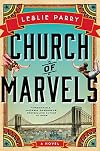
For the first time in her seventeen years, Odile Church is alone. Her mother's sideshow carnival, the Church of Marvels, burned to ash in the spring, the casualty of a freak fire. With it went her mother, many of her friends, and the only life she knew. Her twin sister, Isabelle Church, was spared - only to run off to Manhattan not long after. That was three months ago; three months without a word.
And then Odile receives a cryptic, ominous letter from Belle: "If for some reason this is the last letter I should write to you, please know that I love you." Armed with little more than an old map of her mother's and Belle's letter, Odile hops the next ferry to Manhattan in search of her sister.
Meanwhile, night soiler and amateur boxer Sylvan Threadgill is cleaning out a Manhattan privy when he happens upon a baby girl, discarded like so much garbage. An orphan himself, Sylvan ignores the foreman's orders to leave her be and instead sneaks her off to his basement apartment on Ludlow Street. Finding the thought of dumping her off at an orphanage unbearable, Sylvan resolves to track down the babe's wayward mother.
And on Blackwell's Island, the mortician's bride Alphie Leonetti awakens in Blackwell's Lunatic Asylum with no idea of how she got there - just a sneaking suspicion that her scheming, distrustful mother-in-law, the Signora, is behind her imprisonment. Little by little, Alphie attempts to piece together the fragmented memories leading up to Blackwell's - while also plotting her escape with a mysterious fellow inmate.
Told from the alternating perspectives of Odile, Sylvan, Alphie, and (occasionally) Belle, Church of Marvels is a wonderfully weird, complex, suspenseful, and unexpected story that cuts across multiple genres. Set on the islands of New York City - Manhattan, Coney, and Blackwell - in 1895, Church of Marvels could easily be classified as historical fiction; but its exploration of the extraordinary body also has a sociological feel. Likewise, the glimpse it offers into turn-of-the-century "lunatic asylums" has a distinctly feminist bent: the prisoners - many of whom are not actually mentally ill, but are otherwise troublesome or inconvenient women - are routinely drugged to force compliance, abused for fun or punishment, kept shackled, branded/tattooed, and denied contact with the outside world.
Ditto: Mrs. Bloodworth's apothecary, in which wayward girls go to escape the shame of unwed motherhood (the feminist insight, if not the abuse).
Above all this, though, Church of Marvels is a delicious, edge-of-your-seat mystery. The story begins with three seemingly unrelated narrators; slowly but surely, their paths converge in unforeseen yet serendipitous ways. And just when you think that Parry has tied up all the loose ends, she reveals another layer (or two or three) of interconnectedness. It's rather amazing to watch, actually.
The sheer breadth of diversity to be found here is stunning as well. Let's start with the obvious: the Church of Marvels "freaks," who have minor roles: Georgette, with her extra set of legs; Aldovar, the half man/half woman act, who is "of two spirits" (a botched circumcision left him with "abnormal sex organs"); and Leland the "dwarf."
As Odile searches NYC for her sister, we meet several disabled children, such as Pigeon, the girl at Mrs. Bloodworth's who is missing an arm; and the unnamed boy working in the opium den whose mother cut off his nose. Odile herself suffers from spinal problems; for most of her life, she had to wear a brace, leading to childhood taunts of "Croc-Odile" and "gimp." (One of my favorite passages is when Belle cuts off the pinky toe of her sister's tormentor with her blunt stage dagger.)
And Sylvan Threadgill is biracial, with "the skin of a Gypsy, the hair of a Negro, the build of a German, the nose of a Jew." Mrs. Izzo, in whose care he leaves the baby, has skin "the color of burnished gold."
There's more, but spoilers. Oh, the spoilers!
Beyond the sideshow aspect, the book's diversity isn't immediately obvious - but it's there. That's one of my favorites: when a book hits you with such a marvelously diverse case of characters without giving you much of a hint going in. (Think: The Country of Ice Cream Star.) Of course, it'd be nice to know beforehand - that way interested readers can seek diverse books out - but surprises are nice too. And Church of Marvels is packed with them.
And let's not forget Parry's world-building, which is awesome. There are so many wonderful period details; Mrs. Izzo's weaving business (she makes trinkets out of the hair of the dead) and the washed up whale carcass (of which now only the rib bones remain) are two that will stick with me. Turn-of-the-century New York City is the fifth MC in Church of Marvels.
She also paints characters that are impossibly complex and nuanced; even the likely villain of the story, the Signora, is difficult to hate without restraint, given her past abuse and possible mental disorder(s).
On more than one occasion, I found myself cursing a character's seemingly ridiculous actions - only to have them illuminated past clarity by a big reveal fifty or a hundred pages later. Everything falls into place, no matter how nonsensical. Trust me.
There's so much more I long to say, but I don't want to spoil anything, so. Just go read it. You won't be sorry.
http://www.easyvegan.info/2015/05/06/church-of-marvels-by-leslie-parry/ show less
(Full disclosure: I received a free ARC for review from the publisher.)
"But this story, in truth, is not about me. I am only a small part of it. I could try to forget it, perhaps. I could try to put it behind me. But sometimes I dream that I'll still return to the pageantry of the sideshow, hide myself beneath costumes and powder and paint, grow willingly deaf among the opiating roar of the audience and the bellow of the old brass band. It will show more be like the old days - when Mother was ferocious and alive, before the Church of Marvels burned to the sand. But how can I return now, having seen what I have seen? For I’ve found that here in this city, the lights burn ever brighter, but they cast the darkest shadows I know."
"Why, he wondered, did he have to peddle his difference for their amusement, and yet at the same time temper it, suppress it, make it suitably benign?"
"How would it feel to know there were people who'd chosen to live as they felt, not as they appeared, and never looked back? Could she bear their happiness, as shunned as they were? Was she brave enough?"
"She had seen it done. Wherever they glittered in the afterlife – flying among the high rafters of heaven, swimming with her mother in an undersea cave – she hoped the tigers had known it, and roared."
For the first time in her seventeen years, Odile Church is alone. Her mother's sideshow carnival, the Church of Marvels, burned to ash in the spring, the casualty of a freak fire. With it went her mother, many of her friends, and the only life she knew. Her twin sister, Isabelle Church, was spared - only to run off to Manhattan not long after. That was three months ago; three months without a word.
And then Odile receives a cryptic, ominous letter from Belle: "If for some reason this is the last letter I should write to you, please know that I love you." Armed with little more than an old map of her mother's and Belle's letter, Odile hops the next ferry to Manhattan in search of her sister.
Meanwhile, night soiler and amateur boxer Sylvan Threadgill is cleaning out a Manhattan privy when he happens upon a baby girl, discarded like so much garbage. An orphan himself, Sylvan ignores the foreman's orders to leave her be and instead sneaks her off to his basement apartment on Ludlow Street. Finding the thought of dumping her off at an orphanage unbearable, Sylvan resolves to track down the babe's wayward mother.
And on Blackwell's Island, the mortician's bride Alphie Leonetti awakens in Blackwell's Lunatic Asylum with no idea of how she got there - just a sneaking suspicion that her scheming, distrustful mother-in-law, the Signora, is behind her imprisonment. Little by little, Alphie attempts to piece together the fragmented memories leading up to Blackwell's - while also plotting her escape with a mysterious fellow inmate.
Told from the alternating perspectives of Odile, Sylvan, Alphie, and (occasionally) Belle, Church of Marvels is a wonderfully weird, complex, suspenseful, and unexpected story that cuts across multiple genres. Set on the islands of New York City - Manhattan, Coney, and Blackwell - in 1895, Church of Marvels could easily be classified as historical fiction; but its exploration of the extraordinary body also has a sociological feel. Likewise, the glimpse it offers into turn-of-the-century "lunatic asylums" has a distinctly feminist bent: the prisoners - many of whom are not actually mentally ill, but are otherwise troublesome or inconvenient women - are routinely drugged to force compliance, abused for fun or punishment, kept shackled, branded/tattooed, and denied contact with the outside world.
Ditto: Mrs. Bloodworth's apothecary, in which wayward girls go to escape the shame of unwed motherhood (the feminist insight, if not the abuse).
Above all this, though, Church of Marvels is a delicious, edge-of-your-seat mystery. The story begins with three seemingly unrelated narrators; slowly but surely, their paths converge in unforeseen yet serendipitous ways. And just when you think that Parry has tied up all the loose ends, she reveals another layer (or two or three) of interconnectedness. It's rather amazing to watch, actually.
The sheer breadth of diversity to be found here is stunning as well. Let's start with the obvious: the Church of Marvels "freaks," who have minor roles: Georgette, with her extra set of legs; Aldovar, the half man/half woman act, who is "of two spirits" (a botched circumcision left him with "abnormal sex organs"); and Leland the "dwarf."
As Odile searches NYC for her sister, we meet several disabled children, such as Pigeon, the girl at Mrs. Bloodworth's who is missing an arm; and the unnamed boy working in the opium den whose mother cut off his nose. Odile herself suffers from spinal problems; for most of her life, she had to wear a brace, leading to childhood taunts of "Croc-Odile" and "gimp." (One of my favorite passages is when Belle cuts off the pinky toe of her sister's tormentor with her blunt stage dagger.)
And Sylvan Threadgill is biracial, with "the skin of a Gypsy, the hair of a Negro, the build of a German, the nose of a Jew." Mrs. Izzo, in whose care he leaves the baby, has skin "the color of burnished gold."
There's more, but spoilers. Oh, the spoilers!
Beyond the sideshow aspect, the book's diversity isn't immediately obvious - but it's there. That's one of my favorites: when a book hits you with such a marvelously diverse case of characters without giving you much of a hint going in. (Think: The Country of Ice Cream Star.) Of course, it'd be nice to know beforehand - that way interested readers can seek diverse books out - but surprises are nice too. And Church of Marvels is packed with them.
And let's not forget Parry's world-building, which is awesome. There are so many wonderful period details; Mrs. Izzo's weaving business (she makes trinkets out of the hair of the dead) and the washed up whale carcass (of which now only the rib bones remain) are two that will stick with me. Turn-of-the-century New York City is the fifth MC in Church of Marvels.
She also paints characters that are impossibly complex and nuanced; even the likely villain of the story, the Signora, is difficult to hate without restraint, given her past abuse and possible mental disorder(s).
On more than one occasion, I found myself cursing a character's seemingly ridiculous actions - only to have them illuminated past clarity by a big reveal fifty or a hundred pages later. Everything falls into place, no matter how nonsensical. Trust me.
There's so much more I long to say, but I don't want to spoil anything, so. Just go read it. You won't be sorry.
http://www.easyvegan.info/2015/05/06/church-of-marvels-by-leslie-parry/ show less
The Church of Marvels by author Leslie Parry in set in New York in the late 1890s. This is a world of dirt, disease, noise and squalor, opium dens, brothels, and fight clubs, and where children are often commodities. The tale is told from several different perspectives:
-Sylvan, a night-soiler, someone who cleans out the privies in Manhattan. The only thing that makes the job bearable is the many treasures he has found on the job but he has never found anything like he has found this night show more – a live baby girl. Although he is told by the boss to abandon the baby, he cannot – up until now he has felt lonely and isolated but finding the girl’s family gives him purpose.
-Odile who was raised in a circus called the Church of Marvels on Coney Island. Thanks to a physical handicap, she has always lived in the shadow of her twin sister Belle who is a sword-swallower and a shapeshifter. But when the circus is burned down, killing her mother and several of the performers, Belle disappears and Odile follows the only clue she has to the slums of Manhattan.
-Alphie who was thrown out by her strict religious father at the age of twelve for kissing a boy. She was forced into prostitution but found a job doing concealing makeup for men on the way home after a night of drinking, drugging, and brawling. She met Anthony, an opium smoker and undertaker, who, despite his mother’s protests, marries her. But Alphie has secrets that, when discovered, will have devastating effects for her.
These may be the main characters but Parry has created a huge cast of characters who are often outcasts due to no fault of their own living lives at the edge of proper society but who are all complex, diverse, and fascinating – even the villain of the piece has shades of grey that make the reader, if not empathize, at least understand.
Parry’s Church of Marvels is a beautifully written novel, haunting and memorable. It is both very colourful and exceedingly dark, full of wonders and tragedies but in the end, a very satisfying read. show less
-Sylvan, a night-soiler, someone who cleans out the privies in Manhattan. The only thing that makes the job bearable is the many treasures he has found on the job but he has never found anything like he has found this night show more – a live baby girl. Although he is told by the boss to abandon the baby, he cannot – up until now he has felt lonely and isolated but finding the girl’s family gives him purpose.
-Odile who was raised in a circus called the Church of Marvels on Coney Island. Thanks to a physical handicap, she has always lived in the shadow of her twin sister Belle who is a sword-swallower and a shapeshifter. But when the circus is burned down, killing her mother and several of the performers, Belle disappears and Odile follows the only clue she has to the slums of Manhattan.
-Alphie who was thrown out by her strict religious father at the age of twelve for kissing a boy. She was forced into prostitution but found a job doing concealing makeup for men on the way home after a night of drinking, drugging, and brawling. She met Anthony, an opium smoker and undertaker, who, despite his mother’s protests, marries her. But Alphie has secrets that, when discovered, will have devastating effects for her.
These may be the main characters but Parry has created a huge cast of characters who are often outcasts due to no fault of their own living lives at the edge of proper society but who are all complex, diverse, and fascinating – even the villain of the piece has shades of grey that make the reader, if not empathize, at least understand.
Parry’s Church of Marvels is a beautifully written novel, haunting and memorable. It is both very colourful and exceedingly dark, full of wonders and tragedies but in the end, a very satisfying read. show less
Lists
Awards


You May Also Like


Associated Authors
Statistics
- Works
- 2
- Also by
- 1
- Members
- 631
- Popularity
- #39,928
- Rating
- 3.6
- Reviews
- 46
- ISBNs
- 20
- Languages
- 2