
Thomas Goetz (1)
Author of The Remedy: Robert Koch, Arthur Conan Doyle, and the Quest to Cure Tuberculosis
For other authors named Thomas Goetz, see the disambiguation page.
About the Author
Thomas Goetz is the executive editor of Wired magazine. His writing on science and medicine has been selected for the Best American Science Writing and the Best Technology Writing anthologies. He holds master's degrees in American literature and public health. Goetz lives in San Francisco with his show more wife and two sons. show less
Image credit: Wired
Works by Thomas Goetz
The Remedy: Robert Koch, Arthur Conan Doyle, and the Quest to Cure Tuberculosis (2014) 268 copies, 54 reviews
The Decision Tree: Taking Control of Your Health in the New Era of Personalized Medicine (2010) 70 copies, 2 reviews
Associated Works
Tagged
Common Knowledge
- Birthdate
- 20th century
- Gender
- male
- Education
- University of California, Berkeley (MPH)
University of Virginia (MA)
Bates College (BA) - Occupations
- executive editor, WIRED magazine
- Nationality
- USA
- Places of residence
- San Francisco, California, USA
- Map Location
- USA
Members
Reviews
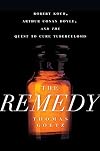
The Remedy was superb. Goetz brings to light the achievements of 19th century scientists that were instrumental in modernizing medicine which at the time was seen as imprecise and oftentimes dangerous. Robert Koch, a man known to science mostly for his methodology postulates, was also one of the fathers of bacteriology alongside his nemesis, Louis Pasteur. Koch's triumphs and downfalls in relation to TB are brought to light right alongside the magnificent story of Arthur Conan Doyle and his show more journey from dissatisfied doctor to acclaimed author. While these stories seem to have no relation to one another, Goetz illustrates that these two scientifically minded men have more in common than meets the eye. For anyone looking to learn more about ACD's creation of that illustrious detective Sherlock Holmes or for those yearning to learn more about the deadly disease of Tuberculosis, this is the book for you!
PS TB is still a major threat to humanity and kills large numbers of people every year. show less
PS TB is still a major threat to humanity and kills large numbers of people every year. show less
The time before antibiotics, when diseases ran rampant, seems like the dark ages to us. But not too long ago doctors and scientists worked in their little back rooms trying to discover the causes and possibly the cures for things such as smallpox, diphtheria and other childhood diseases. After the work by Pasteur and Lister and having discovered the causes of anthrax Robert Koch decided to work on tuberculosis. Unfortunately he forgot his guiding principal: make the outcome fit the evidence, show more not the evidence fit the outcome. He developed a 'cure' for tuberculosis but kept the science and the recipe for the medicine a secret so that other scientists and physicians could not take a critical eye to this 'cure'. They had to use it blindly, and because so many were afflicted they did use it blindly.
Along came Arthur Conan Doyle, doctor in a small village in England, who wanted to find out about this cure as well. He did not do it blindly and criticized Koch for his 'discoveries' in the medical journals.
A fascinating account of the early years of germs and bacteria and how we came to combat them. The author outlines the development through various scientists such as Lister and Pasteur and how the scientific community was late in accepting their discoveries which resulted in many deaths. But the connection between Koch and Doyle is one I didn't know and would not have guessed. We only know Doyle as the author of Sherlock Holmes, which is ably described in the book.
I thought it was a well rounded book, giving background on the personal lives of these men, not just the science. This made it more interesting to a non-science person such as myself. Although I agree with other reviews that the connection in the title is a stretch, and I keep looking for it I wasn't disappointed in what I did learn. My only complaint is the frequent use of parenthesis. Although the information was important, it stopped the flow of the text. I would have found a way to work it in to the regular body of the paragraph.
I know it is a good book when I describe it to several friends and pass it along. show less
Along came Arthur Conan Doyle, doctor in a small village in England, who wanted to find out about this cure as well. He did not do it blindly and criticized Koch for his 'discoveries' in the medical journals.
A fascinating account of the early years of germs and bacteria and how we came to combat them. The author outlines the development through various scientists such as Lister and Pasteur and how the scientific community was late in accepting their discoveries which resulted in many deaths. But the connection between Koch and Doyle is one I didn't know and would not have guessed. We only know Doyle as the author of Sherlock Holmes, which is ably described in the book.
I thought it was a well rounded book, giving background on the personal lives of these men, not just the science. This made it more interesting to a non-science person such as myself. Although I agree with other reviews that the connection in the title is a stretch, and I keep looking for it I wasn't disappointed in what I did learn. My only complaint is the frequent use of parenthesis. Although the information was important, it stopped the flow of the text. I would have found a way to work it in to the regular body of the paragraph.
I know it is a good book when I describe it to several friends and pass it along. show less
 This review was written for LibraryThing Early Reviewers.
The Remedy: Robert Koch, Arthur Conan Doyle, and the Quest to Cure Tuberculosis -by Thomas Goetz
4 stars
It’s difficult to remember a single Victorian novel that doesn’t depict the tragic, wasting death of a character suffering from ‘consumption’. There’s Smike in Dickens’ Nicholas Nickleby, and Helen Burns in Jane Eyre, not to mention, Puccini’s Mimi and Verdi’s Violetta. Unsurprising that the disease should appear in works of art. The role call of tubercular genius is long: show more John Keats, Elizabeth Barrett Browning, the Bronte sisters, Chopin, Thoreau, R.L. Stevenson, and on and on. The list continues to grow on into the 21st century, but the progress of the disease has slowed considerably. Thomas Goetz explores that 19th century period of time when tuberculosis was the deadliest disease in the world, accounting for one third of all deaths.
Goetz wants us to get it. He wants us to understand a time when germ theory was not universally accepted and basic precepts of experimental scientific proof were unknown. I knew, generally, about Robert Koch and his medical contributions, but I did not even begin to understand the magnitude of the change that he brought about. This book isn’t just about the scientific discovery of a deadly bacillus. It’s about the seismic cultural shift that took place as a result of Koch’s work. That’s where Arthur Conan Doyle and his Sherlock Holmes come into the picture. Sherlock Holmes is the embodiment of the scientific method. As a character he reflects a paradigm shift from folk medicine and quackery to rigorous science.
The book was a bit dry in places, but the biographical information kept it lively. There was also occasionally a subtle imitation of style that I enjoyed. The first sentence in the book, “In train after train, consumptives filled the passenger cars, their hacks and coughs competing with the steam whistles and screaming brakes as the engines came to a halt in Potsdamer Platz.” gives a nod to The Red Headed League, one of my favorite Sherlock Holmes stories.
Goetz looks critically at these scientific and literary geniuses. He sees the parallels in their accomplishments and in their egotistical failures. He also draws a clear line connecting 19th and 21st century attitudes towards medicine, disease, and science. I had a library copy and couldn’t highlight all of the comments that caught my attention, but here are a few of them.
“An essential part of the [experimental science] system, then as now, is competition. The base human instinct to beat the other guy is an essential characteristic of science, notwithstanding its tweedy reputation.”
“Time and again, medical science was compelling people to change the way they lived, disrupting norms, and putting notions of public health above those of personal rights. The result was an anti-science libertarianism that took umbrage at an increasingly paternalistic state. At every turn, science was being deployed to constrain the public that was poorly equipped to assess the validity of the science.”
“Through Holmes, Conan Doyle helped people see how from a thousand small observations can come a profound and lasting change.”
There’s lots of fodder for discussion in this book. I will be thinking about it for a long time. show less
4 stars
It’s difficult to remember a single Victorian novel that doesn’t depict the tragic, wasting death of a character suffering from ‘consumption’. There’s Smike in Dickens’ Nicholas Nickleby, and Helen Burns in Jane Eyre, not to mention, Puccini’s Mimi and Verdi’s Violetta. Unsurprising that the disease should appear in works of art. The role call of tubercular genius is long: show more John Keats, Elizabeth Barrett Browning, the Bronte sisters, Chopin, Thoreau, R.L. Stevenson, and on and on. The list continues to grow on into the 21st century, but the progress of the disease has slowed considerably. Thomas Goetz explores that 19th century period of time when tuberculosis was the deadliest disease in the world, accounting for one third of all deaths.
Goetz wants us to get it. He wants us to understand a time when germ theory was not universally accepted and basic precepts of experimental scientific proof were unknown. I knew, generally, about Robert Koch and his medical contributions, but I did not even begin to understand the magnitude of the change that he brought about. This book isn’t just about the scientific discovery of a deadly bacillus. It’s about the seismic cultural shift that took place as a result of Koch’s work. That’s where Arthur Conan Doyle and his Sherlock Holmes come into the picture. Sherlock Holmes is the embodiment of the scientific method. As a character he reflects a paradigm shift from folk medicine and quackery to rigorous science.
The book was a bit dry in places, but the biographical information kept it lively. There was also occasionally a subtle imitation of style that I enjoyed. The first sentence in the book, “In train after train, consumptives filled the passenger cars, their hacks and coughs competing with the steam whistles and screaming brakes as the engines came to a halt in Potsdamer Platz.” gives a nod to The Red Headed League, one of my favorite Sherlock Holmes stories.
Goetz looks critically at these scientific and literary geniuses. He sees the parallels in their accomplishments and in their egotistical failures. He also draws a clear line connecting 19th and 21st century attitudes towards medicine, disease, and science. I had a library copy and couldn’t highlight all of the comments that caught my attention, but here are a few of them.
“An essential part of the [experimental science] system, then as now, is competition. The base human instinct to beat the other guy is an essential characteristic of science, notwithstanding its tweedy reputation.”
“Time and again, medical science was compelling people to change the way they lived, disrupting norms, and putting notions of public health above those of personal rights. The result was an anti-science libertarianism that took umbrage at an increasingly paternalistic state. At every turn, science was being deployed to constrain the public that was poorly equipped to assess the validity of the science.”
“Through Holmes, Conan Doyle helped people see how from a thousand small observations can come a profound and lasting change.”
There’s lots of fodder for discussion in this book. I will be thinking about it for a long time. show less
Near the middle of "The Remedy" there is an account of a publisher telling Arthur Conan Doyle that his book is both "too short and too long." Such is the case with "The Remedy" itself.
It covers a tremendous amount of territory - a search for the cure for TB by many physicians and scientists, along with the life and career of Conan Doyle - sometimes very well, and sometimes not. Readers interested in the search for the cure for TB will finish the book wishing for more on that topic because show more it's absolutely fascinating. That's the "too short" part.
The "too long" part is in everything else. I love Conan Doyle, but the material about him really seems misplaced here; his efforts, though interesting, were such an insignificant part of the quest to cure this horrific disease that readers are likely to find themselves wondering, "Why is this even here?" Equally troubling are the offshoots of so many topics that the author seems to toss in just when the reader is terribly engrossed in the story. He might, for example, write about the subject Robert Koch looking at something interesting in a microscope, then step back to tell the history of the microscope. Unfortunately these interruptions only serve to pause the story, not give the reader more insight.
Most troubling, though, is the author's decision to insert himself into the text. ("This tension, of course, is still palpable today. From the animal rights movement to the anti-vaccine chorus, from creationists to climate change skeptics, science remains as contentious today as it was in the late ninetieth century, on many of the same issues.") Both annoying and condescending; I hated each one.
Goetz shows signs of being a good writer and his subject is fascinating. (Compare it to "Ghost Map," for example - a brilliant account of the cholera epidemic.) Somehow, though, in the end "The Remedy" is only an okay book, when it could have been a really great one. show less
It covers a tremendous amount of territory - a search for the cure for TB by many physicians and scientists, along with the life and career of Conan Doyle - sometimes very well, and sometimes not. Readers interested in the search for the cure for TB will finish the book wishing for more on that topic because show more it's absolutely fascinating. That's the "too short" part.
The "too long" part is in everything else. I love Conan Doyle, but the material about him really seems misplaced here; his efforts, though interesting, were such an insignificant part of the quest to cure this horrific disease that readers are likely to find themselves wondering, "Why is this even here?" Equally troubling are the offshoots of so many topics that the author seems to toss in just when the reader is terribly engrossed in the story. He might, for example, write about the subject Robert Koch looking at something interesting in a microscope, then step back to tell the history of the microscope. Unfortunately these interruptions only serve to pause the story, not give the reader more insight.
Most troubling, though, is the author's decision to insert himself into the text. ("This tension, of course, is still palpable today. From the animal rights movement to the anti-vaccine chorus, from creationists to climate change skeptics, science remains as contentious today as it was in the late ninetieth century, on many of the same issues.") Both annoying and condescending; I hated each one.
Goetz shows signs of being a good writer and his subject is fascinating. (Compare it to "Ghost Map," for example - a brilliant account of the cholera epidemic.) Somehow, though, in the end "The Remedy" is only an okay book, when it could have been a really great one. show less
This review was written for LibraryThing Early Reviewers.Awards

You May Also Like


Associated Authors
Statistics
- Works
- 2
- Also by
- 1
- Members
- 338
- Popularity
- #70,453
- Rating
- 3.7
- Reviews
- 56
- ISBNs
- 13
- Languages
- 1
