
Eric Topol
Author of Deep Medicine: How Artificial Intelligence Can Make Healthcare Human Again
About the Author
Eric Topol, MD, is a practicing cardiologist, professor of genomics, and director of the Scripps Translational Science Institute in La Jolla, California. The author of The Creative Destruction of Medicine, he is one of the top ten most-cited researchers in medicine and works on digital innovative show more technologies to reshape the future of medicine. Follow him on Twitter @EricTopol show less
Works by Eric Topol
Deep Medicine: How Artificial Intelligence Can Make Healthcare Human Again (2019) 186 copies, 5 reviews
The Creative Destruction of Medicine: How the Digital Revolution Will Create Better Health Care (2012) 167 copies, 4 reviews
Associated Works
Cleveland Clinic Heart Book: The Definitive Guide for the Entire Family from the Nation's Leading Heart Center (2000) — Introduction — 22 copies
Tagged
Common Knowledge
- Canonical name
- Topol, Eric
- Legal name
- Topol, Eric Jeffrey
- Birthdate
- 1954-06-26
- Gender
- male
- Occupations
- cardiologist
geneticist - Nationality
- USA
- Associated Place (for map)
- USA
Members
Reviews
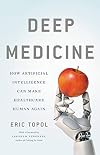
Artificial Intelligence making healthcare human again!? When I saw the mere title of this book, it got me intrigued. As someone being deeply warry of our over-reliance on machines and AI, I became curious as to what arguments could possibly be made to further encourage their use in, of all places, a whole sector requiring above all else something that machines cruelly lack: empathy. What is the author on about!?
The benefits of AI when it comes to make certain diagnoses are well-known, and show more he obviously details them here. For instance, he particularly insists on how efficient AI can be when it comes to pattern-recognition (e.g. brain scans, electrocardiograms, skin lesions and other anomalies etc.) although he's everything but naïve or over-optimistic. He perfectly admits, for example, that a machine can only perform based on the sole data that it has been imputed with, and that, far from being a panacea, our current inputting is not without aggravating certain problems (e.g. much has been said on how AI keeps sustaining discriminatory practices in regards to certain demographics, like people with dark skins when it comes to many skin conditions...).
Can AI ever replace a human expert? On that score, he tackles a thought-provoking discussion about the relevance of radiologists. With AI being faster, more competent and able (or is it?...) to discern patterns in scans, you could be excused indeed to ponder what is the use of human radiologists who, as it is, are merely "technicians" in our hospitals! Wouldn't it make more sense to invest in machines to do the job? This, here, is not about the current shortage of radiologists as staff and the crisis that ensued (e.g. delay in diagnosis for cancer patients etc.) for this is not the topic of this book. This, here, is to question a whole working practice that could include machines alongside humans for potentially better results (or could it?...).
Tellingly, the benefits of AI appears relevant not only for doctors, but for patients too. From telemedicine to individualised smartwatches, and, even, psychotherapy and counselling sessions (I was highly surprised to learn that, most people feel more comfortable to chat about their mental health with a bot than with a doctor or a nurse!) AI can revolutionise the way we, as consumers, treat ourselves away from the one-size-fit-all approach far too common when it comes to health advises.
Ha! But then again: what about empathy?!
For all its optimism at times, reserves and criticisms at others, what the author does above all here is to pit two different models against each other. What are they?
On the one hand, he rejects the current one, which he calls "shallow medicine", whereas there is no real connection between doctors and their patients due to medical professionals being grossly under-staffed but over-worked, hence rushed in their practices. This, as it is, is a source for wider problems indeed, ranging from misdiagnosis and the reliance on unnecessary treatments and procedures (a further waste of money as it is...) while causing highly preventable stress and burnout among professionals. Shallow medicine, in other words, is all about productivity but at the expense of compassion, and so is grossly inefficient in the end.
On the other, he defends what he calls "deep medicine", a model whereas productivity is not abandoned to the responsibility of fallible frontline staff, but to machines and AI instead (far more capable to handle vast data and algorithms than the human brain ever will). Frontline staff, far from having their jobs being taken away or becoming irrelevant could here have, on the contrary, more time for human connection with their patients. Radiologists, for instance, would no longer be "technicians" reading scans in their labs and away from patients, but gatekeepers of sort (deciding whereas a scan is needed in the first place and, if so, what type of scan) before leaving the reading to the machine but being the ones (thanks to their expertise as much as their humanness) interacting directly with the patient in regards to results. Here goes, then: artificial intelligence could make healthcare human again by encouraging our human side that is, increasing the demand for emotional intelligence over that of cold, analytical and detached expert practices.
In the end, then, here's a thought-provoking book about how AI truly is the next revolution when it comes to medicine. The benefits surely are huge, but then again so are the drawbacks and (as the author rightly insists) the ethical problems that will arise from our reliance on it. Being optimistic is great, but being realistic is even better. A machine can only perform what it has been programmed to do and/ learn based on what it has been inputted with. The scientific method relying on human critical thinking, then, will remain highly relevant no matter what. Social inequities certainly won't disappear either. On the contrary, they may be exacerbated unless, again, we humans dare to face them and fight for social justice by reckoning with the flaws of our current research (e.g. still excluding vast demographics from countless studies, with the impact it has upon our understanding of genomics and our abilities to diagnose). A machine certainly can't do that either. Productivity is indeed one thing, but without empathy it can only lead (ironically and counter-intuitively) to vast inefficacy, as has been illustrated for decades now by our current healthcare systems (it's absolutely awful in the USA, where the author is from, but it's certainly not much better in Britain, where I personally live...). We're mere humans after all, and the demand of being both highly productive in a drained system while being, too, truly compassionate is but an oxymoron, setting professionals for failure hence patients for being failed as a result. Could machines take upon the burden of productivity and so allow for our humanness to be brought back forefront? Only time will tell. In the end, though, one cannot do away with empathy and compassion, and these are qualities that an AI, no matter how highly performing, will never embody as much as another human being. I for one was glad to see the author nailing in just such point. show less
The benefits of AI when it comes to make certain diagnoses are well-known, and show more he obviously details them here. For instance, he particularly insists on how efficient AI can be when it comes to pattern-recognition (e.g. brain scans, electrocardiograms, skin lesions and other anomalies etc.) although he's everything but naïve or over-optimistic. He perfectly admits, for example, that a machine can only perform based on the sole data that it has been imputed with, and that, far from being a panacea, our current inputting is not without aggravating certain problems (e.g. much has been said on how AI keeps sustaining discriminatory practices in regards to certain demographics, like people with dark skins when it comes to many skin conditions...).
Can AI ever replace a human expert? On that score, he tackles a thought-provoking discussion about the relevance of radiologists. With AI being faster, more competent and able (or is it?...) to discern patterns in scans, you could be excused indeed to ponder what is the use of human radiologists who, as it is, are merely "technicians" in our hospitals! Wouldn't it make more sense to invest in machines to do the job? This, here, is not about the current shortage of radiologists as staff and the crisis that ensued (e.g. delay in diagnosis for cancer patients etc.) for this is not the topic of this book. This, here, is to question a whole working practice that could include machines alongside humans for potentially better results (or could it?...).
Tellingly, the benefits of AI appears relevant not only for doctors, but for patients too. From telemedicine to individualised smartwatches, and, even, psychotherapy and counselling sessions (I was highly surprised to learn that, most people feel more comfortable to chat about their mental health with a bot than with a doctor or a nurse!) AI can revolutionise the way we, as consumers, treat ourselves away from the one-size-fit-all approach far too common when it comes to health advises.
Ha! But then again: what about empathy?!
For all its optimism at times, reserves and criticisms at others, what the author does above all here is to pit two different models against each other. What are they?
On the one hand, he rejects the current one, which he calls "shallow medicine", whereas there is no real connection between doctors and their patients due to medical professionals being grossly under-staffed but over-worked, hence rushed in their practices. This, as it is, is a source for wider problems indeed, ranging from misdiagnosis and the reliance on unnecessary treatments and procedures (a further waste of money as it is...) while causing highly preventable stress and burnout among professionals. Shallow medicine, in other words, is all about productivity but at the expense of compassion, and so is grossly inefficient in the end.
On the other, he defends what he calls "deep medicine", a model whereas productivity is not abandoned to the responsibility of fallible frontline staff, but to machines and AI instead (far more capable to handle vast data and algorithms than the human brain ever will). Frontline staff, far from having their jobs being taken away or becoming irrelevant could here have, on the contrary, more time for human connection with their patients. Radiologists, for instance, would no longer be "technicians" reading scans in their labs and away from patients, but gatekeepers of sort (deciding whereas a scan is needed in the first place and, if so, what type of scan) before leaving the reading to the machine but being the ones (thanks to their expertise as much as their humanness) interacting directly with the patient in regards to results. Here goes, then: artificial intelligence could make healthcare human again by encouraging our human side that is, increasing the demand for emotional intelligence over that of cold, analytical and detached expert practices.
In the end, then, here's a thought-provoking book about how AI truly is the next revolution when it comes to medicine. The benefits surely are huge, but then again so are the drawbacks and (as the author rightly insists) the ethical problems that will arise from our reliance on it. Being optimistic is great, but being realistic is even better. A machine can only perform what it has been programmed to do and/ learn based on what it has been inputted with. The scientific method relying on human critical thinking, then, will remain highly relevant no matter what. Social inequities certainly won't disappear either. On the contrary, they may be exacerbated unless, again, we humans dare to face them and fight for social justice by reckoning with the flaws of our current research (e.g. still excluding vast demographics from countless studies, with the impact it has upon our understanding of genomics and our abilities to diagnose). A machine certainly can't do that either. Productivity is indeed one thing, but without empathy it can only lead (ironically and counter-intuitively) to vast inefficacy, as has been illustrated for decades now by our current healthcare systems (it's absolutely awful in the USA, where the author is from, but it's certainly not much better in Britain, where I personally live...). We're mere humans after all, and the demand of being both highly productive in a drained system while being, too, truly compassionate is but an oxymoron, setting professionals for failure hence patients for being failed as a result. Could machines take upon the burden of productivity and so allow for our humanness to be brought back forefront? Only time will tell. In the end, though, one cannot do away with empathy and compassion, and these are qualities that an AI, no matter how highly performing, will never embody as much as another human being. I for one was glad to see the author nailing in just such point. show less
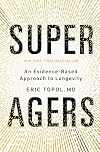
I acknowledge up-front that it’s easier to criticise than it is to produce a literary work. And there is a huge amount of, fairly detailed, biochemistry in this book. Yes, Topol tries to make it accessible to a general reader, and the diagrams certainly help a lot. But, I’ve got a reasonable background in chemistry and biochemistry, and I found it a slog. And, I skipped over many sections..... rather than trying to understand/remember exactly how “Abatacept binds to its CD80 and CD 86 show more receptors to block T Cell activation” .
One thing, I did find slightly disconcerting was his proclivity for citing studies that were either non randomised or very small samples, or, in general, studies that, in my opinion, would not count as “evidenced based”. I think his enthusiasm for “what lies ahead” outpaced the requirement for real “evidence based” research.
Sometimes he is a bit misleading, for example, (p185) he speaks of a single injection impacting a gene and achieving a reduction in LDL Cholesterol in monkey, then leads straight into the observation “that if it works and is safe ..that people with a high risk of coronary and heart disease...a disease that kills about 700,000 Americans a year would be potential candidates”. To me, this link seems a bit of a stretch and potential over-claiming..almost in the “gee-whiz” category. Surely, not everybody with high LDL cholesterol needs this sort of therapy and surely there are other causes of coronary and heart disease.
I rather got the impression that what we have here is the Topol’s own review of literature in his field. Are we reading his summary cards of all the scientific articles he’s been reading? And how much of this is from his weekly newsletter? It’s almost like he’s trying to summarise all the on-going research in his field and make some guesses about where it is going. And, to some extent, that is exactly what I was looking for. The down-side is the huge number of diseases that he tries to cover...for example, type 1 diabetes, lupus, rheumatoid arthritis, multiple sclerosis....and often it’s a bit superficial with a throw-away line about some line of research being “promising”. One thing I DID like was that he connects with the original scientific papers so one can read the original research. (Frequently, I found it less exuberant in its claims than Topol).
I found this paragraph of considerable interest and concern: “According to the World Health Organization, the average American celebrates just one healthy birthday after the age of sixty-five.....For Americans aged sixty years and above, 95 percent have at least one chronic disease, such as heart disease or diabetes, and 79 percent have at least two chronic conditions” Wow!
Topol himself sums up his thoughts in the following words:
“Overriding the aging process poses profound challenges. It’s hard to prove in people....Many of the potential ways we must alter the pace of aging carry a serious risk of cancer....One of the other obstacles that holds back a drug or intervention to promote lifespan is that aging is not considered a disease by regulatory agencies.....We have little data to support that slowing the aging process leads to a “compression of morbidity,” the concept initially proposed by James Fries in the early 1980s.....Fries proposed that over time we are moving toward an “ideal survivorship curve,” meaning that we extend healthy aging and there’s minimal time for chronic illness (fig. 13.1, left panel), as if a person suddenly falls off the cliff or dies with intact health in their sleep.
While it would be ideal for people who made it healthy, well into their eighties or nineties not to have to suffer dementia, cancer, cardiovascular disease, or frailty for many years, it’s hard to find any support for this concept.....There’s no evidence yet for safely and effectively slowing the aging process in human beings.....Notwithstanding these difficulties, I do believe we will ultimately see body-wide modulation of aging.....Most age-related diseases have a long warm-up period of at least one to two decades before symptoms manifest.
AI appears to be capable of reliably predicting tipping points before they happen in complex systems....This precision medical forecasting allows for intensive lifestyle + factors to be put in place for the individual.
Potent anti-inflammatory drug or partial epigenetic programming could be used to target an organ but might wind up slowing the aging process throughout the body.....The exponential growth we have seen with generative AI will be paralleled by the same in digital biology.
There’s a pervasive belief that we’re either immunocompetent or immunocompromised. That’s wrong!....By conducting an “immunome,” we will be able to predict a person’s response to infections, vulnerability to cancer or its spread, and propensity for developing cardiovascular and neurodegenerative diseases.
What if we could periodically grade an individual’s immune system?....A company called Infinity Bio19 amazingly, can take a small amount of blood and determine a person’s exposure to over five hundred viruses via their antibodies. In the same assay, the new technology can detect hundreds of autoimmune antibodies.....It is currently only available for research projects.....For a preview, my results for this test are presented in figure 13.4.
If we could get an immunome on a periodic basis, it could help to pinpoint our arc to immunosenescence and guide our decisions about potential interventions.
Until now, our medical approach has been reactive, with secondary prevention at best. A patient has a heart attack; we put them on statins and aspirin to prevent another event. For a diabetic, we treat blood sugar and lower the hemoglobin A1c.
There are two factors that remain the most formidable obstacles. One is our profound health inequity. [in the USA]. .....If expanding health span turns out to be only for the rich and privileged, then it can be considered an abject failure.....Our lack of a universal health system in the United States, the singular outlier of rich countries in the world, puts us at an unnecessary disadvantage for promoting health span expansion at the population level.
The second great obstacle is about chasing our own tails. How can we simultaneously be hyper-innovative for extending health span but ignore all the things that are shortening it?
Air pollution, micro and nanoplastics, the toxic PFAS forever chemicals, intake of ultra-processed foods....And anti-science is a threat that can only be addressed through a restoration of trust in biomedical expertise”.
My main take-away from the book is the significance of exercise. Here is what Topol himself says: Nothing surpasses regular exercise for promotion of healthy aging! Exercise can be viewed as the single most effective medical intervention that we know. Regular exercise leads to favourable adaptations of the cardiovascular system, brain, pancreas, skeletal muscle, gastrointestinal tract (enhanced production of short-chain fatty acids, SCFA), liver, adipose tissue, gut microbiome, and peripheral blood vessels.....Further, exercise protects against atherosclerosis and improves cardiovascular function.
A randomized trial showed inflammation biomarkers were suppressed more with exercise than with a GLP-1 drug.......Compared with no exercise, briskly walking 450 minutes178 per week was associated with living 4.5 years longer.....That evidence comes from a cohort of more than 650,000 individuals followed for over a decade.....A systematic review of 196 studies with more than thirty million participants reported the link to a 31 percent reduction of all-cause mortality, with a “dose response” of more activity, more benefit.
The much ballyhooed 10,000-step goal was supported by a UK Biobank study of over 72,000 participants, which found the lowest mortality risk was seen for 9,000 to 10,500 steps per day....A significant dose-response curve of benefit—the more exercise, the less cancer—was seen across seven cancer types (colon, breast, kidney, liver, myeloma, non-Hodgkin lymphoma, and endometrial).....The relationship between physical exercise and cognition has been intensively studied,.....A review of the randomized trials suggests that the favourable impact of exercise is consistent but small”. [Which seems to be rather a damp squib after all the earlier build-up but at least it’s consistent and positive].
What’s my overall take on the book? Generally a bit overwhelmed by the coverage and the detail and the number of variables involved. It’s clearly not a simple field of endeavour. And I’ve given up trying to summarise it here. Generally, he writes well and makes things understandable. A bit of repetition in places...maybe unavoidable. And the worrying tendency to cite non-randomised, one off (let alone double-blind) studies. Am I going to live longer as a result. No. I don’t think so. And, I suspect that we have already seen the greatest advance in the field with the reduction in cigarette smoking. It will be hard to match that. And I suspect that effect impacts all the statistics on longevity too. Happy to give it five stars. show less
One thing, I did find slightly disconcerting was his proclivity for citing studies that were either non randomised or very small samples, or, in general, studies that, in my opinion, would not count as “evidenced based”. I think his enthusiasm for “what lies ahead” outpaced the requirement for real “evidence based” research.
Sometimes he is a bit misleading, for example, (p185) he speaks of a single injection impacting a gene and achieving a reduction in LDL Cholesterol in monkey, then leads straight into the observation “that if it works and is safe ..that people with a high risk of coronary and heart disease...a disease that kills about 700,000 Americans a year would be potential candidates”. To me, this link seems a bit of a stretch and potential over-claiming..almost in the “gee-whiz” category. Surely, not everybody with high LDL cholesterol needs this sort of therapy and surely there are other causes of coronary and heart disease.
I rather got the impression that what we have here is the Topol’s own review of literature in his field. Are we reading his summary cards of all the scientific articles he’s been reading? And how much of this is from his weekly newsletter? It’s almost like he’s trying to summarise all the on-going research in his field and make some guesses about where it is going. And, to some extent, that is exactly what I was looking for. The down-side is the huge number of diseases that he tries to cover...for example, type 1 diabetes, lupus, rheumatoid arthritis, multiple sclerosis....and often it’s a bit superficial with a throw-away line about some line of research being “promising”. One thing I DID like was that he connects with the original scientific papers so one can read the original research. (Frequently, I found it less exuberant in its claims than Topol).
I found this paragraph of considerable interest and concern: “According to the World Health Organization, the average American celebrates just one healthy birthday after the age of sixty-five.....For Americans aged sixty years and above, 95 percent have at least one chronic disease, such as heart disease or diabetes, and 79 percent have at least two chronic conditions” Wow!
Topol himself sums up his thoughts in the following words:
“Overriding the aging process poses profound challenges. It’s hard to prove in people....Many of the potential ways we must alter the pace of aging carry a serious risk of cancer....One of the other obstacles that holds back a drug or intervention to promote lifespan is that aging is not considered a disease by regulatory agencies.....We have little data to support that slowing the aging process leads to a “compression of morbidity,” the concept initially proposed by James Fries in the early 1980s.....Fries proposed that over time we are moving toward an “ideal survivorship curve,” meaning that we extend healthy aging and there’s minimal time for chronic illness (fig. 13.1, left panel), as if a person suddenly falls off the cliff or dies with intact health in their sleep.
While it would be ideal for people who made it healthy, well into their eighties or nineties not to have to suffer dementia, cancer, cardiovascular disease, or frailty for many years, it’s hard to find any support for this concept.....There’s no evidence yet for safely and effectively slowing the aging process in human beings.....Notwithstanding these difficulties, I do believe we will ultimately see body-wide modulation of aging.....Most age-related diseases have a long warm-up period of at least one to two decades before symptoms manifest.
AI appears to be capable of reliably predicting tipping points before they happen in complex systems....This precision medical forecasting allows for intensive lifestyle + factors to be put in place for the individual.
Potent anti-inflammatory drug or partial epigenetic programming could be used to target an organ but might wind up slowing the aging process throughout the body.....The exponential growth we have seen with generative AI will be paralleled by the same in digital biology.
There’s a pervasive belief that we’re either immunocompetent or immunocompromised. That’s wrong!....By conducting an “immunome,” we will be able to predict a person’s response to infections, vulnerability to cancer or its spread, and propensity for developing cardiovascular and neurodegenerative diseases.
What if we could periodically grade an individual’s immune system?....A company called Infinity Bio19 amazingly, can take a small amount of blood and determine a person’s exposure to over five hundred viruses via their antibodies. In the same assay, the new technology can detect hundreds of autoimmune antibodies.....It is currently only available for research projects.....For a preview, my results for this test are presented in figure 13.4.
If we could get an immunome on a periodic basis, it could help to pinpoint our arc to immunosenescence and guide our decisions about potential interventions.
Until now, our medical approach has been reactive, with secondary prevention at best. A patient has a heart attack; we put them on statins and aspirin to prevent another event. For a diabetic, we treat blood sugar and lower the hemoglobin A1c.
There are two factors that remain the most formidable obstacles. One is our profound health inequity. [in the USA]. .....If expanding health span turns out to be only for the rich and privileged, then it can be considered an abject failure.....Our lack of a universal health system in the United States, the singular outlier of rich countries in the world, puts us at an unnecessary disadvantage for promoting health span expansion at the population level.
The second great obstacle is about chasing our own tails. How can we simultaneously be hyper-innovative for extending health span but ignore all the things that are shortening it?
Air pollution, micro and nanoplastics, the toxic PFAS forever chemicals, intake of ultra-processed foods....And anti-science is a threat that can only be addressed through a restoration of trust in biomedical expertise”.
My main take-away from the book is the significance of exercise. Here is what Topol himself says: Nothing surpasses regular exercise for promotion of healthy aging! Exercise can be viewed as the single most effective medical intervention that we know. Regular exercise leads to favourable adaptations of the cardiovascular system, brain, pancreas, skeletal muscle, gastrointestinal tract (enhanced production of short-chain fatty acids, SCFA), liver, adipose tissue, gut microbiome, and peripheral blood vessels.....Further, exercise protects against atherosclerosis and improves cardiovascular function.
A randomized trial showed inflammation biomarkers were suppressed more with exercise than with a GLP-1 drug.......Compared with no exercise, briskly walking 450 minutes178 per week was associated with living 4.5 years longer.....That evidence comes from a cohort of more than 650,000 individuals followed for over a decade.....A systematic review of 196 studies with more than thirty million participants reported the link to a 31 percent reduction of all-cause mortality, with a “dose response” of more activity, more benefit.
The much ballyhooed 10,000-step goal was supported by a UK Biobank study of over 72,000 participants, which found the lowest mortality risk was seen for 9,000 to 10,500 steps per day....A significant dose-response curve of benefit—the more exercise, the less cancer—was seen across seven cancer types (colon, breast, kidney, liver, myeloma, non-Hodgkin lymphoma, and endometrial).....The relationship between physical exercise and cognition has been intensively studied,.....A review of the randomized trials suggests that the favourable impact of exercise is consistent but small”. [Which seems to be rather a damp squib after all the earlier build-up but at least it’s consistent and positive].
What’s my overall take on the book? Generally a bit overwhelmed by the coverage and the detail and the number of variables involved. It’s clearly not a simple field of endeavour. And I’ve given up trying to summarise it here. Generally, he writes well and makes things understandable. A bit of repetition in places...maybe unavoidable. And the worrying tendency to cite non-randomised, one off (let alone double-blind) studies. Am I going to live longer as a result. No. I don’t think so. And, I suspect that we have already seen the greatest advance in the field with the reduction in cigarette smoking. It will be hard to match that. And I suspect that effect impacts all the statistics on longevity too. Happy to give it five stars. show less
The author does a good job of sticking to the science here. I appreciate the hundreds of references to research! However, I felt like the actionable information from the book on how to be a "super ager" was quite minimal. Mostly, there was a lot of discussion of scientific advances that are likely, probably, maybe going to lead to better health for all of us in the future....if we have access to health insurance that covers them. For those who are interested in scientific advances in health show more care that might someday translate into better health, this is at least a 4-star book. For me, not so much. show less
The author, an innovative medical school president in California, is one of my favorites on the topic of computing in medicine. He sees the medical landscape wider than most scholars, and he is a true humanist at heart. He surveys the field of artificial intelligence and sees how it could apply to modern medicine.
Most of the described projects are pipe dreams now, but Topol sees potential in them. Of course, they need rigorous clinical trials to demonstrate their efficacy. I would love for show more my personal doctor to prescribe a mobile app for me to track this or that.
I’ve been on the bandwagon of medical mobile apps for a while now. They adopt the power of computing to the ever-changing landscape of life. Artificial intelligence can only add to this power as it will help us solve many problems. In the clinic, virtual assistants, equipped with the power of Natural Language Processing, can even help MDs spend more “human time” with their patients.
Of course, not all will be ideal. Topol tackles the dysutopian themes of artificial intelligence, too. We must be sure that ethics continue to be maintained and that humans remain the driver in the doctor-patient relationship. But in truth, are humans really the driver in the relationship now? Money is a much stronger driver than humanism now. Let’s hope that artificial intelligence adds to the humanism before the money can take over even more.
This book is a great read for those in the field of medical technology, healthcare, or technology. It’s written in an accessible manner while still be thoroughly researched. I love all of Topol’s work. show less
Most of the described projects are pipe dreams now, but Topol sees potential in them. Of course, they need rigorous clinical trials to demonstrate their efficacy. I would love for show more my personal doctor to prescribe a mobile app for me to track this or that.
I’ve been on the bandwagon of medical mobile apps for a while now. They adopt the power of computing to the ever-changing landscape of life. Artificial intelligence can only add to this power as it will help us solve many problems. In the clinic, virtual assistants, equipped with the power of Natural Language Processing, can even help MDs spend more “human time” with their patients.
Of course, not all will be ideal. Topol tackles the dysutopian themes of artificial intelligence, too. We must be sure that ethics continue to be maintained and that humans remain the driver in the doctor-patient relationship. But in truth, are humans really the driver in the relationship now? Money is a much stronger driver than humanism now. Let’s hope that artificial intelligence adds to the humanism before the money can take over even more.
This book is a great read for those in the field of medical technology, healthcare, or technology. It’s written in an accessible manner while still be thoroughly researched. I love all of Topol’s work. show less
Awards


You May Also Like


Associated Authors
Statistics
- Works
- 10
- Also by
- 1
- Members
- 743
- Popularity
- #34,184
- Rating
- 3.8
- Reviews
- 17
- ISBNs
- 65
- Languages
- 4