
Mark Mathabane
Author of Kaffir Boy: The True Story of a Black Youth's Coming of Age in Apartheid South Africa
About the Author
Mark Mathabane is the author of Kaffir Boy in America, Love in Black and White, and African Women: Three Generations.
Works by Mark Mathabane
Kaffir Boy: The True Story of a Black Youth's Coming of Age in Apartheid South Africa (1986) 1,431 copies, 15 reviews
The Lessons of Ubuntu: How an African Philosophy Can Inspire Racial Healing in America (2018) 42 copies, 2 reviews
Associated Works
Reader's Digest Condensed Books 1986 v05: The Judgment / Kaffir Boy / Unnatural Causes / Queen Dolley (1986) — Contributor — 27 copies
Reader's Digest Auswahlbücher 157 - Die Löwen. Was weiß die Taube auf dem Dach von Liebe. Kaffern-Boy. Durch die Schneewüste (1988) — Contributor — 6 copies
L'ultimo raggio di sole-Il dono della tempesta-Pelle nera-I pionieri dell'Harricana — Contributor — 1 copy
Tagged
Common Knowledge
- Legal name
- Mathabane, Johannes
- Other names
- Mathabane, Johannes
- Birthdate
- 1960-10-18
- Gender
- male
- Education
- Dowling College
- Relationships
- Mathabane, Miriam (sister)
- Nationality
- South Africa (birth)
- Places of residence
- Alexandra, Gauteng, South Africa
North Carolina, USA
Portland, Oregon, USA
Members
Reviews
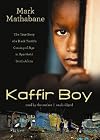
Set in South Africa during the dark days of apartheid, Kaffir Boy is the story of Mark Mathabane's life. He lives with his family in a ghetto in Johannesburg, not only in abject poverty, but also in constant fear of police raids. The police roust the black population frequently to verify their "passes," the documents that allow them permission to live and work. Unfortunately, the passes are rarely in order because keeping them clear often requires bribes and also because the rules are show more completely nonsensical - you need a pass to live in the city, but you first need a nearby job to allow the document that permits you to live there. And you need the pass to get a job, although if you're unemployed, you're not allowed to be issued a pass. Sound ridiculous? It is. It would be merely farcical if the raids didn't involve terrifying children and tossing the meager contents of homes, and if the penalties didn't include being shipped off to tribal reserves or being imprisoned.
I remember apartheid being an issue in the media when I was in high school in the '80s, but I admit I didn't know about the incredible inhumanity of it. As practiced, it sounded like it was possibly more dehumanizing than slavery, and I honestly didn't think such a thing could exist. Mark was subject to "Bantu education," which was the non-compulsory system to prepare black children for their lives of subservience. Faced with few opportunities, he worked as hard as he could at school and also fell into playing tennis, which opened doors to him that he might never have known existed. A meeting with Stan Smith, an American Wimbledon champion and seemingly all-around great guy, led to Mathabane eventually getting a scholarship to go to college in the US, which is where the book ends. He later wrote another memoir, Kaffir Boy in America, which picks up where this one left off. I am curious about it because before leaving South Africa, Mathabane clearly views America as a sort of interracial utopia - which is definitely was not in 1979 (and still isn't today).
I listened to the audio version of the book, which was narrated by Mathabane himself. His speaking voice is beautiful and melodic, and I doubt that anyone else could have done justice to the words in various tribal languages, protest anthems, childhood songs, and snippets in Afrikaans. Some of the events were very difficult to listen to, and I had to take a couple of breaks from it just to regain my equilibrium. But nonetheless, I would recommend it to anyone interested in learning more about what daily life was like under apartheid. show less
I remember apartheid being an issue in the media when I was in high school in the '80s, but I admit I didn't know about the incredible inhumanity of it. As practiced, it sounded like it was possibly more dehumanizing than slavery, and I honestly didn't think such a thing could exist. Mark was subject to "Bantu education," which was the non-compulsory system to prepare black children for their lives of subservience. Faced with few opportunities, he worked as hard as he could at school and also fell into playing tennis, which opened doors to him that he might never have known existed. A meeting with Stan Smith, an American Wimbledon champion and seemingly all-around great guy, led to Mathabane eventually getting a scholarship to go to college in the US, which is where the book ends. He later wrote another memoir, Kaffir Boy in America, which picks up where this one left off. I am curious about it because before leaving South Africa, Mathabane clearly views America as a sort of interracial utopia - which is definitely was not in 1979 (and still isn't today).
I listened to the audio version of the book, which was narrated by Mathabane himself. His speaking voice is beautiful and melodic, and I doubt that anyone else could have done justice to the words in various tribal languages, protest anthems, childhood songs, and snippets in Afrikaans. Some of the events were very difficult to listen to, and I had to take a couple of breaks from it just to regain my equilibrium. But nonetheless, I would recommend it to anyone interested in learning more about what daily life was like under apartheid. show less
The Lessons of Ubuntu: How an African Philosophy Can Inspire Racial Healing in America by Mark Mathabane
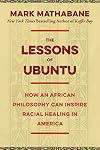
Mark Mathabane gives the reader a vivid account of being a black man in South Africa and America. Unfortunately, the experiences are much the same in both countries. This latest book by Mathabane describes what needs to be done to bring racial healing between blacks and whites. The first part of the book describes ten obstacles to racial healing. The second half of the book outlines the ten principles of Ubuntu, an African philosophy emphasizing the bond connecting all humanity. Mathabane show more recognizes that racial biases are held by both blacks and whites. Racial healing and peace requires practicing empathy, compromise, learning, nonviolence, change, forgiveness, restorative justice, love, spirituality, and hope. Mathabane provides examples of each of these principles put into practice. He explains what the Ubuntu principles are but does not provide a how-to guide to their implementation. His book does provide the inspiration to take action on closing the racial divide. show less
Kaffir Boy: An Autobiography--The True Story of a Black Youth's Coming of Age in Apartheid South Africa by Mark Mathabane
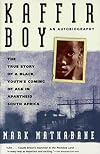
KAFFIR BOY (a library sale find) has been sitting on my bookshelf for several years, and now I've finally read it. It was a major bestseller in 1986 when it was first published, mainly for its graphic content, I suspect. Because author Mathabane was unflinching in his depiction of the squalid ghetto where he grew up, the eldest of several children in apartheid South Africa where whites ruled with an iron fist to keep the native blacks "in their place." "Kaffir" is the South African show more equivalent of the n-word, and I was indeed often reminded of the works of Richard Wright, Dick Gregory and James Baldwin, all of whom I read back in my college days. While I absolutely admire Mathabane for what he endured, and how he persevered in his studies (in ill-equipped, substandard schools) and managed to "escape" to the United States on a tennis scholarship, I often felt buried in redundant descriptions of the horrors and indignities of apartheid, and felt some scrupulous editing could have made this an even better book. Googling Mathabane, I found he is now a US citizen and has written a few more books, but for now I'm kinda on the fence as to whether I'll read them. But I am glad I read this one - a real eye-opener on the apartheid system, something that played a prominent part in a favorite Graham Greene novel, THE HUMAN FACTOR. This was a good book though, if a little too long, and I will recommend it highly, especially to anyone curious about the apartheid era.
- Tim Bazzett, author of the memoir, BOOKLOVER show less
- Tim Bazzett, author of the memoir, BOOKLOVER show less

An amazing portrait of life in South Africa during the last decades of apartheid. The stories of three generations of women are told in their own words. This is a story of strength and faith in the face of grinding poverty and abuse. It is also the story of South Africans coming to terms with a changing world and trying to reconcile the tribal ways with the ways of modern society and the ills that poverty, illiteracy and injustice create.
Lists
Awards


You May Also Like


Associated Authors
Statistics
- Works
- 11
- Also by
- 4
- Members
- 1,958
- Popularity
- #13,128
- Rating
- 3.9
- Reviews
- 22
- ISBNs
- 51
- Languages
- 4
- Favorited
- 4