
Andrew Lownie
Author of Traitor King: The Scandalous Exile of the Duke and Duchess of Windsor
About the Author
Image credit: Andrew Lownie, author of "John Buchan" and "The Edinburgh Literary Companion"
Works by Andrew Lownie
Associated Works
The Thirty-Nine Steps [and] The Power-House (1915) — Introduction, some editions — 173 copies, 8 reviews
Tagged
Common Knowledge
- Birthdate
- 1961
- Gender
- male
- Education
- University of Cambridge
Edinburgh University - Occupations
- historian
Literary Agent - Organizations
- Royal Historical Society
- Nationality
- United Kingdom
- Associated Place (for map)
- United Kingdom
Members
Reviews

A brisk, blunt run-down of the lives and careers of the erstwhile Duke and Duchess of York, which focuses more on recovering as much information as possible about their respective activities than it does on analysis, but which nevertheless provides a clear picture of two fairly awful people. Ferguson comes across like a dim, venal person who can be generous but whose altruism is always tinged by a fundamental narcissism and a sucking need to be loved. Mountbatten-Windsor is a grotesque show more Dickensian caricature of a human being, who will demand repercussions for a staff member who dares to wear a tie that's not made of silk, but who will think nothing of leaving semen-stained tissues scattered on his bedroom floor for his staff to pick up. Andrew Lownie may not be much of a prose stylist, and there is undoubtedly more to come out about the Yorks—I was really curious to know what was the nature of the "business deals" that Mountbatten-Windsor and his daughters are so often involved with, perhaps purposefully left vague and inchoate—but I do think he has the goods here, both about the rolling York horror show and the late Elizabeth Windsor's complicity.
Brits, I promise you: you can abolish your monarchy (and your aristocracy) and you'll be just fine. show less
Brits, I promise you: you can abolish your monarchy (and your aristocracy) and you'll be just fine. show less
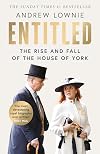
Well researched account of the quite nauseatingly greedy and dodgy Andrew and Sarah. A litany of “deals”, consultancies, missing millions, pomposity and casual sex. Taints the whole royal family- the late Queen was hushing it up, the two daughters were in on much of it. We need to ditch the royals.
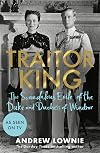
Traitor King: The Scandalous Exile of the Duke and Duchess of Windsor: THE SUNDAY TIMES BESTSELLER by Andrew Lownie
First of all, that’s quite a title.
In polite company, one doesn’t throw around the word ‘traitor’ very casually. But Lownie has written about traitors before (I really enjoyed his book about Guy Burgess) and here he sets out to convince us that Edward and Wallis were not just naive people who might have been manipulated by some clever Nazis, not just ordinary British aristocrats who didn’t particularly enjoy Jewish company, but were in fact conscious and willing supporters of show more Hitler and his criminal regime.
He succeeds. He succeeds because he dug deep into the archives — both the British archives and more interestingly the German, Spanish and others. There he learned that the idea of Edward returning to the throne as a Nazi puppet ruler of a defeated Britain was one that the Duke could live with. It gets worse. After the abdication, Edward and Wallis travelled abroad, including a trip in 1937 to Germany where he was feted by the Nazi regime. There, among other things, he had very nice chat with Hitler at his Alpine retreat, the Berghof. And while much of the trip is well documented, there is no record of what they said.
Meanwhile, there is some evidence that Mrs. Simpson had an affair with Ribbentrop, the future Nazi foreign minister, while he was the German ambassador to London. Ribbentrop was not just a diplomat. He was found guilty of war crimes and crimes against humanity by the Nuremburg tribunal and was hanged 75 years ago.
The Duke and Duchess of Windsor were anti-Semites and would have played the role of puppet rulers exactly as Pétain did in France, or Quisling in Norway.
Fortunately, thanks to the RAF, they never got the chance. show less
In polite company, one doesn’t throw around the word ‘traitor’ very casually. But Lownie has written about traitors before (I really enjoyed his book about Guy Burgess) and here he sets out to convince us that Edward and Wallis were not just naive people who might have been manipulated by some clever Nazis, not just ordinary British aristocrats who didn’t particularly enjoy Jewish company, but were in fact conscious and willing supporters of show more Hitler and his criminal regime.
He succeeds. He succeeds because he dug deep into the archives — both the British archives and more interestingly the German, Spanish and others. There he learned that the idea of Edward returning to the throne as a Nazi puppet ruler of a defeated Britain was one that the Duke could live with. It gets worse. After the abdication, Edward and Wallis travelled abroad, including a trip in 1937 to Germany where he was feted by the Nazi regime. There, among other things, he had very nice chat with Hitler at his Alpine retreat, the Berghof. And while much of the trip is well documented, there is no record of what they said.
Meanwhile, there is some evidence that Mrs. Simpson had an affair with Ribbentrop, the future Nazi foreign minister, while he was the German ambassador to London. Ribbentrop was not just a diplomat. He was found guilty of war crimes and crimes against humanity by the Nuremburg tribunal and was hanged 75 years ago.
The Duke and Duchess of Windsor were anti-Semites and would have played the role of puppet rulers exactly as Pétain did in France, or Quisling in Norway.
Fortunately, thanks to the RAF, they never got the chance. show less
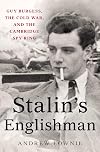
Fascinating biography of Guy Burgess, the third man (depending on how you're counting) of the Cambridge Spy Ring. Burgess is a remarkable person — capricious, waspish, totally self-centred, but also charming and brilliant. It's difficult not to be impressed at how his intellect manages to carry him to the BBC, MI5, MI6 and the Foreign Office despite his obvious and unhidden (quite the opposite) personality flaws. While it is arguable he could have reached much higher positions had he been show more less drunk and obnoxious at work, the fact that he managed to work effectively, and get away with his behaviour, is somewhat astounding.
Also astounding are the descriptions of the "establishment's" reaction to his defection — I was astonished that he was allowed to maintain accounts with banks, tailors, and bookstores in the UK. And that he could arrange to have his furniture shipped to him. And that people visiting Moscow would commonly visit. I assumed that his ostracization from society would have been more complete. This almost feels like he had just swapped clubs.
The book itself can be a little dry — the list-like details, particularly in the first third, could wash over me. But once things start moving it is really compelling. It seems that the history, character and influence of Burgess is much debated, with little agreement — this book is a good place to start to understand it. show less
Also astounding are the descriptions of the "establishment's" reaction to his defection — I was astonished that he was allowed to maintain accounts with banks, tailors, and bookstores in the UK. And that he could arrange to have his furniture shipped to him. And that people visiting Moscow would commonly visit. I assumed that his ostracization from society would have been more complete. This almost feels like he had just swapped clubs.
The book itself can be a little dry — the list-like details, particularly in the first third, could wash over me. But once things start moving it is really compelling. It seems that the history, character and influence of Burgess is much debated, with little agreement — this book is a good place to start to understand it. show less
Lists
Awards


You May Also Like


Associated Authors
Statistics
- Works
- 8
- Also by
- 5
- Members
- 857
- Popularity
- #29,858
- Rating
- 3.8
- Reviews
- 23
- ISBNs
- 62
- Languages
- 2