

Hal Borland (1900–1978)
Author of When the Legends Die
About the Author
Hal Borland (1900-1978) was the author of many works of fiction and nonfiction, most of which draw on his understanding of country life and the natural world. He was best-known for his nature essays in The New York Times
Works by Hal Borland
Our natural world; the land and wildlife of America as seen and described by writers since the country's discovery (1969) 85 copies
Associated Works
Twelve Great Modern Stories, A New Collection — Contributor — 1 copy
Tagged
Common Knowledge
- Canonical name
- Borland, Hal
- Legal name
- Borland, Hal Glen
- Birthdate
- 1900-05-14
- Date of death
- 1978-02-22
- Gender
- male
- Education
- University of Colorado
Columbia University - Occupations
- novelist
writer
author
journalist
naturalist - Awards and honors
- John Burroughs Medal, John Burroughs Association (1968)
- Relationships
- Borland, Barbara Dodge (wife)
- Short biography
- Hal Borland was a well-known American author and journalist. In addition to writing several novels and books about the outdoors, he wrote "outdoor editorials" for The New York Times for more than 30 years, from 1941 to 1978. Hal Borland was born on the plains in Sterling, Nebraska. His family moved to Colorado, where he grew up. After attending local schools, he studied at the University of Colorado. He studied journalism and graduated from Columbia University. Borland started writing as a journalist for publications such as The Denver Post, The New York Times, and Audubon Magazine. From 1941-1978, he wrote what he called "outdoor editorials" for the New York Times. In 1945 he and his wife moved to a 100-acre farm in Connecticut, and lived and worked there. She was also a writer. He published several collections of his nature writing, in addition to novels and other non-fiction books.
- Nationality
- USA
- Birthplace
- Sterling, Nebraska, USA
- Places of residence
- Sterling, Nebraska, USA (birth)
Connecticut, USA - Place of death
- Sharon, Connecticut, USA
- Burial location
- Cremated, ashes kept with family
- Associated Place (for map)
- USA
Members
Reviews
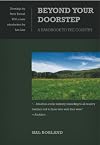
Some time in the latter half of the 70s I plastered a small address label in this book over my mother's handwritten name. As a kid, I had wanted to read it because, even then, I loved to wander in the woods, catch frogs, crayfish, insects, walk in streams up to my knees, get poison ivy and generally contemplate nature whenever I had a chance. Non-fiction, however, intimidated me and I thought it was too sciencey and boring and I wouldn't be able to understand it. Nonetheless, I claimed it show more for my own thinking one day I would come back to it as it seemed to fit naturally into my head as something that interested me and I would want to read.
The edition I own, or rather, annexed from my mother (who I think got it from my grandparents but I am not sure), is the 1st edition, published in 1962 with the original dust jacket with illustrations by Peter Parnall. If you don't know who Peter Parnall is, check out the beautifully illustrated series of children's books he has done, here on Goodreads. Here is an example https://www.goodreads.com/book/show/4563998-winter-barn?ac=1&from_search=tru.... You can also see some of the interior illustrations if you visit Amazon.
So here I am some 40 years later finally picking up this book which I purposely kept when my mother passed away in 2013.
Hal Borland pretty much nails the part of amateur naturalist and his seasonal descriptions of the plants and animals in his dooryard, the local field, forest, etc...are timeless and full of the intrinsic wisdom of a person that really has a deep curiosity about the natural world around him. I found myself following in his footsteps in our own backyard as the book helped me to identify many of the common plants...trees, shrubs, wildflowers and others, growing there. I used google and looked up the latin names in the index he provides at the back of the book to confirm the identity by looking at online images.
One of my favorite parts of the book is Chapter 14, Month by Month: What To Look for and When. Borland kept a seasonal diary of the changes that happened month by month and then over a period of many years. These are things that many of us may be unconsciously aware of but when Borland lays it out like this you find yourself remembering too how the honking of flights of Canada Geese always seems to correspond with the last dregs of snow on the ground and how, in February, the Gray Squirrels on the Oak trees in the yard suddenly became more active because, hey...it's mating season.
On the cover, under the subtitle, A Handbook to the Country, it states, "for anyone who walks the woods and fields and wants to learn about the living things he has often looked at but never seen". Yup, nailed it...because I am seeing a lot more now. show less
The edition I own, or rather, annexed from my mother (who I think got it from my grandparents but I am not sure), is the 1st edition, published in 1962 with the original dust jacket with illustrations by Peter Parnall. If you don't know who Peter Parnall is, check out the beautifully illustrated series of children's books he has done, here on Goodreads. Here is an example https://www.goodreads.com/book/show/4563998-winter-barn?ac=1&from_search=tru.... You can also see some of the interior illustrations if you visit Amazon.
So here I am some 40 years later finally picking up this book which I purposely kept when my mother passed away in 2013.
Hal Borland pretty much nails the part of amateur naturalist and his seasonal descriptions of the plants and animals in his dooryard, the local field, forest, etc...are timeless and full of the intrinsic wisdom of a person that really has a deep curiosity about the natural world around him. I found myself following in his footsteps in our own backyard as the book helped me to identify many of the common plants...trees, shrubs, wildflowers and others, growing there. I used google and looked up the latin names in the index he provides at the back of the book to confirm the identity by looking at online images.
One of my favorite parts of the book is Chapter 14, Month by Month: What To Look for and When. Borland kept a seasonal diary of the changes that happened month by month and then over a period of many years. These are things that many of us may be unconsciously aware of but when Borland lays it out like this you find yourself remembering too how the honking of flights of Canada Geese always seems to correspond with the last dregs of snow on the ground and how, in February, the Gray Squirrels on the Oak trees in the yard suddenly became more active because, hey...it's mating season.
On the cover, under the subtitle, A Handbook to the Country, it states, "for anyone who walks the woods and fields and wants to learn about the living things he has often looked at but never seen". Yup, nailed it...because I am seeing a lot more now. show less
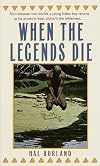
My introduction to literature via Mrs. Garland's ninth grade English class in 1978. Up until then, I'd mostly read books about sports or comics. With this book, I found that there was a big, awesome world out there called literature, and I've been exploring and loving it ever since. Of course, being an assigned reading, I didn't want to read this book, but, Mrs. Garland's daily quizzes and class discussions were great motivators. With each night's reading, I found something happening to me, show more a kind of magic. I stepped into another life, another world, and forgot about my adolescent craziness for a while.
Over the years, I've often fondly thought of this book as the one that opened up the world of literature to me, though I could remember very little of it, only that I really liked it. I decided to read it again a few years ago to see if I could find a little of that first magic I felt so long ago. Of course, it wasn't the same after so many years and so many books, but I found it to be good writing and a good story, and I will read it again. show less
Over the years, I've often fondly thought of this book as the one that opened up the world of literature to me, though I could remember very little of it, only that I really liked it. I decided to read it again a few years ago to see if I could find a little of that first magic I felt so long ago. Of course, it wasn't the same after so many years and so many books, but I found it to be good writing and a good story, and I will read it again. show less
This book is told simply, but has an angry, tragic tone. However, the story gets off to an exciting start when Thomas Black Bull's father murders a fellow Ute Indian who stole from him. I never felt like I wanted to put the book down, especially as Tom moved from Horse Mountain, where he lived like his Native American ancestors, to Pagosa, Colorado as a student in the reservation school, and later when he became a rodeo rider. When the Legends Die is about Tom's restless search for his own show more identity. Many Native Americans probably felt the same way as Tom did as whites tried to rob them of their Indian identities and "civilize" them on the reservations. An excellent book. show less

I was pleasantly surprised by how much I enjoyed this gem originally published in 1962. Hal Borland tells about his country home in New England - the wildflowers that bloom along road- and river-sides; the trees that grow in the valleys and mountainsides; the animals and birds he sees on his walks, the fish he catches in the nearby river, and a month-by-month accounting of what blooms and what birds and animals can be seen. He is quite thorough in his descriptions, whether talking about show more clouds and weather or describing the hazards such as poison ivy and bee stings, and yet it never became tedious to me. Instead, it was such a pleasant diversion from the chaos of the daily newsfeed (Presidential politics, anyone?) that I thoroughly enjoyed reading it. Even though I live in Los Angeles, I'm not far from the hills and I've always enjoyed getting out in Nature (such as it is here), but this made me long for a home in the country and a much slower pace of life. show less
Lists
Animal Memoirs (1)
Best Dog Stories (1)
Awards


You May Also Like


Associated Authors
Statistics
- Works
- 44
- Also by
- 2
- Members
- 2,243
- Popularity
- #11,433
- Rating
- 3.9
- Reviews
- 41
- ISBNs
- 84
- Languages
- 1
- Favorited
- 4
