
Chris Kreski (1962–2005)
Author of Star Trek Memories
Series
Works by Chris Kreski
Associated Works
Perfect I'm Not: Boomer on Beer, Brawls, Backaches, and Baseball (2003) — Author — 80 copies, 1 review
Tagged
Common Knowledge
- Canonical name
- Kreski, Chris
- Birthdate
- 1962-07-03
- Date of death
- 2005-05-09
- Gender
- male
Members
Reviews

Beautiful! This collection of memories about the Star Trek television show feels very much like a scrapbook: it’s filled with snippets from throughout the show’s run, photographs of people behind the scenes, and quotes from some of the series’ most beloved actors. It’s kind of a memoir, but it’s more a research project; Shatner meticulously pieces together the history of the show and of the people involved. He begins at the beginning, with Gene Roddenberry’s childhood and his show more love of stories, and he traces Roddenberry’s long and winding journey to sci-fi fame. The book tells, in chronological order, the different events that came together to make the show possible. He shares highlights from each season. He even tells how things began to unravel, and the different events that led to cancellation.
Shatner has also tracked down many of the people connected with the show, not just actors but also people involved with the production, and he’s interviewed them. I like that Shatner takes the time to quote these people directly; huge block quotes abound throughout the book. Shatner uses this to great effect. For example, in one chapter, he describes a series of pranks that he pulled on Leonard Nimoy. He also quotes Nimoy extensively on the same topic. The result is a hilarious back-and-forth, with both perspectives contrasting sharply. At the same time, the warmth and friendship between Nimoy and Shatner comes through loud and clear.
Finally, I admire Shatner’s openness. Some of the people he interviewed had some resentment or even animosity toward him. In one of the interviews, a fellow actor even said, “I need to tell you why I despise you.” Shatner could have left those parts out, but he didn’t. He could have tried to rebut, but he didn’t do that, either. He let them say it all; he gave them that chance to be heard. He even agreed with some of their points. This is freedom of speech at its finest; interviewees are being quoted and even supported, and never judged—not even by the one they’re criticizing. In this book, Shatner doesn’t even try to shield himself. And that may be because this book isn’t really about William Shatner; it’s about Star Trek. It’s a collective project about a group of people. It’s a chance to preserve many of the thoughts, feelings, and memories from the people at the heart of it. Shatner worked really hard on researching this book and writing it—he’s the author, after all—but he is never the focus. I think that takes both strength and humility, and I am quite impressed. show less
Shatner has also tracked down many of the people connected with the show, not just actors but also people involved with the production, and he’s interviewed them. I like that Shatner takes the time to quote these people directly; huge block quotes abound throughout the book. Shatner uses this to great effect. For example, in one chapter, he describes a series of pranks that he pulled on Leonard Nimoy. He also quotes Nimoy extensively on the same topic. The result is a hilarious back-and-forth, with both perspectives contrasting sharply. At the same time, the warmth and friendship between Nimoy and Shatner comes through loud and clear.
Finally, I admire Shatner’s openness. Some of the people he interviewed had some resentment or even animosity toward him. In one of the interviews, a fellow actor even said, “I need to tell you why I despise you.” Shatner could have left those parts out, but he didn’t. He could have tried to rebut, but he didn’t do that, either. He let them say it all; he gave them that chance to be heard. He even agreed with some of their points. This is freedom of speech at its finest; interviewees are being quoted and even supported, and never judged—not even by the one they’re criticizing. In this book, Shatner doesn’t even try to shield himself. And that may be because this book isn’t really about William Shatner; it’s about Star Trek. It’s a collective project about a group of people. It’s a chance to preserve many of the thoughts, feelings, and memories from the people at the heart of it. Shatner worked really hard on researching this book and writing it—he’s the author, after all—but he is never the focus. I think that takes both strength and humility, and I am quite impressed. show less
The background history, writing, characterisations, production, behind-the-scenes, building success and, ultimately, season 3's flop of Star Trek's Original Series. If you're already familiar with it all, then there won't be much new here; although, having it being retold in the unmistakable cheeky sense of humour of Shatner makes the whole re-told enthrallingly comical.
On the plus side, for a show which has gained a reputation for being geeky/ nerdy, it's quite nice to see one of the main show more actors focusing on the fun side of it. Star Trek TOS surely was very smart SF and as social commentaries (e.g. Shatner delves into that when reminding why it was so different of what was done on TV at the time, especially when tackling some of its most controversial episodes...) but it was also FUN indeed, and far too many viewers are missing that part (or so I feel when talking to non-Trekkers). The many interviews from a vast array of people involved, and breaking down the narrative to enlighten it further, makes for a very engaging read offering far more that Shatner's only perspectives.
On the negative side, though, there has been some bad beef between some of the main actors over the years (George Takei for one has been particularly vocal, but he was certainly not the only one having some contentions...); and so Shatner has to tackle that too. It is, obviously, not very pleasant, especially considering that the beef was going on even at the time of filming and that he, despite being a target of many criticisms, admit to have been unaware of back then! Gracefully however, the book concludes with a welcome self-reflection about his past attitudes, besides being a nice display of understanding towards others. It's just a pity that, given such past beef, James Doohan refused to participate in this book, depriving it of one of its main cast's angles.
Having said that, 'Star Trek Memories' is a delight to read. It's fun. It's engaging. It's enlightening as much as it is entertaining. It is, also, as honest as can be -no matter how difficult it must have been for the author. show less
On the plus side, for a show which has gained a reputation for being geeky/ nerdy, it's quite nice to see one of the main show more actors focusing on the fun side of it. Star Trek TOS surely was very smart SF and as social commentaries (e.g. Shatner delves into that when reminding why it was so different of what was done on TV at the time, especially when tackling some of its most controversial episodes...) but it was also FUN indeed, and far too many viewers are missing that part (or so I feel when talking to non-Trekkers). The many interviews from a vast array of people involved, and breaking down the narrative to enlighten it further, makes for a very engaging read offering far more that Shatner's only perspectives.
On the negative side, though, there has been some bad beef between some of the main actors over the years (George Takei for one has been particularly vocal, but he was certainly not the only one having some contentions...); and so Shatner has to tackle that too. It is, obviously, not very pleasant, especially considering that the beef was going on even at the time of filming and that he, despite being a target of many criticisms, admit to have been unaware of back then! Gracefully however, the book concludes with a welcome self-reflection about his past attitudes, besides being a nice display of understanding towards others. It's just a pity that, given such past beef, James Doohan refused to participate in this book, depriving it of one of its main cast's angles.
Having said that, 'Star Trek Memories' is a delight to read. It's fun. It's engaging. It's enlightening as much as it is entertaining. It is, also, as honest as can be -no matter how difficult it must have been for the author. show less
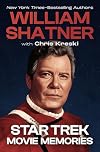
I listened to the audiobook version more than I read it, though I tried to double back and re-read some when I found out the audiobook was abridged. Shatner is a perfect audiobook narrator--he's got a great rhythm and timbre to his voice, and his perspective (at least as written) is slightly off-kilter in a very funny way. Overly professional maybe? It's clear his memories of the older films have faded since he doesn't add a whole lot of personal anecdotes to movies 1-4. It's more of a show more decent summary of their making with a lot of extended quotes from the filmmakers (several of which compliment Shatner for his agreeability, I might add). Once we get to The Final Frontier and especially Generations (both which came out within a few years of this book's release), he has a lot more fun stories to tell. show less
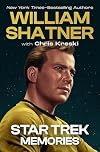
Like Movie Memories, a lot of Shatner's focus is on an impersonal recollection of the history of Star Trek. We get plenty of quotes from people who worked on the show and they describe how the show developed and all of the hardships it faced from season to season. The problem is how few personal anecdotes we get from Shatner himself. I could read about general Star Trek history from anyone, so I want the gossip, Shatner! He provides the occasional tidbit here and there, and then his closing show more chapter includes a long section in which he describes learning how much the other actors didn't like him during the making of the show. I would've liked a lot more of that, please! show less
Lists
Awards

You May Also Like


Associated Authors
Statistics
- Works
- 4
- Also by
- 3
- Members
- 1,851
- Popularity
- #13,903
- Rating
- 3.6
- Reviews
- 27
- ISBNs
- 28
- Languages
- 3