
Arthur Upfield (1890–1964)
Author of The Bone Is Pointed
About the Author
Author Arthur W. Upfield was born in Gosport, Hampshire, England on September 1, 1890. He moved to Australia and adopted it as his homeland. He is best known for his series of books featuring Detective Inspector Napoleon "Bony" Bonaparte of the Queensland State Police. He died on February 13, 1964. show more (Bowker Author Biography) show less
Image credit: National Library of Australia, nla.pic-an9897467-1-v
Series
Works by Arthur Upfield
Associated Works
Reader's Digest Condensed Books: Eagle in the Sky • Lord of the Far Island • Stay of Execution • Cake in the Hat Box — Author — 2 copies
Front for Murder | The Lady Regrets | P. Moran, Operative | The Bone is Pointed (1949) — Contributor — 2 copies
The White Mazurka | The Man Who Watched Trains Go By | Dark Passage | The Devil's Steps (1946) 1 copy
Crows are Black Everywhere; The Owl in the Cellar; Silence in Court; Death of a Swagman (1946) — Contributor — 1 copy
Tagged
Common Knowledge
- Canonical name
- Upfield, Arthur
- Legal name
- Upfield, Arthur William
- Birthdate
- 1890-09-01
- Date of death
- 1964-02-13
- Gender
- male
- Occupations
- novelist
- Organizations
- Australian Geological Society
First Australian Imperial Force (WWI) - Nationality
- UK (birth)
Australia - Birthplace
- Gosport, Hampshire, England, UK
- Places of residence
- Bowral, New South Wales, Australia
Bermagui, New South Wales, Australia - Place of death
- Bowral, New South Wales, Australia
- Associated Place (for map)
- New South Wales, Australia
Members
Discussions
Arthur W. Upfield in Crime, Thriller & Mystery (July 2011)
Reviews

The Australian half-caste detective inspector Napoleon "Bony" Bonaparte is back for his second case. He has once again strayed from his home turf in Queensland, again traveling to a remote bit of New South Wales in order to investigate a missing persons case — or at least, a case in which everyone except Bony is convinced is a simple matter of a man unfamiliar with the territory wandering away from his car and get "bushed" — or lost in the wilderness. Bony is convinced the man was show more murdered, although no body or any physical evidence at all has been found, and he sets out to prove it by once again going undercover at a nearby sheep station, this time the titular Windee.
The mystery here is much more complex and layered than that of the first book in this series, and the entirety is told (in third person) from Bony's point of view, so the reader gets real insight into how this most unusual policeman thinks and processes the evidence and information he gathers. In the end, even though he solves the murder entirely to his satisfaction, he finds himself in a moral quandary about it. The discussion of said quandary ends the book, which does somewhat detract from an absolutely blockbuster climactic section involving Bony on horseback, trying to outrun a bush fire that threatens to overtake him at any moment. Overall, it's an unusual mystery plot and a most unusual detective, but I very much enjoyed both. show less
The mystery here is much more complex and layered than that of the first book in this series, and the entirety is told (in third person) from Bony's point of view, so the reader gets real insight into how this most unusual policeman thinks and processes the evidence and information he gathers. In the end, even though he solves the murder entirely to his satisfaction, he finds himself in a moral quandary about it. The discussion of said quandary ends the book, which does somewhat detract from an absolutely blockbuster climactic section involving Bony on horseback, trying to outrun a bush fire that threatens to overtake him at any moment. Overall, it's an unusual mystery plot and a most unusual detective, but I very much enjoyed both. show less

This is the second time I have read The Barrakee Mystery. I gave it four stars after the first read (a few years before I joined Goodreads) but I have dropped it down to three after this one. While the story is gripping and the characters solid and entertaining, the racism is outrageous. I do acknowledge the book reflects the period of time in which it was written. And Upfield does make it frustratingly difficult for the modern reader to pigeonhole where he stands on issues of race. On the show more one hand his hero, Bony, is a half-caste Aborigine and a highly successful and intelligent detective. And there is a glimpse of Upfield’s attitude towards their treatment when Bony drops a comment about the genocide of one particular tribe describing it as “unhappily wiped out by you gentle white people”.
On the other hand, most of the characters see no great crime in the murder of an Aboriginal man, and the segregation between white and black is taken for granted. Additionally, a common theme in the Bony books is the idea that no matter how “civilised” an Aborigine appears, he will always revert back to the wild ways of the bush. It’s something that we see Bony frequently battling throughout the Upfield’s books, and it is a key plot element involving one of the minor characters in this book.
In the end I feel that it was not Upfield’s intention to be racist, although by modern standards he certainly was. I believe he had a great deal of respect for the Aboriginal people, but it was a respect that was tempered and developed in a world where racism was the accepted norm. From a modern perspective, the racism in his books is shocking. But perhaps at the time of writing what was shocking was that he showed any kind of deference to the Aboriginal people at all.
As a quick note, The Barrakee Mystery does include several uses of the N word, which might offend some readers. show less
On the other hand, most of the characters see no great crime in the murder of an Aboriginal man, and the segregation between white and black is taken for granted. Additionally, a common theme in the Bony books is the idea that no matter how “civilised” an Aborigine appears, he will always revert back to the wild ways of the bush. It’s something that we see Bony frequently battling throughout the Upfield’s books, and it is a key plot element involving one of the minor characters in this book.
In the end I feel that it was not Upfield’s intention to be racist, although by modern standards he certainly was. I believe he had a great deal of respect for the Aboriginal people, but it was a respect that was tempered and developed in a world where racism was the accepted norm. From a modern perspective, the racism in his books is shocking. But perhaps at the time of writing what was shocking was that he showed any kind of deference to the Aboriginal people at all.
As a quick note, The Barrakee Mystery does include several uses of the N word, which might offend some readers. show less
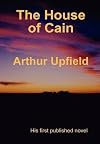
The House of Cain is the first of Arthur Upfield’s books that I have read that doesn’t feature Bony and I enjoyed it much more than I expected. This is Arthur Upfield’s first published work and it bears many similarities with his later books. As is the case with all of Upfield’s works, it is a book of its time. Stereotypes abound, there are the occasional racist remarks and a worldview that is almost colonial.
And yet, people keep coming back to his books, and I believe the reason show more for this is the strength of his stories. The foundation of Upfield’s yarns is not a complicated plot or an unsolvable mystery, rather it is a cast of rich and complex characters, a harsh yet beautiful landscape and a passion for Australia and its people.
I have only one real quibble with The House of Cain, and that is the last half of the epilogue. Upfield abandons his story-telling to philosophise and educate his readers, and the content of this is so out of date, patronising and unscientific it grates incredibly. I haven’t seen this in any of his other books, so thankfully it seems to be a convention he quickly abandoned. show less
And yet, people keep coming back to his books, and I believe the reason show more for this is the strength of his stories. The foundation of Upfield’s yarns is not a complicated plot or an unsolvable mystery, rather it is a cast of rich and complex characters, a harsh yet beautiful landscape and a passion for Australia and its people.
I have only one real quibble with The House of Cain, and that is the last half of the epilogue. Upfield abandons his story-telling to philosophise and educate his readers, and the content of this is so out of date, patronising and unscientific it grates incredibly. I haven’t seen this in any of his other books, so thankfully it seems to be a convention he quickly abandoned. show less
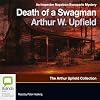
'Death Of A Swagman' is an Australian Golden Age Mystery first published in 1945. The publishers felt the need to preface the book with this text:
Editorial Note
Part of the appeal of Arthur Upfield's stories lies in their authentic portrayal of many aspects of Outback Australian life in the 1930s and through into the 1950s, The dialogue especially, is a faithful evocation of how people spoke. Hence these books reflect and depict the attitudes and ways of speech, particularly with regard to show more Aborigines and to women, which were then commonplace. In reproducing these books, the publisher does not endorse the attitudes or opinions they express.
Having read the book, I can see why they did this. The gap between this and a modern drama like 'Mystery Road' is immense.
For example, the start of the story depends on the fact that, because Napoleon Bonaparte is, in his words, a half-caste, no one meeting him for the first time would assume that he was a police officer. Arriving in town incognito, he manages to get the local police sergeant to arrest him simply by sleeping on a bench during the day and by telling the sergeant to go away when the man wakes him. Throughout the book, Bonaparte's 'mixed blood' is used as the key to his personality. His unusual abilities are explained as coming from the amalgamation of the rational, educated, dispassion gifted him by his white side and his ability to feel the call of the bush and to read the signs upon it like words on a page that comes from his aboriginal blood which has apparently made his an expert tracker although, as he says, "Not as good as a full black".
I'm glad that Bolinda Publishing decided to deal with this by adding an editorial note and leaving the reader to deal with the text rather than taking the bowdlerisation approach that HarperCollins has currently proposed for Agatha Christie's books I think it serves us well to see the attitudes and behaviours that were taken for granted only seventy-eight years ago. How else do we judge the changes made in a lifetime?
I enjoyed 'Death Of A Swagman' mostly for the slightly humorous and eccentric view it gave me of life in a small town in the bush in 1945. The town of Merino is a long way from Miss Marple's St. Mary Mead. The Police Sergeant based there rules over a region of 9,000 square miles and 120 people. The one-street town is surrounded by cattle stations and dominated by the massive white sand dunes of the Walls Of China in what is now the Mungo National Park.
I enjoyed the window into this different world. The scene with the funeral and the race ahead of the storm that followed it was beautifully done. The dialogue, with the exception of the words spoken by Bonaparte himself, was evocative and convincing.
I struggled with Bonaparte at first, He didn't seem real to me. He seems to me to be a literary construct, like Sherlock Holmes. Someone who is more a plot device than a person. He's interesting to watch but hard to believe in, something that Upfield compensates for by surrounding him with recognisable, relatable people. Well, actually, it's really recognisable, relatable men. The women are all a little too sanitised to be relatable.
The attitudes towards women and children and this book caught me by surprise. They were romanticised in a way that reminded me of Dickens and Twain from nearly a century earlier.
The plot held me for most of the book. I enjoyed watching Bonaparte investigate in a leisurely way. The action scenes worked well and the abduction of a key character towards the end added a satisfying amount of tension. Unfortunately, when we reached the big reveal, the motive behind the whole elaborate scheme required a suspension of disbelief that I wasn't capable of. It made no sense to me and I couldn't see why anyone else would give it credence. The way the killer reacted after being confronted also seemed very unlikely.
I'm glad to have sampled Arthur Upfield's work but I don't think I'll travel any further in the company of Detective Inspector Napoleon Bonaparte. show less
Editorial Note
Part of the appeal of Arthur Upfield's stories lies in their authentic portrayal of many aspects of Outback Australian life in the 1930s and through into the 1950s, The dialogue especially, is a faithful evocation of how people spoke. Hence these books reflect and depict the attitudes and ways of speech, particularly with regard to show more Aborigines and to women, which were then commonplace. In reproducing these books, the publisher does not endorse the attitudes or opinions they express.
Having read the book, I can see why they did this. The gap between this and a modern drama like 'Mystery Road' is immense.
For example, the start of the story depends on the fact that, because Napoleon Bonaparte is, in his words, a half-caste, no one meeting him for the first time would assume that he was a police officer. Arriving in town incognito, he manages to get the local police sergeant to arrest him simply by sleeping on a bench during the day and by telling the sergeant to go away when the man wakes him. Throughout the book, Bonaparte's 'mixed blood' is used as the key to his personality. His unusual abilities are explained as coming from the amalgamation of the rational, educated, dispassion gifted him by his white side and his ability to feel the call of the bush and to read the signs upon it like words on a page that comes from his aboriginal blood which has apparently made his an expert tracker although, as he says, "Not as good as a full black".
I'm glad that Bolinda Publishing decided to deal with this by adding an editorial note and leaving the reader to deal with the text rather than taking the bowdlerisation approach that HarperCollins has currently proposed for Agatha Christie's books I think it serves us well to see the attitudes and behaviours that were taken for granted only seventy-eight years ago. How else do we judge the changes made in a lifetime?
I enjoyed 'Death Of A Swagman' mostly for the slightly humorous and eccentric view it gave me of life in a small town in the bush in 1945. The town of Merino is a long way from Miss Marple's St. Mary Mead. The Police Sergeant based there rules over a region of 9,000 square miles and 120 people. The one-street town is surrounded by cattle stations and dominated by the massive white sand dunes of the Walls Of China in what is now the Mungo National Park.
I enjoyed the window into this different world. The scene with the funeral and the race ahead of the storm that followed it was beautifully done. The dialogue, with the exception of the words spoken by Bonaparte himself, was evocative and convincing.
I struggled with Bonaparte at first, He didn't seem real to me. He seems to me to be a literary construct, like Sherlock Holmes. Someone who is more a plot device than a person. He's interesting to watch but hard to believe in, something that Upfield compensates for by surrounding him with recognisable, relatable people. Well, actually, it's really recognisable, relatable men. The women are all a little too sanitised to be relatable.
The attitudes towards women and children and this book caught me by surprise. They were romanticised in a way that reminded me of Dickens and Twain from nearly a century earlier.
The plot held me for most of the book. I enjoyed watching Bonaparte investigate in a leisurely way. The action scenes worked well and the abduction of a key character towards the end added a satisfying amount of tension. Unfortunately, when we reached the big reveal, the motive behind the whole elaborate scheme required a suspension of disbelief that I wasn't capable of. It made no sense to me and I couldn't see why anyone else would give it credence. The way the killer reacted after being confronted also seemed very unlikely.
I'm glad to have sampled Arthur Upfield's work but I don't think I'll travel any further in the company of Detective Inspector Napoleon Bonaparte. show less
Lists
Read in 2006 (2)
Awards


You May Also Like


Associated Authors
Statistics
- Works
- 56
- Also by
- 8
- Members
- 6,428
- Popularity
- #3,829
- Rating
- 3.7
- Reviews
- 139
- ISBNs
- 735
- Languages
- 6
- Favorited
- 16
