
Robert F. Morneau
Author of Ashes To Easter: Lenten Meditations
About the Author
Bishop Robert F. Morneau is pastor of Resurrection Parish in Green BAY, Wisconsin, and the auxiliary bishop of the Diocese of Green Bay. He is a regular columnist for the diocesan paper, The Compass.
Works by Robert F. Morneau
From Resurrection to Pentecost: Easter-Season Meditations (Crossroad Faith & Formation Book) (2000) 66 copies, 1 review
A Retreat With C. S. Lewis: Yielding to a Pursuing God (Grappling With Mysteries of the Faith) (1999) 37 copies
Pathways to Community: Four Weeks on Prudence, Justice, Fortitude, and Temperance (7 x 4: A Meditation a Day for a Span of Four Weeks) (2008) 5 copies
Pathways to God: Four Weeks on Faith, Hope and Charity (7 x 4: A Meditation a Day for a Span of Four Weeks) (2008) 5 copies
Pathways to relationship : four weeks on simplicity, gentleness, humility, friendship (2009) 2 copies
The Gift of Spirituality the Gift of Spirituality: 10 Key Principles for Nurturing the Soul 10 Key Principles for Nurturing the Soul (2016) 2 copies
New Heart 1 copy
The Impact of divine love 1 copy
Associated Works
Only At Night We See the Stars: Finding Light in the Face of Darkness (2002) — Foreword, some editions — 10 copies
Tagged
Common Knowledge
- Birthdate
- 1938-09-10
- Gender
- male
- Occupations
- auxiliary bishop (Diocese of Green Bay)
- Organizations
- Roman Catholic Church
- Nationality
- USA
- Associated Place (for map)
- USA
Members
Reviews
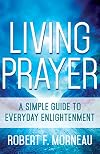
I received an ARC copy of this book from the publisher through NetGalley in exchange for an honest review.
Having read several books on meditation by Kabat-Zinn, Thich Nhat Hanh and the Dalai Lama I was interested to read a book on Catholic prayer (as a form of meditation) and found it very enlightening both in the similarities as well as the differences between the various authors regarding contemplation, meditation and prayer.
First of all the Morneau’s book manages to be several types of show more books at once. Much like Kabat-Zinn’s “Wherever You Go, There You Are” and Hahn’s “Peace is Every Step” it is a “how to” guide on methods of prayer, as those books are for meditation. However, the focus is different. While Zinn, the Dalai Lama and Hahn seek to instill inner mindfulness in the individual meditator, Morneau’s focus is outward. Morneau argues that a prayerful life is comprised of two elements, both of which are essential. The internal dialogue with God, and the external interaction with the Church and the liturgy.
The Buddhist, in my limited understanding, argues that all we have is individual perception and that nothing has reality outside of perception (the concept of “nothingness” or “emptiness.”) of that event. In fact, everything is in such a constant state of change (Hahn calls it “interbeing”) that we cannot say that is has one existence. You and I see the same thing but our perceptions are different due to our proximity, the relative dullness or acuity of our senses and intellect, and perhaps time and experience. This makes sense if you think about it. It is like we are sitting around a campfire at night. Reality is a bunch of shadows appearing and reappearing around us. Morneau would reject this as “subjectivism.” For Morneau, reality is the fire itself. He feels that all reality revolves around God (St. Anselm’s “Ultimate Reality”). This also leads him to argue that private prayer or meditation, in and of itself, is not helpful, leads to isolation and is not healthy. Man is a social animal and needs interaction with a community. Celebration of the Liturgy is crucial to development of the complete and happy person. He also, being a member of the Catholic clergy, ties much of what he says with the Roman Catholic Catechism. show less
Having read several books on meditation by Kabat-Zinn, Thich Nhat Hanh and the Dalai Lama I was interested to read a book on Catholic prayer (as a form of meditation) and found it very enlightening both in the similarities as well as the differences between the various authors regarding contemplation, meditation and prayer.
First of all the Morneau’s book manages to be several types of show more books at once. Much like Kabat-Zinn’s “Wherever You Go, There You Are” and Hahn’s “Peace is Every Step” it is a “how to” guide on methods of prayer, as those books are for meditation. However, the focus is different. While Zinn, the Dalai Lama and Hahn seek to instill inner mindfulness in the individual meditator, Morneau’s focus is outward. Morneau argues that a prayerful life is comprised of two elements, both of which are essential. The internal dialogue with God, and the external interaction with the Church and the liturgy.
The Buddhist, in my limited understanding, argues that all we have is individual perception and that nothing has reality outside of perception (the concept of “nothingness” or “emptiness.”) of that event. In fact, everything is in such a constant state of change (Hahn calls it “interbeing”) that we cannot say that is has one existence. You and I see the same thing but our perceptions are different due to our proximity, the relative dullness or acuity of our senses and intellect, and perhaps time and experience. This makes sense if you think about it. It is like we are sitting around a campfire at night. Reality is a bunch of shadows appearing and reappearing around us. Morneau would reject this as “subjectivism.” For Morneau, reality is the fire itself. He feels that all reality revolves around God (St. Anselm’s “Ultimate Reality”). This also leads him to argue that private prayer or meditation, in and of itself, is not helpful, leads to isolation and is not healthy. Man is a social animal and needs interaction with a community. Celebration of the Liturgy is crucial to development of the complete and happy person. He also, being a member of the Catholic clergy, ties much of what he says with the Roman Catholic Catechism. show less
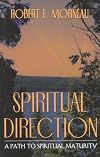
To lead a good spiritual life, to know true inner peace, and to abide in God are goals of all Christians. In Spiritual Directions, one of today's most eminent Christian leaders lays out a path toward spiritual maturity. He describes 10 principles of spiritual direction and 10 guidelines for prayer, discernment, and asceticism. He shares a rich understanding of reverence and the primacy of joy, and gives us a series of delightful spiritual exercises for eclectic nomads. Finally the author show more shares what riches he has found in Quaker spirituality. show less
Located in the seasonal drawer
You May Also Like


Associated Authors
Statistics
- Works
- 61
- Also by
- 2
- Members
- 968
- Popularity
- #26,596
- Rating
- 4.1
- Reviews
- 6
- ISBNs
- 75