
Georg Lukács (1885–1971)
Author of History and Class Consciousness: Studies in Marxist Dialectics
About the Author
George Steiner calls Lukacs "the one major critical talent to have emerged from the gray servitude of the Marxist world." This well-known writer on European literature combines a Marxist-Hegelian concern for the historical process with great artistic sensitivity. Lukacs joined the Hungarian show more Communist party in 1918, serving in its first government until the defeat of Bela Kun. He spent many years in exile, first in Berlin and then, from 1933 to 1945, in Moscow, writing and studying. He later became a professor of aesthetics in Budapest, but after the 1956 revolution he was stripped of influence because of his too-friendly attitude to non-Marxist literatures. Steiner has written: "A Communist by conviction, a dialectical materialist by virtue of his critical method, he has nevertheless kept his eyes resolutely on the past. Despite pressure from his Russian hosts, Lukacs gave only perfunctory notice to the much-heralded achievements of Soviet Realism. Instead, he dwelt on the great lineage of eighteenth and nineteenth century European poetry and fiction. The critical perspective is rigorously Marxist, but the choice of themes is central European and conservative." Lukacs has concentrated mainly on criticism of Russian, French, and German authors and often writes in German. Robert J. Clements has reported that Hungarian young people regard him as somewhat passe. (Bowker Author Biography) show less
Image credit: From the Marxists Internet Archive
Series
Works by Georg Lukács
The Young Hegel: Studies in the Relations between Dialectics and Economics (1948) 123 copies, 1 review
The Culture of People's Democracy: Hungarian Essays on Literature, Art, and Democratic Transition, 1945-1948 (2013) 16 copies
Die Grablegung des alten Deutschland Essays zur deutschen Literatur des 19. Jahrhunderts (1982) 7 copies
Kunst und objektive Wahrheit 6 copies
L'uomo e la rivoluzione 5 copies
Ensaios sobre literatura 5 copies
Individuum und Praxis: Positionen d. "Budapester Schule" : Beitrage (Edition Suhrkamp ; 545) (German Edition) (1975) 4 copies
Philosophie De L'art 1912-1914: Premiers Ecrits Sur L'esthetique: Premiers écrits sur l'esthétique: Numéro 5 (1981) 4 copies
Realismo e Existencialismo 4 copies
Il marxismo nella coesistenza 3 copies
Reboquismo e Dialetica: Uma Resposta Aos Criticos de Historia e Consciencia de Classe - Colecao Biblioteca Lukacs (2015) 3 copies
Ästhetik. 1 3 copies
Thomas Mann and public life 3 copies
Marxismo e politica culturale 3 copies
Ästhetik. 4 3 copies
La questione parlamentare 3 copies
BİREY VE TOPLUM 3 copies
Ästhetik. 3 3 copies
100 Notes - 100 Thoughts/ No. 005/ Gyorgy Lukacs. Notes On Georg Simmel's Lessons, 1906/07, And On A "sociology Of Art", C. 1909 (2011) 3 copies
Estética: a Peculiaridade do Estético: Questões Preliminares e de Princípio (Volume 1) (2019) 2 copies
Cultura e potere 2 copies
Die Verdinglichung und das Bewußtsein des Proletariats (Georg Lukács Werkauswahl in Einzelbänden) (2015) 2 copies
La letteratura sovietica 2 copies
Georg Lukács : selected correspondence, 1902-1920 : dialogues with Weber, Simmel, Buber, Mannheim, and others (1986) 2 copies
Ist der Sozialismus zu retten? : Briefwechsel zwischen Georg Lukács und Werner Hofman (1991) 2 copies
La distruzione della ragione. Vol. I 2 copies
Organisation & Partei 2 copies
Kunst og kapitalisme 2 copies
Obras Completas II ESTETICA I La Peculiaridad de lo Estético 2. Problemas de la mímesis (1965) 2 copies
El hombre, su obra, sus ideas 2 copies
Obras Completas III ESTETICA I La Peculiaridad de lo Estético 3. Categorías psicológicas y filosóficas básicas de lo estético (1965) 2 copies
Obras Completas IV ESTETICA I La Peculiaridad de lo Estético 4. Cuestiones limonares de lo estético (1965) 2 copies
Verdinglichung, Marxismus, Geschichte: Von der Niederlage der Novemberrevolution zur kritischen Theorie (2012) 2 copies
Razprave in eseji o realizmu 2 copies
Essays om realisme 1 copy
Estetica volume Secondo 1 copy
Probleme der Ästhetik 1 copy
Kommunismus, 1920-1921 1 copy
ROMAN KURAMI 1 copy
ESTETİK 1 copy
Samkaalin Yatharthvad 1 copy
ESTETİK II 1 copy
Tâm hồn và Hình thức 1 copy
La distruzione della ragione 1 copy
ESTETİK I 1 copy
LE ROMAN HISTORIQUE 1 copy
Tanulmányok I.kötet 1 copy
Thomas Mann 1 copy
Kommunismus, 1920-1921 1 copy
ZUM SIEBZIGSTEN GEBURTSTAG 1 copy
LA NOVELA HISTÓRICA 1 copy
Realismo un our time 1 copy
Estetik II-III 1 copy
Selected correspondence 1 copy
Wissenschaftliche Intelligenz, Schulung, Organisationsfrage / Frühe Aufsätze 1919-1921 (1968) 1 copy
Hegel Asthetik 1 copy
Rare Georg Lukacs / Political Writings 1919-1929 The Question 1972 - NLB [Hardcover] Lukacs, Georg 1 copy
Essays über Realismus 1 copy
Estetik II 1 copy
Studies in European Realism 1 copy
What is orthodox Marxism? 1 copy
Metafyzika tragédie 1 copy
Lenin si problemele culturii 1 copy
Thomas Mann két tanulmány 1 copy
Alte und neue Kultur 1 copy
El Asalto a la razón 1 copy
Der junge Marx 1 copy
Ästhetik Band I-IV 1 copy
Essays über Realismus 1 copy
“The Ideology of Modernism” 1 copy
Werke. Band 16: Frühe Schriften zur Ästhetik. 1: Heidelberger Philosophie der Kunst (1912-1914) (1974) 1 copy
Írástudók felelőssége 1 copy
Thomas Mann 1 copy
Estetica Volume primo 1 copy
Sociología de la literatura 1 copy
La pensée de Lénine 1 copy
Conversations with Lukacs 1 copy
Wie ist Deutschland zum Zentrum der reaktionaren Ideologie geworden? (Veroffentlichungen des Lukacs-Archivs) (German Edition) (1982) 1 copy
Estetičke ideje 1 copy
Etika i politika 1 copy
Intimna drama 1 copy
Associated Works
Literature: An Introduction to Fiction, Poetry, and Drama (1995) — Contributor, some editions — 1,011 copies, 7 reviews
A Documentary History of Communism and the World: From Revolution to Collapse (1960) — Contributor — 14 copies
Tagged
Common Knowledge
- Canonical name
- Lukács, Georg
- Legal name
- Löwinger, György Bernát (birth)
- Other names
- Lukács, György
- Birthdate
- 1885-04-13
- Date of death
- 1971-06-04
- Gender
- male
- Education
- Royal Hungarian University of Kolozsvár (Dr. rer. oec.|1906)
University of Budapest (Ph.D|1909) - Occupations
- philosopher
literary critic
essayist
literary historian
aesthetician - Organizations
- University of Budapest
Sonntagskreis
Hungarian Communist Party - Awards and honors
- Goethepreis der Stadt Frankfurt (1970)
Hungarian Academy of Sciences (1945) - Relationships
- Heller, Agnes (Colleague)
- Short biography
- Lukács was known for his books of Marxist philosophy and literary criticism. Lukacs studied in Budapest, Berlin and Heidelberg, and published his first book, "Soul and Form", in 1910. This was followed by "The Theory of the Novel" (1916). In 1918 Lukacs joined the Hungarian Communist Party and supported the Soviet Republic established by Bela Kun in 1919. After the overthrow of the Soviet Republic Lukacs was forced into exile and lived in Vienna for ten years. In 1923 he published "History and Class Consciousness". From 1930 to 1944 he lived in the Soviet Union, after which he returned to Hungary. Lukacs was highly critical of the government of Matyas Rakosi and became a supporter of the reformers led by Laszlo Rajk. In 1956 He was appointed as Minister of Culture. However, following the fall of the 1956 revolution Lukacs was deported to Romania but was allowed to return to Budapest in 1957. In his late years he was a professor of several universities and was noted as an ordinary member of the Academy of Sciences (Hungary).
- Nationality
- Hungary
- Birthplace
- Budapest, Austria-Hungary
- Places of residence
- Budapest, Hungary (death)
Budapest, Austro-Hungary (birth|now Hungary) - Place of death
- Budapest, Hungary
- Burial location
- National Graveyard in Fiumei Street, Kerepesdűlő, Józsefváros, Budapest, Hungary
- Map Location
- Hungary
Members
Reviews

Já não é sem tempo que esse livro deveria ter sido traduzido e publicado no Brasil. Não só por causa dos atuais e brutais ataques ao exercício da razão, da investigação científica e do pensamento crítico, mas também pela profunda decadência ideológica, tanto do pensamento burguês, como também da esquerda em geral, com a emergência, há décadas, do chamado pós-modernismo, nas suas várias facetas e a perda da perspectiva revolucionária. Se já, ao tempo em que esse livro show more foi escrito, esta decadência se manifestava amplamente, muito mais hoje quando a irracionalidade do capital e suas expressões teóricas se expressam de forma cada vez mais ampla, profunda e brutal, sustentando uma ordem social sempre mais perversa. Esse livro será, com certeza, um instrumento muito importante nessa luta contra o irracionalismo e contra a destruição da razão. IVO TONET show less
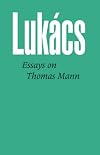
Naphta strikes back! Apparently unaware of his satirization as Naphta in The Magic Mountain, Lukács provides a thorny Marxist reading of Mann's works. And it is a striking and odd reading experience, as if Naphta stepped out of the book and assessed his author's position in and posture towards the class struggle.
Fans of Lukács will enjoy this, fans of Mann too, though perhaps less, as the perspective here is strictly Marxist in the most theoretical and schematic sense. There are some show more interesting insights into Mann's "discovery of the bourgeois man" and so on. But the greatest pleasure of this book really comes from reading Lukács as Naphta. Mann absolutely nailed him. show less
Fans of Lukács will enjoy this, fans of Mann too, though perhaps less, as the perspective here is strictly Marxist in the most theoretical and schematic sense. There are some show more interesting insights into Mann's "discovery of the bourgeois man" and so on. But the greatest pleasure of this book really comes from reading Lukács as Naphta. Mann absolutely nailed him. show less

Đây là tập tiểu luận được Lukács viết hồi còn rất trẻ, trong đó trình hiện cái nhìn, đánh giá của ông về một số nhân vật lớn của văn chương thế giới: điều gì là yếu tính nơi tinh thần họ, và nơi tác phẩm của họ. Việc trình hiện các đánh giá của cảm năng ở mức rất cao được thực hiện thông qua thức tiểu luận, không hề là khô khan, mà ngược lại, mang những rung động show more của một hình thức của nghệ thuật (đưa thức tiểu luận trở nên một nghệ thuật, ngang hàng với các nghệ thuật khác, là điều được Lukács bàn tới và khẳng định khả thể của nó trong bức thư cho người bạn Leo Popper mở đầu cuốn sách). show less
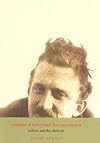
Georg Lukács was dubbed "the philosopher of the October Revolution" and his masterpiece History and Class Consciousness (1923) is commonly held to be the foundational text for the tradition known as "Western Marxism" which includes the work of Theodor Adorno, Walter Benjamin, Ernst Bloch, Max Horkheimer, and Herbert Marcuse. As the liberating energies of the Russian Revolution were sapped by Stalinism, Lukács was subjected to ferocious attack for "deviations" from the "party line" in show more History and Class Consciousness. In the mid-1920s, he wrote Talism and the Dialectic, a sustained and passionate response to this onslaught. Unpublished at the time, Lukács himself thought the text had been destroyed. However, a group of researchers recently found the manuscript gathering dust in the newly opened archives of the CPSU in Moscow. Now, for the first time, this fascinating, polemical and intense text is available in English, in an accomplished translation by Esther Leslie and published here with an introduction from John Rees and a postface by Slavoj Zizek. It is a crucial part of a hidden intellectual history and will transform interpretations of Lukács's oeuvre. "Some critiques of my book History and Class Consciousness have appeared (written by Comrades Rudas and Deborin) which I simply cannot let pass without a response ... It is certainly not my intention to defend the book itself. I would be only too glad if I could regard it as completely redundant, if I could see that its purpose had been full accomplished. What is this purpose? To demonstrate methodologically that the organisation and tactics of Bolshevism are the only possible consequence of Marxism; to prove that, of necessity, the problems of Bolshevism follow logically—that is to say logically in a dialectical sense—from the method of materialist dialectics as implemented by its founders. But my critics move instead in the opposite direction. They use their polemics to smuggle Menshevik elements into Marxism and Leninism. I have to retaliate. I am not defending my book. I am attacking the poen Menshevism of Deborin and the tail-ending of Rudas." show less
Lists
Awards


You May Also Like


Associated Authors
Statistics
- Works
- 329
- Also by
- 6
- Members
- 4,553
- Popularity
- #5,521
- Rating
- 3.7
- Reviews
- 21
- ISBNs
- 346
- Languages
- 17
- Favorited
- 9