
Maya Schenwar
Author of Who Do You Serve, Who Do You Protect? Police Violence and Resistance in the United States
About the Author
Maya Schenwar is Editor-in-Chief of Truth out. She has written about the prison-industrial complex for Truthout, the New York Times, the Guardian, the New Jersey Star-Ledger, and others and is the recipient of a Sigma Delta Chi Award for her writing on prisons.
Works by Maya Schenwar
Who Do You Serve, Who Do You Protect? Police Violence and Resistance in the United States (2016) — Editor — 185 copies, 4 reviews
Locked Down, Locked Out: Why Prison Doesn't Work and How We Can Do Better (2014) 78 copies, 2 reviews
Tagged
Common Knowledge
- Gender
- female
- Agent
- Hannah Bowman (Liza Dawson Assoc.)
- Places of residence
- Chicago, Illinois, USA
- Associated Place (for map)
- Illinois, USA
Members
Reviews
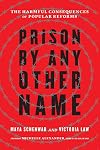
Prison by Any Other Name: The Harmful Consequences of Popular Reform by Maya Schenwar and Victoria Law is a well researched and presented account of how many, if not all, popular reforms ultimately cause more harm than good.
Through analyzing the laws and reforms, their practical applications, and both statistical and anecdotal research, the authors demonstrate that the popular reforms proposed and thus far implemented serve to broaden, not shrink, those under carceral control. In other show more words, what Foucault had referred to as the carceral archipelago has indeed come to pass and is only being strengthened by these well-intentioned reforms. This is not limited to any part of the political spectrum. While right wing plans make few apologies for targeting, whether explicitly or implicitly, people of color and poor people, left wing and bipartisan plans are equally counterproductive.
The examples throughout the book put real faces to the inane policies that have been enacted. The damage done to not only those deemed criminals but to their families and future generations is made clear to any reader. Even if you aren't comfortable with the idea of abolition you need to read and understand that these "humane" forms of control are not beneficial to either the "criminal" or society.
What is needed as expressed by Schenwar and Law is a more just and equitable society. Making changes to the system that don't change the overall structure just makes the system larger and more pervasive. Making the government more about social welfare and less about punishment and control is, at the core, prison reform. Increasing the cooperation and communication between various movements is essential to making progress. But individuals are also key, opening communication between individuals would begin to make where we live more like communities, not just similar people living in proximity.
Just ignore anarchists who pretend to be sociologically informed but seem to think that simply abolishing everything immediately is a solution. Even most anarchists who truly want to work toward that know that total immediate anarchy is unworkable and irrational and that steps in that direction are the way to both shape society without creating chaos. I am not an anarchist and am comfortable with the idea of a functioning government that is more concerned with the social welfare of all rather than the economic and financial gluttony of the very few. And that is currently what we have.
I highly recommend this to anyone even remotely curious about prison reform and/or what abolition might look like. This does not answer every pragmatic question but does lay a very solid foundation for why such change is needed.
Reviewed from a copy made available by the publisher via NetGalley. show less
Through analyzing the laws and reforms, their practical applications, and both statistical and anecdotal research, the authors demonstrate that the popular reforms proposed and thus far implemented serve to broaden, not shrink, those under carceral control. In other show more words, what Foucault had referred to as the carceral archipelago has indeed come to pass and is only being strengthened by these well-intentioned reforms. This is not limited to any part of the political spectrum. While right wing plans make few apologies for targeting, whether explicitly or implicitly, people of color and poor people, left wing and bipartisan plans are equally counterproductive.
The examples throughout the book put real faces to the inane policies that have been enacted. The damage done to not only those deemed criminals but to their families and future generations is made clear to any reader. Even if you aren't comfortable with the idea of abolition you need to read and understand that these "humane" forms of control are not beneficial to either the "criminal" or society.
What is needed as expressed by Schenwar and Law is a more just and equitable society. Making changes to the system that don't change the overall structure just makes the system larger and more pervasive. Making the government more about social welfare and less about punishment and control is, at the core, prison reform. Increasing the cooperation and communication between various movements is essential to making progress. But individuals are also key, opening communication between individuals would begin to make where we live more like communities, not just similar people living in proximity.
Just ignore anarchists who pretend to be sociologically informed but seem to think that simply abolishing everything immediately is a solution. Even most anarchists who truly want to work toward that know that total immediate anarchy is unworkable and irrational and that steps in that direction are the way to both shape society without creating chaos. I am not an anarchist and am comfortable with the idea of a functioning government that is more concerned with the social welfare of all rather than the economic and financial gluttony of the very few. And that is currently what we have.
I highly recommend this to anyone even remotely curious about prison reform and/or what abolition might look like. This does not answer every pragmatic question but does lay a very solid foundation for why such change is needed.
Reviewed from a copy made available by the publisher via NetGalley. show less
A hugely important book to read for folks looking and thinking about alternatives to incarceration and the ways that most of the "reforms" that are being currently offered are in fact functionally the same as prison and may, in some cases, be worse in terms of stretching out a person's punishment for far longer than if they had been sent to prison for the original crime they were accused of.
It's infuriating at every step (I started out reading this book right before I went to bed and ended show more up having to swap up my book line up because I would get so angry I couldn't sleep,) and I could see people reading this and being frustrated that more time isn't spent on alternatives that are actually useful (though they do discuss alternatives a little bit, it's not the entire focus of this book and really only shows up in the last chapter,) though I felt like it was fine and does the work it's meant to.
In a larger line up of books about ending the PIC, I would put it a little later (it's a great follow up to We Do This 'Til We Free Us,) but nonetheless it's a hugely critical read that energized me to continue to try to fight these forms of punishment and confinement that do nothing to stop harm and in fact only increase its prevalence. show less
It's infuriating at every step (I started out reading this book right before I went to bed and ended show more up having to swap up my book line up because I would get so angry I couldn't sleep,) and I could see people reading this and being frustrated that more time isn't spent on alternatives that are actually useful (though they do discuss alternatives a little bit, it's not the entire focus of this book and really only shows up in the last chapter,) though I felt like it was fine and does the work it's meant to.
In a larger line up of books about ending the PIC, I would put it a little later (it's a great follow up to We Do This 'Til We Free Us,) but nonetheless it's a hugely critical read that energized me to continue to try to fight these forms of punishment and confinement that do nothing to stop harm and in fact only increase its prevalence. show less

Best for: People interested in what justice could look like.
In a nutshell: Author Maya Schenwar - whose sister has been in and out of prison - explores what is wrong with our current system, as well as alternatives.
Line that sticks with me: “Isolation does not ‘rehabilitate’ people. Disappearance does not deter harm. And prison does not keep us safe.”
Why I chose it: A political podcast I used to listen to interviewed the author. It struck both my husband and I so much that we show more accidentally bought two copies.
Review: I grew up assuming that if something bad happens, I should call the cops. Aside from the recognition that this is rooted deeply in the fact that police responding to any incident I report will see a white woman, and thus probably won’t shoot me, it is also based in the idea that justice means the ‘criminal’ is apprehended, tried, convicted, and sent away. This book asks those of us who hold that assumption to set it aside and imagine something else.
Ms. Schenwar is the editor of Truthout, and has written a lot about the prison-industrial complex. Part of her writing is informed by her personal experience of having a family member - her sister - in and out of prison and the broader criminal punishment system for many years. This fairly quick read (I took in all 200 pages in two days) is broken into two parts - the first looks at all the ways the criminal punishment system tears families and communities apart, and the second explores alternatives.
The basic premise is, I think, summed up in the line that stuck with me. Society sees individuals who harm others as needing to be taken out of society. Allegedly, this should ‘rehabilitate’ them, but it doesn’t. It doesn’t keep people who haven’t caused harm yet from harming others, and it isn’t making me any safer when I walk down the street. Instead, our current system is causing more harm by removing individuals and perpetuating even more harm. If the person who earns money fro the family goes to jail, what happens to her husband and children? If a child’s father is in prison and her mother is working multiple jobs to meet her needs, what options does the child have?
So much of our society is built on this very specific way of viewing “justice,” even though there’s not a lot out there to suggest that throwing people in prison gets justice for anyone. The language choices Ms. Schenwar makes throughout really got me thinking - she doesn’t talk about our current system as ‘criminal justice,’ it’s ‘criminal punishment.’ And instead of referring to crime, she talks about harm. The discussion around the latter point I found especially interesting.
The only reason this isn’t a five-star book for me is that, while the examples of alternatives are plentiful, Ms. Schenwar doesn’t, for me at least, offer up what this could look like on a large scale and what it would take to get there. But it’s a starting point for me, and one that will lead me to learn more about prison abolition and what I can do to support such movements. show less
In a nutshell: Author Maya Schenwar - whose sister has been in and out of prison - explores what is wrong with our current system, as well as alternatives.
Line that sticks with me: “Isolation does not ‘rehabilitate’ people. Disappearance does not deter harm. And prison does not keep us safe.”
Why I chose it: A political podcast I used to listen to interviewed the author. It struck both my husband and I so much that we show more accidentally bought two copies.
Review: I grew up assuming that if something bad happens, I should call the cops. Aside from the recognition that this is rooted deeply in the fact that police responding to any incident I report will see a white woman, and thus probably won’t shoot me, it is also based in the idea that justice means the ‘criminal’ is apprehended, tried, convicted, and sent away. This book asks those of us who hold that assumption to set it aside and imagine something else.
Ms. Schenwar is the editor of Truthout, and has written a lot about the prison-industrial complex. Part of her writing is informed by her personal experience of having a family member - her sister - in and out of prison and the broader criminal punishment system for many years. This fairly quick read (I took in all 200 pages in two days) is broken into two parts - the first looks at all the ways the criminal punishment system tears families and communities apart, and the second explores alternatives.
The basic premise is, I think, summed up in the line that stuck with me. Society sees individuals who harm others as needing to be taken out of society. Allegedly, this should ‘rehabilitate’ them, but it doesn’t. It doesn’t keep people who haven’t caused harm yet from harming others, and it isn’t making me any safer when I walk down the street. Instead, our current system is causing more harm by removing individuals and perpetuating even more harm. If the person who earns money fro the family goes to jail, what happens to her husband and children? If a child’s father is in prison and her mother is working multiple jobs to meet her needs, what options does the child have?
So much of our society is built on this very specific way of viewing “justice,” even though there’s not a lot out there to suggest that throwing people in prison gets justice for anyone. The language choices Ms. Schenwar makes throughout really got me thinking - she doesn’t talk about our current system as ‘criminal justice,’ it’s ‘criminal punishment.’ And instead of referring to crime, she talks about harm. The discussion around the latter point I found especially interesting.
The only reason this isn’t a five-star book for me is that, while the examples of alternatives are plentiful, Ms. Schenwar doesn’t, for me at least, offer up what this could look like on a large scale and what it would take to get there. But it’s a starting point for me, and one that will lead me to learn more about prison abolition and what I can do to support such movements. show less
Maya Schenwar has written a compelling book that really needs to be read by everyone in the U.S. Our "justice" system has become a for-profit venue for retribution and revenge. There is little rehabilitation or actual justice. By locking millions of people in cages for an ever-growing variety of "crimes", we have effectively created a revolving door prison culture.
This book takes us inside and beyond those prison walls. Schenwar's writing style is conversational, making it an ideal read for show more people from any educational background. She takes us on a journey, using real and sometimes personal cases to spotlight the cracks, fissures, and major breaks in our prison system.
Even if you believe - or maybe especially if you believe - that at least most people in prison deserve to be there, you need to read this book. Schenwar points out how the prison culture destroys the inmates' humanity, how merely surviving inside those walls requires a shutdown of the very qualities we should be nurturing. The type of change we are cultivating inside prisons is not what we want to set loose on society when these inmates are released.
While the first half of this book focuses on the problems of prison, the second half is all about ways to fix the breaks. These are not idealistic, far-fetched dreams, but actual programs that work and should absolutely be implemented everywhere.
Not everyone in prison is a cold-blooded killer. In fact, most are not. Yet we treat them all equally, like rabid animals in a war zone. Isn't it time we regained our humanity? show less
This book takes us inside and beyond those prison walls. Schenwar's writing style is conversational, making it an ideal read for show more people from any educational background. She takes us on a journey, using real and sometimes personal cases to spotlight the cracks, fissures, and major breaks in our prison system.
Even if you believe - or maybe especially if you believe - that at least most people in prison deserve to be there, you need to read this book. Schenwar points out how the prison culture destroys the inmates' humanity, how merely surviving inside those walls requires a shutdown of the very qualities we should be nurturing. The type of change we are cultivating inside prisons is not what we want to set loose on society when these inmates are released.
While the first half of this book focuses on the problems of prison, the second half is all about ways to fix the breaks. These are not idealistic, far-fetched dreams, but actual programs that work and should absolutely be implemented everywhere.
Not everyone in prison is a cold-blooded killer. In fact, most are not. Yet we treat them all equally, like rabid animals in a war zone. Isn't it time we regained our humanity? show less
Awards


You May Also Like


Associated Authors
Statistics
- Works
- 4
- Members
- 448
- Popularity
- #54,748
- Rating
- 4.2
- Reviews
- 9
- ISBNs
- 14