
Andrea J. Ritchie
Author of Queer (In)Justice: The Criminalization of LGBT People in the United States (Queer Ideas/Queer Action)
About the Author
Works by Andrea J. Ritchie
Queer (In)Justice: The Criminalization of LGBT People in the United States (Queer Ideas/Queer Action) (2011) 294 copies, 8 reviews
Invisible No More: Police Violence Against Black Women and Women of Color (2017) 220 copies, 17 reviews
Associated Works
Our enemies in blue : police and power in America (2004) — Introduction, some editions — 191 copies, 1 review
Who Do You Serve, Who Do You Protect? Police Violence and Resistance in the United States (2016) — Contributor — 185 copies, 4 reviews
Tagged
Common Knowledge
Members
Reviews
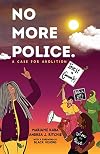
No More Police: A Case for Abolition, by Mariame Kaba and Andrea Ritchie, is an organized and well-researched explanation of the need for abolishing the police.
The kneejerk response from those who support the white supremacist status quo is that pulling the cops off the street will lead to full scale violence and crime. In other words, these people not only don't know anything about what the abolitionist movement is, they are trying to use fear (which statistics don't actually support) to show more maintain their entitlement and power under the present system.
No matter where you currently stand on the issue, don't let the false fear these hypocrites are peddling be your "rationale" for taking a stand. Read this book. Think about the statistics and the stories. Think about their ideas based on this information. This is not an overnight type of movement. In fact, at one point, they state that achieving safe, supportive and a truly just society is multigenerational. But we must start.
I'm not going to try to restate their arguments, they do too good of a job for me to mess it up. But for anyone who wants a society that is just for all, they owe it to themselves to not listen to the slogans, whether from the fear-mongers or from the "defund the police" crowd. The research here is cited so you can verify things for yourself (isn't that the usual first complaint of those who won't believe anything?). If you're one of those who "do your own research" then this is ideal. Do it. With an open mind. You may not think every idea here is good, but if you disagree with the larger premise, that police do not make people safer and do nothing to decrease violence (in fact they increase violence), then I have to question whether you just like your position in a white supremacist society more than you care for or believe in any moral, ethical, or spiritual system.
Highly recommended for those who want to know about, or know more about, the abolitionist movement. In fact, I think this is one of a handful of books I would recommend to someone who doesn't really like the idea but wants to better understand it. Maybe you won't flip 180 degrees but I find it hard to believe you will be totally against it either.
Reviewed from a copy made available by the publisher via NetGalley. show less
The kneejerk response from those who support the white supremacist status quo is that pulling the cops off the street will lead to full scale violence and crime. In other words, these people not only don't know anything about what the abolitionist movement is, they are trying to use fear (which statistics don't actually support) to show more maintain their entitlement and power under the present system.
No matter where you currently stand on the issue, don't let the false fear these hypocrites are peddling be your "rationale" for taking a stand. Read this book. Think about the statistics and the stories. Think about their ideas based on this information. This is not an overnight type of movement. In fact, at one point, they state that achieving safe, supportive and a truly just society is multigenerational. But we must start.
I'm not going to try to restate their arguments, they do too good of a job for me to mess it up. But for anyone who wants a society that is just for all, they owe it to themselves to not listen to the slogans, whether from the fear-mongers or from the "defund the police" crowd. The research here is cited so you can verify things for yourself (isn't that the usual first complaint of those who won't believe anything?). If you're one of those who "do your own research" then this is ideal. Do it. With an open mind. You may not think every idea here is good, but if you disagree with the larger premise, that police do not make people safer and do nothing to decrease violence (in fact they increase violence), then I have to question whether you just like your position in a white supremacist society more than you care for or believe in any moral, ethical, or spiritual system.
Highly recommended for those who want to know about, or know more about, the abolitionist movement. In fact, I think this is one of a handful of books I would recommend to someone who doesn't really like the idea but wants to better understand it. Maybe you won't flip 180 degrees but I find it hard to believe you will be totally against it either.
Reviewed from a copy made available by the publisher via NetGalley. show less
Queer (In)Justice: The Criminalization of LGBT People in the United States (Queer Ideas/Queer Action Book 5) by Joey L. Mogul
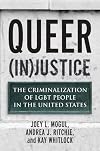
Rating: 3.5* of five
The Publisher Says: The first comprehensive work to turn a “queer eye” on the criminal justice system, providing an eye-opening study of LGBTQ+ rights and equality.
Drawing on years of research, activism, and legal advocacy, Queer (In)Justice is a searing examination of queer experiences as “suspects,” defendants, prisoners, and survivors of crime. The authors unpack queer criminal archetypes—from “gleeful gay killers” and “lethal lesbians” to “disease show more spreaders” and “deceptive gender benders”—to illustrate the punishment of queer expression, regardless of whether a crime was ever committed. Tracing stories from the streets to the bench to behind prison bars, the authors prove that the policing of sex and gender both bolsters and reinforces racial and gender inequalities.
An eye-opening study of LGBTQ rights and equality, Queer (In)Justice illuminates and challenges the many ways in which queer lives are criminalized, policed, and punished.
I RECEIVED THIS BOOK FROM THE GOODREADS M/M GIFT EXCHANGE. THANKS!
My Review: Back in the innocent days of 2020, when I received it, this was a mind-blowing read. In 2025, a mere five years later, its infelicities are brought into sharp relief by the spotlight the current US regime is shining on issues of social justice by trampling on, trying to bury, and (where possible) expunge progress made.
I have trans friends and family members. I'm guessing that was either not the case for the authors, or they simply did not delve deeply into those folks' experience. Importantly, though it might seem trivial to some, referring to trans women as "trans" and cisgender women as "women" just perpetuates their othering. The terms "gender non-conforming" and "genderqueer" are not synonyms for "transgender." "Genderqueer" is a different thing, its own category of queerness. I grant you that, when I first saw it codified in the 1990s, it did not have the sense of meaning it does now. "Gender non-conforming" includes anyone, cisgender or even heterosexual, whose manner of self-presentation falls on the edges or outside of a specific culture'e gender norms.
It is a case of the times being unkind to a solidly researched and competently argued (and footnoted!) work of scholarship.
That lacuna, addressable if Beacon Press brings out a second edition of this thirteen-year-old work, aside, I have the greatest respect for this genuinely informative scholarly examination of why decriminalization of same-sex sexual acts is only one small step for humankind. It is a project worth examining in the current horrifying recrudescence of the intolerant ignorance of our never-distant past. When frightened by change, humans routinely find scapegoats and the cynical, power-hungry would-be tyrants feed that base, appallingly cruel need in our ape-brained characters.
An admirable facet of this treatment of the legal system's weaponization of power is that it never isolates the causes of victimization. Race, biological sex however expressed, and socioeconomic class are all very explicitly brought into the conversation. The extent of violence against transfem and gender non-conforming queer men around the world...I'm specifically thinking of the violence committed on the US-Mexico border, though it is by no means the only place this occurs...is often exacerbated by socioeconomic pressures leading these vulnerable people into prostitution. No such threats of violence appertain to their clients. Why would that be, if it is the act of having sex with another man that is being scapegoated here?
I'll leave that thought to marinate with y'all.
In many ways it is the abolitionist movement's intersection with queer-rights groups that powerfully reinforce each other's main thrust: Reform. The system is, as the looneys on the political right constantly complain, rigged. They do not see that it's been rigged for a purpose, and that purpose is also served by impoverishing and immiserating them. Reform for selectively applied to benefit some and exclude others is the antithesis of fairness, justice, equitable distribution...all those things everyone likes until the language they're couched in gets politicized. show less
The Publisher Says: The first comprehensive work to turn a “queer eye” on the criminal justice system, providing an eye-opening study of LGBTQ+ rights and equality.
Drawing on years of research, activism, and legal advocacy, Queer (In)Justice is a searing examination of queer experiences as “suspects,” defendants, prisoners, and survivors of crime. The authors unpack queer criminal archetypes—from “gleeful gay killers” and “lethal lesbians” to “disease show more spreaders” and “deceptive gender benders”—to illustrate the punishment of queer expression, regardless of whether a crime was ever committed. Tracing stories from the streets to the bench to behind prison bars, the authors prove that the policing of sex and gender both bolsters and reinforces racial and gender inequalities.
An eye-opening study of LGBTQ rights and equality, Queer (In)Justice illuminates and challenges the many ways in which queer lives are criminalized, policed, and punished.
I RECEIVED THIS BOOK FROM THE GOODREADS M/M GIFT EXCHANGE. THANKS!
My Review: Back in the innocent days of 2020, when I received it, this was a mind-blowing read. In 2025, a mere five years later, its infelicities are brought into sharp relief by the spotlight the current US regime is shining on issues of social justice by trampling on, trying to bury, and (where possible) expunge progress made.
I have trans friends and family members. I'm guessing that was either not the case for the authors, or they simply did not delve deeply into those folks' experience. Importantly, though it might seem trivial to some, referring to trans women as "trans" and cisgender women as "women" just perpetuates their othering. The terms "gender non-conforming" and "genderqueer" are not synonyms for "transgender." "Genderqueer" is a different thing, its own category of queerness. I grant you that, when I first saw it codified in the 1990s, it did not have the sense of meaning it does now. "Gender non-conforming" includes anyone, cisgender or even heterosexual, whose manner of self-presentation falls on the edges or outside of a specific culture'e gender norms.
It is a case of the times being unkind to a solidly researched and competently argued (and footnoted!) work of scholarship.
That lacuna, addressable if Beacon Press brings out a second edition of this thirteen-year-old work, aside, I have the greatest respect for this genuinely informative scholarly examination of why decriminalization of same-sex sexual acts is only one small step for humankind. It is a project worth examining in the current horrifying recrudescence of the intolerant ignorance of our never-distant past. When frightened by change, humans routinely find scapegoats and the cynical, power-hungry would-be tyrants feed that base, appallingly cruel need in our ape-brained characters.
An admirable facet of this treatment of the legal system's weaponization of power is that it never isolates the causes of victimization. Race, biological sex however expressed, and socioeconomic class are all very explicitly brought into the conversation. The extent of violence against transfem and gender non-conforming queer men around the world...I'm specifically thinking of the violence committed on the US-Mexico border, though it is by no means the only place this occurs...is often exacerbated by socioeconomic pressures leading these vulnerable people into prostitution. No such threats of violence appertain to their clients. Why would that be, if it is the act of having sex with another man that is being scapegoated here?
I'll leave that thought to marinate with y'all.
In many ways it is the abolitionist movement's intersection with queer-rights groups that powerfully reinforce each other's main thrust: Reform. The system is, as the looneys on the political right constantly complain, rigged. They do not see that it's been rigged for a purpose, and that purpose is also served by impoverishing and immiserating them. Reform for selectively applied to benefit some and exclude others is the antithesis of fairness, justice, equitable distribution...all those things everyone likes until the language they're couched in gets politicized. show less
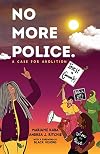
Two seasoned activists make a convincing case for defunding the police.
As Kaba and Ritchie note, defunding “means investing the billions currently poured into policing and the prison-industrial complex into community-based safety strategies: meeting basic needs that include housing, health care, access to care for disabled people, childcare, elder care, a basic guaranteed income, and accessible, sustainable living-wage jobs.” The authors use three main arguments. First, they show how show more policing endangers, rather than protects, America’s most vulnerable communities. Second, they claim that calls for reforming the police—rather than abolition—are futile because the inherent violence of policing makes it impossible to reform. Finally, they argue that there are more effective ways to promote safety. “We call for abolition of police because, despite all of the power, resources and legitimacy we pour into them, they cannot and will not deliver safety,” they write. Kaba and Ritchie begin by showing how police manufacture crimes by focusing on making most of their arrests in certain “hot spots”—which, they argue, is code for brown and Black neighborhoods—while ignoring others. This perpetuates a culture of “fearmongering” that politicians use to divert funds to police and away from social services programs that have been proven to prevent violence. The authors urge a shift to an “abundance mindset,” in which the government stops using resources to punish marginalized populations and instead uses them to meet every American’s needs. Furthermore, they urge us to listen to survivors, who often encounter violence in the very systems that are allegedly set up to protect them. Kaba and Ritchie are knowledgeable, passionate, and skilled at elucidating complex concepts clearly, without sacrificing nuance. The book is deeply researched and flawlessly argued, and the plan they lay out is practical, compassionate, and circumspect.
A brilliantly articulated plan to abolish the police.
-Kirkus Review show less
As Kaba and Ritchie note, defunding “means investing the billions currently poured into policing and the prison-industrial complex into community-based safety strategies: meeting basic needs that include housing, health care, access to care for disabled people, childcare, elder care, a basic guaranteed income, and accessible, sustainable living-wage jobs.” The authors use three main arguments. First, they show how show more policing endangers, rather than protects, America’s most vulnerable communities. Second, they claim that calls for reforming the police—rather than abolition—are futile because the inherent violence of policing makes it impossible to reform. Finally, they argue that there are more effective ways to promote safety. “We call for abolition of police because, despite all of the power, resources and legitimacy we pour into them, they cannot and will not deliver safety,” they write. Kaba and Ritchie begin by showing how police manufacture crimes by focusing on making most of their arrests in certain “hot spots”—which, they argue, is code for brown and Black neighborhoods—while ignoring others. This perpetuates a culture of “fearmongering” that politicians use to divert funds to police and away from social services programs that have been proven to prevent violence. The authors urge a shift to an “abundance mindset,” in which the government stops using resources to punish marginalized populations and instead uses them to meet every American’s needs. Furthermore, they urge us to listen to survivors, who often encounter violence in the very systems that are allegedly set up to protect them. Kaba and Ritchie are knowledgeable, passionate, and skilled at elucidating complex concepts clearly, without sacrificing nuance. The book is deeply researched and flawlessly argued, and the plan they lay out is practical, compassionate, and circumspect.
A brilliantly articulated plan to abolish the police.
-Kirkus Review show less

Read. This. Book. Today.
(Full disclosure: I received a free electronic ARC for review through Edelweiss, as well as a finished copy through Library Thing's Early Reviewers program. Trigger warning for violence against women and children, including sexual assault and rape, as well as racism, ableism, homophobia, biphobia, and transphobia.)
"At the 2004 National Coalition on Police Accountability conference, a man who identified himself as a former member of the Black Panther Party approached show more me at the end of the workshop. He said that his sister had been raped by a police officer 'back in the day,' but he had never understood what happened to her as police brutality until he had heard it framed that way in the workshop. I asked him how he and his sister had described her experience. He answered, somewhat bewildered, that it was 'just something bad that happened.' He then thanked me for opening his eyes as to how his sister’s experience fit into the work he had been doing all his life to challenge state violence against Black people."
Chances are, when you hear the words "police brutality," you picture a young black man - armed with only a bag of Skittles or a cell phone - killed in the streets, either by gunfire or a Taser or with an officer's bare fists: Philando Castile. Eric Garner. Sean Bell. Mike Brown. Trayvon Martin. Tamir Rice. (Although, at just twelve years old, this last could hardly be described as a man, even a young one.) Yet black women and women of color - including disabled women, trans women, and lesbian and bisexual women - also suffer from racialized police violence, compounded by gender and other axes of oppression.
Black women activists and scholars - such as Alicia Garza, Patrisse Cullors, and Opal Tometi, the founders of #BlackLivesMatter - have begun to shift the conversation in recent years. From the #SayHerName hashtag - created in response to Sandra Bland's death while in police custody - to the groundbreaking AAPF report "Black Girls Matter: Pushed Out, Overpoliced, and Underprotected," discussions of police violence are widening to include black women, people of color, people with physical and mental disabilities, LGBTQ and Two Spirit people, sex workers, children, and more.
Andrea Ritchie's Invisible No More: Police Violence Against Black Women and Women of Color is an invaluable contribution to the literature. She tackles a difficult and admittedly wide-ranging topic with passion, insight, and a boatload of receipts. Ritchie pinpoints seven sites in which black women and women of color are vulnerable to police violence:
* girlhood, e.g., as schools push to criminalize previously normal juvenile misbehavior, like talking back;
* disability, such as when police are called to perform a welfare check on someone who may be in mental distress and whom they are ill-equipped to deal with; or when trying to communicate with a deaf person;
* sexual violence, including sexual harassment, sexual assault, and rape;
* gender, i.e. when police enforce gender norms in behavior and dress; this can range from hassling women with a more masculine gender presentation to disbelieving rape victims who were "asking for it" by their nonconformity to white ideals of womanhood;
* sex, such as targeting those engaged in sex work, or "gender checks" for trans or gender nonconforming folks;
* motherhood, which ranges from police violence against pregnant women and mothers on one end of the spectrum (thus endangering children and fetuses), to criminalizing the parenting choices of black women and women of color, many of them a direct response to poverty and lack of resources (see, e.g., Laura Browder, a black woman who was arrested after leaving her children at a food court while she interviewed for a job...at the same food court); and
* police responses to violence against women, which can paradoxically result in additional violence against the victim, including physical assault, sexual assault, and murder.
While each of these chapters could easily fill its own book (indeed, on the topic of girls, police, and education, I strongly recommend Monique W. Morris's 2016 title, Pushout: The Criminalization of Black Girls in Schools), Ritchie skillfully distills each topic into an engaging and informative look at one aspect of racialized and gendered police violence. Each chapter fits seamlessly with the others; indeed, there is quite a bit of overlap, and I often found myself nodding at how one thread circled back to touch many others. I especially appreciate her inclusion of strip and body cavity searches which, as state-sanctioned (and in prisons, required) forms of sexual assault and rape, are particularly unsettling.
In addition to problems, Ritchie also examines solutions, with profiles of various activists and movements that have coalesced around different cases or sites of police violence. While, according to Ritchie, the ultimate solution lies in dismantling the police state (although, admittedly, it's difficult for me to imagine what this might look like), she primarily focuses on less radical measures. Specifically, she points to four measures that could have the greatest impact - in no small part because they have been the driving force between increased contact between marginalized communities and the police: ending the war on drugs, the war on terror, immigration enforcement by police, and broken windows policing.
Thoroughly researched and documented, with the perfect marriage of reasoned arguments and righteous anger, Invisible No More is a must read - for everyone. By focusing solely on black men and men of color, we miss the myriad ways that police violence manifests in other communities. Invisible No More will teach you to widen your perspective - and, hopefully, your circle of compassion.
TABLE OF CONTENTS
foreword by Mariame Kaba xi
chapter 1 Introduction 1
chapter 2 Enduring Legacies 19
chapter 3 Policing Paradigms and Criminalizing Webs 43
chapter 4 Policing Girls 70
chapter 5 Policing (Dis)ability 88
chapter 6 Police Sexual Violence 104
chapter 7 Policing the Borders of Gender
chapter 8 Policing Sex 144
chapter 9 Policing Motherhood 165
chapter 10 Police Responses to Violence 183
chapter 11 Resistance 203
chapter 12 Conclusion 233
afterword by Charlene Carruthers 342
acknowledgments 346
notes 352 index
http://www.easyvegan.info/2017/08/25/invisible-no-more-by-andrea-ritchie/ show less
(Full disclosure: I received a free electronic ARC for review through Edelweiss, as well as a finished copy through Library Thing's Early Reviewers program. Trigger warning for violence against women and children, including sexual assault and rape, as well as racism, ableism, homophobia, biphobia, and transphobia.)
"At the 2004 National Coalition on Police Accountability conference, a man who identified himself as a former member of the Black Panther Party approached show more me at the end of the workshop. He said that his sister had been raped by a police officer 'back in the day,' but he had never understood what happened to her as police brutality until he had heard it framed that way in the workshop. I asked him how he and his sister had described her experience. He answered, somewhat bewildered, that it was 'just something bad that happened.' He then thanked me for opening his eyes as to how his sister’s experience fit into the work he had been doing all his life to challenge state violence against Black people."
Chances are, when you hear the words "police brutality," you picture a young black man - armed with only a bag of Skittles or a cell phone - killed in the streets, either by gunfire or a Taser or with an officer's bare fists: Philando Castile. Eric Garner. Sean Bell. Mike Brown. Trayvon Martin. Tamir Rice. (Although, at just twelve years old, this last could hardly be described as a man, even a young one.) Yet black women and women of color - including disabled women, trans women, and lesbian and bisexual women - also suffer from racialized police violence, compounded by gender and other axes of oppression.
Black women activists and scholars - such as Alicia Garza, Patrisse Cullors, and Opal Tometi, the founders of #BlackLivesMatter - have begun to shift the conversation in recent years. From the #SayHerName hashtag - created in response to Sandra Bland's death while in police custody - to the groundbreaking AAPF report "Black Girls Matter: Pushed Out, Overpoliced, and Underprotected," discussions of police violence are widening to include black women, people of color, people with physical and mental disabilities, LGBTQ and Two Spirit people, sex workers, children, and more.
Andrea Ritchie's Invisible No More: Police Violence Against Black Women and Women of Color is an invaluable contribution to the literature. She tackles a difficult and admittedly wide-ranging topic with passion, insight, and a boatload of receipts. Ritchie pinpoints seven sites in which black women and women of color are vulnerable to police violence:
* girlhood, e.g., as schools push to criminalize previously normal juvenile misbehavior, like talking back;
* disability, such as when police are called to perform a welfare check on someone who may be in mental distress and whom they are ill-equipped to deal with; or when trying to communicate with a deaf person;
* sexual violence, including sexual harassment, sexual assault, and rape;
* gender, i.e. when police enforce gender norms in behavior and dress; this can range from hassling women with a more masculine gender presentation to disbelieving rape victims who were "asking for it" by their nonconformity to white ideals of womanhood;
* sex, such as targeting those engaged in sex work, or "gender checks" for trans or gender nonconforming folks;
* motherhood, which ranges from police violence against pregnant women and mothers on one end of the spectrum (thus endangering children and fetuses), to criminalizing the parenting choices of black women and women of color, many of them a direct response to poverty and lack of resources (see, e.g., Laura Browder, a black woman who was arrested after leaving her children at a food court while she interviewed for a job...at the same food court); and
* police responses to violence against women, which can paradoxically result in additional violence against the victim, including physical assault, sexual assault, and murder.
While each of these chapters could easily fill its own book (indeed, on the topic of girls, police, and education, I strongly recommend Monique W. Morris's 2016 title, Pushout: The Criminalization of Black Girls in Schools), Ritchie skillfully distills each topic into an engaging and informative look at one aspect of racialized and gendered police violence. Each chapter fits seamlessly with the others; indeed, there is quite a bit of overlap, and I often found myself nodding at how one thread circled back to touch many others. I especially appreciate her inclusion of strip and body cavity searches which, as state-sanctioned (and in prisons, required) forms of sexual assault and rape, are particularly unsettling.
In addition to problems, Ritchie also examines solutions, with profiles of various activists and movements that have coalesced around different cases or sites of police violence. While, according to Ritchie, the ultimate solution lies in dismantling the police state (although, admittedly, it's difficult for me to imagine what this might look like), she primarily focuses on less radical measures. Specifically, she points to four measures that could have the greatest impact - in no small part because they have been the driving force between increased contact between marginalized communities and the police: ending the war on drugs, the war on terror, immigration enforcement by police, and broken windows policing.
Thoroughly researched and documented, with the perfect marriage of reasoned arguments and righteous anger, Invisible No More is a must read - for everyone. By focusing solely on black men and men of color, we miss the myriad ways that police violence manifests in other communities. Invisible No More will teach you to widen your perspective - and, hopefully, your circle of compassion.
TABLE OF CONTENTS
foreword by Mariame Kaba xi
chapter 1 Introduction 1
chapter 2 Enduring Legacies 19
chapter 3 Policing Paradigms and Criminalizing Webs 43
chapter 4 Policing Girls 70
chapter 5 Policing (Dis)ability 88
chapter 6 Police Sexual Violence 104
chapter 7 Policing the Borders of Gender
chapter 8 Policing Sex 144
chapter 9 Policing Motherhood 165
chapter 10 Police Responses to Violence 183
chapter 11 Resistance 203
chapter 12 Conclusion 233
afterword by Charlene Carruthers 342
acknowledgments 346
notes 352 index
http://www.easyvegan.info/2017/08/25/invisible-no-more-by-andrea-ritchie/ show less
 This review was written for LibraryThing Early Reviewers.
Lists
Awards


You May Also Like


Associated Authors
Statistics
- Works
- 7
- Also by
- 3
- Members
- 800
- Popularity
- #31,871
- Rating
- 4.2
- Reviews
- 27
- ISBNs
- 22
