
John M. D. Pohl
Author of Aztec, Mixtec and Zapotec Armies
About the Author
Dr. John M.D. Pohl is an eminent authority on several American Indian civilizations and has directed numerous archaeological excavations in Mexico, Central America, Canada, and the United States, specializing in the deciphering of ancient pictographic writing systems. He works in Los Angeles as a show more writer, designer, and producer, and is noted for his unique skills in bringing the ancient past to life through a variety of media show less
Works by John M. D. Pohl
Aztecs and Conquistadores: The Spanish Invasion and the Collapse of the Aztec Empire (General Military) (2005) 66 copies
Children of the Plumed Serpent: The Legacy of Quetzalcoatl in Ancient Mexico (2012) — Curator and Author — 28 copies
Associated Works
500 Nations: An Illustrated History of North American Indians (1994) — Contributor — 669 copies, 5 reviews
Tagged
Common Knowledge
- Canonical name
- Pohl, John M. D.
- Other names
- POHL, John M. D.
- Birthdate
- 1952-08-16
- Gender
- male
- Occupations
- art historian
university professor - Organizations
- University of California, Los Angeles
- Nationality
- USA
- Associated Place (for map)
- USA
Members
Reviews
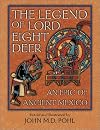
A very well-done book. This is perhaps a children's presentation, and very suitable for them, but although short it'll also hold an adult's interest.
The legend of Lord Eight Deer is known from oral histories of the Mixtec people of Oaxaca, modern Mexico, and from the Codex Zouche-Nuttall (British Museum). This book represents John Pohl's efforts to tie together the two strands, and to give a single narrative for the modern reader. The epic tale is well presented and readable, and there is a show more little additional detail to clarify the essentials such as how a codex represented a story, how characters were named, and the background of how the conflict had developed. I describe this as primarily a children's book simply because it's so short: the tale is primary here, the explanatory details brief. An adult-targeted edition would be twice the length and the story starting to be submerged within the history, but that's not to say that this is in any way a childish book, merely cut to just the story.
As a close contemporary of the Battle of Hastings, it's interesting to compare the Mixtec Codex as an art form with the Bayeaux Tapestry. Not my usual reading, but I enjoyed it immensely. show less
The legend of Lord Eight Deer is known from oral histories of the Mixtec people of Oaxaca, modern Mexico, and from the Codex Zouche-Nuttall (British Museum). This book represents John Pohl's efforts to tie together the two strands, and to give a single narrative for the modern reader. The epic tale is well presented and readable, and there is a show more little additional detail to clarify the essentials such as how a codex represented a story, how characters were named, and the background of how the conflict had developed. I describe this as primarily a children's book simply because it's so short: the tale is primary here, the explanatory details brief. An adult-targeted edition would be twice the length and the story starting to be submerged within the history, but that's not to say that this is in any way a childish book, merely cut to just the story.
As a close contemporary of the Battle of Hastings, it's interesting to compare the Mixtec Codex as an art form with the Bayeaux Tapestry. Not my usual reading, but I enjoyed it immensely. show less
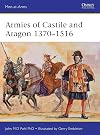
Men-at-Arms is Osprey's least attractive series in need of a relaunch. To celebrate the 500th title in the series, quite an achievement, they selected what turned out to be another helicopter book. Its author is a specialist in the ancient art and writing of Mexico but almost a tourist in European medieval history. Thus expect even more mistakes than usual in an Osprey title such as Swiss wearing turbans (the turbans seem to be an Embleton idea, though, as he has called the Swiss caps show more "turbans" in other books too. If the Swiss really had worn turbans, it is highly likely that today, they would be known by a derivation of their Swiss name similar to the fact that most European languages call it a halberd (Hellebarde, hallebarde, alabarda etc.) based on the Swiss halparte).
Besides the turban-wearing Swiss, there is an illustration of the battle of Sluys between the English and the French, some more French and Italians etc. This would not matter if the Men-at-Arms titles weren't restricted to 48 pages. The illustrations of John of Gaunt and Christopher Columbus further reduce the space dedicated to the nominal title of the "Armies of Aragon and Castille". The actual focus of the booklet is the struggle between the Angevins and the Aragonese for the control of Sicily and Naples - for which it ends too soon with its cut-off date of 1516 (while it also fails to tell the beginning of the story).
Limiting the focus to Spain and the fight for unification of the peninsula under one family would have allowed to present important local actors such as the Military Order of Santiago and the other orders that played an important political role. It would also have permitted a glance at what happened at the French border (which is completely cut out while the easy accessible sources of English involvement are given outsized presence - without, however, mentioning Henry VIII's queen Catherine of Aragon). The plates by Gerry Embleton are competently done.
The well-made recent Spanish TV drama series "Isabel" has shown how interesting and multi-faceted this era was. It would really merit a treatment by an actual expert not an interested tourist in the matter who then could also present local sources and illustrations to a greater audience. show less
Besides the turban-wearing Swiss, there is an illustration of the battle of Sluys between the English and the French, some more French and Italians etc. This would not matter if the Men-at-Arms titles weren't restricted to 48 pages. The illustrations of John of Gaunt and Christopher Columbus further reduce the space dedicated to the nominal title of the "Armies of Aragon and Castille". The actual focus of the booklet is the struggle between the Angevins and the Aragonese for the control of Sicily and Naples - for which it ends too soon with its cut-off date of 1516 (while it also fails to tell the beginning of the story).
Limiting the focus to Spain and the fight for unification of the peninsula under one family would have allowed to present important local actors such as the Military Order of Santiago and the other orders that played an important political role. It would also have permitted a glance at what happened at the French border (which is completely cut out while the easy accessible sources of English involvement are given outsized presence - without, however, mentioning Henry VIII's queen Catherine of Aragon). The plates by Gerry Embleton are competently done.
The well-made recent Spanish TV drama series "Isabel" has shown how interesting and multi-faceted this era was. It would really merit a treatment by an actual expert not an interested tourist in the matter who then could also present local sources and illustrations to a greater audience. show less
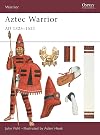
An Osprey Warrior entry. Pohl's insight into Aztec warfare is quite good. He provides an overview of Aztec society and the warrior's place in that society. He examines training, religion, dress and fighting.
The plates, by Adam Hook, do an excellent job of supporting the writing, with good views of Aztec soldiery on campaign, as well as those a la Rousselot, that simply give us an idea of dress, colors and accouterments.
The plates, by Adam Hook, do an excellent job of supporting the writing, with good views of Aztec soldiery on campaign, as well as those a la Rousselot, that simply give us an idea of dress, colors and accouterments.
The Men-at-Arms Series has been the traditional format for introducing new topics as well as more specialized examinations of a particular campaign, army or even regiment. As the author of the book I am surprised by jcbrunner's review. He states that I am "almost a tourist" in European Medieval history and therefore one should expect more than the usual number of mistakes in an Osprey book. Actually, in addition to researching, I have spent a considerable amount of time traveling throughout show more the Crown of Aragon visiting fortifications, arsenals, and churches. To suggest that I am limited by a specialization in ancient Mexican art and writing with the implication being that I am not really qualified to discuss European armies is unfounded considering how much I have published on Spanish armies and their conquest of the Americas in which I demonstrate that their tactics came from the Granada and Italian campaigns which is why I wrote this book. In regard to the Swiss "turbans," the term is simply a basic description of the form but I have found that Embleton always has very specific reasons for describing elements of Medieval dress in the way that he does. I selected the image from Froissart not because it represented an actual battle - which it doesn't with the battle of Sluys being fought with cogs in 1340 - but because the painter was depicting a battle between carracks during his own time in the mid-15th century that would have been more typical of the Spanish campaigns in the Mediterranean. John of Gaunt is included because he had a legitimate claim to Castile and his campaign illustrates the fighting techniques that the Iberians had mastered for grinding down Gaunt's chevauchée. The incorporation of Columbus' campaign demonstrates how Iberian merchant-kings saw capital investment in one area of core wealth in the Caribbean as the means for financing military expansion in a more strategic area of power in Italy. In turn the Italian campaign produced the wealth and leadership to then reinvest in the conquest of the Aztec and Inca empires which I describe in other publications. It was an ingenious strategy for the time and the basis on which the Spaniards subsequently built their global empire. show less
You May Also Like


Associated Authors
Statistics
- Works
- 21
- Also by
- 3
- Members
- 372
- Popularity
- #64,809
- Rating
- 4.0
- Reviews
- 5
- ISBNs
- 20
- Languages
- 1
- Favorited
- 1