

Edward Luttwak
Author of The Grand Strategy of the Roman Empire: From the First Century A.D. to the Third
About the Author
Edward N. Luttwak is a senior associate of the Center for Strategic and International Studies. A longtime strategic and security consultant to U.S. government departments, the armed services, and friendly governments, he is the author of The Grand Strategy of the Byzantine Empire, among other books.
Works by Edward Luttwak
The Grand Strategy of the Roman Empire: From the First Century A.D. to the Third (1976) 618 copies, 5 reviews
The endangered American dream : how to stop the United States from becoming a Third World country and how to win the geo-economic struggle for industrial supremacy (1993) 27 copies, 1 review
La dittatura del capitalismo: dove ci porteranno il liberalismo selvaggio e gli eccessi della globalizzazione (1999) 5 copies
Strategic power: Military capabilities and political utility (The Washington papers) (1976) 2 copies
Estratégia 1 copy
'An insufficient war: the brilliance of Arafat - & his repeated failure' in TLS 5099, 22 Dec 2000 1 copy
'Homer Inc' in LRB 34/4, 23 Feb 2012 [review of Stephen Mitchell's tr of 'The Iliad by Homer'] 1 copy
Associated Works
Current status of negotiations between the Tibetan government in exile and the People's Republic of China : hearing before the Committee on International Relations, House of… (1998) — Contributor, some editions — 1 copy
Tagged
Common Knowledge
- Legal name
- Luttwak, Edward Nicolae
- Birthdate
- 1942-11-04
- Gender
- male
- Education
- Johns Hopkins University (PhD)
- Organizations
- Center for Strategic & International Studies
- Nationality
- USA
- Birthplace
- Arad, Romania
- Map Location
- USA
Members
Reviews
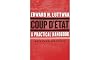
I read the first edition of this classic when I was in the Air Force 50 years ago. It was a dry, practical planning guide for a military takeover, with no political commentary or fluff. This revised edition has added much of both. I suspect that it has something to do with the author's subsequent checkered career in US intelligence, as lots of it reads more like sour grapes than gripping analysis. Parts of the original remain here, of course, but the additions and revisions make it more of a show more muddled mess than a coherent tome. The first edition would've gotten 5 stars - this one's lucky at half that, and mostly for the fond recollection of the prose of the first edition. Give it a pass, unless you just want to see the title on your shelf. show less
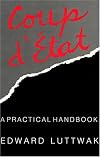
The preface of this enjoyable little volume states:
“This is a handbook. It is therefore not concerned with a theoretical analysis of the coup d’état, but rather a formulation of the techniques which can be employed to seize power within a state. It can be compared to a cookery book in the sense that it aims at enabling any layman equipped with enthusiasm – and the right ingredients – to carry out his own coup.”
It is spot-on, just like the rest of this book. Coup d’État show more describes the conditions, strategy, planning, and execution of overthrowing a government, a once popular pastime in southern Europe, Latin America, and Africa. As the book concentrates on the mechanics, it makes it very clear that no specific ideology is required to execute the process. A state of underdevelopment makes things much easier, as was the lack of a nexus between the native cultures and methods and ideologies the newly independent states inherited from former colonial powers. The apparatus of the state in such countries was stronger than ever under the colonial government. A lack of a dispersed political culture as existed in modern Western countries and a lack of commitment of an often hardly literate population made things easier.
Bureaucracies and particularly the military use of standardised procedures, make a coup feasible with relatively few people if well planned, and proper use is made of speed, opportunism, and control of information flows. The examples in the book are somewhat dated, as is hopefully the concept of coups itself, now that standards of education and communication are rising nearly everywhere.
Still, I would not say I could execute my own coup after reading this book. In the industry where I work, we would hire a consultant for support. show less
“This is a handbook. It is therefore not concerned with a theoretical analysis of the coup d’état, but rather a formulation of the techniques which can be employed to seize power within a state. It can be compared to a cookery book in the sense that it aims at enabling any layman equipped with enthusiasm – and the right ingredients – to carry out his own coup.”
It is spot-on, just like the rest of this book. Coup d’État show more describes the conditions, strategy, planning, and execution of overthrowing a government, a once popular pastime in southern Europe, Latin America, and Africa. As the book concentrates on the mechanics, it makes it very clear that no specific ideology is required to execute the process. A state of underdevelopment makes things much easier, as was the lack of a nexus between the native cultures and methods and ideologies the newly independent states inherited from former colonial powers. The apparatus of the state in such countries was stronger than ever under the colonial government. A lack of a dispersed political culture as existed in modern Western countries and a lack of commitment of an often hardly literate population made things easier.
Bureaucracies and particularly the military use of standardised procedures, make a coup feasible with relatively few people if well planned, and proper use is made of speed, opportunism, and control of information flows. The examples in the book are somewhat dated, as is hopefully the concept of coups itself, now that standards of education and communication are rising nearly everywhere.
Still, I would not say I could execute my own coup after reading this book. In the industry where I work, we would hire a consultant for support. show less
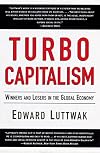
Excellent overview of how our current thinking of capitalism evolved and what it is currently leading to. It was published in 1999 so it is a little dated but some of the projections have come to pass. Excellent point that we currently think society exists to satisfy economics rather than the other way around, as we used to think.
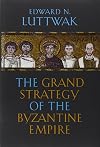
Great book. Details the transformation and adaption of the late Roman empire that continued in the eastern Mediterranean for a thousand years after the western Roman empire fell. The strategy included doing more with fewer troops, using diplomacy, religion, and prestige of the empire to overawe the various threats to the empire. Well worth the read.
Lists
Awards

You May Also Like


Associated Authors
Statistics
- Works
- 35
- Also by
- 5
- Members
- 2,296
- Popularity
- #11,183
- Rating
- 3.8
- Reviews
- 30
- ISBNs
- 105
- Languages
- 10
- Favorited
- 2