
Mark Rotenberg
Author of Forbidden Erotica (Taschen 25)
About the Author
Works by Mark Rotenberg
Tagged
Common Knowledge
- Gender
- male
Members
Reviews

This book really is either for very mentally sound historians of sexuality or for very very sad men who really need to get a life.
My interest is quite definitely the former and, from that perspective, it is a reference text - in essence it represents the 'cream' of the Rotenberg collection of pornography (no, not erotica, just downright pornography) from the 1860s through to the 1950s.
But, really, it is, despite the intelligent and sensitive introduction from Laura Mirsky who does not mince show more words on the exploitation often involved in these photographs, not recommended for your library. If you have any sensitivity at all, male or female, it will just depress you.
We have written before on the sexual culture of the West in fairly disparaging terms (see the essays throughout the 'sexuality-erotica' section of our Goodreads entry). While we must be mindful that this material, though extensive, was only available and of interest to a relatively small number of males, the sheer joylessness of the raw basic hardcore sex in this book, its studied exposures of aroused genitalia without charm or grace and its determined comic attitude to sexuality (like one perpetual dirty joke) show that social repression certainly encouraged repressed minds to see sex as a sad, dirty and underhand business.
On balance, I think Rotenberg has done history a favour in preserving these photographs. The dispassionate adult observer should be interested in such representation because of what it tells us about a culture that we hope is confined now to the margins of the West. Even swinging and dogging culture in the contemporary West attempts to show some 'joie de vivre' and certainly mutual pleasure between equals.
The interview with Rotenberg is also interesting as an insight into the mind of the collector qua collector. It is clear that his initial fascination may have been quite definitely sexual but that the obsessive drive for more material, even the minor risks taken in meeting strange types in parking lots, has more in common with the mind of the determined stamp collector or trainspotter than that of the libertine. This is 'fetishism' of a strangely harmless type.
Much is made of the lack of perfection in the models. Quite the contrary. They are decidely podgy up until the 1920s (or so) and then relatively scrawny. But this is overplayed. The production of hardcore pornography was a very underground matter in which 'image' was less important than delivery of the basics under the counter and with fairly captive customers who could not 'surf' the net for fantasies that might force entrepreneurs to compete for high-paid models or trawl Eastern Europe for hungry young beauties. The market gave little incentive for producers to refine their product beyond the basic because the market was small and at the harder end.
The only time that this material moves an edge above the brutal, boring and trite is when, very occasionally, it apes high art. The late nineteenth century seemed to like bulky Rubenesque older women. A very few shots are like watching the Belgian master come to life. More interesting is the political sub-text of anti-clerical pornography where nuns and priests engage in fellatio and other sexual conduct in photography that self-evidently apes the Spanish tradition of sacred painting that so influenced the tacky religious pictures that would be found in churches, schools and hospitals across Catholic Europe.
This sexual anticlericalism is an ancient feature of European culture with an immensely long pedigree. It is really about resentment of hypocrisy and of the comfortable lives (as others saw it) of the oppressive moral guides who told late Victorian men and women what was right and what was wrong in sexual matters. However, this material is exceptional in its cultural meaning. Most of the material has no meaning - it says very little more than that hardcore sexuality was not about liberation as it has been to some extent since the 1970s but about something else, almost certainly aggression and even (somewhere in there) hatred.
I am not convinced that this hatred was as simplistically misogynistic as feminist theorists like to think. I think it was self-hatred amongst men for their own entrapment, of what they had become under a repressive morality that gave no space for sexual self-expression except in terms of the whore observed or copulated with in secret. The aggressive gaze is rarely directed at the woman and actual 'violence' appears to be formalised and very limited. Instead the aggressive gaze is directed outwards at the voyeur as if to say: 'See, I am doing what you would like to do. I have the power even though I am the low-life with the whore. I have freedom in my degradation and you have slavery in your respectability."
Maybe I am reading too much into pictures that have (for me) no erotic content whatsoever. It is not just technological weaknesses in the media being used nor the fact that the women are overweight, the costumes ridiculous and the 'jokes' deeply unfunny (and I am no prude) but the overwhelming sense that these people are scarcely more interesting than performing animals at a circus.
And perhaps I have hit on a point here. Today, few of us feel comfortable watching animals at a circus. We know animals are not humans but we have long since granted them some sort of rights and one right is not observing them perform unnatural tricks. These photographs come from the age of circuses - they are for respectable but ignorant people who want to watch creatures alien to their everyday world perform 'tricks'. A surprising number of these photographs (at least before the 1920s) involve improbable gymnastics and angles designed to show 'how it is done' - the analogy with the seal with a ball on its nose or the bear dancing is apposite.
One day historians will see the Victorian and Catholic eras in industrial Europe as a quintessential age of cruelty and, though I would not labour the point, it was certainly an era of appalling working conditions for the majority, militarism and eventual mass slaughter and the almost forgetful destruction of indigenous peoples as empire expanded. The cruelty of existence under enormous pressure to conform to certain cold ethical standards (of respectability, of compliance and conscription and of hard struggle to build lives in dull pioneer settlements under the eye of the preacher) created the same callousness that gave us circuses, easy patriotism, imperialism and an objectifying attitude to sexual pleasure.
The hard core material does become much more humane and easier to understand as persons engaged in pleasure as the 1920s moves towards the 1950s. It is no less dull but the gaze does seem to be directed to the other participant rather than be a performance for the voyeur. We are moving towards the modern age. It is as if people are slowly learning to empathise with one another - just! One may speculate whether Hollywood was critical in shifting the visual mind (as opposed to the literary sensibility) from cold observation as an aid to masturbation and obsession to one of imaginative engagement in what was being seen.
A grim book. Reading it is an experience you might undertake in order to know better the human condition but it is not one to ennoble the human spirit. show less
My interest is quite definitely the former and, from that perspective, it is a reference text - in essence it represents the 'cream' of the Rotenberg collection of pornography (no, not erotica, just downright pornography) from the 1860s through to the 1950s.
But, really, it is, despite the intelligent and sensitive introduction from Laura Mirsky who does not mince show more words on the exploitation often involved in these photographs, not recommended for your library. If you have any sensitivity at all, male or female, it will just depress you.
We have written before on the sexual culture of the West in fairly disparaging terms (see the essays throughout the 'sexuality-erotica' section of our Goodreads entry). While we must be mindful that this material, though extensive, was only available and of interest to a relatively small number of males, the sheer joylessness of the raw basic hardcore sex in this book, its studied exposures of aroused genitalia without charm or grace and its determined comic attitude to sexuality (like one perpetual dirty joke) show that social repression certainly encouraged repressed minds to see sex as a sad, dirty and underhand business.
On balance, I think Rotenberg has done history a favour in preserving these photographs. The dispassionate adult observer should be interested in such representation because of what it tells us about a culture that we hope is confined now to the margins of the West. Even swinging and dogging culture in the contemporary West attempts to show some 'joie de vivre' and certainly mutual pleasure between equals.
The interview with Rotenberg is also interesting as an insight into the mind of the collector qua collector. It is clear that his initial fascination may have been quite definitely sexual but that the obsessive drive for more material, even the minor risks taken in meeting strange types in parking lots, has more in common with the mind of the determined stamp collector or trainspotter than that of the libertine. This is 'fetishism' of a strangely harmless type.
Much is made of the lack of perfection in the models. Quite the contrary. They are decidely podgy up until the 1920s (or so) and then relatively scrawny. But this is overplayed. The production of hardcore pornography was a very underground matter in which 'image' was less important than delivery of the basics under the counter and with fairly captive customers who could not 'surf' the net for fantasies that might force entrepreneurs to compete for high-paid models or trawl Eastern Europe for hungry young beauties. The market gave little incentive for producers to refine their product beyond the basic because the market was small and at the harder end.
The only time that this material moves an edge above the brutal, boring and trite is when, very occasionally, it apes high art. The late nineteenth century seemed to like bulky Rubenesque older women. A very few shots are like watching the Belgian master come to life. More interesting is the political sub-text of anti-clerical pornography where nuns and priests engage in fellatio and other sexual conduct in photography that self-evidently apes the Spanish tradition of sacred painting that so influenced the tacky religious pictures that would be found in churches, schools and hospitals across Catholic Europe.
This sexual anticlericalism is an ancient feature of European culture with an immensely long pedigree. It is really about resentment of hypocrisy and of the comfortable lives (as others saw it) of the oppressive moral guides who told late Victorian men and women what was right and what was wrong in sexual matters. However, this material is exceptional in its cultural meaning. Most of the material has no meaning - it says very little more than that hardcore sexuality was not about liberation as it has been to some extent since the 1970s but about something else, almost certainly aggression and even (somewhere in there) hatred.
I am not convinced that this hatred was as simplistically misogynistic as feminist theorists like to think. I think it was self-hatred amongst men for their own entrapment, of what they had become under a repressive morality that gave no space for sexual self-expression except in terms of the whore observed or copulated with in secret. The aggressive gaze is rarely directed at the woman and actual 'violence' appears to be formalised and very limited. Instead the aggressive gaze is directed outwards at the voyeur as if to say: 'See, I am doing what you would like to do. I have the power even though I am the low-life with the whore. I have freedom in my degradation and you have slavery in your respectability."
Maybe I am reading too much into pictures that have (for me) no erotic content whatsoever. It is not just technological weaknesses in the media being used nor the fact that the women are overweight, the costumes ridiculous and the 'jokes' deeply unfunny (and I am no prude) but the overwhelming sense that these people are scarcely more interesting than performing animals at a circus.
And perhaps I have hit on a point here. Today, few of us feel comfortable watching animals at a circus. We know animals are not humans but we have long since granted them some sort of rights and one right is not observing them perform unnatural tricks. These photographs come from the age of circuses - they are for respectable but ignorant people who want to watch creatures alien to their everyday world perform 'tricks'. A surprising number of these photographs (at least before the 1920s) involve improbable gymnastics and angles designed to show 'how it is done' - the analogy with the seal with a ball on its nose or the bear dancing is apposite.
One day historians will see the Victorian and Catholic eras in industrial Europe as a quintessential age of cruelty and, though I would not labour the point, it was certainly an era of appalling working conditions for the majority, militarism and eventual mass slaughter and the almost forgetful destruction of indigenous peoples as empire expanded. The cruelty of existence under enormous pressure to conform to certain cold ethical standards (of respectability, of compliance and conscription and of hard struggle to build lives in dull pioneer settlements under the eye of the preacher) created the same callousness that gave us circuses, easy patriotism, imperialism and an objectifying attitude to sexual pleasure.
The hard core material does become much more humane and easier to understand as persons engaged in pleasure as the 1920s moves towards the 1950s. It is no less dull but the gaze does seem to be directed to the other participant rather than be a performance for the voyeur. We are moving towards the modern age. It is as if people are slowly learning to empathise with one another - just! One may speculate whether Hollywood was critical in shifting the visual mind (as opposed to the literary sensibility) from cold observation as an aid to masturbation and obsession to one of imaginative engagement in what was being seen.
A grim book. Reading it is an experience you might undertake in order to know better the human condition but it is not one to ennoble the human spirit. show less
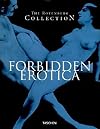
This is a wonderful collection of old erotic photographs, from a period starting in the 1870s, which portray men and women engaged in a variety of erotic acts. Many depictions of the human body in the period concerned felt constrained then, by legal or moral pressures to employ the conceit of being 'artistic', rather than being simply intended to arouse basic human instincts, even though they often have this latter effect even if they are also visually satisfying as 'art'. The work presented show more here is so explicit in its content that attempts at the former effect would be useless; the many images contained in the volume would have been intended for private collection and minimal display, with arousal being their principal aim. Compared with their modern equivalent the images show a true innocence, unsullied by current commercial standards, and their impact today is probably little different from what it was in the years following the rise of the popular art of photography. They are explicit, although examples that are still illegal or offensive have been avoided, but their erotic innocence shines though constantly. The book contains a huge number of images, and is accompanied by a short essay by Laura Mirsky that sets the art form into social and artistic contexts, and a revealing interview by Mirsky with Mark Rotenberg, the collector and owner of the material. Required reading for those interested in erotic aspects of the Victorian/Edwardian social context. show less
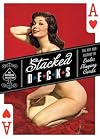
Although this purports to cover the history of erotic playing cards,it only scrapes the surface! It doesn't examine the wide range of explicit and gay material out there, nor does it touch on the famous Playboy bunny cards which for many a young thing were their first taste of the titilating.
Lists
Sex in the past (1)
You May Also Like


Statistics
- Works
- 5
- Members
- 261
- Popularity
- #88,098
- Rating
- 3.8
- Reviews
- 3
- ISBNs
- 9
- Languages
- 2
- Favorited
- 1