
Mary Rubio
Author of Lucy Maud Montgomery: The Gift of Wings
About the Author
Works by Mary Rubio
Associated Works
The Selected Journals of L. M. Montgomery: Vol. 1, 1889-1910 (1985) — Editor — 321 copies, 3 reviews
The Selected Journals of L. M. Montgomery: Vol. 5, 1935-1942 (2004) — Editor — 110 copies, 2 reviews
The Complete Journals of L.M. Montgomery: The PEI Years, 1889-1900 (1985) — Editor — 50 copies, 1 review
Tagged
Common Knowledge
- Other names
- Rubio, Mary Henley
- Birthdate
- 1939
- Gender
- female
- Education
- DePauw University
McMaster University - Occupations
- professor emeritus
- Organizations
- University of Guelph
- Nationality
- USA (birth)
Canada - Birthplace
- Illinois, USA
- Associated Place (for map)
- Illinois, USA
Members
Reviews
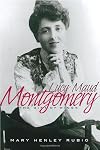
L.M. Montgomery, called Maud by those she was close to, was, of course, the author of Anne of Green Gables, Emily of New Moon and many other books. During her life and for many decades after, she was seen as a woman who lived a fairly straightforward life, but as this biography shows, many of the darker depths of her novels reflect, directly or indirectly, the complex and often unhappy life she read.
Maud was a woman who felt things deeply -- both the positive and the negative -- and a woman show more who had great discipline. She could have a public persona of a happy, successful author while writing in her journal of the depths of her misery. I believe that both portraits have some truth. The happy, successful woman was not a lie, but she was only able to exist because Maud had the discipline to compartmentalize her life.
The saddest part of Maud's story, in my view, is the way that prescription drugs most likely caused much of that misery in their effects on her husband and herself. Ewan MacDonald, Maud's husband, suffered from depression, as best we can tell, and Maud herself seemed to suffer from anxiety and possibly depression too. Both were given prescription drugs which were fairly standard at the time but which are known now to just make depression and anxiety worse, cause other physical ailments, and are addictive. It doesn't take much reading between the lines of Maud's journal and what we know of her life to see that whenever the drug use was heaviest, the problems she and Ewan suffered were worst.
Maud could be a difficult and complex person, but she also had great insight and energy. It is easy to see how such a woman could write novels and stories which seem simple and happy on the surface and have the whole depth of human experience just underneath. show less
Maud was a woman who felt things deeply -- both the positive and the negative -- and a woman show more who had great discipline. She could have a public persona of a happy, successful author while writing in her journal of the depths of her misery. I believe that both portraits have some truth. The happy, successful woman was not a lie, but she was only able to exist because Maud had the discipline to compartmentalize her life.
The saddest part of Maud's story, in my view, is the way that prescription drugs most likely caused much of that misery in their effects on her husband and herself. Ewan MacDonald, Maud's husband, suffered from depression, as best we can tell, and Maud herself seemed to suffer from anxiety and possibly depression too. Both were given prescription drugs which were fairly standard at the time but which are known now to just make depression and anxiety worse, cause other physical ailments, and are addictive. It doesn't take much reading between the lines of Maud's journal and what we know of her life to see that whenever the drug use was heaviest, the problems she and Ewan suffered were worst.
Maud could be a difficult and complex person, but she also had great insight and energy. It is easy to see how such a woman could write novels and stories which seem simple and happy on the surface and have the whole depth of human experience just underneath. show less
I am a huge fan of Lucy Maud Montgomery and of her novels. I think I can safely say that I have read every biography or LMM related book available on the market (and then some). Mary Rubio is one of the most well-known LMM scholar and I actually had the opportunity of meeting her in PEI quite a few years ago.
LMM has always been an enigma and through the various biographies written about her (including her very own journals), you always get the feeling that you are still missing huge pieces show more of her life - that she is still, somehow, managing to remain a mystery.
All of this changed for me when I starting reading The Gift of Wings by Mary Rubio.
This is, withouth a doubt, the most comprehensive book every written on Maud and FINALLY answer so many of the "mystery" questions that have surrounded Maud's life and death for the last 60 years.
The Gift of Wings gives a wonderful glimpse of Maud's life as a youngster and how much she loved PEI. As I was reading, I could actually feel myself in PEI - in the 1800's. The book continues with the story of Ewan (Ewen) and Maud's meeting and subsequent wedding as well as their many moves and the birth of their children (including a third child that did not survive).
Throughout this book, you will find some little gems that had never previously been revealed. This is due in large part by the fact that Maud's son Stuart - met with Rubio on many occasions, before his death to talk about his mother and to give Rubio full access to all of Maud's journals and various writings etc. It is amazing to me to think what would have happened had all of these precious papers been left to Chester, Maud's other son.
There are some great black and whites shots of Maud, her friends and family.
What I also loved about this book is the fact that Rubio really dug deep into the family aspect. She honestly describes Chester (wow!) and Stuart as well as the problem Maud had with Ewan and medication.
FINALLY, this book also announces and clarifies that the "mystery" cause of LMM's death was potentially suicide - although there is some speculation that Maud may simply have accidentally overdosed on the drugs she has become addicted to (prescription).
NOWHERE in any other biography has this ever been mentioned in such a forthright manner. I always felt odd that this somehow was the worst kept secret and yet, never admitted to.
There is also a very interesting look at Maud's problem child - Chester.
Having said all of this, I always thought that although Maud would be the person I would most love to meet (which dead person would you love to talk with) I also always felt that while I would highly respect her as a writer, I probably would not like her as a person. She sounded incredibly vain and not particularly open to honestly discussing feelings, etc.
Although I understand that the time period was different, Maud got very despondent over war, Chester, money, etc. These are still issues that we face today and somehow I feel as though she tended to amplify in her own mind how horrible her life was. It seems to me, she was not living anything that other people were not living - and she had more money than most.
Still, this book is addictive and I could not put it down - which is a miracle since the book has over 600 pages.
This is "the" LMM biography. I suggest you buy it and savour it show less
LMM has always been an enigma and through the various biographies written about her (including her very own journals), you always get the feeling that you are still missing huge pieces show more of her life - that she is still, somehow, managing to remain a mystery.
All of this changed for me when I starting reading The Gift of Wings by Mary Rubio.
This is, withouth a doubt, the most comprehensive book every written on Maud and FINALLY answer so many of the "mystery" questions that have surrounded Maud's life and death for the last 60 years.
The Gift of Wings gives a wonderful glimpse of Maud's life as a youngster and how much she loved PEI. As I was reading, I could actually feel myself in PEI - in the 1800's. The book continues with the story of Ewan (Ewen) and Maud's meeting and subsequent wedding as well as their many moves and the birth of their children (including a third child that did not survive).
Throughout this book, you will find some little gems that had never previously been revealed. This is due in large part by the fact that Maud's son Stuart - met with Rubio on many occasions, before his death to talk about his mother and to give Rubio full access to all of Maud's journals and various writings etc. It is amazing to me to think what would have happened had all of these precious papers been left to Chester, Maud's other son.
There are some great black and whites shots of Maud, her friends and family.
What I also loved about this book is the fact that Rubio really dug deep into the family aspect. She honestly describes Chester (wow!) and Stuart as well as the problem Maud had with Ewan and medication.
FINALLY, this book also announces and clarifies that the "mystery" cause of LMM's death was potentially suicide - although there is some speculation that Maud may simply have accidentally overdosed on the drugs she has become addicted to (prescription).
NOWHERE in any other biography has this ever been mentioned in such a forthright manner. I always felt odd that this somehow was the worst kept secret and yet, never admitted to.
There is also a very interesting look at Maud's problem child - Chester.
Having said all of this, I always thought that although Maud would be the person I would most love to meet (which dead person would you love to talk with) I also always felt that while I would highly respect her as a writer, I probably would not like her as a person. She sounded incredibly vain and not particularly open to honestly discussing feelings, etc.
Although I understand that the time period was different, Maud got very despondent over war, Chester, money, etc. These are still issues that we face today and somehow I feel as though she tended to amplify in her own mind how horrible her life was. It seems to me, she was not living anything that other people were not living - and she had more money than most.
Still, this book is addictive and I could not put it down - which is a miracle since the book has over 600 pages.
This is "the" LMM biography. I suggest you buy it and savour it show less
Do you think you know LM Montgomery from reading her children's books? Nope! This book is fascinating for so many reasons but perhaps what appealed to me the most was the discussion of how Maud manipulated her journal for publication.
Lucy Maud Montgomery is the beloved author of the Anne of Green Gables series, the Emily series, Jane of Lantern Hill, The Blue Castle and countless other novels, short stories and poems. She is considered one of the defining authors of Canada – although the Canadian critics didn’t receive her books well, she brought attention to our country on the global literary landscape, and her books are still popular today.
The Gift of Wings is a comprehensive biography of Montgomery’s life, show more digging deeper into her life than “Maud’s own compelling account of her life.” Rubio is no stranger to the topic of LMM – she is the co-editor of Mongtomgery’s journals and the Norton Critical Edition of Anne of Green Gables, co-author of Writing a Life: L.M. Montgomery, and editor of Harvesting Thistles: The Textual Garden of L.M. Montgomery. So when reading this, you know Rubio knows what she’s talking about.
It took me such a long time to get through this book! It’s been sitting on my night table for months now. I struggle so much getting through non-fiction. I am trying to change that, but it doesn’t always have the draw that a really good novel has. Nonetheless, it had some really interesting information in it; a lot of things about Montgomery that I had never known before. It gave such an insight to the books that I love so much.
But I think this biography has cemented the fact that I probably don’t want to read the journals. There were some parts that were so heartbreaking, and I wouldn’t want to get so much into Montgomery’s brain at those points in time. Especially relating to her husband’s depression and her anxiety issues. Goodness! They were prescribed medications that only made what they were feeling worse, and the medication was addictive and goodness. It breaks my heart, because if doctors knew more about what they were prescribing, and how these drugs didn’t interact well with each other, and didn’t work well at all really, things might have been a bit better for her. Breaks my heart!
There were two parts that stood out for me the most, and made this book as interesting for me as it was. The first was something any Montgomery fan would appreciate. Rubio talks about the periods when Montgomery is writing each of her books: what she was dealing with in her personal life at that point in time as well as events and people that had an influence on aspects of the stories. I loved reading about that. For those parts alone, I will come back to this book. Whenever I am rereading one of Montgomery’s books and want to get a refresher on the insight behind it, I will return to this book. In the same respect, it was interesting to hear the trials and successes Montgomery had when actually getting her books and short stories published.
The other thing that really interested me was more relating to her personal life. Montgomery’s husband (Ewan Macdonald) was a Presbyterian minister. He was the minister at two small churches in rural Ontario during the time that the United Church of Canada was formed. For those who don’t know, the UCC was formed through an amalgamation of some Presbyterian, Methodist and and Congregational churches in the 1920′s. This would have had a big impact on communities such as the one Montgomery lived in, where there was a potential that either the whole church would become a part of the UCC, or where they could lose part of their membership to the UCC. The book goes into how exactly it effected Montgomery’s family – the churches Ewan was a minister at had to decide whether they were going to stay Presbyterian or change to UCC, and this period would have no doubt caused all sorts of stress to Ewan with the uncertainty of what was going to happen to his parishes. The UCC was a big part of my life for most of high school, it was where I met some of the most awesome people ever, and it is the church I will go back to if I ever decide I need to go back to church. Reading about it’s history, and how it’s formation effected people at that time, was definitely interesting and gave a bit more insight to where the UCC started.
The Bottom Line: I definitely think that this is a must-read for any Montgomery fan. Even if it takes as long for you to get through it as it took me, it’s worth it. It may not be the best read for people who are only fans of the Anne books, as it touches on a lot more than Anne. It gives an in-depth look at the author we all love so much, and I’ll definitely be keeping this one on my bookshelf so I can return to certain parts of it. show less
The Gift of Wings is a comprehensive biography of Montgomery’s life, show more digging deeper into her life than “Maud’s own compelling account of her life.” Rubio is no stranger to the topic of LMM – she is the co-editor of Mongtomgery’s journals and the Norton Critical Edition of Anne of Green Gables, co-author of Writing a Life: L.M. Montgomery, and editor of Harvesting Thistles: The Textual Garden of L.M. Montgomery. So when reading this, you know Rubio knows what she’s talking about.
It took me such a long time to get through this book! It’s been sitting on my night table for months now. I struggle so much getting through non-fiction. I am trying to change that, but it doesn’t always have the draw that a really good novel has. Nonetheless, it had some really interesting information in it; a lot of things about Montgomery that I had never known before. It gave such an insight to the books that I love so much.
But I think this biography has cemented the fact that I probably don’t want to read the journals. There were some parts that were so heartbreaking, and I wouldn’t want to get so much into Montgomery’s brain at those points in time. Especially relating to her husband’s depression and her anxiety issues. Goodness! They were prescribed medications that only made what they were feeling worse, and the medication was addictive and goodness. It breaks my heart, because if doctors knew more about what they were prescribing, and how these drugs didn’t interact well with each other, and didn’t work well at all really, things might have been a bit better for her. Breaks my heart!
There were two parts that stood out for me the most, and made this book as interesting for me as it was. The first was something any Montgomery fan would appreciate. Rubio talks about the periods when Montgomery is writing each of her books: what she was dealing with in her personal life at that point in time as well as events and people that had an influence on aspects of the stories. I loved reading about that. For those parts alone, I will come back to this book. Whenever I am rereading one of Montgomery’s books and want to get a refresher on the insight behind it, I will return to this book. In the same respect, it was interesting to hear the trials and successes Montgomery had when actually getting her books and short stories published.
The other thing that really interested me was more relating to her personal life. Montgomery’s husband (Ewan Macdonald) was a Presbyterian minister. He was the minister at two small churches in rural Ontario during the time that the United Church of Canada was formed. For those who don’t know, the UCC was formed through an amalgamation of some Presbyterian, Methodist and and Congregational churches in the 1920′s. This would have had a big impact on communities such as the one Montgomery lived in, where there was a potential that either the whole church would become a part of the UCC, or where they could lose part of their membership to the UCC. The book goes into how exactly it effected Montgomery’s family – the churches Ewan was a minister at had to decide whether they were going to stay Presbyterian or change to UCC, and this period would have no doubt caused all sorts of stress to Ewan with the uncertainty of what was going to happen to his parishes. The UCC was a big part of my life for most of high school, it was where I met some of the most awesome people ever, and it is the church I will go back to if I ever decide I need to go back to church. Reading about it’s history, and how it’s formation effected people at that time, was definitely interesting and gave a bit more insight to where the UCC started.
The Bottom Line: I definitely think that this is a must-read for any Montgomery fan. Even if it takes as long for you to get through it as it took me, it’s worth it. It may not be the best read for people who are only fans of the Anne books, as it touches on a lot more than Anne. It gives an in-depth look at the author we all love so much, and I’ll definitely be keeping this one on my bookshelf so I can return to certain parts of it. show less
Lists
Awards

You May Also Like


Associated Authors
Statistics
- Works
- 4
- Also by
- 8
- Members
- 201
- Popularity
- #109,506
- Rating
- 4.4
- Reviews
- 8
- ISBNs
- 8