
Rita Lorraine Hubbard
Author of The Oldest Student: How Mary Walker Learned to Read
Series
Works by Rita Lorraine Hubbard
Tagged
Common Knowledge
- Birthdate
- 20th Century
- Gender
- female
- Occupations
- writer
editor
book reviewer
educator - Short biography
- Rita Lorraine Hubbard has written nonfiction books for both children and adults. She runs the children's book review site Picture Book Depot. Ms Hubbard lives in Chattanooga, Tennessee.
- Nationality
- USA
- Associated Place (for map)
- USA
Members
Reviews

Born into slavery in 1848 and freed at the age of fifteen, Mary Walker had always wanted to learn to read - something she associated with the freedom of flight. But the hard circumstances of her life - enslavement, poverty, the necessity of hard work - left little time to learn, and there were few opportunities. She treasured the Bible she had been given however, and many, many years later, when she was 114 years old, she finally got her chance to learn...
I was tearing up as I read The show more Oldest Student: How Mary Walker Learned to Read, and I thank the online friend who recommended it to me. With an engaging, inspirational tale from author Rita Lorraine Hubbard, and beautiful artwork from illustrator Oge Mora, who won a Caldecott Honor for her Thank You, Omu, this was a rewarding picture-book to peruse, both from an aesthetic and a storytelling perspective. I appreciated the inclusion of the various photographs of Mary, on the endpapers, and the author's brief note at the end. The inclusion of a bibliography on the colophon was a little confusing - I thought it should have been at the rear of the book, with the note - but also welcome. There is something terribly satisfying about the idea of a long-deferred dream finally coming to fruition, and this true-life tale certainly taps into that. There is also something terribly poignant about all of the injustices that Mary Walker had to face, all of the roadblocks between her and her dream. I've seen quite a bit of discussion of late, in the children's book world, of how and when to present the evils of slavery to very young children. For all that it does not focus on slavery throughout the narrative, this simple but uplifting tale of a woman who had to wait more than a century to learn to read, does a better job, I think, in capturing the inhumanity of that institution, than many another, more explicit title. Highly recommended, to all picture-book readers, whether they are looking for stories that address the legacy of slavery, or for uplifting, inspirational stories of people who never gave up on their dream. show less
I was tearing up as I read The show more Oldest Student: How Mary Walker Learned to Read, and I thank the online friend who recommended it to me. With an engaging, inspirational tale from author Rita Lorraine Hubbard, and beautiful artwork from illustrator Oge Mora, who won a Caldecott Honor for her Thank You, Omu, this was a rewarding picture-book to peruse, both from an aesthetic and a storytelling perspective. I appreciated the inclusion of the various photographs of Mary, on the endpapers, and the author's brief note at the end. The inclusion of a bibliography on the colophon was a little confusing - I thought it should have been at the rear of the book, with the note - but also welcome. There is something terribly satisfying about the idea of a long-deferred dream finally coming to fruition, and this true-life tale certainly taps into that. There is also something terribly poignant about all of the injustices that Mary Walker had to face, all of the roadblocks between her and her dream. I've seen quite a bit of discussion of late, in the children's book world, of how and when to present the evils of slavery to very young children. For all that it does not focus on slavery throughout the narrative, this simple but uplifting tale of a woman who had to wait more than a century to learn to read, does a better job, I think, in capturing the inhumanity of that institution, than many another, more explicit title. Highly recommended, to all picture-book readers, whether they are looking for stories that address the legacy of slavery, or for uplifting, inspirational stories of people who never gave up on their dream. show less
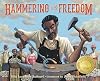
This book tells the true story of William “Bill” Lewis, born into slavery around 1810. His biological father was Colonel James Lewis, a slaveholder who owned a plantation in Winchester, Tennessee.
Colonel Lewis decided Bill should train to be a blacksmith, and Bill got so good at it that local people began to pay for his services. Colonel Lewis let Bill keep a little of the money for himself:
“Each coin he saved brought him closer to purchasing his freedom. Once he was free, he could show more spend his money on whatever he wanted. And what he wanted was to free his family.”
Bill saved for years. Eventually he married a woman named Jane, and they began to have children. Thus he needed even more money, and he asked Colonel Lewis to let him rent himself out. The Colonel agreed on the condition that Bill pay him $350 a year as “rent” for his freedom, and then he could keep the rest. Bill, then age 27, agreed.
Bill must have been very good indeed. He earned enough money to open his own blacksmith shop in Chattanooga. There, in 1837, he made history as the first African American blacksmith in the city. He worked day and night so he could buy Jane’s freedom. As the author explains, “Once Jane was free, any future children she and Bill had would also be free.” He paid $1,000 for her freedom. [Note: $1,000 in 1837 is equivalent in purchasing power to $25,533.33 in 2017.]
He continued to work hard, buying his own freedom for $1,000 next. He still had his son Eldridge’s freedom to purchase, and finally was able to do so for $400. In 1851, he paid the colonel $300, the total asking price for his elderly mother and aunt. Yet, his siblings still remained in bondage. So he worked even harder. Finally he was able to return to Winchester with the $2,000 for his two brothers.
At age 50, Bill was able to buy a big house with $2,000 cash for his ten children and extended family. The author concludes:
“Twenty-six years after Bill’s arrival in Chattanooga, his plan was complete. He had worked, sweated, and prayed. Now he finally had his loving family around him, just like when he was a boy. Only now they were all free.”
In an Afterword, the author also tells about Bill’s brave exploits during the Civil War. Nevertheless, Union soldiers seized Bill’s blacksmith shop during the war, and most of his fortune disappeared. He and Jane were forced to file for a government pension.
Bill died on September 2, 1896, at around the age of 86. The author reports that his obituary said he left behind “a host of friends, both white and colored, and always bore an excellent record for thrift, honesty and sobriety.”
Today, there is a historical marker in Chattanooga that was erected in his honor.
Illustrator John Holyfield uses full-color acrylic illustrations that richly capture the emotions of the characters in the story with an overall emphasis on positive and uplifting depictions of African-American lives, even in slavery.
Evaluation: It’s hard not to be awe-struck and inspired by the story of Bill Lewis. My only criticism would be that the author did not stress how unusual Bill's situation was, because of being allowed to develop his outstanding talent; being allowed to profit from it; and being allowed to purchase the freedom of himself and his family. The author also doesn’t explain the reason why Bill needed to buy Jane’s freedom before his own. (The status of children, whether slave or free, was determined by the status of the mother, not the father.)
Nevertheless, this uplifting story is both instructive and inspirational. It has a strong emotional core that will pull in readers and help them learn important history at the same time, offering a strong counter-narrative to the common canard that slaves were “lazy.” It will no doubt also start questions and conversations about social and cultural justice. show less
Colonel Lewis decided Bill should train to be a blacksmith, and Bill got so good at it that local people began to pay for his services. Colonel Lewis let Bill keep a little of the money for himself:
“Each coin he saved brought him closer to purchasing his freedom. Once he was free, he could show more spend his money on whatever he wanted. And what he wanted was to free his family.”
Bill saved for years. Eventually he married a woman named Jane, and they began to have children. Thus he needed even more money, and he asked Colonel Lewis to let him rent himself out. The Colonel agreed on the condition that Bill pay him $350 a year as “rent” for his freedom, and then he could keep the rest. Bill, then age 27, agreed.
Bill must have been very good indeed. He earned enough money to open his own blacksmith shop in Chattanooga. There, in 1837, he made history as the first African American blacksmith in the city. He worked day and night so he could buy Jane’s freedom. As the author explains, “Once Jane was free, any future children she and Bill had would also be free.” He paid $1,000 for her freedom. [Note: $1,000 in 1837 is equivalent in purchasing power to $25,533.33 in 2017.]
He continued to work hard, buying his own freedom for $1,000 next. He still had his son Eldridge’s freedom to purchase, and finally was able to do so for $400. In 1851, he paid the colonel $300, the total asking price for his elderly mother and aunt. Yet, his siblings still remained in bondage. So he worked even harder. Finally he was able to return to Winchester with the $2,000 for his two brothers.
At age 50, Bill was able to buy a big house with $2,000 cash for his ten children and extended family. The author concludes:
“Twenty-six years after Bill’s arrival in Chattanooga, his plan was complete. He had worked, sweated, and prayed. Now he finally had his loving family around him, just like when he was a boy. Only now they were all free.”
In an Afterword, the author also tells about Bill’s brave exploits during the Civil War. Nevertheless, Union soldiers seized Bill’s blacksmith shop during the war, and most of his fortune disappeared. He and Jane were forced to file for a government pension.
Bill died on September 2, 1896, at around the age of 86. The author reports that his obituary said he left behind “a host of friends, both white and colored, and always bore an excellent record for thrift, honesty and sobriety.”
Today, there is a historical marker in Chattanooga that was erected in his honor.
Illustrator John Holyfield uses full-color acrylic illustrations that richly capture the emotions of the characters in the story with an overall emphasis on positive and uplifting depictions of African-American lives, even in slavery.
Evaluation: It’s hard not to be awe-struck and inspired by the story of Bill Lewis. My only criticism would be that the author did not stress how unusual Bill's situation was, because of being allowed to develop his outstanding talent; being allowed to profit from it; and being allowed to purchase the freedom of himself and his family. The author also doesn’t explain the reason why Bill needed to buy Jane’s freedom before his own. (The status of children, whether slave or free, was determined by the status of the mother, not the father.)
Nevertheless, this uplifting story is both instructive and inspirational. It has a strong emotional core that will pull in readers and help them learn important history at the same time, offering a strong counter-narrative to the common canard that slaves were “lazy.” It will no doubt also start questions and conversations about social and cultural justice. show less
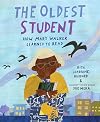
The Oldest Student: How Mary Walker Learned to Read would be inspiring under any circumstances, but this book, written by Rita Lorraine Hubbard, recounts the actual story of a woman who was born a slave in 1848 and never learned to read until she was 116 years old! And I had been previously inspired by Cato learning Greek at a comparably youthful 80!
Oge Mora’s colorful collage illustrations trace Mary from her terrible childhood to freedom to her decades as a nursemaid, sharecropper, wife, show more mother, seamstress, milliner, grandmother. At 114, she had outlived two husbands and all three of her sons. And that’s when Mary Walker first joined a class to learn to read, the oldest student in the class — and probably any class. Her Bible became her favorite book, and Mrs. Walker was lucky enough to be able to read for many more years. Every class library should include Mary Walker. show less
Oge Mora’s colorful collage illustrations trace Mary from her terrible childhood to freedom to her decades as a nursemaid, sharecropper, wife, show more mother, seamstress, milliner, grandmother. At 114, she had outlived two husbands and all three of her sons. And that’s when Mary Walker first joined a class to learn to read, the oldest student in the class — and probably any class. Her Bible became her favorite book, and Mrs. Walker was lucky enough to be able to read for many more years. Every class library should include Mary Walker. show less
Imagine not knowing how to read for most of your life. For Mary Walker, after a hard life of slavery, emancipation, sharecropping and work, work, work, she did not learn how to read until she was 116 years old. Her resilience, gumption, and pursuit of a long-held dream are respectfully described.
Lists
Awards


You May Also Like


Associated Authors
Statistics
- Works
- 7
- Members
- 642
- Popularity
- #39,292
- Rating
- 4.4
- Reviews
- 26
- ISBNs
- 22
- Languages
- 1