
Robin McKinley (1) (1952–)
Author of The Hero and the Crown
For other authors named Robin McKinley, see the disambiguation page.
Series
Works by Robin McKinley
Ebon 54 copies
The Golden Country 36 copies
Associated Works
Spells of Enchantment: The Wondrous Fairy Tales of Western Culture (1991) — Contributor — 605 copies, 5 reviews
The Year's Best Fantasy and Horror: Sixteenth Annual Collection (2003) — Contributor — 240 copies, 2 reviews
Dragons and Warrior Daughters: Fantasy Stories by Women (Lions Tracks) (1989) — Contributor — 31 copies
Tagged
Common Knowledge
- Legal name
- McKinley, Jennifer Carolyn Robin
- Birthdate
- 1952-11-16
- Gender
- female
- Education
- Dickinson College
Bowdoin College - Occupations
- author
homeopath - Awards and honors
- Damon Knight Memorial Grand Master Award (2022)
- Agent
- Merrilee Heifetz (Writers House)
- Relationships
- Dickinson, Peter (husband)
- Nationality
- USA
- Birthplace
- Warren, Ohio, USA
- Places of residence
- California, USA
New York, USA
Japan
Maine, USA
Hampshire, England, UK - Associated Place (for map)
- USA
Members
Discussions
Grand Master Robin McKinley in The Green Dragon (February 2023)
August Fantasy Thread - SPOILERS - Beauty in The Green Dragon (August 2012)
August Fantasy Thread - NO SPOILERS - Beauty in The Green Dragon (August 2012)
Chat about... Beauty by Robin McKinley in The SF&F Book Chat (April 2012)
Robin McKinley in Fairy Tales Retold (October 2011)
Anyone read Pegasus by Robin McKinley? in Read YA Lit (May 2011)
Reviews
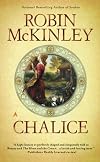
Sept 25-27 2015, 4th read, 5 stars:
Yet again I found myself suddenly wanting to re-read this book and ended up devouring it in a couple days. I am lucky the library by my workplace had it in; I really need to buy my own copy. And I upped it to 5 stars this time, even though I know objectively it's far from a perfect book. But I identify so much with Mirasol in many ways; I think that may have something to do with why I kept having urges to revisit this despite only giving it 3 stars the very show more first time I ever read it.
Mirasol is a beekeeper who takes the position of Chalice within her demesne's ruling Circle, a role that places her as the second most important figure in serving and protecting her hometown. She, along with a new Master who has just returned from a 7-year stint as a priest of Fire, must find make her way in mending the broken demesne left in the disastrous wake of the previous Master and Chalice.
This is a very introspective and meditative book. Mirasol's inner monologue reveals a self-reflective personality that is constantly and anxiously striving to do her best in the given circumstances. She dwells a lot on past events, turning them and her worries over and over again in her head. She strikes me as having imposter syndrome; always feeling like she falls short of expectations when she, in fact, is doing quite well. There's also a nice tension between her duty to her role as Chalice and being herself, which she is continuously negotiating throughout the book.
The narrative itself moves back and forth from past events to the present storyline using flashbacks and reminiscences, which normally I dislike but I felt it worked very well here. McKinley's mellifluous prose, like the sweet honey of Mirasol's bees, deftly weaves together the past timeline with the present. The narrative is often somewhat circular and repetitive-- but I didn't really mind it. It reflects how Mirasol's mind works, her constant fretting over doing her duty properly. I suppose to someone else, it might make her a terribly irritating character, but I always seem to pick up this book right when I am in the mood to read something like this, and she's always seemed like a really strong character to me. And even though she worries a lot, she's constantly doing something about it, studying up on Chalicehood, caring for her bees, helping the people of the demesne-- this is a character who knows how to take action, though the action may not be dramatic or heroic as you'd expect from a fantasy novel.
Which brings me to another point-- this is a fantasy novel on a much smaller scale. The book's setting is inhabited with an everyday, ordinary sort of magic, and the heroism isn't grand but I think it's still heroism nonetheless. Mirasol's mission is to save her demesne and its people; while it may not involve sword fights, it does involve a lot of hard work.
McKinley's writing in this book is all about subtlety, I think. Re-reading this, I can see and appreciate how she reveals details about the characters almost casually, mentioning how Mirasol couldn't kill her bees the winter after her mother dies or showing how Mirasol's thoughts often drift to the Master or describing how Mirasol has found her world shifting just slightly when the Master walks in the room. McKinley's descriptive prowess is also great-- I like her descriptions of the land as a living thing, changing with and reacting to the events that occur upon.
I don't know if I can actually recommend this book because I suspect most people would find it boring. Not much actually happens, aside from a few key events. But I really love it, as you can tell. And I find it interesting that this book has grown so much on me. It has now become one of my absolute favourites, but if I hadn't decided to re-read it the first time, this wouldn't have happened. But perhaps it is the kind of book that keeps you thinking about it long after and that's why I picked it up a second time...
*
Previous reviews:
March 5-7 2013, 3rd read, 4 stars:
I suddenly felt like re-reading this one, even though I remembered that I found the 2nd half dragging upon my first re-read. I always think this book is better than it actually is, and every time I get to the last 2/3, I always feel like rushing through it because it has just gone on long enough already! McKinley's prose is lovely, but it's so circular and repetitive that I get tired close to the end.
This time, though, I found the worldbuilding very much complete-- I bet McKinley has it all in her head but not all of it gets into the book because it is told from Mirasol's perspective, and she doesn't need to explain everything because they are very normal to her. This book is about Mirasol's personal journey from small woodskeeper to Chalice, this is a very character-driven book, so we do not need to know about the setting beyond what is necessary for Mirasol's story. Although I would very much have liked to. I doubt McKinley would ever write it, but I would love more stories within this world, perhaps about other characters.
*
2010, 1st read, 3 stars: I thought this book was both confusing and compelling, since it starts in the middle of the story and as you read along, what happened before is slowly revealed through flashbacks and memories. It's fine as a technique to tell a story, but the problem I found with this particular novel is that frankly, I felt as if nothing much happened in the first half. It's mostly explanations of the world and introducing the characters but this is done using lengthy, albeit with lush, descriptions rather than action. There are also paragraphs and paragraphs detailing the main character's beekeeping activities which where unnecessarily long. In short, the first half of the book often seems like a rambling mess. However, the action starts in the second half and the book becomes much more interesting.
McKinley uses an understated writing style where she gives hints and clues as to what's going on, but never fully explains anything, preferring the reader to figure it out for themselves. I found this both frustrating and intriguing, as it kept me reading in hopes that certain things would be made a bit clearer. I don't think it's necessary for an author to explain everything, but she could have given us just a bit more about the fantasy world she created. The world-building felt incomplete, and McKinley hints at a lot of interesting ideas but never truly develops them. I did like how the relationship between Mirasol and the Master was handled, and thought the ending for them made perfect sense, even if it was a bit of a surprise. Still, there is much more to be desired with this book and it's just a shame that McKinley chose to spend more time writing in unnecessary detail about the habits of bees rather than showing us more of her world and characters.
Yet again I found myself suddenly wanting to re-read this book and ended up devouring it in a couple days. I am lucky the library by my workplace had it in; I really need to buy my own copy. And I upped it to 5 stars this time, even though I know objectively it's far from a perfect book. But I identify so much with Mirasol in many ways; I think that may have something to do with why I kept having urges to revisit this despite only giving it 3 stars the very show more first time I ever read it.
Mirasol is a beekeeper who takes the position of Chalice within her demesne's ruling Circle, a role that places her as the second most important figure in serving and protecting her hometown. She, along with a new Master who has just returned from a 7-year stint as a priest of Fire, must find make her way in mending the broken demesne left in the disastrous wake of the previous Master and Chalice.
This is a very introspective and meditative book. Mirasol's inner monologue reveals a self-reflective personality that is constantly and anxiously striving to do her best in the given circumstances. She dwells a lot on past events, turning them and her worries over and over again in her head. She strikes me as having imposter syndrome; always feeling like she falls short of expectations when she, in fact, is doing quite well. There's also a nice tension between her duty to her role as Chalice and being herself, which she is continuously negotiating throughout the book.
The narrative itself moves back and forth from past events to the present storyline using flashbacks and reminiscences, which normally I dislike but I felt it worked very well here. McKinley's mellifluous prose, like the sweet honey of Mirasol's bees, deftly weaves together the past timeline with the present. The narrative is often somewhat circular and repetitive-- but I didn't really mind it. It reflects how Mirasol's mind works, her constant fretting over doing her duty properly. I suppose to someone else, it might make her a terribly irritating character, but I always seem to pick up this book right when I am in the mood to read something like this, and she's always seemed like a really strong character to me. And even though she worries a lot, she's constantly doing something about it, studying up on Chalicehood, caring for her bees, helping the people of the demesne-- this is a character who knows how to take action, though the action may not be dramatic or heroic as you'd expect from a fantasy novel.
Which brings me to another point-- this is a fantasy novel on a much smaller scale. The book's setting is inhabited with an everyday, ordinary sort of magic, and the heroism isn't grand but I think it's still heroism nonetheless. Mirasol's mission is to save her demesne and its people; while it may not involve sword fights, it does involve a lot of hard work.
McKinley's writing in this book is all about subtlety, I think. Re-reading this, I can see and appreciate how she reveals details about the characters almost casually, mentioning how Mirasol couldn't kill her bees the winter after her mother dies or showing how Mirasol's thoughts often drift to the Master or describing how Mirasol has found her world shifting just slightly when the Master walks in the room. McKinley's descriptive prowess is also great-- I like her descriptions of the land as a living thing, changing with and reacting to the events that occur upon.
I don't know if I can actually recommend this book because I suspect most people would find it boring. Not much actually happens, aside from a few key events. But I really love it, as you can tell. And I find it interesting that this book has grown so much on me. It has now become one of my absolute favourites, but if I hadn't decided to re-read it the first time, this wouldn't have happened. But perhaps it is the kind of book that keeps you thinking about it long after and that's why I picked it up a second time...
*
Previous reviews:
March 5-7 2013, 3rd read, 4 stars:
I suddenly felt like re-reading this one, even though I remembered that I found the 2nd half dragging upon my first re-read. I always think this book is better than it actually is, and every time I get to the last 2/3, I always feel like rushing through it because it has just gone on long enough already! McKinley's prose is lovely, but it's so circular and repetitive that I get tired close to the end.
This time, though, I found the worldbuilding very much complete-- I bet McKinley has it all in her head but not all of it gets into the book because it is told from Mirasol's perspective, and she doesn't need to explain everything because they are very normal to her. This book is about Mirasol's personal journey from small woodskeeper to Chalice, this is a very character-driven book, so we do not need to know about the setting beyond what is necessary for Mirasol's story. Although I would very much have liked to. I doubt McKinley would ever write it, but I would love more stories within this world, perhaps about other characters.
*
2010, 1st read, 3 stars: I thought this book was both confusing and compelling, since it starts in the middle of the story and as you read along, what happened before is slowly revealed through flashbacks and memories. It's fine as a technique to tell a story, but the problem I found with this particular novel is that frankly, I felt as if nothing much happened in the first half. It's mostly explanations of the world and introducing the characters but this is done using lengthy, albeit with lush, descriptions rather than action. There are also paragraphs and paragraphs detailing the main character's beekeeping activities which where unnecessarily long. In short, the first half of the book often seems like a rambling mess. However, the action starts in the second half and the book becomes much more interesting.
McKinley uses an understated writing style where she gives hints and clues as to what's going on, but never fully explains anything, preferring the reader to figure it out for themselves. I found this both frustrating and intriguing, as it kept me reading in hopes that certain things would be made a bit clearer. I don't think it's necessary for an author to explain everything, but she could have given us just a bit more about the fantasy world she created. The world-building felt incomplete, and McKinley hints at a lot of interesting ideas but never truly develops them. I did like how the relationship between Mirasol and the Master was handled, and thought the ending for them made perfect sense, even if it was a bit of a surprise. Still, there is much more to be desired with this book and it's just a shame that McKinley chose to spend more time writing in unnecessary detail about the habits of bees rather than showing us more of her world and characters.

Lovely, lovely book. Much like her other books, from what I remember, everything is written and told in a rather calm, slow-moving way but everything that you read is of the utmost urgency and importance. You must keep reading to know what will happen.
Mirasol is a beekeeper who is chosen to be the Chalice, the second-most powerful and important member of the Circle, who rule and ensure the demesne's unity and wholeness. The most powerful and important member is the Master, but he had been show more sent to the priests of Fire long ago to learn their ways, and is no longer quite human... What can be done to repair the hysterical land when the Master is feared and inhuman, the Circle members do not trust each other, and the Chalice is inexperienced and has no idea what to do? Mirasol does her best with the help of honey, her bees, and lots of reading, but the members of the Circle must come together and trust the Master.
The story is, of course, more complex than this; the above blurb does not do it justice. The only not-great thing about this book is that it can be somewhat confusing. It's not told in a straightforward way, jumping forward and back in time, and it can be kind of hard to figure out what is going on and why things are important somehow. Overall, however, this is a wonderful book, an original fantasy story with imperfect, complex characters and its own world and magic. Very much recommended. show less
Mirasol is a beekeeper who is chosen to be the Chalice, the second-most powerful and important member of the Circle, who rule and ensure the demesne's unity and wholeness. The most powerful and important member is the Master, but he had been show more sent to the priests of Fire long ago to learn their ways, and is no longer quite human... What can be done to repair the hysterical land when the Master is feared and inhuman, the Circle members do not trust each other, and the Chalice is inexperienced and has no idea what to do? Mirasol does her best with the help of honey, her bees, and lots of reading, but the members of the Circle must come together and trust the Master.
The story is, of course, more complex than this; the above blurb does not do it justice. The only not-great thing about this book is that it can be somewhat confusing. It's not told in a straightforward way, jumping forward and back in time, and it can be kind of hard to figure out what is going on and why things are important somehow. Overall, however, this is a wonderful book, an original fantasy story with imperfect, complex characters and its own world and magic. Very much recommended. show less
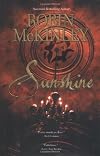
When I picked this up, I was expecting a vampire novel. I was not expecting a sci-fi novel. In fact, I think the novel is somehow equal parts Chelsea Quinn Yarbro, Philip K. Dick, and Kevin Brockmeier, though don't ask me how she managed it. I think genre fiction is risky enough, because it's too easy to get trapped by the formulas and cliches of the genres, but mixing genres is downright dangerous. It's a bit like alchemy; even when you don't blow things all to hell, you're more often than show more not left with just a lump of lead. McKinley, however, has turned up gold.
What we have here is more than just an unique vampire narrative that plays on (and sometimes undoes) the old traditions of vampire novels while spicing up the story with the inventive elements of alternate-universe sci-fi (she never lets the sci-fi take over, which was a stroke of genius). Such a novel would be terrific in its own right just for the creativity involved. But McKinley takes it step further by actually caring about her prose, and she frequently slips in delicious sentences and even whole passages that belong among the best in either genre--she is downright literary in her attention to language, almost a kind of Anthony Burgess with a Gothic cyberpunk mentality, and it made the novel not only exhilarating but also eloquent.
So McKinley has accomplished a rare thing indeed: she's managed to write a book I'd recommend to sci-fi/fantasy fans, to speculative fiction fans, to vampire fans, and to snobbish readers of "literature" alike. This was my first McKinley novel, but I'm definitely reading more. show less
What we have here is more than just an unique vampire narrative that plays on (and sometimes undoes) the old traditions of vampire novels while spicing up the story with the inventive elements of alternate-universe sci-fi (she never lets the sci-fi take over, which was a stroke of genius). Such a novel would be terrific in its own right just for the creativity involved. But McKinley takes it step further by actually caring about her prose, and she frequently slips in delicious sentences and even whole passages that belong among the best in either genre--she is downright literary in her attention to language, almost a kind of Anthony Burgess with a Gothic cyberpunk mentality, and it made the novel not only exhilarating but also eloquent.
So McKinley has accomplished a rare thing indeed: she's managed to write a book I'd recommend to sci-fi/fantasy fans, to speculative fiction fans, to vampire fans, and to snobbish readers of "literature" alike. This was my first McKinley novel, but I'm definitely reading more. show less
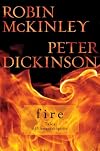
I love Robin McKinley. I have for years. So my biggest disappointment with this collection of stories by her and her husband, writer Peter Dickinson, is that it contains only two pieces from McKinley. I gather, however (thanks for the enlightenment, all) that Dickinson has earned the right to the majority through his own experience, so I suppose I can't begrudge him the extra story.
Like most collections, there is a spectrum of quality here. The stories -- of which there are only five -- are show more sizable, with the final work reaching novella proportions. In fact, it is that last piece -- "First Flight" -- that I enjoyed the most. McKinley's story of a young man who conceives of himself as "the dim little brother" offers a wonderfully expressed coming-of-age. The first person narration is full of genuine voice and the reader understands the "little brother" more with each passing phrase. Also, it has dragons. Dragons make every story better, right? :)
The other piece by McKinley frustrated me because I actually wanted it to be longer. "Hellhound" centers on a young woman who adopts a strange dog, and ends up very glad she did when strange events occur. It didn't hurt that this story had horses in it -- horses, like dragons, make everything better, obviously -- but I also appreciated how authentic the human-animal relationships felt here. The moments that frustrated me were when the supernatural climax occurs -- it felt like there simply wasn't enough room in the story for a complete conflict and its resolution; consequently, I felt rushed and confused about some of the context details.
My favorite of Dickinson's contributions was "Phoenix", a short story that played (obviously) on the legend of the singular firebird, but also managed to reflect on the nature of love, ideas of identity and dedication, and even environmental stewardship. This story rang with melancholy and nostalgia, but not in an irritating way -- I liked the feel of it very much.
There wasn't anything wrong with the other two stories by Dickinson -- they just weren't all that memorable.
Overall, this was a pleasant collection filled with solid writing and entertaining, often thought-provoking ideas. What more can you ask from stories? show less
Like most collections, there is a spectrum of quality here. The stories -- of which there are only five -- are show more sizable, with the final work reaching novella proportions. In fact, it is that last piece -- "First Flight" -- that I enjoyed the most. McKinley's story of a young man who conceives of himself as "the dim little brother" offers a wonderfully expressed coming-of-age. The first person narration is full of genuine voice and the reader understands the "little brother" more with each passing phrase. Also, it has dragons. Dragons make every story better, right? :)
The other piece by McKinley frustrated me because I actually wanted it to be longer. "Hellhound" centers on a young woman who adopts a strange dog, and ends up very glad she did when strange events occur. It didn't hurt that this story had horses in it -- horses, like dragons, make everything better, obviously -- but I also appreciated how authentic the human-animal relationships felt here. The moments that frustrated me were when the supernatural climax occurs -- it felt like there simply wasn't enough room in the story for a complete conflict and its resolution; consequently, I felt rushed and confused about some of the context details.
My favorite of Dickinson's contributions was "Phoenix", a short story that played (obviously) on the legend of the singular firebird, but also managed to reflect on the nature of love, ideas of identity and dedication, and even environmental stewardship. This story rang with melancholy and nostalgia, but not in an irritating way -- I liked the feel of it very much.
There wasn't anything wrong with the other two stories by Dickinson -- they just weren't all that memorable.
Overall, this was a pleasant collection filled with solid writing and entertaining, often thought-provoking ideas. What more can you ask from stories? show less
Lists
Same Title (1)
quigui wishlish (1)
Swashbucklers (1)
1970s (1)
Best Dog Stories (1)
First Novels (1)
mom (1)
1980s (1)
Favourite Books (4)
Best Young Adult (4)
Comfort Reads (4)
Five star books (4)
Female Author (5)
Princess Tales (7)
Carole's List (2)
Guilty Pleasures (2)
Farm Boy Fantasy (3)
Elevenses (2)
Summer Reading (3)
Sonlight Books (3)
Newbery Adjacent (1)
Awards


You May Also Like
Associated Authors
Statistics
- Works
- 42
- Also by
- 12
- Members
- 50,946
- Popularity
- #300
- Rating
- 4.0
- Reviews
- 1,435
- ISBNs
- 344
- Languages
- 10
- Favorited
- 9

