
Charlie Lovett
Author of The Bookman's Tale
About the Author
Works by Charlie Lovett
The Further Adventures of Ebenezer Scrooge: A Christmas Carol Continued (2015) 112 copies, 7 reviews
Lewis Carroll Among His Books: A Descriptive Catalogue Of The Private Library Of Charles L. Dodgson (2005) 14 copies
Lewis Carroll and the Press: An Annotated Bibliography of Charles Dodgson's Contributions to Periodicals (1999) 10 copies
Alice on Stage: History of the Early Theatrical Productions of "Alice in Wonderland" (1990) 2 copies
Wooing Wed Widing Hood 1 copy
A Hairy Tale 1 copy
Supercomics 1 copy
Unwrapped 1 copy
Associated Works
The Haunting of the Snarkasbord : A Portmanteau inspired by Lewis Carroll's The Hunting of the Snark (2012) — Contributor — 3 copies
Tagged
Common Knowledge
- Canonical name
- Lovett, Charlie
- Legal name
- Lovett, Charles Candler
- Birthdate
- 1962
- Gender
- male
- Education
- Davidson College (BA|1984)
Vermont College of Fine Arts (MFA|1997) - Occupations
- bookseller
author
children's playwright - Organizations
- Grolier Club
Lewis Carroll Society of North America - Nationality
- USA
- Birthplace
- Winston-Salem, North Carolina, USA
- Places of residence
- Winston-Salem, North Carolina, USA
Kingham, Oxfordshire, England, UK - Associated Place (for map)
- USA
Members
Reviews

"Lazarus keeps excellent circulation records, and when I checked the book out, the librarian, who was of course a friend of mine, informed me that I was the first to do so since 1875. I laughed and said to him, 'Who on earth do you suppose they bought it for?' and without pausing a second to think he said, in all seriousness, 'Why, Arthur, they bought it for you.' That's the point of a library. A book that no one wants to read today may be essential for someone in the future. So we save show more them, we protect them."
Superbly satisfying. A true delight for bibliophiles, medieval history buffs, and those who appreciate a good old fashioned treasure hunt. Lovett's latest tale is a cheerful jaunt ripe with history and the joys of books. Arthur and Bethany's rousing discussions about the merits of digitizing versus traditional library formats were particularly engaging.
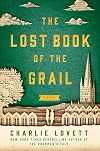
Arthur is an English professor, Holy Grail enthusiast, and curmudgeonly Luddite who has haunted the Barchester Cathedral Library for much of his adult life. Following a childhood immersed in Arthurian legend, he has been passively pursuing the mystery of the mythical Holy Grail for years with limited success. But the sudden appearance of the youthful and passionate Bethany, arriving in his sleepy English town to digitize the cathedral's medieval manuscripts, takes his predictable life in a wildly unexpected direction. Butting heads over modernity but discovering a shared love for Grail lore, the unlikely duo set out to pursue a series of clues and long kept secrets, making a myriad of new discoveries about life, love, and medieval history along the way. show less
Superbly satisfying. A true delight for bibliophiles, medieval history buffs, and those who appreciate a good old fashioned treasure hunt. Lovett's latest tale is a cheerful jaunt ripe with history and the joys of books. Arthur and Bethany's rousing discussions about the merits of digitizing versus traditional library formats were particularly engaging.
Arthur is an English professor, Holy Grail enthusiast, and curmudgeonly Luddite who has haunted the Barchester Cathedral Library for much of his adult life. Following a childhood immersed in Arthurian legend, he has been passively pursuing the mystery of the mythical Holy Grail for years with limited success. But the sudden appearance of the youthful and passionate Bethany, arriving in his sleepy English town to digitize the cathedral's medieval manuscripts, takes his predictable life in a wildly unexpected direction. Butting heads over modernity but discovering a shared love for Grail lore, the unlikely duo set out to pursue a series of clues and long kept secrets, making a myriad of new discoveries about life, love, and medieval history along the way. show less
A significantly better work than this author's earlier attempt, A Bookman's Tale. He has resisted the temptation to insert distracting elements of melodrama. There are no murders to be solved, no skulking villains to be battled. Just a solid, well-told mystery involving history and books involving the possible discovery of the Grail's location.
Threaded throughout is an ongoing consideration of weighty subjects, such as the nature of religious faith, and role of digital files in the library. show more I found this latter material especially interesting, not only for being rarely explored in this genre of fiction, but also because it has executed very well and even-handedly. show less
Threaded throughout is an ongoing consideration of weighty subjects, such as the nature of religious faith, and role of digital files in the library. show more I found this latter material especially interesting, not only for being rarely explored in this genre of fiction, but also because it has executed very well and even-handedly. show less
Can you discover more than one treasure at the same time? Charlie Lovett's wonderful 2017 novel “The Lost Book of the Grail” answers, why not?
If you have read much Anthony Trollope, you have probably heard of the fictional English town of Barchester. Lovett takes us there again in the company of Arthur Prescott, named after King Arthur and obsessed with Holy Grail legends since his childhood. Now he works happily with ancient manuscripts in the Barchester Cathedral Library. Suddenly show more those manuscripts are threatened.
Bethany Davis, a young American, comes to Barchester to digitalize these manuscripts. In his mind, Arthur views this project as making them expendable. His suspicions gain validity when Bethany's employer, an American billionaire, makes an offer to buy the manuscripts, and the cathedral hierarchy, desperate for money, takes the offer seriously.
Bethany turns out to be a Grail enthusiast, too, and together, along with a couple of friends, they begin a quest not for the Grail itself but for a book about the Grail and an almost mythical early saint. When they find it at last, it turns out to be more than Arthur could have hoped for. And the other treasure? Why, it's Bethany's heart, to Arthur an even greater prize.
Lovett first won acclaim for his novel “The Bookman's Tale,” but I found this an even more rewarding tale. And his scholarship is as impressive as his writing. show less
If you have read much Anthony Trollope, you have probably heard of the fictional English town of Barchester. Lovett takes us there again in the company of Arthur Prescott, named after King Arthur and obsessed with Holy Grail legends since his childhood. Now he works happily with ancient manuscripts in the Barchester Cathedral Library. Suddenly show more those manuscripts are threatened.
Bethany Davis, a young American, comes to Barchester to digitalize these manuscripts. In his mind, Arthur views this project as making them expendable. His suspicions gain validity when Bethany's employer, an American billionaire, makes an offer to buy the manuscripts, and the cathedral hierarchy, desperate for money, takes the offer seriously.
Bethany turns out to be a Grail enthusiast, too, and together, along with a couple of friends, they begin a quest not for the Grail itself but for a book about the Grail and an almost mythical early saint. When they find it at last, it turns out to be more than Arthur could have hoped for. And the other treasure? Why, it's Bethany's heart, to Arthur an even greater prize.
Lovett first won acclaim for his novel “The Bookman's Tale,” but I found this an even more rewarding tale. And his scholarship is as impressive as his writing. show less
Lists
Carole's List (1)
Awards


You May Also Like


Associated Authors
Statistics
- Works
- 30
- Also by
- 1
- Members
- 3,429
- Popularity
- #7,421
- Rating
- 3.7
- Reviews
- 187
- ISBNs
- 109
- Languages
- 4
- Favorited
- 3