
Greer Macallister
Author of The Magician's Lie
About the Author
Greer Macallister received a MFA in creative writing at American University. She is a poet, short story writer, and playwright. Her work has appeared in several publications including The North American Review, The Missouri Review, and The Messenger. Her first novel, The Magician's Lie, was show more published in 2015. (Bowker Author Biography) show less
Image credit: Greer Macallister
Series
Works by Greer Macallister
Žena číslo 99 1 copy
Associated Works
Author in Progress: A No-Holds-Barred Guide to What It Really Takes to Get Published (2016) — Contributor — 72 copies, 1 review
Tagged
Common Knowledge
- Birthdate
- 20th Century
- Gender
- female
- Agent
- Elisabeth Weed
- Nationality
- USA
- Associated Place (for map)
- USA
Members
Reviews
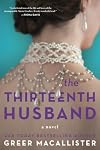
Many thanks to NetGalley and Sourcebooks for the opportunity to read this ARC.
This is another excellent historical fiction about an inimitable woman by award-winning author Greer Macallister. In Aimee Crocker (1864-1941), a real 19th century American railroad heiress, the author found herself a ready-made protagonist whose dramatic real life story just begged to be told. She told it herself, in fact, in her own 1936 autobiography. Most of the biographical details, the author assures us, show more have been respected. Certainly the historical context and the way that women, even the privileged, were expected to fit it, is true to fact. The result is a captivating novel that traces one woman’s unusual experience over a near half-century during which every woman’s life changed drastically with the major historical shifts taking place. Nonetheless, even in 1941, when she died, most women did not have lives half as liberated as hers had been. She was simply a trailblazer, and the author shows us how and why.
Despite the title, Aimee Crocker, first married at 17, did not collect a baker’s dozen of husbands, though I got the distinct impression that would not have challenged her too much. She seems to have been fully capable of doing so. The reason for the title comes to light as the story unwinds. She did, nonetheless, marry more than most women of her time, and since.
The story is a first-person account, and from the opening paragraph, ‘Aimee’ makes it clear that this will not be a poor little rich girl’ story. Money, she acknowledges, can buy freedom and happiness, and she is not remotely contrite about using her considerable wealth to get what she wanted: ‘it was the only power I could count on.’ All too true, especially for women like her who came of age in times when women had no other reliable source of power besides father and husbands—unlike many, these were not always of use when needed. Of course, to onlookers, especially the scandal-seeking press, she was an adventuress (not a compliment), a ´hussy’, a known menace,’ and, worst of all the very ´Queen of Bohemia’ and not just an ordinary disgraceful bohemian.
Although she seems impervious, and certainly strives to come across that way in the author’s portray of her, the Aimee we see here is not invulnerable. She is the opposite, plagued all her life by the kind of attention that is sometimes ego-supporting and other times soul-destroying. She searches always for love, and is invariably disappointed. She wants to be true to herself but even money can’t buy the truth and loyalty of others. She is not only constant prey to the tabloids,’ she is haunted by seemingly metaphysical forces.
For the most part, Aimee Crocker, in this telling, just keeps rollicking on. That’s admirable enough. Read the book to find out whether, in ´buying’ herself a certain life with certain people, she was ultimately any happier than those without such privileges. show less
This is another excellent historical fiction about an inimitable woman by award-winning author Greer Macallister. In Aimee Crocker (1864-1941), a real 19th century American railroad heiress, the author found herself a ready-made protagonist whose dramatic real life story just begged to be told. She told it herself, in fact, in her own 1936 autobiography. Most of the biographical details, the author assures us, show more have been respected. Certainly the historical context and the way that women, even the privileged, were expected to fit it, is true to fact. The result is a captivating novel that traces one woman’s unusual experience over a near half-century during which every woman’s life changed drastically with the major historical shifts taking place. Nonetheless, even in 1941, when she died, most women did not have lives half as liberated as hers had been. She was simply a trailblazer, and the author shows us how and why.
Despite the title, Aimee Crocker, first married at 17, did not collect a baker’s dozen of husbands, though I got the distinct impression that would not have challenged her too much. She seems to have been fully capable of doing so. The reason for the title comes to light as the story unwinds. She did, nonetheless, marry more than most women of her time, and since.
The story is a first-person account, and from the opening paragraph, ‘Aimee’ makes it clear that this will not be a poor little rich girl’ story. Money, she acknowledges, can buy freedom and happiness, and she is not remotely contrite about using her considerable wealth to get what she wanted: ‘it was the only power I could count on.’ All too true, especially for women like her who came of age in times when women had no other reliable source of power besides father and husbands—unlike many, these were not always of use when needed. Of course, to onlookers, especially the scandal-seeking press, she was an adventuress (not a compliment), a ´hussy’, a known menace,’ and, worst of all the very ´Queen of Bohemia’ and not just an ordinary disgraceful bohemian.
Although she seems impervious, and certainly strives to come across that way in the author’s portray of her, the Aimee we see here is not invulnerable. She is the opposite, plagued all her life by the kind of attention that is sometimes ego-supporting and other times soul-destroying. She searches always for love, and is invariably disappointed. She wants to be true to herself but even money can’t buy the truth and loyalty of others. She is not only constant prey to the tabloids,’ she is haunted by seemingly metaphysical forces.
For the most part, Aimee Crocker, in this telling, just keeps rollicking on. That’s admirable enough. Read the book to find out whether, in ´buying’ herself a certain life with certain people, she was ultimately any happier than those without such privileges. show less
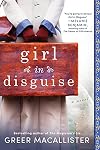
Kate Warne’s up against it. Chicago in 1856 is a rough town for a young widow with no money, no job prospects, and no desire to remarry. Mistreated by parents who never loved her, exploited her, and taught her never to love or trust anyone, Kate has learned to lie and dissemble, as circumstances seem to require. That skill, at least, she picked up from her father, a down-on-his-luck actor who, when not putting on stage makeup to perform, tried his hand at con games.
Which explains why, when show more Kate reads a want ad run by Allan Pinkerton looking for an operative to join his agency, she applies. After all, doesn’t she have the natural talent? Pinkerton nearly throws her out of his office; his profession is no place for a woman, he says. But Kate perseveres, of course, and Pinkerton reluctantly gives her a trial run — which doesn’t work out too well.
How that happens, and what she does about it, I’ll leave for you to find out, for Girl in Disguise is well worth your exploration. Be warned, however: Readers expecting a whodunit or thriller or even a unified plot will be disappointed, but, I expect, not for long. Such is the brio with which Macallister tells her story, and the loving attention she pays her protagonist, that it hardly matters.
Girl in Disguise is a coming-into-her-own novel, as Kate settles into her profession and masters it. Sometimes that process feels too easy, but rest assured, reversals arrive. The chapters represent cases, some of which are connected, especially in the narrative’s latter stages. But most stand alone, showing Kate’s progression, the professional and personal obstacles she faces, and, above all, how she handles a line of work that excites and fascinates her, yet leaves little or no room for a private life, let alone intimacy.
That, in turn, leads her toward self-discovery, because she must ask herself what she wants, and whether she’s lied so well to the world, she has fooled herself in the process. As such, her character drives the narrative, an essential, given that the plot is episodic and fragmented. It’s an unusual way to approach a suspense novel, but here, it works.
Kate Warne was a real person, but little is known about her. Macallister does an impressive job re-creating her in plausible fashion. I particularly like the family history, which both brings out her character and influences the story line. Better yet, she lets Kate remain emotionally scarred. No miraculous transformations mar this book, for the author is too psychologically astute for that.
The most exciting parts involve what few traces the real Kate Warne left in the historical record, and what tantalizing bits they are. She helped spirit Lincoln safely through Baltimore just before his first inauguration, foiling an assassination attempt. Later, during the Civil War, she performed surveillance on Rose Greenhow, a Washington socialite and clever Confederate spy, an excellent characterization.
I wish Pinkerton’s portrayal reached this level, but I don’t see his inner life or motivations as clearly as Kate’s or Greenhow’s. I wanted more from this major character. Lincoln’s cameo appearance provides just enough detail, I suppose, though I could have used a little more with him too, and George B. McClellan gets even shorter shrift, which I understand, yet which sets off my historian’s itch. During the war, McClellan would later command the Army of the Potomac and employ Pinkerton to run informants, who invariably offered inflated estimates of Confederate strength. McClellan swallowed them whole and used them as an excuse not to fight, driving Lincoln crazy. Maybe some other novelist will tackle that triangle.
The relative shallowness of the male characters is the most serious weakness of Girl in Disguise. With one exception, a suave, dapper colleague at Pinkerton’s agency who has a secret to protect, the men don’t measure up to Kate, Greenhow, or two women whom Kate trains as operatives.
Still, I thoroughly enjoyed Girl in Disguise, which richly imagines a complex tale based on a sketchy historical record. show less
Which explains why, when show more Kate reads a want ad run by Allan Pinkerton looking for an operative to join his agency, she applies. After all, doesn’t she have the natural talent? Pinkerton nearly throws her out of his office; his profession is no place for a woman, he says. But Kate perseveres, of course, and Pinkerton reluctantly gives her a trial run — which doesn’t work out too well.
How that happens, and what she does about it, I’ll leave for you to find out, for Girl in Disguise is well worth your exploration. Be warned, however: Readers expecting a whodunit or thriller or even a unified plot will be disappointed, but, I expect, not for long. Such is the brio with which Macallister tells her story, and the loving attention she pays her protagonist, that it hardly matters.
Girl in Disguise is a coming-into-her-own novel, as Kate settles into her profession and masters it. Sometimes that process feels too easy, but rest assured, reversals arrive. The chapters represent cases, some of which are connected, especially in the narrative’s latter stages. But most stand alone, showing Kate’s progression, the professional and personal obstacles she faces, and, above all, how she handles a line of work that excites and fascinates her, yet leaves little or no room for a private life, let alone intimacy.
That, in turn, leads her toward self-discovery, because she must ask herself what she wants, and whether she’s lied so well to the world, she has fooled herself in the process. As such, her character drives the narrative, an essential, given that the plot is episodic and fragmented. It’s an unusual way to approach a suspense novel, but here, it works.
Kate Warne was a real person, but little is known about her. Macallister does an impressive job re-creating her in plausible fashion. I particularly like the family history, which both brings out her character and influences the story line. Better yet, she lets Kate remain emotionally scarred. No miraculous transformations mar this book, for the author is too psychologically astute for that.
The most exciting parts involve what few traces the real Kate Warne left in the historical record, and what tantalizing bits they are. She helped spirit Lincoln safely through Baltimore just before his first inauguration, foiling an assassination attempt. Later, during the Civil War, she performed surveillance on Rose Greenhow, a Washington socialite and clever Confederate spy, an excellent characterization.
I wish Pinkerton’s portrayal reached this level, but I don’t see his inner life or motivations as clearly as Kate’s or Greenhow’s. I wanted more from this major character. Lincoln’s cameo appearance provides just enough detail, I suppose, though I could have used a little more with him too, and George B. McClellan gets even shorter shrift, which I understand, yet which sets off my historian’s itch. During the war, McClellan would later command the Army of the Potomac and employ Pinkerton to run informants, who invariably offered inflated estimates of Confederate strength. McClellan swallowed them whole and used them as an excuse not to fight, driving Lincoln crazy. Maybe some other novelist will tackle that triangle.
The relative shallowness of the male characters is the most serious weakness of Girl in Disguise. With one exception, a suave, dapper colleague at Pinkerton’s agency who has a secret to protect, the men don’t measure up to Kate, Greenhow, or two women whom Kate trains as operatives.
Still, I thoroughly enjoyed Girl in Disguise, which richly imagines a complex tale based on a sketchy historical record. show less

Warning: This review contains spoilers.
****
Virginia Reeve and a team of 12 women are being sent to the Arctic in hopes of succeeding where men have failed: the Canadian Arctic, in search of John Franklin and his crew, or their remains. The expedition is not crowned with glory, though; in fact, Virginia is on trial for the murder of one of the expedition members. The book is told in essentially two storylines: the trial, and the past (divided between the expedition and Virginia’s life show more before the expedition).
Sometimes dual-timeline stories can be frustrating or annoying if one storyline is more compelling than the other. Whatever mood I was in, both storylines were equally compelling for me, and I am glad that it clicked. It was interesting for me to read because I have read a fair bit about the Franklin expedition, so I wasn’t really surprised when the news leaked about Franklin’s crew resorting to cannibalism. I was more surprised by the revelation about Virginia’s past, although I did get an inkling just before the book spelled it out.
People who find pompous men irritating will find much to be irritated with in the prosecutor at Virginia’s trial — I was constantly shouting epithets at the book as I read (good thing I was reading this at home). I found all of the characters easy to keep track of, even if some were not as prominent as others by virtue of there being so many.
Overall, I enjoyed this book, and I definitely endorse Macallister’s recommendation of Fatal Passage, by Ken McGoogan, for further reading. show less
****
Virginia Reeve and a team of 12 women are being sent to the Arctic in hopes of succeeding where men have failed: the Canadian Arctic, in search of John Franklin and his crew, or their remains. The expedition is not crowned with glory, though; in fact, Virginia is on trial for the murder of one of the expedition members. The book is told in essentially two storylines: the trial, and the past (divided between the expedition and Virginia’s life show more before the expedition).
Sometimes dual-timeline stories can be frustrating or annoying if one storyline is more compelling than the other. Whatever mood I was in, both storylines were equally compelling for me, and I am glad that it clicked. It was interesting for me to read because I have read a fair bit about the Franklin expedition, so I wasn’t really surprised when the news leaked about Franklin’s crew resorting to cannibalism. I was more surprised by the revelation about Virginia’s past, although I did get an inkling just before the book spelled it out.
People who find pompous men irritating will find much to be irritated with in the prosecutor at Virginia’s trial — I was constantly shouting epithets at the book as I read (good thing I was reading this at home). I found all of the characters easy to keep track of, even if some were not as prominent as others by virtue of there being so many.
Overall, I enjoyed this book, and I definitely endorse Macallister’s recommendation of Fatal Passage, by Ken McGoogan, for further reading. show less

I have always been fascinated by the mystery of the Franklin expedition and also by true stories of pioneering feminists. Women who refused to live by society's expectations and paved their own paths. The Arctic Fury blends both of these intriguing subjects together in a compelling story of adventure, mystery, betrayal and heartbreak.
Virgina Reeve is offered the chance to do the unthinkable: lead a group of 12 women to the Arctic in a search for the lost Franklin expedition. The chapters show more alternate between Virginia Reeve's trial where she is accused of murder and the past recollection of various characters detailing the quest to find out what happened to the Franklin expedition.
The chapters flow very smoothly and piece together details of the journey and what each woman thought and felt. It led to very good character development and an understanding of why the women acted in the manner they did.
The novel was thought provoking and very touching. One thing that surprised me is how the author was able to take a character who was unlikable to one who became the opposite.
This is the first novel I have read by Greer Macallister but it will not be the last. show less
Virgina Reeve is offered the chance to do the unthinkable: lead a group of 12 women to the Arctic in a search for the lost Franklin expedition. The chapters show more alternate between Virginia Reeve's trial where she is accused of murder and the past recollection of various characters detailing the quest to find out what happened to the Franklin expedition.
The chapters flow very smoothly and piece together details of the journey and what each woman thought and felt. It led to very good character development and an understanding of why the women acted in the manner they did.
The novel was thought provoking and very touching. One thing that surprised me is how the author was able to take a character who was unlikable to one who became the opposite.
This is the first novel I have read by Greer Macallister but it will not be the last. show less
Lists
Awards


You May Also Like


Associated Authors
Statistics
- Works
- 12
- Also by
- 1
- Members
- 1,831
- Popularity
- #14,053
- Rating
- 3.8
- Reviews
- 129
- ISBNs
- 70
- Languages
- 2