
S. R. Ranganathan (1892–1972)
Author of The Five Laws of Library Science
About the Author
Image credit: Varghese Nijeeb P.
Series
Works by S. R. Ranganathan
Colon Classification: Basic Classification (6th edition) (Ranganathan Series in Library Science) (1963) 69 copies, 2 reviews
Annals of library science 5 copies
Library manual, for library authorities, librarians, and honorary library workers (Ranganathan series in library science) (1962) 3 copies
A descriptive account of the colon classification (Ranganathan series in library science) (1990) 2 copies
Theory of library catalogue 2 copies
Memorabilia Ranganathan 2 copies
A Librarian looks back: An autobiography of Dr. S.R. Ranganathan (Kaula series in library science) (1992) 2 copies
information technology 1 copy
History of Library Science 1 copy
Tagged
Common Knowledge
- Canonical name
- Ranganathan, Shyali Ramamrita
- Legal name
- Ranganathan, Shiyali Ramamrita
- Birthdate
- 1892-08-09
- Date of death
- 1972-09-27
- Gender
- male
- Education
- M.A. mathematics
- Occupations
- mathematician
library theorist
classificationist - Relationships
- Yogeshwar, Ranga (grandfather)
- Short biography
- Formatosi originariamente come un matematico, successivamente si applicò in maniera costante allo studio della biblioteconomia dando un contributo notevole allo sviluppo delle biblioteche. E' famoso, tra le altre cose, per avere enunciato le "cinque leggi della biblioteconomia"
- Nationality
- India
- Associated Place (for map)
- India
Members
Reviews
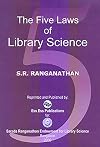
S.R. Ranganathan's book The Five Laws of Library Science (1931; 1963 reprint edition) is a surprisingly interesting, if charmingly eccentric, book.
The beauty of Ranganathan's Five Laws is that they are simple enough to memorize, yet have lots of implications for library service. Ranganathan's logical mind develops these implications throughout the text.
Please note that when Ranganathan says "books," he really means any library material. And where he says "laws," I would say "tendencies". The show more five laws of library science were not passed by any legislature, so they're are not laws in any legal sense. Ranganathan used the word "law" to mean, in his words, "self-evident truth". To Ranganathan, library science is a science and its basic truths are as fundamental and unchanging as the laws of physics. Ranganathan admits, however, that unlike the laws of physics, which cannot easily be broken, the laws of library science are often ignored and/or violated.
To understand what Ranganathan really meant by "laws", it is important to remember that Ranganathan regarded books, libraries, and even the laws themselves as quasi-living things. In Ranganathan's mind, books "want" to be united with their readers. Libraries "want" to bring books and readers together. The "laws" of library science may be ignored or not enforced, but they "want" to exert their power. The laws will ultimately be victorious. show less
The beauty of Ranganathan's Five Laws is that they are simple enough to memorize, yet have lots of implications for library service. Ranganathan's logical mind develops these implications throughout the text.
Please note that when Ranganathan says "books," he really means any library material. And where he says "laws," I would say "tendencies". The show more five laws of library science were not passed by any legislature, so they're are not laws in any legal sense. Ranganathan used the word "law" to mean, in his words, "self-evident truth". To Ranganathan, library science is a science and its basic truths are as fundamental and unchanging as the laws of physics. Ranganathan admits, however, that unlike the laws of physics, which cannot easily be broken, the laws of library science are often ignored and/or violated.
To understand what Ranganathan really meant by "laws", it is important to remember that Ranganathan regarded books, libraries, and even the laws themselves as quasi-living things. In Ranganathan's mind, books "want" to be united with their readers. Libraries "want" to bring books and readers together. The "laws" of library science may be ignored or not enforced, but they "want" to exert their power. The laws will ultimately be victorious. show less

Almost every publication on classification generally refers to Ranganathan and his Colon Classification, which was developed for the University of Madras and used by many other academic libraries, particularly in India. His theories of faceted classification are, although complex, useful for those who would attempt to organize every foreseeable subject of academic inquiry, and adaptable to the classification of other things. This particular work is a textbook on applying the Colon show more Classification, and displays both Ranganathan's primary theories and the sheer complexity of his system, which, in its theoretical rigor and depth of coverage, is largely unsuited for browsing use by the general public. Ranganathan does argue, at length, that all libraries should classify their works intensively, and that the abbreviated classification common in Dewey libraries is “a sop” and a disservice (p. 414). He claims that “opposition to the adoption of an infinitely hospitable scheme of classification boils down to the inability of the smaller public libraries to afford the provision of reference assistants to act as 'translators' or intermediaries between the public and the books” (p. 415). It is not only the cost of reference, however, but that of classifiers, not to mention the cost to public opinion if the location of subjects and books cannot be determined without recourse to a librarian or catalog. If we want to be “infinitely hospitable” to our users, we should endeavor to understand how they understand and search for subjects, and arrange the books so that they can quickly be found. A small quantity of detail may be lost in this attempt, but it may not matter if the area it is lost in is also kept small. show less

The book "Colon Classification" by S. R. Ranganathan is a comprehensive and insightful guide on the principles and practices of library classification. Ranganathan's writing style is clear and concise, making it easy for readers to understand the complex theories and concepts presented. This book provides a wealth of information on the subject, from the basics of colon classification to its applications in the library setting.
Overall, I would highly recommend "Colon Classification" to anyone show more looking to expand their knowledge of library science and classification. Whether you are a student, librarian, or simply interested in the subject, this book will provide you with valuable insights and practical tools that you can use in your own work. A must-read for anyone in the field. show less
Overall, I would highly recommend "Colon Classification" to anyone show more looking to expand their knowledge of library science and classification. Whether you are a student, librarian, or simply interested in the subject, this book will provide you with valuable insights and practical tools that you can use in your own work. A must-read for anyone in the field. show less

S. R. Ranganathan is most known in the U.S. for his book on the Five Laws of Library Science, and internationally for his development of a classification system based on facets, the so-called Colon Classification System. But in this book on Reference Services S. R. Ranganathan asserts that early in his career her recognized that without a well-developed set of reference services to give specific guidance to users of the library that his life's work of developing library science would fail. show more He describes his life's work as sitting on three legs of a stool: a. developing a new classification system for organizing the library, b. actually organizing a library based on that system, and c establishing a set of reference services that would support users getting maximum use of that library. show less
Lists
You May Also Like


Associated Authors
Statistics
- Works
- 34
- Members
- 367
- Popularity
- #65,578
- Rating
- 4.1
- Reviews
- 11
- ISBNs
- 49
- Languages
- 3