
Phillip Margulies
Author of Belle Cora
About the Author
Phillip Margulies is a professional writer and editor. He has written more than a dozen books for young adults, including Strategic Defense Systems of the Future, The Rise of Islamic Fundamentalism, and Global Issues: Nuclear Nonproliferation (for Facts On File). Foreword author James M. Goldgeier show more is professor of political science and international affairs at The George Washington University and a senior fellow at the Council on Foreign Relations. His most recent book is America between the Wars: From 11/9 to 9/11. A former State Department official and staff member of the National Security Council, he has held appointments at Cornell University, Standford University, and the Brookings Institution, among others. show less
Works by Phillip Margulies
The Devil on Trial: Witches, Anarchists, Atheists, Communists, and Terrorists in America's Courtrooms (Junior Library Guild Selection) (2008) 63 copies, 5 reviews
A Primary Source History of the Colony of North Carolina (Primary Sources of the Thirteen Colonies And the Lost Colony) (2006) 16 copies
The Writ of Habeas Corpus: The Right To Have Your Day In Court (The Library of American Laws and Legal Principles) (2005) 5 copies
Tagged
Common Knowledge
Members
Reviews
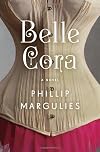
If anything, Belle Cora questions what it means to be bad or good. Through Arabella’s journey from New York City to San Francisco, Mr. Margulies casts doubt on the true meaning of these arbitrary adjectives. At the same time, he raises questions about the oldest profession in the world as he forces readers to see that life from Belle’s up-close perspective. Her initial abhorrence of such a life, followed swiftly by acceptance of its perks, her reluctance to leave that life with its show more perks, and her eventual flaunting of her position support Belle’s opinion that such a life is not as horrible as her experiences in more pious societies. The fact that she accepts even the worst behaviors among her clientele but refuses to forgive those from her childhood who caused her the most heartbreak is telling. Indeed, it is a scathing commentary on the hypocrisy of religion, politics, the law, and everything else that most people consider to be good in society both then and today.
Belle Cora is like Scarlett O’Hara had Scarlett grown up without money and connections. She is ruthless, fiercely independent, intelligent, devoted, and fearless. The tough lessons taught to her by her aunt and her cousins serve her in good stead as she learns how to not only survive but to thrive in corrupt and remorseless New York City. One may not support her methods but will still admire her resolute determination to succeed.
The love story within Belle Cora is a poignant surprise. One never expects her childhood crush on Jeptha to last as long, to become as complicated and adult, and to be quite as endearingly sweet as it does. More importantly, just as Belle’s chosen profession examines society’s opinion of right and wrong, Jeptha and Belle’s relationship further probes the issue. Both make unique and costly decisions to be with one another, sometimes to the detriment to their individual benefit as well as that of their relationship.
Belle Cora is ambitious in scope and excellent in execution. The topics addressed and the questions poised create a story that refuses to let go of a reader, burrowing under a reader’s skin and forcing one to consistently evaluate previous assumptions, values, belief systems, and the like. Its vibrant and thorough descriptions of a bygone era create a full-fledged image replete with aromas. Along with its unforgettable characters, Belle Cora is a book for the ages. show less
Belle Cora is like Scarlett O’Hara had Scarlett grown up without money and connections. She is ruthless, fiercely independent, intelligent, devoted, and fearless. The tough lessons taught to her by her aunt and her cousins serve her in good stead as she learns how to not only survive but to thrive in corrupt and remorseless New York City. One may not support her methods but will still admire her resolute determination to succeed.
The love story within Belle Cora is a poignant surprise. One never expects her childhood crush on Jeptha to last as long, to become as complicated and adult, and to be quite as endearingly sweet as it does. More importantly, just as Belle’s chosen profession examines society’s opinion of right and wrong, Jeptha and Belle’s relationship further probes the issue. Both make unique and costly decisions to be with one another, sometimes to the detriment to their individual benefit as well as that of their relationship.
Belle Cora is ambitious in scope and excellent in execution. The topics addressed and the questions poised create a story that refuses to let go of a reader, burrowing under a reader’s skin and forcing one to consistently evaluate previous assumptions, values, belief systems, and the like. Its vibrant and thorough descriptions of a bygone era create a full-fledged image replete with aromas. Along with its unforgettable characters, Belle Cora is a book for the ages. show less
This was honestly one of the best books that I have read in a long time. The funny thing is that I almost stopped reading it about a third of the way through. I didn't almost stop reading it because I thought it was badly written or that it was boring. I almost stopped reading it because I felt so connected with the main character and she kept having bad things happen to her and I just didn't know if I could take more of that. I am so happy that I decided to continue reading it.
I can't show more recall feeling this connected to a character in a long time as I felt with the main character Arabella. She goes by many names throughout this book but I am just going to call her Arabella. This is written as though Arabella has written a book about her life (and this book is actually based on a real woman named Belle Cora, which is a name that Arabella goes by in this book). I really liked getting to read everything from her point-of-view and the fact that it was written as though it was an autobiography really enhanced the story for me.
Throughout her adulthood Arabella does some pretty unsavory things: prostitution, becomes a famous madame, and much more. You would think that because of those things that she wouldn't be a character that you would sympathize with or even like. I loved Arabella and while reading this book it felt like I was Arabella (well maybe not with the prostitution parts). Whenever she was wronged, I wanted vengeance; whenever she was sad, I was sad. I think that most of the reasons why she ends up the way she does is because of the way she was treated by her family when she was sent to live with her aunt and uncle. No matter what she ended up doing I still rooted for her.
The one thing that Arabella wants most throughout this book is Jeptha Talbot's love. She originally fell in love with Jeptha while she was living with her aunt and uncle and spends her life trying to gain Jeptha's love. For most of the book I thought that Jeptha just wasn't the right man for her. They were so different that I felt like he would never make her happy and she could never really make him happy either. As I neared the end of the book I realized that I was wrong. Jeptha's love could have been the one thing to truly save her.
This was such a beautifully written book that highlighted what life was like in San Francisco during the gold rush. Through Arabella's story you get to see the corruption in politics during those times, what life in a parlor house was like, and all the rebuilding of the city after fires and a major earthquake.
I would highly recommend this book to someone looking for a fascinating historical fiction novel. show less
I can't show more recall feeling this connected to a character in a long time as I felt with the main character Arabella. She goes by many names throughout this book but I am just going to call her Arabella. This is written as though Arabella has written a book about her life (and this book is actually based on a real woman named Belle Cora, which is a name that Arabella goes by in this book). I really liked getting to read everything from her point-of-view and the fact that it was written as though it was an autobiography really enhanced the story for me.
Throughout her adulthood Arabella does some pretty unsavory things: prostitution, becomes a famous madame, and much more. You would think that because of those things that she wouldn't be a character that you would sympathize with or even like. I loved Arabella and while reading this book it felt like I was Arabella (well maybe not with the prostitution parts). Whenever she was wronged, I wanted vengeance; whenever she was sad, I was sad. I think that most of the reasons why she ends up the way she does is because of the way she was treated by her family when she was sent to live with her aunt and uncle. No matter what she ended up doing I still rooted for her.
The one thing that Arabella wants most throughout this book is Jeptha Talbot's love. She originally fell in love with Jeptha while she was living with her aunt and uncle and spends her life trying to gain Jeptha's love. For most of the book I thought that Jeptha just wasn't the right man for her. They were so different that I felt like he would never make her happy and she could never really make him happy either. As I neared the end of the book I realized that I was wrong. Jeptha's love could have been the one thing to truly save her.
This was such a beautifully written book that highlighted what life was like in San Francisco during the gold rush. Through Arabella's story you get to see the corruption in politics during those times, what life in a parlor house was like, and all the rebuilding of the city after fires and a major earthquake.
I would highly recommend this book to someone looking for a fascinating historical fiction novel. show less
Loved this sprawling historical novel which at times made me think of Gone With The Wind: ambitious young woman making hard choices to survive and then relentless in her prosperity. Society be damned. There is even a highly satisfying love triangle of sorts (nothing like GWtW) full of complications that befit *real* relationships. Loved the characters: Belle, her brother Lewis, her lovers Jeptha and Charley Cora, were developed so richly that I can't stop thinking about them. I received this show more book as a Goodreads giveaway. show less
Belle Cora is a big, grand sweeping tale that covers a multitude of themes, many of which could be explored by a reviewer for days. Even a synopsis of this novel could get lengthy (I know, I started one and gave up) but it wouldn't do justice to the work behind this saga by Phillip Margulies. The novel is set in the mid-1800s to early 1900s and is told by Arabella Godwin, a woman who goes from being the daughter of a wealthy man in NYC to the madam of a house of ill repute in San Francisco. show more In between she lives a life of rural poverty, works in a clothing mill, marries a preacher, and sails around Cape Horn.
Through Margulies Belle is written as a real woman. One who, within in her own being, is true to a strict ethical code. She does not choose a life of prostitution but comes and goes to it out of necessity. She knows exactly what she is and makes no effort to hide it even when the times dictate that she should renounce her career to save her own skin. Instead, she uses her trade to forge connections, extract promises and exert influence when she needs it. While for some Belle is not a woman to be admired I found her to be strong, intelligent, and fiercely loyal. Her sense of style and humor made her even more interesting.
In the same way that Margulies creates a woman of many layers, he re-creates the world around her.
Through his careful research we experience the poor rural areas of upstate New York where a religious sect predicted the end of the world in 1844. We travel by sea down around Cape Horn with an assortment of passengers from around the world. When Belle land in San Francisco we get to experience the first iteration of what will be a magnificent city but is now only a muddy mess populated with violent men and few women living in tents with trenches for bathrooms. A true frontier, this San Francisco will burn to the ground and rebuild numerous times in its pursuit of gold.
Belle Cora is not an introspective book. Arabella is a pragmatic woman who takes the highs and lows of life in stride and wastes little time in thinking about what might have been or could be. Even her lifelong love for a man whose nature is the antithesis of hers does not stop her from living her life without him when she must. Pathos, recrimination? No, not for Belle. She wins, she loses but she lives. Right off the page, she lives. show less
Through Margulies Belle is written as a real woman. One who, within in her own being, is true to a strict ethical code. She does not choose a life of prostitution but comes and goes to it out of necessity. She knows exactly what she is and makes no effort to hide it even when the times dictate that she should renounce her career to save her own skin. Instead, she uses her trade to forge connections, extract promises and exert influence when she needs it. While for some Belle is not a woman to be admired I found her to be strong, intelligent, and fiercely loyal. Her sense of style and humor made her even more interesting.
In the same way that Margulies creates a woman of many layers, he re-creates the world around her.
Through his careful research we experience the poor rural areas of upstate New York where a religious sect predicted the end of the world in 1844. We travel by sea down around Cape Horn with an assortment of passengers from around the world. When Belle land in San Francisco we get to experience the first iteration of what will be a magnificent city but is now only a muddy mess populated with violent men and few women living in tents with trenches for bathrooms. A true frontier, this San Francisco will burn to the ground and rebuild numerous times in its pursuit of gold.
Belle Cora is not an introspective book. Arabella is a pragmatic woman who takes the highs and lows of life in stride and wastes little time in thinking about what might have been or could be. Even her lifelong love for a man whose nature is the antithesis of hers does not stop her from living her life without him when she must. Pathos, recrimination? No, not for Belle. She wins, she loses but she lives. Right off the page, she lives. show less
Awards


You May Also Like


Statistics
- Works
- 19
- Members
- 471
- Popularity
- #52,266
- Rating
- 3.9
- Reviews
- 21
- ISBNs
- 35