
Lisa Robertson (1) (1961–)
Author of Occasional Work and Seven Walks from the Office for Soft Architecture
For other authors named Lisa Robertson, see the disambiguation page.
Works by Lisa Robertson
Associated Works
The Arcadia Project: North American Postmodern Pastoral (New Series) (2012) — Contributor — 28 copies
Eleven More American Women Poets in the 21st Century: Poetics Across North America (2012) — Contributor — 12 copies
Tagged
Common Knowledge
- Birthdate
- 1961-07-22
- Gender
- female
- Education
- Simon Fraser University
- Occupations
- poet
professor
bookseller - Nationality
- Canada
- Birthplace
- Toronto, Ontario, Canada
- Places of residence
- Vancouver, British Columbia, Canada
Oakland, California, USA
France - Associated Place (for map)
- Canada
Members
Reviews
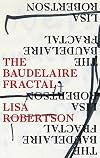
'The girl within the Baudelairean body of work will undo it by repeating it within herself, as indeed she repeats girlhood, misshapen. She's always and only untimely, apparitional, forbidden, monstrous, a stain on authority. Her sensation is multiple, an intoxication of number.'
I'm never the biggest fan of autofiction; I usually tire of the thinly-veiled disguise behind a 'character', when really it's just an autobiography. Whether you call this autofiction, I don't know, but this is just show more something different enough for me to sit up and notice. This is proper writing, if you get what I mean. Right from the very first sentence I felt that we, as readers, were in the presence of someone who could use language to create images and sensations and emotions that justify our time and involvement in the reading experience.
With a poet's sensitivity to, and playfulness with, language, Lisa Robertson - who perhaps is and is not the poet Hazel Brown - delivers a stunning portrait of the artist as a young woman. Waking up one day to discover that she has somehow written the works of Baudelaire, Hazel looks back over her youth as she now sits in her French country retreat, a 50-something woman recalling her days in Vancouver, London and Paris. 'Written' is something of a misnomer; rather she has subsumed the words, has become them to the point where they were 'physiologically my own'. This profound connection with words and art then reveals itself as she looks back on the start of her career as a 'writer', taking odd jobs and saving enough to rent small rooms in attics in Paris, having a succession of flings with nameless young men, and wandering around art galleries.
The attic becomes an important metaphor and reference point; here she is the heir of Virginia Woolf, finding a room of her own to write and become a self, but also of Mrs Rochester and the other 'women in the attic' (indeed, there are several explicit nods to 'Jane Eyre' throughout the book). This is a book about writing the self, about representing - 'augmenting' - the self. It is an intelligent book, wearing its learning on its sleeve, with multitudinous references to artists and philosophers sprinkled as we go. At the heart, too, is not only Baudelaire, but the figure of Jeanne Duval, his Haitian-born mistress who was literally painted out of his life but upon whom, on his deathbed, Baudelaire was able to gaze, with Manet's portrait of her on his wall.
This is a funny, smart and self-affirming book. The feminine and the artist are the central themes; it is a journey of self-discovery and of acknowledging mistakes. It is a call for representation and identity. It might be a self-portrait, but it is done with a linguistic style and a vibrancy that is impossible to resist. Read this. 4.5 stars, happily rounded up. Wonderful. show less
I'm never the biggest fan of autofiction; I usually tire of the thinly-veiled disguise behind a 'character', when really it's just an autobiography. Whether you call this autofiction, I don't know, but this is just show more something different enough for me to sit up and notice. This is proper writing, if you get what I mean. Right from the very first sentence I felt that we, as readers, were in the presence of someone who could use language to create images and sensations and emotions that justify our time and involvement in the reading experience.
With a poet's sensitivity to, and playfulness with, language, Lisa Robertson - who perhaps is and is not the poet Hazel Brown - delivers a stunning portrait of the artist as a young woman. Waking up one day to discover that she has somehow written the works of Baudelaire, Hazel looks back over her youth as she now sits in her French country retreat, a 50-something woman recalling her days in Vancouver, London and Paris. 'Written' is something of a misnomer; rather she has subsumed the words, has become them to the point where they were 'physiologically my own'. This profound connection with words and art then reveals itself as she looks back on the start of her career as a 'writer', taking odd jobs and saving enough to rent small rooms in attics in Paris, having a succession of flings with nameless young men, and wandering around art galleries.
The attic becomes an important metaphor and reference point; here she is the heir of Virginia Woolf, finding a room of her own to write and become a self, but also of Mrs Rochester and the other 'women in the attic' (indeed, there are several explicit nods to 'Jane Eyre' throughout the book). This is a book about writing the self, about representing - 'augmenting' - the self. It is an intelligent book, wearing its learning on its sleeve, with multitudinous references to artists and philosophers sprinkled as we go. At the heart, too, is not only Baudelaire, but the figure of Jeanne Duval, his Haitian-born mistress who was literally painted out of his life but upon whom, on his deathbed, Baudelaire was able to gaze, with Manet's portrait of her on his wall.
This is a funny, smart and self-affirming book. The feminine and the artist are the central themes; it is a journey of self-discovery and of acknowledging mistakes. It is a call for representation and identity. It might be a self-portrait, but it is done with a linguistic style and a vibrancy that is impossible to resist. Read this. 4.5 stars, happily rounded up. Wonderful. show less
A few short passages from The Baudelaire Fractal:
Now I understood that I was haunted by the problematic ratios of sex and art, of anger and sadness. I’ve never solved them.
I had not yet been exposed to the fashion that would later become so attractive to me, the craze for transforming each experience into a concept.
In reading I continuously discovered the extent of my own incomprehension; it was so varied and complicated that it became my wealth.
Laziness in fact was my main form of show more vitality.
…nameless girl with your torn skirt, there’s nothing left for you but to destroy art.
The girls played in the half-dark. Their games expressed all the muted power and violence inscribed in the rooms of that dark apartment, its objects and surfaces and collections, and also in the spaces outside the apartment, in the city; the confining luxury constrained them to play out the erotic catastrophes of their parents as well as family histories and political damages and hatreds that I witnessed in the streets. The collections made a decor of the undersides of these stories. None of us had any choice, neither the children nor me. Yet in a mild, non-committal way I disliked the children, and the parents, and my tasks. I did this sort of work because it was the work I had been raised to do, but I did it resentfully and badly.
Weren’t all of my desires originated by an elsewhere? Isn’t this the structural experience of modern life?
So thoroughly have we absorbed the truth of this proposition of the work of the elsewhere within modern desire that it has achieved invisibility. It is part of the language of the advertisers and the artists as well as the colonizers. The binary structure is theoretically convenient. Every city and every dream is erotically charged by an outside: a voyage, an ocean, a dalliance in a cabin, in a dim provincial hotel. Swiftly the voyage recedes. We forget who we were then in the haste to succeed at anything. We forget who we loved and who we fucked over. The forgetting comes to animate our experience of what we next call art.
I was looking for a new life. I wanted to be as stupid as kissing, as dirty as a servant, as ripe as a blown-open diary, and I was.
Yet I am completely disgusted by literature. That’s why this is erotic comedy.
I wanted the gorgeousness in the tawdry and girlish, but I also wanted anger. Sentences had surfaces; I wanted them to begin to undo themselves, to careen into the impossible. A sentence could be a blade. My task was to free the sentence from literature. To free it from culture even, since both are owned. show less
Now I understood that I was haunted by the problematic ratios of sex and art, of anger and sadness. I’ve never solved them.
I had not yet been exposed to the fashion that would later become so attractive to me, the craze for transforming each experience into a concept.
In reading I continuously discovered the extent of my own incomprehension; it was so varied and complicated that it became my wealth.
Laziness in fact was my main form of show more vitality.
…nameless girl with your torn skirt, there’s nothing left for you but to destroy art.
The girls played in the half-dark. Their games expressed all the muted power and violence inscribed in the rooms of that dark apartment, its objects and surfaces and collections, and also in the spaces outside the apartment, in the city; the confining luxury constrained them to play out the erotic catastrophes of their parents as well as family histories and political damages and hatreds that I witnessed in the streets. The collections made a decor of the undersides of these stories. None of us had any choice, neither the children nor me. Yet in a mild, non-committal way I disliked the children, and the parents, and my tasks. I did this sort of work because it was the work I had been raised to do, but I did it resentfully and badly.
Weren’t all of my desires originated by an elsewhere? Isn’t this the structural experience of modern life?
So thoroughly have we absorbed the truth of this proposition of the work of the elsewhere within modern desire that it has achieved invisibility. It is part of the language of the advertisers and the artists as well as the colonizers. The binary structure is theoretically convenient. Every city and every dream is erotically charged by an outside: a voyage, an ocean, a dalliance in a cabin, in a dim provincial hotel. Swiftly the voyage recedes. We forget who we were then in the haste to succeed at anything. We forget who we loved and who we fucked over. The forgetting comes to animate our experience of what we next call art.
I was looking for a new life. I wanted to be as stupid as kissing, as dirty as a servant, as ripe as a blown-open diary, and I was.
Yet I am completely disgusted by literature. That’s why this is erotic comedy.
I wanted the gorgeousness in the tawdry and girlish, but I also wanted anger. Sentences had surfaces; I wanted them to begin to undo themselves, to careen into the impossible. A sentence could be a blade. My task was to free the sentence from literature. To free it from culture even, since both are owned. show less
There are a few topics that tend to repel me — fashion, dandyism, symbolist and decadent poetry, French thought, prose-poetry, bohemians, Deleuze, Debord, Foucault — and Robertson has somehow managed to concoct a book out of them. This is as close as I've come to literary kryptonite in quite some time. I'll just quote a few passages so you can decide for yourself if you will enjoy The Baudelaire Fractal:
"A garment is a pause in textile."
"Fashion is the net of the history of love."
"I show more think my feeling for painting is a deferred material telepathy, an elemental magnetism. I was noticing a mineral sympathy of my body’s iron and copper and calcium towards paint."
"I happened upon an emancipation from vocables into the substance of mortality."
"I’ll be a feminine man whose decadent joy resists all appropriation. I’ll be untimely only."
"Anyone without a language for desire perishes."
"I wanted to escape the violent sociology of beauty to experience aesthetics as an even redistribution of the senses across the most banal parts of dailiness."
"I entered literature like an assassin, leaking, fucking, wanting, drinking."
"That spring I put tulips in all my poems. They were fists, they were cunts, they were clocks."
"The sexuality of sentences: Reader, I weep in it."
"My walks with my dog through the fields are theoretical experiments in the association of arcane concepts with a material history of margins." show less
"A garment is a pause in textile."
"Fashion is the net of the history of love."
"I show more think my feeling for painting is a deferred material telepathy, an elemental magnetism. I was noticing a mineral sympathy of my body’s iron and copper and calcium towards paint."
"I happened upon an emancipation from vocables into the substance of mortality."
"I’ll be a feminine man whose decadent joy resists all appropriation. I’ll be untimely only."
"Anyone without a language for desire perishes."
"I wanted to escape the violent sociology of beauty to experience aesthetics as an even redistribution of the senses across the most banal parts of dailiness."
"I entered literature like an assassin, leaking, fucking, wanting, drinking."
"That spring I put tulips in all my poems. They were fists, they were cunts, they were clocks."
"The sexuality of sentences: Reader, I weep in it."
"My walks with my dog through the fields are theoretical experiments in the association of arcane concepts with a material history of margins." show less
Not an easy text to read, but beautiful in its grapples, and land based structure.
Awards


You May Also Like


Associated Authors
Statistics
- Works
- 26
- Also by
- 3
- Members
- 681
- Popularity
- #37,120
- Rating
- 3.8
- Reviews
- 7
- ISBNs
- 54
- Languages
- 2