
Sun Ra (1914–1993)
Author of Space Is The Place: The Lives And Times Of Sun Ra
About the Author
Image credit: By Pandelis karayorgis at English Wikipedia
Works by Sun Ra
The Wisdom of Sun Ra: Sun Ra's Polemical Broadsheets and Streetcorner Leaflets (2006) 36 copies, 1 review
I Roam The Cosmos (mixed) 2 copies
Uncharted Passages 2 copies
Lanquidity 2 copies
Nuits de la Fondation Maeght 2 copies
Purple Night 1 copy
It Is Forbidden: At The Ann Arbor Blues & Jazz Festival In Exile 1974 [music cd] (2001) 1 copy, 1 review
In the Orbit of Ra 1 copy
In The Orbit Of Ra 1 copy
The sound of joy 1 copy
Blue delight 1 copy
Pathways To Unknown Worlds 1 copy
Stray Voltage 1 copy
Pink Elephants On Parade 1 copy
A Fireside Chat With Lucifer 1 copy
Nothing Is... 1 copy
MY BROTHER THE WIND 1 1 copy
Dancing Shadows 1 copy
Fate in a Pleasant Mood 1 copy
Bad and Beautiful 1 copy
Cosmos [Vinyl] 1 copy
Live at Montreux [Vinyl] 1 copy
Atlantis [Vinyl] 1 copy
Reflections in Blue [Vinyl] 1 copy
Continuation 1 copy
Strange Strings 1 copy
The Magic City 1 copy
Futuristic Sounds Of Sun Ra 1 copy
Super-Sonic Jazz 1 copy
Space Aura 1 copy
S Ra - Red Hot Org - Outer Spaceways Incorporated - Kronos Quartet & Friends Meet Sun Ra (2024) [HD] 1 copy
Jazz By Sun Ra 1 copy
Live at Montreux 1 copy
Associated Works
Tagged
Common Knowledge
- Legal name
- Le Sony'r Ra
- Other names
- Herman Poole Blount
- Birthdate
- 1914-05-22
- Date of death
- 1993-05-30
- Gender
- male
- Nationality
- USA
- Birthplace
- Birmingham, Alabama, USA
- Associated Place (for map)
- Alabama, USA
Members
Reviews

“I like all the sounds that upset people.” —Sun Ra
When Sun Ra (née Herman Blount) ascended to infinite Space, he left behind one of the great œuvres of American eclectic music, preserved on hundreds of recordings made between 1956 & 1992. He was a singularly eccentric character, and John Szwed’s version of Sun Ra’s Life & Times serves as a valuable guide to the man’s idiosyncrasies and inspirations.
Sonny (Szwed uses the name by which Sun Ra was known among intimates) came of show more age in 1930s Birmingham AL in a room full of books, records and musical instruments that served as a kind of perpetual rehearsal space for local musicians and a stopover for musical drifters. After WWII—during which he was jailed as a conscientious objector—Sonny made his way to Chicago, where he deepened his reading and further developed his musical vision. Southside street vendors and book stalls fed his expansive curiosity. Szwed provides a fascinating review of obscure works (Volney’s The Ruins, George G.M. James’ Stolen Legacy, Godfrey Higgins’ Anacalypsis) connecting ancient Egypt to the origins of the Negro race and its influence on the course of human civilization, all of which Sonny devoured, along with all manner of esoterica: Christian gnostics, theosophy, numerology, etc. Sonny discovered that others had been there before him, opening the same doors—'holy men, cranks, scholars, eccentrics, self-ordained agents of the absurd.’
Szwed helps us see that Sun Ra’s ideas on space connected with older streams of thought, all part of a shared vision of a black sacred cosmos: the traditional African-American understanding of “science” as not too distinct from Hermetic philosophy and magic; the legend of the conjure man and black science fiction; the Black Muslim blend of scientific method and mystical process (see Elijah Muhammad’s The Theology of Time); the possibility of spiritual travel in Afro-Baptist discourse; recurring themes of journey, exodus and escape.
Sun Ra worked out many of his ideas in sound, through his music. In Birmingham he became known for his skill in transcribing big band arrangements by Duke Ellington and Fletcher Henderson, and kept a book of his own compositions and arrangements inspired by dreams or articles from Popular Mechanics. He disparaged the compositional limitations of bebop, and remained open to a wide range of influences, from blues and jazz, Tchaikovsky, Scriabin and Debussy to the exotica of Martin Denny & Les Baxter. In the mid-1950s in Chicago he formed the Arkestra, which would be the vehicle for his musical project. The band was his instrument, though he insisted that it wasn’t his band, but the Creator’s; he was only following orders. He subjected musicians (‘tone scientists’) to harsh regimentation and discipline, even in the service of collective improvisation. He was an enthusiast of early electronic keyboards, prepared pianos and the theremin, and pioneered various avant-garde recording techniques: recording live at strange sites, the use of feedback, distortion or reverb, unusual microphone placement, abrupt edits or fades, the inclusion of incidental background noises. The Arkestra in performance was a further extension of Sun Ra’s vision, and it drew its theatrics eclectically from many sources: the Afro-Baptist church, black cabaret, vaudeville and tent shows, Greek Tragedy, deploying operatic technologies of acoustic hallucinations, cries, moans, echoes, the use of fire, darkness and mythical dramaturgy, Scriabin’s use of colored lights to reinforce and correlate with specific sounds. The Arkestra was constantly disrupting critical predispositions and habits, writes Szwed, calling attention to the critics’ limitations, requiring multiple levels of interpretation and a fuller understanding of different genres and different styles of playing. When the Arkestra performed, the music often seemed to be the subtext of some grander plan.
Sun Ra and the Arkestra moved to New York City in 1961 and settled in the East Village. Their first regular gig was at Café Bizarre, where Charles Mingus came to hear them play. [Mingus: "What are you doing here?" Sun Ra: "I live just around the corner." Mingus: "No, I mean on this planet."]. They provided live soundtracks to underground films curated by Jonas Mekas at the Charles Theatre and played shows with John Coltrane, Albert Ayler and Archie Shepp to raise funds for the Black Arts Repertory company organized by LeRoi Jones. In 1965, Sun Ra began to take his music further out. NYC had become ground zero for the New Thing. As Szwed tells it,
"Players demanded that jazz die to be born again. In the process they discovered parallels between the cut-and-paste montage aesthetics of postmodernism and those of African-American aesthetics; between surrealism and spirit possession; folk music and turn-of-the-century Viennese classical practices. It was a highly compressed, intense period of creativity, much of it occurring outside of the public’s hearing."
Fortunately, Sun Ra recorded hundreds of rehearsals and performances by the Arkestra. In the fall of 1968, the band relocated to Philadelphia, and in the next 25 years achieved a measure of renown. Sun Ra was always from the future, he was always breaking new ground, and the strange and beautiful music that he made is a source of ineffable pleasure for those who are open to it. show less
When Sun Ra (née Herman Blount) ascended to infinite Space, he left behind one of the great œuvres of American eclectic music, preserved on hundreds of recordings made between 1956 & 1992. He was a singularly eccentric character, and John Szwed’s version of Sun Ra’s Life & Times serves as a valuable guide to the man’s idiosyncrasies and inspirations.
Sonny (Szwed uses the name by which Sun Ra was known among intimates) came of show more age in 1930s Birmingham AL in a room full of books, records and musical instruments that served as a kind of perpetual rehearsal space for local musicians and a stopover for musical drifters. After WWII—during which he was jailed as a conscientious objector—Sonny made his way to Chicago, where he deepened his reading and further developed his musical vision. Southside street vendors and book stalls fed his expansive curiosity. Szwed provides a fascinating review of obscure works (Volney’s The Ruins, George G.M. James’ Stolen Legacy, Godfrey Higgins’ Anacalypsis) connecting ancient Egypt to the origins of the Negro race and its influence on the course of human civilization, all of which Sonny devoured, along with all manner of esoterica: Christian gnostics, theosophy, numerology, etc. Sonny discovered that others had been there before him, opening the same doors—'holy men, cranks, scholars, eccentrics, self-ordained agents of the absurd.’
Szwed helps us see that Sun Ra’s ideas on space connected with older streams of thought, all part of a shared vision of a black sacred cosmos: the traditional African-American understanding of “science” as not too distinct from Hermetic philosophy and magic; the legend of the conjure man and black science fiction; the Black Muslim blend of scientific method and mystical process (see Elijah Muhammad’s The Theology of Time); the possibility of spiritual travel in Afro-Baptist discourse; recurring themes of journey, exodus and escape.
Sun Ra worked out many of his ideas in sound, through his music. In Birmingham he became known for his skill in transcribing big band arrangements by Duke Ellington and Fletcher Henderson, and kept a book of his own compositions and arrangements inspired by dreams or articles from Popular Mechanics. He disparaged the compositional limitations of bebop, and remained open to a wide range of influences, from blues and jazz, Tchaikovsky, Scriabin and Debussy to the exotica of Martin Denny & Les Baxter. In the mid-1950s in Chicago he formed the Arkestra, which would be the vehicle for his musical project. The band was his instrument, though he insisted that it wasn’t his band, but the Creator’s; he was only following orders. He subjected musicians (‘tone scientists’) to harsh regimentation and discipline, even in the service of collective improvisation. He was an enthusiast of early electronic keyboards, prepared pianos and the theremin, and pioneered various avant-garde recording techniques: recording live at strange sites, the use of feedback, distortion or reverb, unusual microphone placement, abrupt edits or fades, the inclusion of incidental background noises. The Arkestra in performance was a further extension of Sun Ra’s vision, and it drew its theatrics eclectically from many sources: the Afro-Baptist church, black cabaret, vaudeville and tent shows, Greek Tragedy, deploying operatic technologies of acoustic hallucinations, cries, moans, echoes, the use of fire, darkness and mythical dramaturgy, Scriabin’s use of colored lights to reinforce and correlate with specific sounds. The Arkestra was constantly disrupting critical predispositions and habits, writes Szwed, calling attention to the critics’ limitations, requiring multiple levels of interpretation and a fuller understanding of different genres and different styles of playing. When the Arkestra performed, the music often seemed to be the subtext of some grander plan.
Sun Ra and the Arkestra moved to New York City in 1961 and settled in the East Village. Their first regular gig was at Café Bizarre, where Charles Mingus came to hear them play. [Mingus: "What are you doing here?" Sun Ra: "I live just around the corner." Mingus: "No, I mean on this planet."]. They provided live soundtracks to underground films curated by Jonas Mekas at the Charles Theatre and played shows with John Coltrane, Albert Ayler and Archie Shepp to raise funds for the Black Arts Repertory company organized by LeRoi Jones. In 1965, Sun Ra began to take his music further out. NYC had become ground zero for the New Thing. As Szwed tells it,
"Players demanded that jazz die to be born again. In the process they discovered parallels between the cut-and-paste montage aesthetics of postmodernism and those of African-American aesthetics; between surrealism and spirit possession; folk music and turn-of-the-century Viennese classical practices. It was a highly compressed, intense period of creativity, much of it occurring outside of the public’s hearing."
Fortunately, Sun Ra recorded hundreds of rehearsals and performances by the Arkestra. In the fall of 1968, the band relocated to Philadelphia, and in the next 25 years achieved a measure of renown. Sun Ra was always from the future, he was always breaking new ground, and the strange and beautiful music that he made is a source of ineffable pleasure for those who are open to it. show less

Companion to Corbett's edited Pathways to Unknown Worlds, the emphasis in Wisdom of Sun-Ra is upon primary source material rather than the commentary and transcribed interviews in Pathways. Corbett provides a helpful and brief introduction, then sends the reader directly into Sonny Blount's obtuse but strangely compelling diatribes.
There are two versions of each broadsheet / sermon. In the first section are presented scans of the original manuscripts: closely typewritten pages with cramped show more margins, strikeouts, marginalia, and replete with idiosyncratic spelling, punctuation, capitalization. The final section presents the transcripts, and though some of Sun Ra's stylings are retained, it's key to have reference to the scans.
It's clear that despite the obtuseness of some passages, Sun Ra had a vision and it is both sincere and serious. Having only the barest of exposure to his spaceways / freakout costumes and imagery, largely distilled through others such as Bootsy Collins, I now suspect these frames were selected precisely to dilute or temper the radical content he presented. (In fact it is Corbett who raises this possibility in his introduction, but it only strikes home after reading the broadsheets.) In short, while music was obviously a major concern of his, Sun Ra was equally focused on race relations, social re-engineering, a connection with the divine (if not the sacred), and exploding the myths of institution and personality which so dominate politics and social power. That he did this by counterposing his own myth is in hindsight brilliant: simultaneously public and private, available to any initiate taking the time and effort to uncover it.
Corbett writes: "[These manuscripts] offer an amazing, sometimes shocking view into the early uncut investigations of Sun Ra, his imaginative and angry reinterpretations of scripture, his scintillating and absurd etymologies, his beloved equations, his powerful analysis of racial epithets and black vernacularisms, and a few intimations of his later preoccupation with space." [6] Corbett suggests Sun Ra was a powerful influence on the Black Muslims: true or not, his viciously provocative exegeses turn Biblical passages inside out, and make the Black American the true descendant of Abraham. These sermons come across as serving the moment, though, as at times Jesus is an exemplar and at other times those following Jesus are characterized as duped and untrue to the Creator. Sun Ra delivers these ideas as barbs and insults to what can be supposed to be a black audience.
The broadsheets make dense reading, with concepts and turns of phrase surfacing among multiple broadsheets, at times explained pages after they are first introduced. I suspect these conversations were as much an intellectual exercise for Sun Ra as they were a message to be delivered on a Chicago street corner. The etymologies are especially reminiscent of word associations: not literally true, I'm not persuaded Sun Ra understood them as defensible etymologies so much as they are provocative collisions of meanings and sounds (God and Guard, for example, are "phonetics" in Black English, and he ran with the possibilities suggested by these 2 words). In that way, perhaps similar to how he thought of music and musical ideas.
There is nothing about Sun Ra's music or musical activities in this work, and Sun Ra refers to contemporary music in these sermons only rarely. show less
There are two versions of each broadsheet / sermon. In the first section are presented scans of the original manuscripts: closely typewritten pages with cramped show more margins, strikeouts, marginalia, and replete with idiosyncratic spelling, punctuation, capitalization. The final section presents the transcripts, and though some of Sun Ra's stylings are retained, it's key to have reference to the scans.
It's clear that despite the obtuseness of some passages, Sun Ra had a vision and it is both sincere and serious. Having only the barest of exposure to his spaceways / freakout costumes and imagery, largely distilled through others such as Bootsy Collins, I now suspect these frames were selected precisely to dilute or temper the radical content he presented. (In fact it is Corbett who raises this possibility in his introduction, but it only strikes home after reading the broadsheets.) In short, while music was obviously a major concern of his, Sun Ra was equally focused on race relations, social re-engineering, a connection with the divine (if not the sacred), and exploding the myths of institution and personality which so dominate politics and social power. That he did this by counterposing his own myth is in hindsight brilliant: simultaneously public and private, available to any initiate taking the time and effort to uncover it.
Corbett writes: "[These manuscripts] offer an amazing, sometimes shocking view into the early uncut investigations of Sun Ra, his imaginative and angry reinterpretations of scripture, his scintillating and absurd etymologies, his beloved equations, his powerful analysis of racial epithets and black vernacularisms, and a few intimations of his later preoccupation with space." [6] Corbett suggests Sun Ra was a powerful influence on the Black Muslims: true or not, his viciously provocative exegeses turn Biblical passages inside out, and make the Black American the true descendant of Abraham. These sermons come across as serving the moment, though, as at times Jesus is an exemplar and at other times those following Jesus are characterized as duped and untrue to the Creator. Sun Ra delivers these ideas as barbs and insults to what can be supposed to be a black audience.
The broadsheets make dense reading, with concepts and turns of phrase surfacing among multiple broadsheets, at times explained pages after they are first introduced. I suspect these conversations were as much an intellectual exercise for Sun Ra as they were a message to be delivered on a Chicago street corner. The etymologies are especially reminiscent of word associations: not literally true, I'm not persuaded Sun Ra understood them as defensible etymologies so much as they are provocative collisions of meanings and sounds (God and Guard, for example, are "phonetics" in Black English, and he ran with the possibilities suggested by these 2 words). In that way, perhaps similar to how he thought of music and musical ideas.
There is nothing about Sun Ra's music or musical activities in this work, and Sun Ra refers to contemporary music in these sermons only rarely. show less
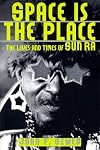
Sun Ra, wrapped in the mythology of ancient Egypt and glittering with the sheen of space-age technology, seemed too far out. He claimed to come from Saturn, and he was at least three planets distant from Earth: as an African American (Mars), a jazz musician (Jupiter) and an avant-gardist (there’s Saturn). And then there is his personal vision. Ra was a brilliant musician who mixed and melded music from the entire history of jazz with classical, African and electronics. His performances show more were unforgettable multi-media extravaganzas that featured chanting, dancing, wild costumes, poetry and fabulous music.
Ra was no fool. He built a big band and kept it working for fifty years, long after the more famous bands had folded up. He was perhaps the first African American to own his own label – Saturn. He controlled his own publishing and distribution (mostly). He made two films, one of which has become a cult classic (Space is the Place).
This collection by John Sinclair, former manager of MC5 and a producer of many of Ra’s concerts offers a tantalizing introduction to Sun Ra. Memoirs by the Arkestra, reviews of major concerts, essays on the Ra’s place in cultural history will send you running to find the music. Interviews with Sun Ra himself both mystify and demonstrate the originality of his thinking. Ra-inspired poetry by Amiri Baraka (Leroy Jones, prose by DJ Steve Fly Agaric 23, and a collection of graphic art add other dimensions.
Sun Ra remains a fascinating figure, a composer and performer whose work is becoming better known through the release of new compilations and restored recordings. This book is both inspired and inspirational and offers important insights into the work of this unjustly neglected artist. show less
Ra was no fool. He built a big band and kept it working for fifty years, long after the more famous bands had folded up. He was perhaps the first African American to own his own label – Saturn. He controlled his own publishing and distribution (mostly). He made two films, one of which has become a cult classic (Space is the Place).
This collection by John Sinclair, former manager of MC5 and a producer of many of Ra’s concerts offers a tantalizing introduction to Sun Ra. Memoirs by the Arkestra, reviews of major concerts, essays on the Ra’s place in cultural history will send you running to find the music. Interviews with Sun Ra himself both mystify and demonstrate the originality of his thinking. Ra-inspired poetry by Amiri Baraka (Leroy Jones, prose by DJ Steve Fly Agaric 23, and a collection of graphic art add other dimensions.
Sun Ra remains a fascinating figure, a composer and performer whose work is becoming better known through the release of new compilations and restored recordings. This book is both inspired and inspirational and offers important insights into the work of this unjustly neglected artist. show less
I grew up in Baltimore. Sun Ra was based in Philly during alotof of my adult yrs there. He played in Baltimore fairly often. There was a club on N Charles St called the Famous Ballroom. Sun Ra & the Arkestra played there. It was dark, w/ one of those "disco balls" - those multi-faceted things that spin & have light reflecting off them. It wasn't a big place but the stage cd manage to hold the Arkestra. I have a very fond memory (that must be around 30 yrs old by now) of sitting at the show more Ballroom at a round table witnessing the Arkestra playing in full force - w/ dancers & whatnot. At the end, Sun Ra came out into the audience (it was up-close & personal) leading a snake-dance & tilting a "rain-stick" by people's ears so they cd hear the sand pouring from one end to the other of the bamboo tube. He did it to me. If I didn't love him for 10 zillion other reasons I think I might just love him for that alone. They sold records at the concerts - white ones w/ hand-done covers of their more 'far-out' stuff & black ones of the more traditional stuff. Lardy knows I was dirt-poor in those days but I still managed to buy one of each - as I recall, they weren't that expensive. What an incredible person! What incredible music! What incredible philosophy! What incredible imagination! What incredible humor! When I think of all the sadness & trouble that the people I respect have gone thru it makes me ever so angry. Sun Ra, I wish there were a paradise for you to go to where yr immense creativity cd flourish even more than it did on this shithole of a human cesspit that some people have the audacity to call "society". If ever a person has deserved bliss in my bk, it's certainly you & yrs!! show less
Lists
Awards

You May Also Like


Associated Authors
Statistics
- Works
- 111
- Also by
- 1
- Members
- 571
- Popularity
- #43,840
- Rating
- 4.2
- Reviews
- 6
- ISBNs
- 22
- Languages
- 1
- Favorited
- 1