
John Jeremiah Sullivan
Author of Pulphead: Essays
About the Author
Image credit: Description English: John Jeremiah Sullivan at the National Book Critics Circle Awards. Date 8 March 2012 Source Own work Author David Shankbone
Works by John Jeremiah Sullivan
Associated Works
String Theory: David Foster Wallace on Tennis (2016) — Introduction, some editions — 255 copies, 6 reviews
Best of The Oxford American: Ten Years from the Southern Magazine of Good Writing {anthology} (2002) — Contributor — 45 copies
Heavy Rotation: Twenty Writers on the Albums That Changed Their Lives (2009) — Contributor — 23 copies, 2 reviews
Tagged
Common Knowledge
- Legal name
- Sullivan, John Jeremiah
- Birthdate
- 1974
- Gender
- male
- Education
- University of the South
- Occupations
- editor
- Organizations
- GQ
Harper's Magazine - Awards and honors
- Whiting Writers' Award (2004)
Windham–Campbell Literature Prize (2015) - Nationality
- USA
- Places of residence
- Wilmington, North Carolina, USA
- Associated Place (for map)
- North Carolina, USA
Members
Reviews
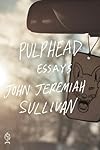
John Jeremiah Sullivan’s Pulphead is an eclectic collection of essays that, once you start reading, you’ll find hard to put down. It doesn’t really matter what he is writing about—he has the ability to engage the reader even about subjects that would not otherwise seem interesting, such as Christian rock festivals, Indian cave paintings, or forgotten explorers. I did have a hard time really caring about the trials and tribulations of former stars of MTV’s Real World, however. show more Sullivan is a part of every essay he writes, sometimes in a very personal way as in his description of his time helping look after the aged Andrew Lytle or in the tale of Sullivan’s brother, who was electrocuted while rehearsing with his rock band—but miraculously recovered. Sullivan’s recounting of some of his brother’s obtuse remarks during the first month of his convalescence, before he regained his grasp of reality, is hysterical.
Sullivan also has a way of bringing to life the characters he meets, such as a group of guys from West Virginia who are attending the Christian rock festival in Pennsylvania. In other essays, at a distance, he gives us a compelling portrait of the very much alive Axl Rose and of the very dead Michael Jackson. His heartfelt homage to Jackson’s abilities is very effective and had me reassessing my own feelings.
Sullivan proves time and time again in this collection that a well-written essay can be as interesting and as compelling as any work of fiction. I look forward to reading more by this talented author. show less
Sullivan also has a way of bringing to life the characters he meets, such as a group of guys from West Virginia who are attending the Christian rock festival in Pennsylvania. In other essays, at a distance, he gives us a compelling portrait of the very much alive Axl Rose and of the very dead Michael Jackson. His heartfelt homage to Jackson’s abilities is very effective and had me reassessing my own feelings.
Sullivan proves time and time again in this collection that a well-written essay can be as interesting and as compelling as any work of fiction. I look forward to reading more by this talented author. show less
A collection of journalistic essays on subjects ranging across Christian rock festivals, Native American cave paintings, Michael Jackson, Walt Disney World, and the day author's brother nearly died after being electrocuted by a microphone, to pick a few. Smart, funny, insightful, basically exactly what you'd want from this sort of book. Really good.
Pulphead: Essays by John Jeremiah Sullivan (New York: Farrar, Straus, & Giroux, 2011. 365pp) Also posted at wherepenmeetspaper.blogspot.com - check it out for more reviews!
John Jeremiah Sullivan is a contributing writer to The New York Times Magazine, a contributing editor of Harper’s Magazine, and editor of The Paris Review. He is the author of two books: Blood Horses and Pulphead.
“Greatest Hits”
I recently picked up a couple books containing essays by reputable journalists. The first show more being Distrust that Particular Flavor by William Gibson, and the second being Pulphead by John Jeremiah Sullivan. What I’ve found difficult about these books is that both are rather like listening to a compilation album, or better yet, a “greatest hits” album by an artist you love. On such an album, there are bound to be songs that you love and songs that you hate. Similarly, there are essays in John Jeremiah Sullivan’s Pulphead that are pure genius, while others were best to skip over. I’m going to spend time on the pure genius, as I think those essays are reason enough to buy this book.
Creation Fest
In my opinion, the best essay in this collection is the first essay, a commentary on Christian culture against a background of hilarity. In this essay, Mr. Sullivan was assigned to cover a festival in Missouri where Christian bands were playing. But, in a penchant for the more elaborate, instead of merely covering the bands, sitting on the side of the stage, and writing a brief report, he decided to recruit some young Christian folk to travel in a RV with him on the way in order to get more honest material. He posted on a chatroom looking for some travel companions:
“I had failed to grasp how ‘youth’ the [Christian rock] phenomenon is. Most of the people hanging out in these chat rooms were teens, and I don’t mean nineteen either, I mean fourteen. Some of them, I was about to learn, were mere tweens. I had just traipsed out onto the World Wide Web and asked a bunch of twelve-year-old Christians if they wanted to come for a ride in my van” (5).
Five pages into his book of essays, and Sullivan had me hooked. Not only is he talking about Creation Fest, a Christian festival I attended long ago, but he’s funny! He also grasped the Christian “rock” phenomenon quite accurately. Christian rock is somewhat of a separate genre from the rest of rock in general. Sullivan describes why.
“A question must be asked is whether a hard-core Christian who turns nineteen and finds he or she can write first-rate songs (someone like Damien Jurado) would never have anything whatsoever to do with Christian rock. Talent tends to come hand in hand with a certain base level of subtlety. And believe it or not, the Christian-rock establishment sometimes expresses a kind of resigned approval of the way groups like U2 or Switchfoot…take quiet pains to distance themselves from any unambiguous Jesus-loving, recognizing that to avoid this is the surest way to connect with the world” (19).
I’m a Christian, and I’m a musician, but ask me if I like current Christian bands and I’ll genuinely laugh you out of a room. This kind of statement certainly rings true.
Covering the Christian rock concert marathon that is Creation Festival, Sullivian, listening to the bands suddenly exclaims “Shit, it’s Petra” (those who know of Petra understand the fact that swearing is entirely warranted in this circumstance due to their unnaturally awful sound) and begins to talk about his Christian upbringing in a long exposé. In some of the most honest, beautiful prose discussing one’s personal faith in regards to Christianity, he says that his problem with Christianity is that,
“I love Jesus Christ…He was the most beautiful dude. Forget the Epistles, forget all the bullying stuff that came later. Look at what He said…His breakthrough was the aestheticization of weakness. Not in what conquers, not in glory, but in what’s fragile and what suffers—there lies sanity. And salvation…once you’ve known Him as a god, it’s hard to find comfort in the man. The sheer sensation of life that comes with a total, all-pervading notion of being—the pulse of consequence one projects onto even the humblest things—the pull of that won’t slacken. And one has doubts about one’s doubts” (33).
That’s raw. That’s honest. And, it’s something that I think more people need to think about. Christians have done a lot of stupid things in the name of Christ, to the point that a guy won’t consider himself a Christian because he loves Jesus, not the religion and mantra that’s behind it.
Michael Jackson is Awesome
Among this book of brilliant essays was a piece about Michael Jackson. Michael Jackson has singlehandedly changed the world of pop (he is, after all, known as the King of Pop) and he gets a bit of a bad rap. He terribly disfigured his face through surgery, did some creepy things, and played in a world of perpetuated childhood. In the essay, Sullivan writes,
“His art will come to depend on his ability to stay in touch with that childlike inner instrument, keeping near enough to himself to heed his own melodic promptings. If you’ve listened to toddlers making up songs, the things they invent are often bafflingly catchy and ingenious. They compose to biorhythms somehow” (112).
The thing that we dislike Michael for so often was also the thing that brought him such beautiful music. It’s true; he may have been a serial child-molester, but then again maybe not. Maybe, Sullivan purports, he just loved children with a similar childlike innocence. Sullivan also muses, that we have perhaps done him an injustice, especially in regard to his looks,
“We have, in any case, a pathology of pathologization in this country, It’s a bourgeois disease, and we do right to call bullshit on it. We moan that Michael changed his face out of self-loathing. He may have loved what he became” (126).
Sullivan succeeds in tugging at the heartstrings of the reader, and forces him or her to come to grips with either former prejudices or doubts about the famous, and perhaps infamous, pop-star that is Michael Jackson.
Sullivan has several other essays that are worth reading as well, one on his time in New Orleans after hurricane Katrina; one on The Real World reality TV series and the reality TV phenomena in general; one on Axl Rose (remember him?); and one on Bunny Wailer (singer and guitarist with Bob Marley). These essays are just a few of the ones I enjoyed in the collection. I highly recommend that you check them out for yourself, as the clarity and honesty he brings to these essays brings out things you wouldn’t think about, or perhaps wouldn’t want to. He tells a story about this world that most of us don’t know, and it’s too honest, raw, and compelling to not read. You just have to find the essays that are the best, as in the end not all of them spoke to me. If all of the essays were as good as the ones I mentioned, I would rate this book much higher. But, it’s certainly still worth picking up and reading as the good far outweighs the bad. show less
John Jeremiah Sullivan is a contributing writer to The New York Times Magazine, a contributing editor of Harper’s Magazine, and editor of The Paris Review. He is the author of two books: Blood Horses and Pulphead.
“Greatest Hits”
I recently picked up a couple books containing essays by reputable journalists. The first show more being Distrust that Particular Flavor by William Gibson, and the second being Pulphead by John Jeremiah Sullivan. What I’ve found difficult about these books is that both are rather like listening to a compilation album, or better yet, a “greatest hits” album by an artist you love. On such an album, there are bound to be songs that you love and songs that you hate. Similarly, there are essays in John Jeremiah Sullivan’s Pulphead that are pure genius, while others were best to skip over. I’m going to spend time on the pure genius, as I think those essays are reason enough to buy this book.
Creation Fest
In my opinion, the best essay in this collection is the first essay, a commentary on Christian culture against a background of hilarity. In this essay, Mr. Sullivan was assigned to cover a festival in Missouri where Christian bands were playing. But, in a penchant for the more elaborate, instead of merely covering the bands, sitting on the side of the stage, and writing a brief report, he decided to recruit some young Christian folk to travel in a RV with him on the way in order to get more honest material. He posted on a chatroom looking for some travel companions:
“I had failed to grasp how ‘youth’ the [Christian rock] phenomenon is. Most of the people hanging out in these chat rooms were teens, and I don’t mean nineteen either, I mean fourteen. Some of them, I was about to learn, were mere tweens. I had just traipsed out onto the World Wide Web and asked a bunch of twelve-year-old Christians if they wanted to come for a ride in my van” (5).
Five pages into his book of essays, and Sullivan had me hooked. Not only is he talking about Creation Fest, a Christian festival I attended long ago, but he’s funny! He also grasped the Christian “rock” phenomenon quite accurately. Christian rock is somewhat of a separate genre from the rest of rock in general. Sullivan describes why.
“A question must be asked is whether a hard-core Christian who turns nineteen and finds he or she can write first-rate songs (someone like Damien Jurado) would never have anything whatsoever to do with Christian rock. Talent tends to come hand in hand with a certain base level of subtlety. And believe it or not, the Christian-rock establishment sometimes expresses a kind of resigned approval of the way groups like U2 or Switchfoot…take quiet pains to distance themselves from any unambiguous Jesus-loving, recognizing that to avoid this is the surest way to connect with the world” (19).
I’m a Christian, and I’m a musician, but ask me if I like current Christian bands and I’ll genuinely laugh you out of a room. This kind of statement certainly rings true.
Covering the Christian rock concert marathon that is Creation Festival, Sullivian, listening to the bands suddenly exclaims “Shit, it’s Petra” (those who know of Petra understand the fact that swearing is entirely warranted in this circumstance due to their unnaturally awful sound) and begins to talk about his Christian upbringing in a long exposé. In some of the most honest, beautiful prose discussing one’s personal faith in regards to Christianity, he says that his problem with Christianity is that,
“I love Jesus Christ…He was the most beautiful dude. Forget the Epistles, forget all the bullying stuff that came later. Look at what He said…His breakthrough was the aestheticization of weakness. Not in what conquers, not in glory, but in what’s fragile and what suffers—there lies sanity. And salvation…once you’ve known Him as a god, it’s hard to find comfort in the man. The sheer sensation of life that comes with a total, all-pervading notion of being—the pulse of consequence one projects onto even the humblest things—the pull of that won’t slacken. And one has doubts about one’s doubts” (33).
That’s raw. That’s honest. And, it’s something that I think more people need to think about. Christians have done a lot of stupid things in the name of Christ, to the point that a guy won’t consider himself a Christian because he loves Jesus, not the religion and mantra that’s behind it.
Michael Jackson is Awesome
Among this book of brilliant essays was a piece about Michael Jackson. Michael Jackson has singlehandedly changed the world of pop (he is, after all, known as the King of Pop) and he gets a bit of a bad rap. He terribly disfigured his face through surgery, did some creepy things, and played in a world of perpetuated childhood. In the essay, Sullivan writes,
“His art will come to depend on his ability to stay in touch with that childlike inner instrument, keeping near enough to himself to heed his own melodic promptings. If you’ve listened to toddlers making up songs, the things they invent are often bafflingly catchy and ingenious. They compose to biorhythms somehow” (112).
The thing that we dislike Michael for so often was also the thing that brought him such beautiful music. It’s true; he may have been a serial child-molester, but then again maybe not. Maybe, Sullivan purports, he just loved children with a similar childlike innocence. Sullivan also muses, that we have perhaps done him an injustice, especially in regard to his looks,
“We have, in any case, a pathology of pathologization in this country, It’s a bourgeois disease, and we do right to call bullshit on it. We moan that Michael changed his face out of self-loathing. He may have loved what he became” (126).
Sullivan succeeds in tugging at the heartstrings of the reader, and forces him or her to come to grips with either former prejudices or doubts about the famous, and perhaps infamous, pop-star that is Michael Jackson.
Sullivan has several other essays that are worth reading as well, one on his time in New Orleans after hurricane Katrina; one on The Real World reality TV series and the reality TV phenomena in general; one on Axl Rose (remember him?); and one on Bunny Wailer (singer and guitarist with Bob Marley). These essays are just a few of the ones I enjoyed in the collection. I highly recommend that you check them out for yourself, as the clarity and honesty he brings to these essays brings out things you wouldn’t think about, or perhaps wouldn’t want to. He tells a story about this world that most of us don’t know, and it’s too honest, raw, and compelling to not read. You just have to find the essays that are the best, as in the end not all of them spoke to me. If all of the essays were as good as the ones I mentioned, I would rate this book much higher. But, it’s certainly still worth picking up and reading as the good far outweighs the bad. show less
I'd never heard of Sullivan before, he's been compared to David Foster Wallace so I picked up his anthology of 14 magazine articles. It has a central-Appalachia border-state cultural flavor, in particular Indiana/Kentucky and by osmosis points east and west along that line, neither Yankee or Southern. He might be seen as a regional author, or an author with regional flavor. Sullivan is not the fierce intellectual like Wallace, more subdued, but in his writing has intense flashes with show more sentences here and there that cause one to stop and marvel at the creativity. He's also a likeable writer, which is a good thing since he's always in his stories. One reason we read is to meet interesting people, Sullivan is an author you don't mind spending time with and getting to know as he mixes his own background in with the story he's covering.
My favorite pieces are "Mister Lytle", about his apprenticeship with the 90 year old writer Andrew Nelson Lytle, who one morning was found nibbling Sullivan's ear, and more. "Upon This Rock", about a Christian Youth rock concert in PA and a group of feral West Virginia good ole boys he befriends; this is the funniest piece, sort of like DFW's essay on the state fair. "Michael" is a re-evaluation of the common belief that M. Jackson was a pedophile, I found it pretty convincing that Jackson may have been a pedo in thought, but not deed. "American Grotesque" is an investigation of the mysterious death of a Census worker found hanged in the woods with the words "Fed" inked on his chest. This was headline news for a few days in the red/blue culture wars, this essay investigates. "Unnamed Caves" is a fascinating piece on "pot diggers" in eastern Tennessee, people who dig up old Indian graves, I learned a lot on the subject. "Violence of the Lambs" is very creative, it reminded me of what Edgar Allen Poe used to do in the early 19th century ("The Balloon-Hoax"), it's something of a small masterpiece that may end up being among his most enduring essays, once the pop culture stuff fades. Not everyone liked it, the Washington Post said it had "gaseous prose" (perhaps an allusion to Poe's gas-light era?), and some readers were shocked/upset by the surprise ending, but I found it brilliant and brave. show less
My favorite pieces are "Mister Lytle", about his apprenticeship with the 90 year old writer Andrew Nelson Lytle, who one morning was found nibbling Sullivan's ear, and more. "Upon This Rock", about a Christian Youth rock concert in PA and a group of feral West Virginia good ole boys he befriends; this is the funniest piece, sort of like DFW's essay on the state fair. "Michael" is a re-evaluation of the common belief that M. Jackson was a pedophile, I found it pretty convincing that Jackson may have been a pedo in thought, but not deed. "American Grotesque" is an investigation of the mysterious death of a Census worker found hanged in the woods with the words "Fed" inked on his chest. This was headline news for a few days in the red/blue culture wars, this essay investigates. "Unnamed Caves" is a fascinating piece on "pot diggers" in eastern Tennessee, people who dig up old Indian graves, I learned a lot on the subject. "Violence of the Lambs" is very creative, it reminded me of what Edgar Allen Poe used to do in the early 19th century ("The Balloon-Hoax"), it's something of a small masterpiece that may end up being among his most enduring essays, once the pop culture stuff fades. Not everyone liked it, the Washington Post said it had "gaseous prose" (perhaps an allusion to Poe's gas-light era?), and some readers were shocked/upset by the surprise ending, but I found it brilliant and brave. show less
Lists
Awards


You May Also Like


Associated Authors
Statistics
- Works
- 9
- Also by
- 14
- Members
- 1,174
- Popularity
- #21,919
- Rating
- 4.1
- Reviews
- 35
- ISBNs
- 28
- Languages
- 6
- Favorited
- 2